
The Quick Read: FHA has no repair formula. The loan can reach up to 80% of your home’s appraised value, and the cash left for repairs is whatever remains after your old mortgage, closing costs and the financed upfront premium come out. A 203(k) renovation loan is a separate product that holds repair money in escrow instead of paying it to you.
Key Takeaways
- The 80% cap applies to the new total loan, not to the cash you receive.
- Your payoff balance comes out first, then costs and the financed premium. Repair money is what is left.
- You must have owned and lived in the home for 12 months before the case number is assigned.
- A standard cash-out has no repair escrow. A 203(k) has one, but it is not a cash-out.
- Three- and four-unit homes face extra tests that one- and two-unit homes skip.
FHA cash-out estimate
Seeded with an example value, a balance to match, and a round cash request; change any field.
Editable benchmark: 7.40% as of October 15, 2026 · Freddie Mac 30-year average via FRED®. A conventional market reference, not an FHA cash-out refinance quote.
Illustrative starting assumptions: a $350,000 home value, a $193,000 current balance, the FHA cap on a principal residence with the upfront premium financed, a thirty-year term at the current Freddie Mac benchmark, and property taxes and insurance estimated at typical national rates. Every field is editable.
An illustration, not a Loan Estimate, an approval, a quote, or a commitment to lend. The rate shown is the weekly Freddie Mac thirty-year conventional benchmark, used as a market reference; an FHA cash-out is priced by the lender at lock, and this is not an FHA cash-out refinance quote. HUD’s cap limits the base loan; the upfront premium is financed on top of the capped base loan; the monthly premium for the first year follows the snapshot’s schedule. Cash available means the base loan the cap permits less the balances retired, before closing costs, which this calculator leaves out. The line figure applies the line program’s combined loan-to-value ceiling to the same value and balance. Taxes and insurance are estimates you can edit. Licensed in sixteen states for consumer mortgages.
How Much Does the Cash-Out Actually Release?
The cash equals 80% of appraised value, minus your payoff, minus costs and financed premium. That is the whole formula. Nothing in it mentions repairs. Whatever lands in your hands, you decide how to spend.
This is where most borrowers misread the number. “80% LTV” does not mean you receive 80% of the value in cash. LTV, or loan-to-value, is the new loan balance divided by appraised value. HUD’s handbook transmittal set the maximum for cash-out at 80%, and that ceiling covers the full new loan. Your old mortgage gets paid off from inside it.
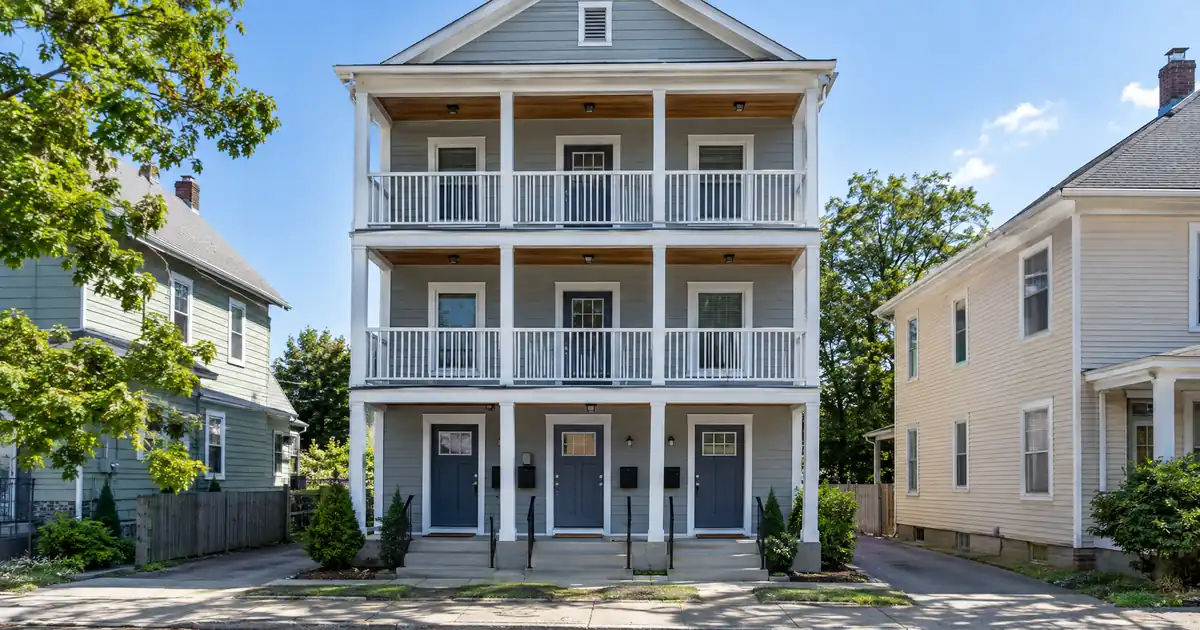
Picture a triplex appraised at 100 units of value. Say your current mortgage is 60 of those units. The new loan tops out at 80. That leaves 20 before costs. Now take out closing costs and the financed upfront premium. The final number is smaller, and that smaller number is your repair budget.
The upfront premium is 1.75% of the base loan, and it is financed, meaning it is added to the balance. That lifts the loan you take on without putting cash in your pocket. The annual premium runs between 0.15% and 0.75% of the balance, depending on term, loan amount and LTV. It affects your monthly budget, not the cash at closing.
Lendmire’s piece How Much a Cash-Out Refinance Releases on a 2-4 Unit Primary Home walks through the same squeeze from the general cash-out side.
Why a 2-4 Unit Home Is Different
A duplex, triplex or fourplex can qualify as a primary home if you live in one of the units. Across the wholesale programs Lendmire places FHA files with, that owner-occupancy is the foundation of the whole loan. The FHA cash-out refinance program reaches 80% LTV only on a home you have owned and occupied for 12 months before the case number. The case number is the identifier FHA assigns when the lender orders the appraisal. Exact terms depend on the lender’s guidelines, property type, leverage, and a full review of the borrower’s file.
Two things change once you pass two units.
Self-sufficiency test. On three- and four-unit homes, FHA checks whether the property’s rental income can carry its own mortgage. Rent is measured by what the appraiser says the units should rent for, with an allowance taken off for vacancy and upkeep. The details are in HUD’s handbook, and lenders apply them file by file. A one- or two-unit home skips this test.
Reserves. Three- and four-unit homes also face a reserve requirement. Reserves are cash you hold after closing, in the bank, to cover payments if something goes wrong. HUD’s older refinance reference guide describes both the test and the reserve rule for these properties. The guide is dated, so confirm current amounts with your loan officer. Every figure here varies by lender and program — guidelines, property type, leverage, and credit profile all apply.
Here is the catch. Your own unit’s rent counts as part of the property’s income in this test, but your tenants’ rent cannot replace your own occupancy. You still have to live there.
What Comes Off the Top Before You See Cash
Four items are paid before any repair money reaches you. Here is the order:
| Step | What happens |
|---|---|
| Payoff | The old mortgage is paid in full |
| Costs | Third-party and closing costs are settled |
| Financed premium | The 1.75% upfront premium is added to the balance |
| Reserves | For 3-4 units, cash you hold afterward |
Reserves are not subtracted from the loan. They are money you must still have on hand, and many borrowers forget to plan for them. If your cash-out was meant to supply the reserves, the plan does not hold together.
Some lenders also hold back for items such as taxes and insurance. That varies, and it shows up on your Loan Estimate.
Worked Example: Percentages of Value
No dollar figures here, only percentages of appraised value. Each case assumes a home appraised at 100%.
| Payoff as % of value | Max new loan | Room before costs |
|---|---|---|
| 50% | 80% | 30% |
| 65% | 80% | 15% |
| 75% | 80% | 5% |
These are illustrations, not quotes. Costs and the financed premium then shrink the room further.
Notice how fast the room disappears. A homeowner with a payoff at 75% of value has almost nothing left for repairs. The same homeowner in a lower appraisal faces a worse picture. Say the appraisal comes in 10% short of what you expected. The same payoff is now a bigger share of value. The 80% ceiling drops with it. The room before costs can shrink by far more than 10%.
This works the same for a duplex, a triplex or a fourplex. Unit count does not change the 80% cap. It changes the extra tests (self-sufficiency, reserves) and the county loan limits that apply. County loan limits vary by place and unit count, and higher counts get higher limits. Check the limit for your county before you plan, because a loan above it cannot be made.
How Do You Size a Repair Budget Against the Cash?
Work backward from the room. Start with a contractor’s written bid for the work. Then estimate your room using the steps above, and compare.
1. Get a written bid for each unit and for shared areas like the roof or the stairwell.
2. Estimate appraised value conservatively, then apply the 80% cap.
3. Subtract your payoff, then costs and the financed premium.
4. Compare what remains to the bid, and hold some back for overruns.
If the room covers the bid with a cushion, a standard cash-out may work. If it falls short, you have three paths. Scale back the scope. Pay part of the work out of pocket. Or look at a renovation loan.
The cash-out also asks you to qualify on the larger balance. Base ratios, meaning housing cost and total debt as a share of income, start at 31/43 with no compensating factors. Documented compensating factors can stretch that to 40/50 at the top tier, and the automated finding governs most files. For a deeper look at a stretched file, see Lendmire’s article Can a 2-4 Unit Primary Home With a High DTI Get an FHA Cash-Out?.
How Does the Appraisal Change Your Cash?
The appraisal sets two things: the value that the 80% applies to, and the condition of the home. Both matter for repairs.
On value, a low number cuts your room, as shown above. On condition, the appraiser reports anything that affects health, safety or the soundness of the structure. Cosmetic wear usually gets noted without being required. Items that threaten safety or soundness, such as a failing roof, exposed wiring or a broken stair rail, can become conditions of the loan.
The lender makes the final call on which repairs are required. That means repairs the appraiser flags may have to be finished before closing. A standard cash-out cannot pay for them in advance, because the money arrives only at closing. Here is the practical trap: you need the cash to do the work, and you need the work done to get the cash.
Multi-unit homes add exposure. A problem in one unit, or in a shared system, can stall the whole file. A three- or four-unit building has more systems to inspect and more places for a condition to hide.
FHA Cash-Out vs. 203(k): Which Fits Repairs?
A standard cash-out pays you cash. A 203(k) pays for repairs through an escrow. They solve different problems.
HUD’s 203(k) overview says the program can rehabilitate one- to four-unit homes, including while refinancing the debt on them. HUD’s comparison fact sheet is blunt on one point: a 203(k) refinance cannot be a cash-out. Part of the new loan pays off your old mortgage, and the rest goes into an escrow that is released as work is finished.
| Factor | FHA cash-out | 203(k) refinance |
|---|---|---|
| Cash to you | Yes, after payoff and costs | No |
| Repair escrow | None | Yes, released in draws |
| Value basis | Current appraised value | Projected value after work |
| Contractor | Your choice, paid by you | Bid, plan and inspection |
| Consultant | Not required | Required on the Standard version |
The value basis is the key difference. A 203(k) sizes the loan on what the home will be worth after the repairs, accounting for the cost of the work. That can open up more room than a cash-out on today’s value.
Choose a cash-out if repairs are modest, you can safely wait for closing to start work, and you want the flexibility of cash.
Choose a 203(k) if the repairs are large, the appraiser may require work, or you want the money tied to finished work instead of paid up front.
There are two versions. The Limited version covers non-structural work. The Standard version handles structural work and requires a 203(k) consultant. HUD raised the Limited version’s cost limit in a 2024 mortgagee letter, so confirm the current figure with your loan officer before planning around any number you see online. A Standard 203(k) can also reserve payments for time the home cannot be lived in, which matters in a multi-unit.
The tradeoff is time and paperwork. Funds go out in draws after inspection, so contractors are usually not paid up front. Expect more steps than a cash-out.
Eligibility Checklist
Across the wholesale programs Lendmire places FHA files with, these are the points that decide a cash-out:
- Occupancy. You own the home and live in it as your principal residence. A pure rental does not qualify. A borrower who has moved out is outside FHA cash-out.
- 12-month rule. At least one borrower owned and lived there for 12 months before the case number.
- Payment history. The mortgage must be current, with recent payments made within the month they were due. A borrower who had forbearance must complete the plan and then show a run of on-time payments.
- Credit. The programs Lendmire works with start at a 580 decision score. Specific outcomes depend on the full file and lender guidelines.
- 3-4 units. Self-sufficiency and reserves apply, as described above.
- Free and clear. A home with no mortgage can still be refinanced as a cash-out.
HUD’s older guide also lists an exception for a property inherited within the past 12 months. The conditions have changed over time, so confirm them in the current handbook.
Where the Rule Breaks: Edge Cases
Condos. A 203(k) on a condo covers only the interior of the unit, in buildings of no more than four units.
Moved-out owners. Renting your old unit while you live elsewhere pushes the loan outside this lane.
Streamline. The FHA Streamline refinances an existing FHA loan with no appraisal and a limited credit review. It adds no cash, so it does not fund repairs.
Rent evidence. For one- and two-unit homes, rent does not drive the loan. For three and four units, it feeds the self-sufficiency test. Tenants’ leases matter more there.
Tax. Tax treatment can depend on your situation; borrowers should speak with a qualified tax professional before relying on any deduction or credit.
Key Terms Defined
LTV (loan-to-value). The new loan balance divided by the home’s appraised value.
Case number. The FHA identifier assigned when the appraisal is ordered, used to date the 12-month rule.
Self-sufficiency test. An FHA check on three- and four-unit homes that asks whether rent can cover the mortgage.
Reserves. Cash you still hold after closing, available to cover payments.
Upfront premium. FHA mortgage insurance of 1.75% of the base loan, added to the balance at closing.
203(k). An FHA renovation program that holds repair money in escrow and releases it as work is completed.
Draw. One staged payment from a 203(k) escrow, released after an inspection.
Frequently Asked Questions
How much cash can I get for repairs on a duplex?
It depends on your appraised value and payoff. The new loan can reach up to 80% of value. Subtract your payoff, closing costs and the financed upfront premium, and the remainder is what you can spend. Unit count does not change the 80% cap, but a low appraisal can shrink the number sharply.
Can I use FHA cash-out for repairs on a fourplex I live in?
Yes, if you meet the occupancy and 12-month rules and the file qualifies. A fourplex also faces the self-sufficiency test and reserves. The cash is yours to spend, but a standard cash-out has no repair escrow, so the money arrives only at closing.
Is cash-out or 203(k) better for major repairs?
Usually a 203(k), especially when the appraiser may require work. It sizes the loan on value after repairs and releases money in draws. A cash-out suits smaller jobs you can start after closing. HUD’s fact sheet confirms a 203(k) refinance cannot be a cash-out.
Can I count rent from the other units?
Not for occupancy. You must live in the home. On three- and four-unit homes, appraiser-estimated rent, including your own unit’s, feeds the self-sufficiency test. On one- and two-unit homes, rent does not drive qualification.
Do 3-4 units have extra requirements?
Yes. Three- and four-unit homes face the self-sufficiency test and a reserve requirement. Lenders may also layer on their own conditions, so the exact reserve amount can differ by file. Everything is subject to lender guidelines and full file review.
Is an FHA Cash-Out Right for Your Repairs?
Run the room first. If the cash covers a written bid with a cushion, a standard cash-out may fit. If the work is large or may be required by the appraiser, look at a 203(k) before you commit.
If you are weighing a cash-out refinance against keeping the loan you have, Lendmire can help you compare the programs and the equity each one reaches. Program details are subject to lender guidelines, and nothing here is a commitment to lend.
For your own numbers, request a scenario review with Lendmire.
About Lendmire
Lendmire is a mortgage brokerage (NMLS# 2371349) licensed for consumer mortgage lending in 16 states, arranging FHA, VA, conventional and jumbo purchase and refinance loans through a wholesale lending network. Eligibility is determined by the lender on each file. Scotsman Guide named Lendmire a Top Mortgage Workplace in both 2025 and 2026.
For the program’s current guidelines, see FHA loan programs.
Get Started
Ready to find the right loan for you?
In about 30 seconds you can review financing options available for your home or investment property. No commitment required.
Informational only. Not a Loan Estimate, approval, or commitment to lend. Program availability and eligibility are subject to lender guidelines, credit approval, property review, and underwriting.
References
1. HUD Handbook 4000.1 transmittal
2. HUD Archives, Refinances reference guide
3. HUD FHA Resource Center, 203(k) overview
This article is part of Lendmire’s FHA Loan series — every loan program’s qualification details, guidelines, and scenarios live on the loan options page.
Related reading: Can a 2-4 Unit Primary Home With a High DTI Get an FHA Cash-Out? · FHA Cash-Out MIP Duration on a 2-4 Unit Primary Home · How to Qualify for an FHA Cash-Out on a 2-4 Unit Primary Home
Brandon Miller
Founder & CEO, Mortgage Loan Originator, Lendmire LLC
- Mortgage Loan Originator · NMLS# 1129696 · Verify on NMLS Consumer Access
- North Carolina Real Estate Broker · License# 343312 · Verify on NCREC
- North Carolina Insurance Producer · License# 19053198 · Property, Casualty, Life, Health · Verify on NAIC SBS
- Lendmire LLC · Firm NMLS# 2371349 · Verify firm licensure
Legal disclosures. Lendmire (NMLS# 2371349) is a state-licensed mortgage brokerage that arranges financing through wholesale lender relationships. Lendmire is not a direct lender, depository institution, or registered financial advisor. The discussion above is general informational content about real estate financing — it is not financial, legal, or tax advice, and readers should consult licensed professionals for guidance on their individual circumstances. Loan inquiries are subject to lender underwriting; this article does not represent a commitment to lend. Loan terms, rates, and qualification standards vary by borrower, property, and state, and are subject to change at any time. Equal Housing Opportunity. NMLS Consumer Access: nmlsconsumeraccess.org.