
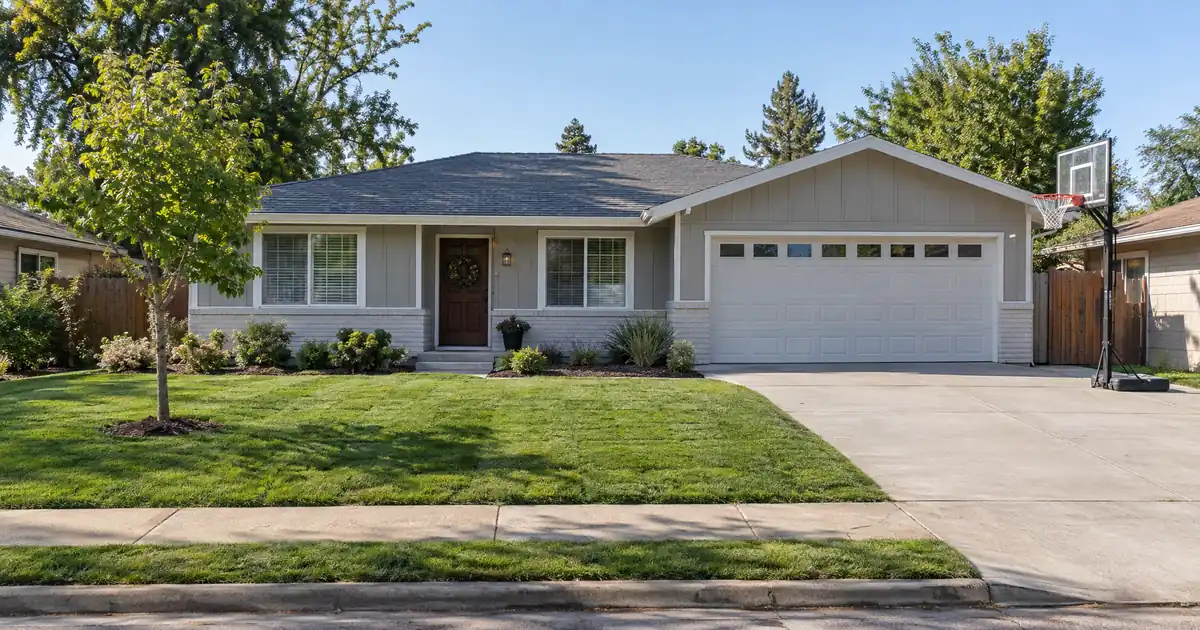
The Quick Read: An FHA cash-out on a home with no mortgage is allowed, and it is still treated as a cash-out refinance. The home must be your principal residence, you must have owned and lived in it for 12 months before the case number, and the new loan reaches 80% of the appraised value at most. The word “buyout” is not an FHA term, so the first job is to sort out which kind you mean.
FHA cash-out estimate
Seeded with an example value, a balance to match, and a round cash request; change any field.
Editable benchmark: 7.40% as of October 15, 2026 · Freddie Mac 30-year average via FRED®. A conventional market reference, not an FHA cash-out refinance quote.
Illustrative starting assumptions: a $350,000 home value, a $193,000 current balance, the FHA cap on a principal residence with the upfront premium financed, a thirty-year term at the current Freddie Mac benchmark, and property taxes and insurance estimated at typical national rates. Every field is editable.
An illustration, not a Loan Estimate, an approval, a quote, or a commitment to lend. The rate shown is the weekly Freddie Mac thirty-year conventional benchmark, used as a market reference; an FHA cash-out is priced by the lender at lock, and this is not an FHA cash-out refinance quote. HUD’s cap limits the base loan; the upfront premium is financed on top of the capped base loan; the monthly premium for the first year follows the snapshot’s schedule. Cash available means the base loan the cap permits less the balances retired, before closing costs, which this calculator leaves out. The line figure applies the line program’s combined loan-to-value ceiling to the same value and balance. Taxes and insurance are estimates you can edit. Licensed in sixteen states for consumer mortgages.
What Does “Buyout” Mean on a Paid-Off Home?
“Buyout” is a borrower word, not a HUD word. It usually means one of two things.
The first is pulling equity out of a home that has no loan on it. FHA treats that as a cash-out refinance. The second is paying a co-owner for their share, as in a divorce, an inheritance split, or a partnership that ends. That one has its own paperwork, covered below.
Both can run through the same loan. In both, the new FHA mortgage becomes the first and only lien on the home. HUD’s Handbook 4000.1 is the governing policy source for FHA single-family loans, and HUD updates it on a regular schedule. Lenders also add their own rules on top, so the file that clears one wholesale lender may not clear another.
Key Terms Defined
Cash-out refinance: A new loan that is larger than what you owe, or a new loan on a home you owe nothing on, with the extra money paid to you.
Case number: The FHA ID assigned to your loan file. HUD measures your occupancy history back from this date, not from closing.
LTV (loan-to-value): The loan amount divided by the appraised value, shown as a percentage.
Principal residence: The home where you actually live, as your main address.
Upfront mortgage insurance premium: An FHA charge of 1.75% of the base loan, which can be financed into the loan.
Equity buyout: A payment to a co-owner for their share of the home’s value, backed by a legal agreement.
Why Is a No-Mortgage Home Still a Cash-Out?
A refinance with no payoff is still cash-out because FHA defines the term by what happens to the money, not by whether a loan existed. The Handbook language, as reproduced by a compliance reference site that mirrors Section II.A.8, covers refinancing any mortgage and also withdrawing equity where no mortgage currently exists. The proceeds are not limited to one purpose.
HUD’s older reference guide says the same about free-and-clear properties. That guide is archived and predates the current Handbook, so treat it as background. Check the live Section II.A.8 on HUDCLIPS for the current wording.
Across the wholesale programs Lendmire places FHA files with, a paid-off home is a routine request. It is simpler on the lien side because there is nothing to pay off. It is not simpler on occupancy, appraisal, or credit.
The Core Requirements, Side by Side
| Requirement | What the file needs |
|---|---|
| Occupancy | Owned and lived in as principal residence for 12 months before case number |
| Title | At least one borrower holds title before case number |
| Maximum leverage | 80% of appraised value |
| Property | Owner-occupied principal residence |
| Credit and income | Underwritten by automated finding or manual review |
| Mortgage insurance | 1.75% upfront, plus an annual premium |
These figures are subject to lender guidelines and full file review. None of this is a commitment to lend.
How Is the Loan Underwritten, Step by Step?
The steps run in a fixed order, and an early miss usually stops the file.
1. Eligibility screen. The lender checks title, occupancy, and property type. Occupancy is typically documented with items like employment records, tax records, or utility bills that show you live at the address.
2. Case number. The FHA case number is assigned. Your 12-month clock is measured to this date. A borrower who is at month 11 on the day of the case number has a problem, even if closing falls after month 12.
3. Appraisal. An FHA appraisal sets the value. The 80% cap applies to that appraised figure, not to what you paid or what a listing site says.
4. Loan sizing. With no payoff, the loan amount is the cash you want, plus financed closing costs, plus the financed upfront premium. All of it must fit under the 80% cap.
5. Payment-history tests. These apply only when a mortgage exists. The Handbook asks for on-time payments over the prior 12 months and at least six months on the current loan. With no mortgage, there is nothing to test. This is the point many paid-off owners miss. They assume the payment rules block them. They do not.
6. Credit and income review. The file runs through FHA’s automated scoring or goes to manual underwriting. The Handbook applies the refinance requirements to both. The new payment, including mortgage insurance and taxes and insurance on the home, goes into the ratios.
7. Title and closing. The title company clears the deed, checks for liens, judgments, and unpaid taxes, and records the new FHA mortgage as the first lien. You receive a Loan Estimate early and a Closing Disclosure before signing.
What Does the Lender Look at Beyond the Rules?
Four things decide most outcomes: occupancy history, appraised value against the cap, credit and income, and lender overlays.
On credit and income, the base ratio pair is 31/43, housing to total. Documented compensating factors can reach 40/50 at the top tier, and the automated finding governs most files. A paid-off home helps here, because there is no existing mortgage payment in the debt picture. The new payment replaces nothing, so it is all added burden. That makes the ratio test the real hurdle for many owners on fixed income.
Credit-score floors are where lenders differ most. The wholesale programs Lendmire works with start at a 580 decision score for FHA purchase files, and cash-out files can be held to a stricter level by an individual lender. Some lenders set a higher floor than HUD does. Ask early.
The 80% cap is a ceiling, not a payout. Costs, the upfront premium, and underwriting all change the cash that reaches you. Under the cap, 20% equity stays in the home.
What Does the Lender Need From You?
Gather these before the case number is assigned:
- Proof the deed is in your name, plus government ID
- Occupancy evidence for the full 12 months, such as utility bills or employment records at the address
- Income documents: pay stubs, W-2s, or benefit award letters, depending on your source
- Proof that property taxes are current and homeowner’s insurance is in force
- A list of debts and obligations, since they feed the ratios
- Any legal documents tied to the home, such as a divorce decree or probate papers
Missing property-tax proof and a stale insurance declaration are the common reasons a paid-off file stalls. Both are easy to fix before the file goes in.
Where Does the General Rule Break?
The 12-month rule has named exceptions, and a few property types fall outside it entirely.
Inherited homes. The Handbook text exempts inherited property from the minimum occupancy period before a cash-out. The catch: you must not have treated the home as an investment property since you inherited it. Title must also be recorded in your name. HUD’s archived guide shows an older, tighter version of this rule, so rely on the current Handbook.
Buying out a co-owner. The FHA rate-and-term rules treat the equity owed to a departing owner as property-related debt that can be included in the new loan. The lender asks for the divorce decree, settlement agreement, or another legally enforceable equity agreement. Whether the same treatment reaches a cash-out file is a lender and Handbook question.
Recorded land contract. If you are paying off a recorded land contract, the unpaid principal balance counts as the outstanding balance.
Manufactured homes. The home must have been permanently installed on its site for more than 12 months before the case number.
Second homes and rentals. Not eligible for standard FHA cash-out. Occupancy decides the leverage.
Recently bought homes. A home bought for cash is not a “paid-off for years” case. The 12-month occupancy test still applies unless the inheritance exception fits.
Two- to four-unit homes. The archived HUD guide required extra tests for three- and four-unit homes. Lenders may still apply extra review, so ask before you assume.
How Does a Co-Owner Buyout Work on a Paid-Off Home?
The mechanics depend on who is leaving and what they agreed to. Say two siblings inherit a home with no loan on it, and one wants to keep it. The staying sibling applies for the FHA cash-out. The departing sibling signs a deed transferring their share, and the loan proceeds fund the payment.
Here is the order that keeps the file clean:
1. Agree on a value, usually backed by an independent appraisal.
2. Put the payout terms in a written, enforceable agreement.
3. The staying owner applies and holds title, or title is cleared to them at closing.
4. The title company runs a search for hidden liens, judgments, and unpaid taxes.
5. At closing, funds go to the departing owner and the deed is recorded.
Because there is no existing note, the departing owner has nothing to be released from. Their protection is the recorded deed and the payment. The staying owner takes the new loan alone, which means the ratios have to work on one person’s income unless a co-borrower is added.
A divorce, an inheritance, and a partnership each need different paperwork. A divorce needs the decree. An inheritance needs probate or estate documents. Unmarried co-owners need a signed agreement, and an attorney is worth having for it. Occupancy still has to be shown by whoever keeps the home, subject to the exceptions above.
What Does a Cash-Out on a Paid-Off Home Cost You?
A paid-off home has no monthly mortgage payment. A cash-out creates one, with a long term and mortgage insurance attached. The CFPB’s home equity guide notes that a cash-out replaces your current loan with a larger one and can raise the payment and extend the payoff time. That guide speaks to people who already have a loan, but the principle holds for any new lien.
The costs are built into the file in plain view: closing costs, prepaid items, the 1.75% upfront premium that can be financed, and an annual premium between 0.15% and 0.75% of the balance. On a thirty-year loan above 90% LTV, the annual premium lasts the full term. At or below 90%, it ends after eleven years. Since the cash-out cap is 80%, the shorter schedule is the one that normally applies, subject to the lender’s final loan terms.
The CFPB cautions that paying non-mortgage debts with mortgage debt can raise the risk of foreclosure, because unsecured debt becomes debt secured by your home. Its report found borrowers most often used the cash to pay other bills or debts. The test to run is whether the total cost of this cash is lower than the cost of the debt or need it replaces.
What Do Most Borrowers Get Wrong?
- “No mortgage means no cash-out loan.” HUD defines cash-out to include equity withdrawal with no existing mortgage.
- “Paid off means I can borrow 100%.” The cap is 80%, and no equity option turns all of it into cash.
- “The payment-history rules block me.” They apply only to existing mortgages.
- “Any property works.” Standard FHA cash-out is for a principal residence only.
- “An inherited home means a 12-month wait.” There is an exception, if the home was never treated as an investment property.
- “The cap equals my payout.” The cap is a ceiling. Costs and the premium reduce the cash.
Is FHA the Right Tool for the Buyout?
It depends on the file. FHA suits a borrower whose credit is fair and whose ratios are tight, because it tolerates thinner profiles than many other programs. It costs more in mortgage insurance, and the 80% cap is the same ceiling you would meet elsewhere. A borrower with strong credit and low debt may find another cash-out structure leaves less insurance on the loan.
Other routes exist for funding a buyout: savings, a home equity line, a personal loan, an owner-held note, or selling. Each trades the same three things: who qualifies, what lien sits on the home, and what the monthly cost looks like. A borrower with solid cash reserves and no need for a monthly payment may not want any new lien at all.
Lendmire’s FHA cash-out refinance program page covers the structure from the brokerage side.
Tax treatment can depend on your situation; borrowers should speak with a qualified tax professional before relying on any deduction or credit.
If you are weighing a cash-out refinance on a home you own outright, Lendmire can help you compare the programs and the equity each one reaches. Lendmire brokers these loans through wholesale lenders in the 16 states where it holds consumer lending licenses. It is not the lender.
Frequently Asked Questions
Can I use an FHA cash-out loan to buy out a co-owner when the home has no mortgage?
Often yes, if you qualify as the borrower and the buyout is backed by a legally enforceable agreement. You must still meet the occupancy and title rules, and the loan stays under 80% of appraised value. Whether the payout can be handled as a cash-out or a rate-and-term file depends on the lender’s reading of the Handbook, so confirm the structure before applying.
Do I need 12 months of ownership if I inherited the home?
Not under the Handbook’s inheritance exception, as long as you have not treated the property as an investment since inheriting it. Title must be recorded in your name first. Individual lenders may add their own review, so ask before the case number is assigned.
What is the maximum amount I can get?
The ceiling is 80% of the appraised value for an FHA cash-out. The amount that reaches you is lower, because financed closing costs and the financed 1.75% upfront premium count inside that cap. County loan limits also apply.
Does a paid-off home help me qualify?
It removes an existing mortgage payment from your debt picture, which helps. But the new payment, with mortgage insurance, taxes, and homeowner’s insurance, is all added burden. The ratios still have to work: 31/43 is the base pair, and documented compensating factors can reach 40/50 at the top tier.
Can I get FHA cash-out on a rental or second home?
No. Standard FHA cash-out requires an owner-occupied principal residence, so occupancy decides the leverage.
For your own numbers, request a scenario review with Lendmire.
For current guidelines and terms, see Lendmire’s FHA loan programs page.
About Lendmire
Lendmire (NMLS# 2371349) is a mortgage brokerage serving homeowners and home buyers in 16 states. FHA, VA, conventional and jumbo purchase and refinance loans are arranged through wholesale lending channels; Lendmire brokers the financing and the lender underwrites each application. Scotsman Guide named Lendmire a Top Mortgage Workplace in both 2025 and 2026.
Get Started
Ready to find the right loan for you?
In about 30 seconds you can review financing options available for your home or investment property. No commitment required.
Informational only. Not a Loan Estimate, approval, or commitment to lend. Program availability and eligibility are subject to lender guidelines, credit approval, property review, and underwriting.
References
1. HUD Housing Handbooks (HUDCLIPS)
2. HUD Handbook 4000.1 Section II.A.8 reproduction
3. HUD Archives, HOC Reference Guide: Refinances
4. CFPB, using home equity guide
5. CFPB
This article is part of Lendmire’s FHA Loan series — every loan program’s qualification details, guidelines, and scenarios live on the loan options page.
Related reading: FHA Cash-Out Inheritance Exception on a Paid-Off Inherited Home · FHA Cash-Out vs Conventional Cash-Out on a Paid-Off Home · Can an Heir Get an FHA Cash-Out on a Paid-Off Inherited Home?
Brandon Miller
Founder & CEO, Mortgage Loan Originator, Lendmire LLC
- Mortgage Loan Originator · NMLS# 1129696 · Verify on NMLS Consumer Access
- North Carolina Real Estate Broker · License# 343312 · Verify on NCREC
- North Carolina Insurance Producer · License# 19053198 · Property, Casualty, Life, Health · Verify on NAIC SBS
- Lendmire LLC · Firm NMLS# 2371349 · Verify firm licensure
Required disclosures. Lendmire (NMLS# 2371349) operates as a licensed mortgage broker, not a direct lender or depository. The discussion in this article is general in nature and should not be relied upon as financial, legal, or tax advice — every investment scenario is unique and should be reviewed by a qualified professional. Any loan inquiry is subject to lender underwriting, and this article is not a commitment to lend or a guarantee of approval. Mortgage rates, loan terms, and program guidelines vary by borrower, property, and state, and may change without notice. Equal Housing Opportunity. Verify licensure at NMLS Consumer Access.