
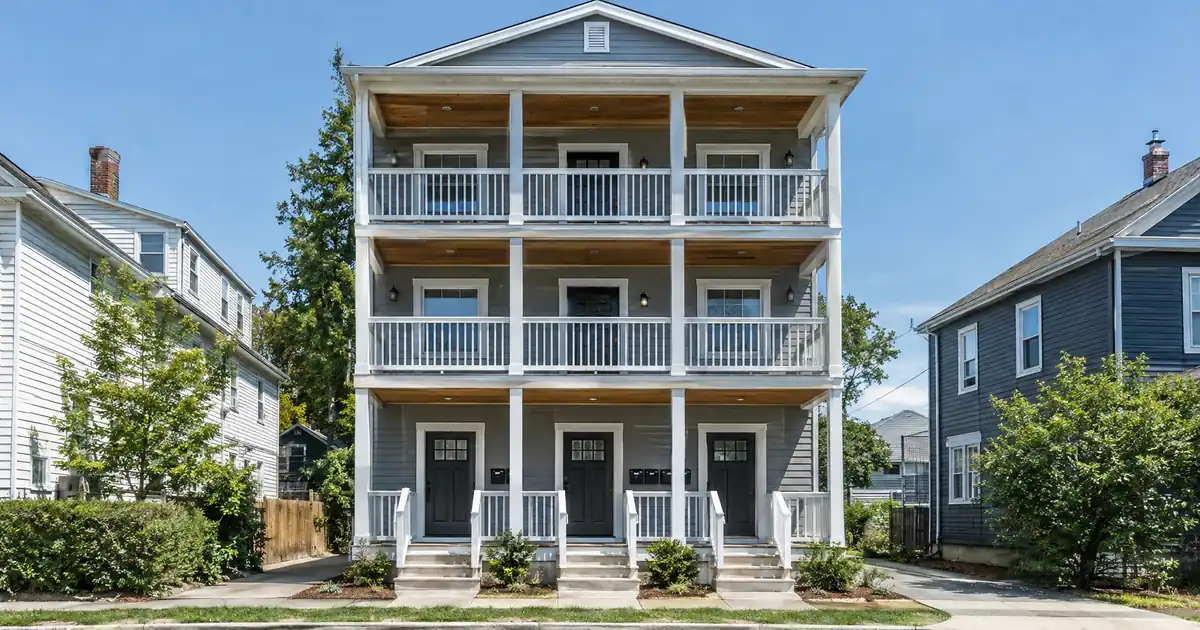
The Quick Read: Yes, if you live in one of the units. A VA cash-out refinance puts no restriction on how you spend the cash, so renovation is allowed. The catch is the occupancy rule, the appraisal, and how the other units’ rent is treated in qualifying. Subject to lender guidelines and full file review.
VA cash-out estimate
Seeded with an example value, a typical balance, and a round cash request at the first-use fee; change any field.
Editable benchmark: 7.40% as of October 15, 2026 · Freddie Mac 30-year average via FRED®. A conventional market reference, not a VA cash-out refinance quote.
Illustrative starting assumptions: a $350,000 home value, a $193,000 current balance, the full-value VA cap with the first-use funding fee financed, a thirty-year term at the current Freddie Mac benchmark, and property taxes and insurance estimated at typical national rates. Every field is editable.
Illustrative estimate only — not a Loan Estimate, approval, quote, or commitment to lend. The rate field carries the weekly Freddie Mac thirty-year conventional benchmark, a market reference and not a VA cash-out refinance quote; a VA loan is priced by the lender at lock. The total loan, funding fee included, is capped at the program leverage on the reasonable value; the fee follows the tier chosen. The cash available is what the cap allows less the balances paid off and the fee, before closing costs, which are not included. The HELOC line is the line program’s combined loan-to-value ceiling applied to the same value and balance. Taxes and insurance are editable estimates. The debt-to-income figure is a guideline; residual income decides a VA file. Licensed in sixteen states for consumer mortgages.
What Makes a 2-4 Unit a “Primary Home”?
A duplex, triplex, or fourplex counts as your primary home when you live in one of the units. The other units can be rented to tenants. The VA does not guarantee a cash-out on a building you own only as a rental.
VA.gov says you qualify if you hold a Certificate of Eligibility, meet VA and lender credit and income standards, and will live in the home you are refinancing. That last test is the one that sorts 2-4 unit files. Live in the building, and the cash-out is on the table. Move out, and it is not.
Across the wholesale programs Lendmire places VA files with, occupancy is the first thing checked on a multi-unit refinance. It shows up in the application, the appraisal, and the closing certifications. A file that is vague on which unit is yours gets stuck early.
Can the Cash Go to Renovation?
Yes. The VA cash-out reaches up to 100% of the appraised value, including the financed funding fee, and it refinances any loan type into a VA loan. What you do with the cash is your decision. Roof, plumbing, electrical, flooring, a unit rehab, a kitchen: all are fair uses.
The VA also has a separate path for work on the home. VA Circular 26-18-6 covers alteration and repair loans. It says eligible loan types include regular cash-out refinances, and it treats “alteration, repair, renovation, and improvement” as interchangeable terms. Where improvements are included in the value and finished after closing, funds go to the contractor in draws, and the lender needs the borrower’s written approval before each draw.
So there are two routes:
| Factor | Plain cash-out | Cash-out with alteration/repair |
|---|---|---|
| When you get funds | Cash at closing | Contractor draws after closing |
| Scope limits | None set by the VA on use | Work must fit the loan’s rules |
| Appraisal basis | Current value | Value can include the improvements |
| Process burden | Lighter | Heavier: bids, draws, sign-offs |
| Lender availability | Widely offered | Varies by lender |
Not every lender offers the draw route on a multi-unit. That is a lender choice, not a VA ban. Ask early.
Which Route Fits Which Project?
Match the route to the project, not the other way around.
- Cosmetic refresh (paint, flooring, fixtures): plain cash-out is simpler. Nothing needs to be appraised as “to be completed.”
- Systems work (HVAC, plumbing, electrical): either route works. Plain cash-out is easier if you already have a firm bid.
- Roof or structural work: the VA Buyer’s Guide lists roof, foundation, floors, plumbing, electrical, and HVAC among common alterations and repairs. Some lenders still decline structural work as their own overlay. That is a lender-by-lender difference.
- Full unit rehab: the draw route can help when the finished value is what supports the loan.
- Adding a unit or converting to more units: this depends on the appraisal, local zoning, and the one-to-four-unit limit. No general answer fits.
Plain cash-out is often the better fit when the scope is small and the bids are in hand. The draw route earns its extra paperwork on bigger, staged jobs. It is a real toss-up on mid-size projects, and a loan officer who has seen both on a multi-unit can help you weigh it.
Renovating While You Live There
Most guides skip this part. You live in one unit. A tenant lives in another. Contractors are in the building.
Three things matter.
1. Occupancy stays intact. The home must be your primary residence with an expectation of continued occupancy. If work makes your own unit unlivable for a stretch, ask the lender how a temporary move is treated. Do not assume.
2. Every unit still has to meet property standards. The VA appraiser notes deficiencies, and minimum property requirements still apply. A unit torn open mid-job is a question to raise before the appraisal, not after.
3. Tenants need a plan. Notice, access, and sequencing are your job as landlord. The loan does not solve them. Phase the work so at least one unit stays habitable.
Can cash-out proceeds fund work on the rental units, not just yours? The VA does not restrict the use of the cash. Lender policy and the appraisal decide how that plays out on a given file.
How the Appraisal Treats a 2-4 Unit
The VA appraisal sets the reasonable value. On a 2-4 unit it also supplies a fair rent opinion that underwriting uses. For renovation on the draw route, improvements can be included in the value, but the loan is limited to what that value supports.
Here is the practical risk. Appraisals on older multi-unit buildings sometimes come in below the number a borrower hoped for. Renovation spending does not always add dollar-for-dollar value. The type of work and the appraiser’s read decide it. Size the project to the appraisal, not to the wish list. If you build the budget around a value that does not appear, the cash falls short.
Qualifying: What Rent Counts and What Does Not
This is where multi-unit VA files get decided. Rent from the other units does not offset your payment dollar for dollar.
Under the VA’s underwriting standards at 38 CFR 36.4340, as quoted in secondary summaries, the following conditions apply before the other units’ rent can count:
- The lease amount used is 75% of the rent, unless a higher share can be documented.
- You have documented landlord experience or a reasonable likelihood of success as a landlord.
- You hold verified reserves covering six months of principal, interest, taxes, and insurance.
Confirm the current text with your loan officer, since lenders may add overlays on top, such as extra reserve months or a lower rent percentage. Overlays are not VA rules. They differ from one lender to the next.
Beyond rent, the full file looks like this:
- A Certificate of Eligibility. The VA’s COE decides eligibility, and service requirements are VA’s rules.
- Full credit underwriting. VA sets no minimum credit score. The wholesale programs Lendmire places VA loans with start at a 580 decision score.
- Residual income as the controlling test. The 41% debt-to-income figure is a guideline, not a cap, and a ratio above it needs residual income well above the table.
- Seasoning and net tangible benefit. The VA cash-out carries the same seasoning as the IRRRL: the later of 210 days from the first payment and the 6th payment, plus a net tangible benefit.
- Lease copies, a rent schedule, and landlord history for the other units.
- Contractor bids and a scope of work, especially on the draw route.
Reserves documentation is the item that trips files most. Statements that show six months of reserves have to be seasoned and sourced, and cash from the refinance itself generally does not count as the reserves you already had.
The Funding Fee and What It Means for the Cash
The VA funding fee on a cash-out refinance is 2.15% on first use and 3.3% on later use. It can be financed. Veterans receiving compensation for a service-connected disability, and the other exempt groups, are not charged it. The cash-out loan reaches 100% of the appraised value including the financed fee, so a financed fee reduces the cash left for the project.
That is the arithmetic that surprises people. Cash to you is the new loan, less the old payoff, the funding fee if financed, and closing costs. Budget from that net figure, not from the loan amount.
What a Worked Example Looks Like
Run the numbers on a fourplex in plain terms. A veteran lives in one unit. One of the other three needs a full rehab. The appraisal comes in near the purchase price paid years ago, plus appreciation. The new VA loan pays off the old lien first. The funding fee is financed. Closing costs come out. What remains is the renovation fund.
Whether that fund covers the rehab depends on three things: the appraised value, the existing balance, and the fee tier. If the project cost is larger than the net cash, options include phasing the work, trimming scope, or using the draw route so that finished value is considered. None of that is guaranteed, and it all depends on lender guidelines and the full file.
Risks Worth Weighing
A cash-out replaces the whole mortgage with a larger one. Even if the new terms are better, the payment can rise because the balance is higher. The CFPB notes that a cash-out refinance replaces the original mortgage and that failing to pay can lead to foreclosure. You are also drawing down equity, which is a trade, not free money.
The same agency has noted that home repairs or new construction was the second-most common reason borrowers gave for cash-out refinancing, after paying off debt. So this is a common use. It is still a big decision.
Other things to price in:
- A new loan resets the term.
- Only part of the other units’ rent counts toward qualifying.
- Renovation cost overruns come out of your pocket.
- The VA IRRRL refinances only an existing VA loan and gives no cash out, so it cannot fund renovation.
Other programs, such as FHA or conventional renovation products, treat 2-4 units differently. Compare them before you choose.
Common Mistakes
- Assuming all rent counts. It does not.
- Treating lender overlays as VA rules. A lender’s “no structural work” policy is its own.
- Skipping the occupancy plan. Decide where you will live during construction before applying.
- Budgeting from the loan amount. Budget from net cash after payoff, fee, and costs.
- Picking the draw route for a small job. It adds paperwork for little gain.
- Using the cash-out on a building you do not live in. That does not qualify.
Key Terms Defined
Certificate of Eligibility (COE): the VA document that confirms your entitlement and any funding fee exemption.
Cash-out refinance: a new loan that pays off your current mortgage and gives you the difference in cash.
Alteration and repair: the VA’s term for renovation work funded through the loan, often paid to the contractor in draws.
Residual income: the money left each month after major obligations, which is the controlling VA underwriting test.
Net tangible benefit: a test showing the refinance gives the borrower a real, measurable advantage.
Overlay: a lender’s own rule that is stricter than the VA’s.
Questions to Ask Before You Apply
1. Does the lender offer a draw route on a 2-4 unit, or plain cash-out only?
2. What reserve months and rent percentage does it apply to the other units?
3. Does it accept structural work or additions?
4. How does it treat a temporary move during construction?
5. How is the fee tier set on my entitlement?
If you are weighing a cash-out refinance against keeping the loan you have, Lendmire can help you compare the programs and the equity each one reaches. See the VA cash-out refinance program for the basics.
Frequently Asked Questions
Can I use VA cash-out on a duplex I rent out?
No, not unless you live in it. The VA requires that you occupy the home you are refinancing. If you live in one unit and rent the other, it is reviewed on occupancy.
Does the cash have to go to the home?
No. The VA places no restriction on how you spend cash-out proceeds. Renovation is a common use, but only a home you live in qualifies for the loan.
Does the VA ban structural work?
No. The VA’s Buyer’s Guide lists foundation and roof among common repairs. Some lenders decline structural work as their own overlay, so ask before you apply.
Can an IRRRL fund repairs?
No. The IRRRL only refinances an existing VA loan and gives no cash out. A renovation needs a cash-out refinance.
Does all of the rent from the other units count?
No. Underwriting uses only part of it, and the file needs landlord experience and verified reserves. Lender overlays can tighten this further. Everything is subject to lender guidelines and full file review, and nothing here is a commitment to lend.
For your own numbers, request a scenario review with Lendmire.
About Lendmire
Lendmire (NMLS# 2371349) is a mortgage broker licensed for consumer lending in 16 states. Lendmire arranges FHA, VA, conventional and jumbo purchase and refinance loans through wholesale lenders; every file is underwritten by the lender under the applicable program guidelines. Scotsman Guide named Lendmire a Top Mortgage Workplace in both 2025 and 2026.
Get Started
Ready to find the right loan for you?
In about 30 seconds you can review financing options available for your home or investment property. No commitment required.
Informational only. Not a Loan Estimate, approval, or commitment to lend. Program availability and eligibility are subject to lender guidelines, credit approval, property review, and underwriting.
References
1. VA.gov – Cash-out refinance loan
2. VA Circular 26-18-6, Loans for Alteration and Repair
3. VA Home Loan Guaranty Buyer’s Guide
5. CFPB Office of Research blog – cash-out refinance mortgages and their borrowers
This article is part of Lendmire’s VA Loans series — every loan program’s qualification details, guidelines, and scenarios live on the loan options page.
Related reading: VA Cash-Out vs Conventional Cash-Out Living in a 2-4 Unit Primary Home · VA Cash-Out Appraisal Requirements for a 2-4 Unit Primary Home · VA vs Conventional Cash-Out Requirements on a 2-4 Unit Primary Home
Brandon Miller
Founder & CEO, Mortgage Loan Originator, Lendmire LLC
- Mortgage Loan Originator · NMLS# 1129696 · Verify on NMLS Consumer Access
- North Carolina Real Estate Broker · License# 343312 · Verify on NCREC
- North Carolina Insurance Producer · License# 19053198 · Property, Casualty, Life, Health · Verify on NAIC SBS
- Lendmire LLC · Firm NMLS# 2371349 · Verify firm licensure
Legal disclosures. Lendmire (NMLS# 2371349) is a state-licensed mortgage brokerage that arranges financing through wholesale lender relationships. Lendmire is not a direct lender, depository institution, or registered financial advisor. The discussion above is general informational content about real estate financing — it is not financial, legal, or tax advice, and readers should consult licensed professionals for guidance on their individual circumstances. Loan inquiries are subject to lender underwriting; this article does not represent a commitment to lend. Loan terms, rates, and qualification standards vary by borrower, property, and state, and are subject to change at any time. Equal Housing Opportunity. NMLS Consumer Access: nmlsconsumeraccess.org.