
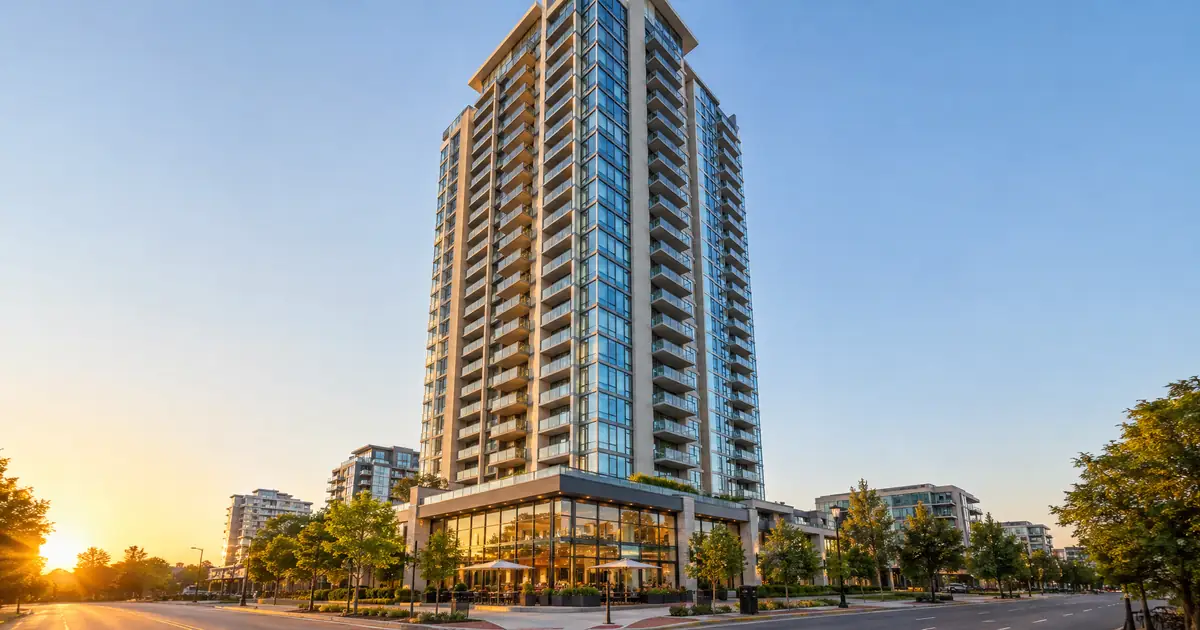
The Quick Read: A VA cash-out on a condo in a tower with a retail or office floor works only if you live in the unit and VA accepts the whole building. The commercial floor is an appraisal and lender-review question, not an automatic disqualifier. Occupancy is the first test, and a rental cannot be the subject of a VA cash-out.
- You must live in the home you are refinancing. Investor-owned condos fail at this step.
- VA approves condo projects as a whole, not one unit at a time.
- The appraisal must report commercial interests and their effect on residential value.
- Lender overlays on commercial space are often stricter than VA’s own handbook.
- If you rent the unit, equity generally moves through a non-owner-occupied product such as a DSCR cash-out.
Can a VA Cash-Out Work on a Rental Condo?
No. VA’s cash-out page lists three conditions that must all be true. You qualify for a Certificate of Eligibility. You meet VA and lender credit and income standards. You will live in the home. The occupancy line ends the conversation for rentals.
A VA cash-out does not require you to receive cash, either. Refinancing a non-VA loan into a VA loan counts as cash-out even if nothing comes back to you. The loan also needs an existing lien to refinance. A property with no mortgage on it is not eligible.
Picture a veteran who bought a downtown tower unit with a VA loan, lived there for a few years, and moved out. That unit is now a rental. A VA cash-out is off the table. The next move for that equity is a different product, covered further down.
How Does VA Review a Condo Project?
VA reviews the project first and the unit second. Under the VA Lender’s Handbook, Chapter 16, condominiums must be approved by VA before any unit in the project is eligible for the guaranty. The federal regulation on condominium projects says the same thing: the legal documents establishing the project must be approved before VA guarantees an individual unit loan.
A cash-out gets the same project review as a purchase. Approval status matters just as much on a refinance.
Here is the order a lender typically works through:
1. Borrower gate. Certificate of Eligibility, credit, income, and occupancy.
2. Project status. The lender checks whether the building is already on VA’s condo list. A condo acceptable to HUD or USDA may also be acceptable to VA, which makes HUD/FHA acceptance a common shortcut. The lender should still confirm current VA standing.
3. Approval request, if needed. The lender or sponsor sends a written request and the project’s organizational documents to VA.
4. Appraisal. The unit and project are appraised against VA minimum property requirements. VA’s appraisal sets reasonable value, which caps the loan.
5. Lender overlay. The lender’s own condo questionnaire gets the last word.
One edge case trips people up. VA has no single-unit approval path. FHA created one, but VA approval is project-wide. If a website tells you a lender can get just your unit approved, treat that as unreliable.
What Does the Commercial Floor Actually Change?
It changes the paperwork, the appraisal, and the lender’s comfort level.
Chapter 16 says that if a condominium has commercial or other non-residential ownership interests, the appraisal report must include them and their impact on the value of the residential units. In practice, the attorney’s review for a mixed-use project also looks at the share of non-residential units or uses and their voting rights in the association.
Many consumer websites claim VA caps commercial space at 25% of a condo project. VA publishes no verified percentage cap for condo projects, so treat that number as unproven. The 25% figure appears to come from the small mixed-use property context, or from lender overlays repeated as if they were VA rules. Across the lenders we place files with, commercial-space limits vary, and so does how they measure it.
That measurement question matters in a tower. Lenders compute the percentage differently. Some count floor area, some count units, and they differ on whether lobbies, garages, and amenity space belong in the math. A ground-floor restaurant row, a leased office floor, and a parking garage are not the same risk. A condo-hotel is a separate problem, because it is generally excluded from these programs altogether.
Small Mixed-Use Rules vs. Tower Rules
A mixed-use rule written for a one-to-four unit building does not govern a high-rise condo. Those rules apply to small properties you occupy, such as a duplex with a storefront. A tower unit is a one-family residential unit inside a project, and the project-approval path governs it.
Why does this matter? Online advice often blends the two. A veteran reads a “primarily residential” test meant for a four-unit building and assumes it settles a 40-story question. It does not. The tower question is answered at the building level: approval status, the appraiser’s treatment of the commercial component, and the lender’s questionnaire.
New or converted projects add one more wrinkle. A presale requirement applies to proposed or declarant-controlled projects, not to an established tower.
What Decides the Outcome?
Four things decide it, in this order:
| Order | Test | What it asks |
|---|---|---|
| 1 | Occupancy | Will you live in the unit? |
| 2 | Project status | Is the building acceptable to VA? |
| 3 | Appraisal | How does the commercial component affect value? |
| 4 | Lender overlay | Does the lender’s questionnaire pass the building? |
The first is binary. The last is where most towers get stuck. The same building a VA lender’s overlay rejects may be reviewed differently by another lender, because the condo questionnaire is the lender’s, not a single national rule.
On condo files with a commercial component, the building usually decides the outcome before the borrower’s credit does. A strong borrower in a building that fails the lender’s project review still has no file. Asking the management company early for the commercial ratio, delinquency figures, and investor concentration saves everyone a dead end.
Worked Scenario: The Retail Podium Tower
Consider a veteran who owns a unit in a residential tower with shops on the first two floors. She lives there. She wants cash-out.
She passes the borrower gate. The lender checks the VA condo list and finds the building is not listed. The management company supplies the organizational documents, and the lender submits an approval request. The appraiser reports the retail space and its effect on residential values. Then the lender’s questionnaire asks about commercial share, delinquency, and investor concentration.
Any step can end the file. A pass at VA’s project level does not force a lender to accept the building. And if the veteran later moves out and rents the unit, she is in a different product category entirely.
If the Building Isn’t Approved
You have four realistic paths.
- Request approval. The lender or sponsor can submit documents to VA. The association has to cooperate, and an uncooperative HOA stalls it.
- Try a different lender. Overlays vary, and a building one lender declines may pass another’s review.
- Use a conventional product. It has its own condo rules and is not VA.
- Wait for the building to fix the issue. A delinquency or concentration problem can improve.
Where DSCR Fits After You Rent the Unit
A VA loan on a property you keep stays charged against your entitlement, which can affect your next VA purchase. Many investors occupy a unit on a VA loan, then convert it to a rental. After that, pulling equity generally moves to a non-owner-occupied product.
A DSCR cash-out refinance is built for that. DSCR stands for debt service coverage ratio. It compares the rent to the full monthly obligation (principal, interest, taxes, insurance, and any HOA dues, together called PITIA). It qualifies primarily on property-level rental income covering the payment, subject to lender guidelines, and there is no owner-occupancy certification. DSCR loans are designed for non-owner-occupied investment properties, so they are reviewed differently from a standard owner-occupied mortgage.
Across the select lenders in Lendmire’s wholesale network, the typical shape looks like this:
- Cash-out leverage: tops out around 75% LTV on a standard rental cash-out refinance.
- Seasoning: about 6 months of ownership, measured from title recording.
- Coverage: 1.00 is where select programs start. Stronger ratios open better pricing and leverage. A separate select-lender path takes coverage below 1.00, with leverage and terms adjusted.
- Credit: a 620 floor exists in parts of the network, most programs want around 660, and 700+ opens the strongest tiers.
- Reserves: commonly around 6 months of PITIA, and about 9 months on loans above $1,500,000.
- Loan size: up to $3,000,000 on standard programs.
Clearing 1.00 is not the same as positive cash flow. DSCR counts rent against PITIA only. Repairs, vacancy, management, and utilities sit outside it. The commercial floor still matters here, because it affects project warrantability, but the review is the lender’s condo questionnaire rather than VA’s occupancy test. Equity available depends on rent used for lender review, PITIA, reserves, and the leverage ceiling. It is not a guaranteed cash figure. For the full picture, see the complete DSCR loans guide.
Tax treatment can depend on how the funds are used and how the property is held; investors should keep clear records and speak with a qualified tax professional before relying on any deduction.
Key Terms Defined
Certificate of Eligibility: The VA document proving you qualify for a VA-backed loan.
Project approval: VA’s acceptance of a whole condo building, which must come before any unit in it can carry a VA guaranty.
Notice of Value: The VA appraisal result that sets the reasonable value of the home and caps the loan.
Lender overlay: A stricter rule a lender adds on top of the VA minimum.
DSCR: A ratio comparing a property’s rent to its full monthly obligation.
PITIA: Principal, interest, taxes, insurance, and association dues.
Pre-Application Checklist
1. Confirm you will live in the unit.
2. Ask your lender to check whether the building is on VA’s condo list.
3. Request the lender’s condo questionnaire from the management company.
4. Ask how the lender measures commercial space and whether garages and lobbies count.
5. Ask about delinquency and investor concentration in the association.
6. Have a fallback plan if the building fails review.
Frequently Asked Questions
Does a retail floor automatically disqualify a building?
No. VA’s handbook requires the appraisal to report commercial interests and their effect on residential value, and VA does not publish a percentage cap for condo projects. The more common obstacle is a lender’s own commercial-space limit, which varies.
Is a cash-out harder than a purchase in the same building?
The project review is the same. The cash-out adds an existing-lien requirement and the same occupancy test, so the building matters equally. The practical difference is that you must already live there.
Can a lender get just my unit approved?
Not at VA. Approval is project-wide, so the building as a whole must be acceptable. FHA has a single-unit path, but VA does not.
What if the HOA won’t cooperate?
Approval needs the association’s organizational documents, so a stalled HOA stalls the request. Your options are another lender whose overlays fit the building, a non-VA product, or waiting until the association changes course.
I moved out. Can I still do a VA cash-out?
No. Cash-out requires current occupancy. Once the unit is a rental, equity generally moves through a DSCR cash-out refinance instead, subject to lender guidelines and credit approval.
If you are buying or refinancing a rental property and want to see how the numbers work, Lendmire can help you compare DSCR loan options based on the property income, credit profile, leverage, and investor goals. Lendmire is a mortgage broker arranging financing through select lenders in its wholesale network across 41 markets, including Washington, D.C. This is not a commitment to lend, and every file is underwritten individually.
About Lendmire
Lendmire (NMLS# 2371349) is a mortgage brokerage focused on DSCR investor financing, helping arrange programs through wholesale and investor-lending channels in 41 markets, including Washington, D.C. DSCR loans are evaluated by the lender on property cash flow rather than personal income, subject to lender guidelines, supporting LLC closings and accommodating investors with four or more financed properties. Scotsman Guide Top Mortgage Workplace in both 2025 and 2026.
For how equity extraction works on an investment property, see Lendmire’s guide to cash-out refinance on an investment property.
Get Started
Ready to find the right loan for you?
In about 30 seconds you can review financing options available for your investment property. No commitment required.
Informational only. Not a Loan Estimate, approval, or commitment to lend. Program availability and eligibility are subject to lender guidelines, credit approval, property review, and underwriting.
References
1. VA.gov: Cash-out refinance loan
2. VA Lender’s Handbook (Pamphlet 26-7), Chapter 16
This article is part of Lendmire’s cash-out refinance program — full qualification details, guidelines, and scenarios live on the program page.
Related reading: Can You Get an Appraisal Waiver on a Cash-Out Refinance? · How a Cash-Out Refinance Replaces Your Mortgage With Cash · Can a Streamlined Refinance Become a Cash-Out Refinance?
Brandon Miller
Founder & CEO, Mortgage Loan Originator, Lendmire LLC
- Mortgage Loan Originator · NMLS# 1129696 · Verify on NMLS Consumer Access
- North Carolina Real Estate Broker · License# 343312 · Verify on NCREC
- North Carolina Insurance Producer · License# 19053198 · Property, Casualty, Life, Health · Verify on NAIC SBS
- Lendmire LLC · Firm NMLS# 2371349 · Verify firm licensure
Disclosures. The information presented in this article is general market commentary, not financial, legal, or tax advice. Lendmire is a mortgage brokerage (NMLS# 2371349) — not a direct lender or depository institution — and loan placement is subject to lender underwriting. Nothing in this content represents a commitment to lend. Loan terms, pricing, and program availability vary based on borrower qualifications, property characteristics, and state of subject property, and are subject to change at any time. Lendmire complies with Equal Housing Opportunity requirements. Consumer access: nmlsconsumeraccess.org.