
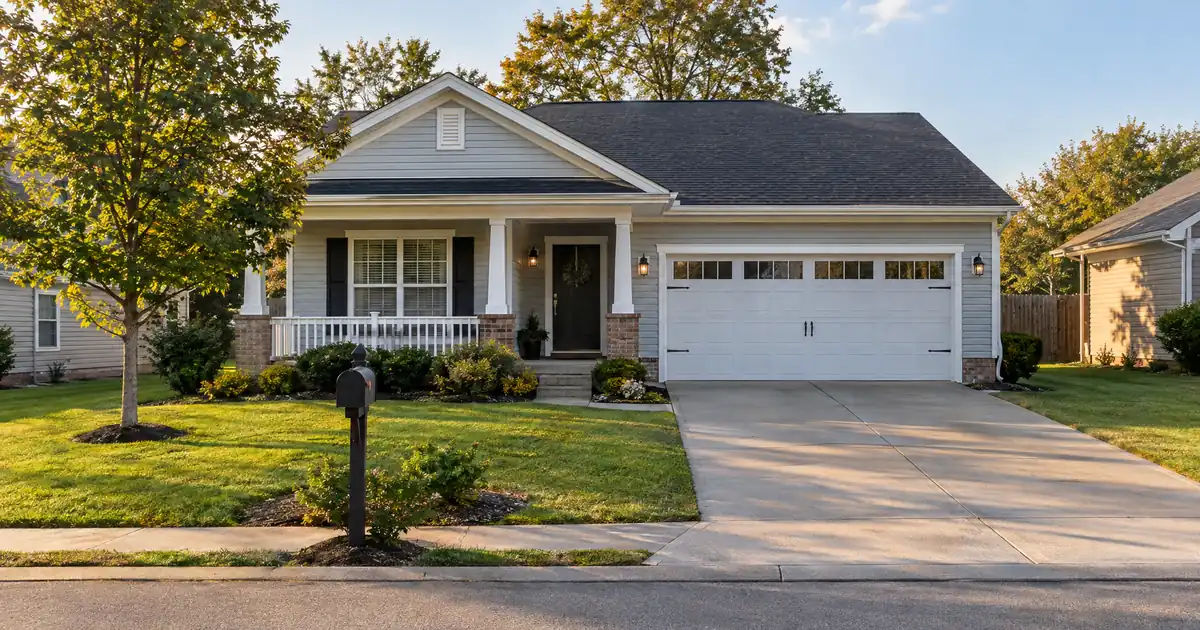
The Quick Read: A conventional cash-out refinance works on one property at a time, and that property’s occupancy sets the maximum loan. Refinance the home you live in, and the cap is higher than on a second home. The other home does not serve as collateral, but it still counts in your debt ratio, your reserves, and your tally of financed properties. Every figure here is subject to lender guidelines and full file review, and nothing is a commitment to lend.
Key Takeaways
- The new loan is a first mortgage on one property. You choose which one.
- A one-unit primary home reaches 80% loan-to-value on a cash-out. A second home reaches 75%.
- The payment on the home you do not refinance still goes into your debt-to-income ratio.
- Your current first mortgage needs to be at least 12 months old, and a borrower needs to have been on title for six months. Exceptions exist.
- A second home is a specific thing. If it behaves like a rental, the lender will not treat it as a second home.
What Is a Cash-Out Refinance, and Why Does the Property Matter?
A cash-out refinance replaces your current first mortgage with a new, larger one and hands you the difference. The new loan pays off the old one, pays closing costs, and puts the rest of the money in your hands for any purpose.
Owning two homes adds a question: which home carries the new loan? The loan attaches to the subject property only. Its label (primary residence or second home) decides how much of the value you can borrow against.
Lendmire’s cash-out refinance programs are built around that choice. Lendmire is a mortgage broker, so it arranges these loans through wholesale lenders rather than lending directly. Across the conventional files that run through wholesale channels, the occupancy label drives more of the outcome than almost anything else in the application.
Here is the leverage picture for conventional cash-out loans, with purchase leverage for comparison.
| Subject property | Cash-out max LTV | Purchase max LTV |
|---|---|---|
| One-unit primary home | 80% | 95% (97% first-time buyer, fixed rate) |
| Two- to four-unit primary home | 75% | 95% |
| Second home (one unit) | 75% | 90% |
LTV, or loan-to-value, is the loan balance divided by the home’s appraised value. The gap between the purchase column and the cash-out column is deliberate. A cash-out loan leaves you with less equity, so the agencies ask for more equity to remain.
The cash-out figures follow the pattern in Fannie Mae’s Eligibility Matrix. Freddie Mac’s guide sets a matching framework for cash-out loans. Specific caps can change, so confirm against the current matrix before you plan around a number.
Which Home Should You Cash Out?
If both homes have equity, the primary home usually reaches more cash for the same value. The second home sits at 75% instead of 80%, and cash-out and second-home status generally both push pricing up. But the better choice depends on more than the cap.
| Question | Cash out the primary | Cash out the second home |
|---|---|---|
| Leverage cap | 80% (one unit) | 75% (one unit) |
| Equity left behind | Less | More |
| Occupancy rule | You must live there | Occasional use, exclusive control |
| Your existing loan | Replaced and reset | Replaced and reset |
| Right to cancel | Generally applies | May not apply; ask |
Two points tip the decision.
Look at the loan you would give up. A cash-out refinance replaces the existing first mortgage. If one home has a loan you like and the other does not, that matters more than a five-point difference in the cap. You restart the loan clock on whichever property you refinance.
Look at the equity. Say each home has the same value and the same balance. The primary home produces more usable cash. If the second home has far more equity, the lower cap may still leave it ahead.
A two- to four-unit primary home drops to 75%, the same as a second home.
How Is the Loan Underwritten, Step by Step?
Underwriting a cash-out refinance is a full new loan review, not a paperwork update. Here is the sequence.
1. Pick the subject property. One home carries the new first lien. Its occupancy type sets the leverage cap.
2. Confirm it is a true cash-out. If you take cash beyond small incidental amounts, or pay off a second lien that did not fund the purchase, the loan counts as a cash-out. Taxes and insurance can be rolled in.
3. Check seasoning. The first mortgage being paid off must be at least 12 months old, measured from note date to note date. At least one borrower must have held title for six months. Inheritance, a legal award, and delayed financing carry their own exceptions.
4. Run the file through automated underwriting. The system weighs credit, income, assets, and debts together. Wholesale conventional programs start at a 620 decision score, and the automated finding governs most files. The total debt ratio can go as high as 50%.
5. Order the appraisal. Value sets the ceiling. The cap is a percentage of appraised value, so a low appraisal shrinks the maximum loan directly.
6. Receive disclosures and close. You get a Loan Estimate and a Closing Disclosure. The old first lien is paid off, and what remains comes to you.
Manually underwritten loans use tighter ratio limits (36% or 45%, depending on score and reserves) with the factors in the matrix. Few files take that path, but it explains why a borrower with thin reserves can see a different answer from a different lender.
The seasoning rules come straight from Fannie Mae’s cash-out refinance guidelines and from Freddie Mac. They are written into agency rules, so no lender can waive them on a whim.
What Counts as a Second Home?
A second home is a one-unit property you occupy for part of the year, with year-round suitability and exclusive control. Rental use is where owners get tripped up.
The agency definition, laid out in Fannie Mae’s occupancy guidance, includes these tests:
- You occupy it for some portion of the year.
- It is a single dwelling that works year-round.
- You hold exclusive control.
- It is not a timeshare or a rental arrangement.
- No management company controls who stays there.
If you have identified rental income, the loan can still be delivered as a second home, but that income cannot be used to qualify. Fail the tests, and the lender treats the property as something other than a second home, with its own leverage and pricing.
Disclose actual use. Misstating occupancy to reach a higher cap can create serious problems later. A property that you rent out part-time through a management program is exactly the kind of fact that belongs in the conversation up front.
How Does the Other Home Show Up in Your File?
The home you are not refinancing does not appear in the collateral, but the lender still counts it in three places.
Your debt ratio. The monthly obligation on the other home goes into your total debt-to-income ratio. That includes the mortgage payment, taxes, insurance, and any association dues. The ratio is your total monthly debts divided by your gross monthly income. Two mortgages can push it toward that 50% automated ceiling.
Your reserves. Reserves are the savings you could still tap after closing. Owning more than one financed property generally raises the reserves a lender wants, especially when the subject is a second home. The matrix sets the exact requirement for your file.
Your property count. Agency rules count the 1-4 unit homes you are personally obligated on, and your primary residence is included. A multi-unit property counts as one. That tally can affect later purchases and refinances on either home.
Credit matters on both sides. Lendmire’s article Conventional Cash-Out Refinance Credit Requirements for a Second Home goes deeper on scores and what the file shows.
A Worked Example in Percentages
Take two homes of equal value. Treat these as modeled inputs, not market data. Each has an existing first mortgage equal to 50% of its value.
| Item | Primary (one unit) | Second home |
|---|---|---|
| Max new loan | 80% of value | 75% of value |
| Existing balance | 50% of value | 50% of value |
| Room before costs | Up to 30% of value | Up to 25% of value |
Closing costs and any prepaid items come out of that room. What reaches you is smaller than the table shows. The same math applies whichever home you pick, so the real question is whether five points of value are worth more than the loan you would replace.
Structures and Variations Worth Knowing
Rate-and-term instead of cash-out. If you only want to change the loan, not pull equity, a limited cash-out (rate-and-term) refinance reaches 95% LTV on a one-unit primary home. It pays off the first mortgage, closing costs, and a purchase-money second lien, with only incidental cash back. Mortgage insurance applies above 80%. For borrowers who want a different term and no cash, the cap difference is large. Exact terms depend on the lender’s guidelines, property type, leverage, and a full review of the borrower’s file.
The 89.99% wholesale lane. One wholesale program reaches 89.99% LTV with no mortgage insurance. It requires a 680 score, a 50% ratio, a 30-year fixed loan, a conforming balance, a primary residence, and its own six months of seasoning. It does not apply to a second home. It is not written in Texas, where a homestead cash-out is capped by the state constitution at the agency figure. Every figure here varies by lender and program — guidelines, property type, leverage, and credit profile all apply.
Delayed financing. If you bought one home with cash, an exception lets you borrow against it without waiting for the usual seasoning. The purchase must have been arm’s-length, and the source of funds must be documented.
Buying out a co-owner. Freddie Mac treats a buyout of a co-owner’s equity as a special-purpose cash-out, with its own seasoning treatment. Fannie Mae describes related buyouts under limited cash-out.
Title held in an LLC. Freddie’s text lets time held by an LLC or LP count toward six-month title seasoning in specified cases. This helps if you moved a home out of an entity before refinancing.
Manufactured homes. These follow a separate product matrix. Do not assume the numbers above apply.
Occupancy by borrower. Freddie Mac requires all borrowers to occupy on a primary-residence cash-out. Program rules on non-occupant co-borrowers vary, so ask before adding or removing a name.
What Are You Using the Cash For?
A cash-out refinance has no restriction on use of proceeds. Common uses are paying off other debt, repairs, a down payment on another property, or building a cash cushion.
Be cautious with one use. Moving credit card or other unsecured debt into your mortgage turns it into debt secured by your home. If payments become hard to carry, the home is at risk. Your balance may drop on paper, but the new loan lasts far longer than the cards did.
A refinance of your primary home generally carries a three-business-day right to cancel after closing. The CFPB explains that right for most non-purchase-money mortgages. It is built around a principal dwelling, so a second-home refinance may not carry it. Ask your loan officer which applies to your file before you plan around it. If you cancel, the old loan stays in place.
Tax treatment can depend on your situation; borrowers should speak with a qualified tax professional before relying on any deduction or credit.
How Does Cash-Out Compare With the Alternatives?
| Option | What it does | Main tradeoff |
|---|---|---|
| Cash-out refinance | One new first mortgage replaces the old one | Resets the whole loan |
| Rate-and-term refinance | Changes the loan, little or no cash | Higher cap, no real cash |
| Keep first, add a second lien | Existing loan stays, new lien added | Two payments, two liens |
| Savings | No new debt | Uses your own cash |
Neither option is cheaper in every case, so treat any blanket claim with suspicion. The honest comparison is structural: one new first mortgage against two separate loans. Which costs less depends on the rate on your existing loan and the size of the equity you want to reach.
Who This Fits, and Who Should Look Elsewhere
It tends to fit if:
- You have meaningful equity in a home you can refinance.
- Your existing first mortgage is 12 months old or more.
- You understand which loan you would be replacing.
- Your combined obligations on both homes stay well inside the ratio limits.
Look elsewhere if:
- You only want a different term and no cash. A rate-and-term loan reaches higher leverage.
- Your current loan is one you would rather keep. A second lien or savings may suit you better.
- The second home is really used as a rental. The loan would be classified differently.
- You would stretch your budget thin across two mortgages.
Key Terms Defined
Cash-out refinance: a new first mortgage that pays off the old one and gives you the extra money.
LTV (loan-to-value): the loan amount divided by the home’s appraised value.
Seasoning: the minimum time your loan and your name on title must exist before you can refinance.
Subject property: the one home that secures the new loan.
DTI (debt-to-income): your total monthly debts divided by your gross monthly income.
Reserves: savings you could still draw on after closing.
Delayed financing: an exception that lets a cash buyer borrow against the home without the usual seasoning wait.
Next Step
If you are weighing a cash-out refinance against keeping the loan you have, Lendmire can help you compare the programs and the equity each one reaches. A short conversation about which home you would refinance usually settles most of the open questions.
Frequently Asked Questions
Can I cash out my second home and my primary home at the same time?
Each refinance is its own loan with its own review. You can apply for one on each home, but both payments count in your debt ratio, and the property count and reserve requirements rise. Many owners find that one refinance fits the budget and two does not. Each file is subject to lender guidelines and full file review.
Does the second home’s loan limit differ from the primary home’s?
Yes. A one-unit primary home reaches 80% on a cash-out. A one-unit second home reaches 75%. The gap exists because a lender wants more equity left behind on a property you do not live in full-time.
Do I have to wait before refinancing?
Usually, yes. The first mortgage being paid off must be at least 12 months old, and one borrower must have held title for six months. Delayed financing, inheritance, and legal awards have their own exceptions. Check your note date and title date before you apply.
Can rental income from my second home help me qualify?
No. If rental income exists, the loan can still be delivered as a second home, but the income cannot be used to qualify. If the property operates as a rental or sits in a management program, it may not meet the second-home definition at all.
Can FHA or VA loans do a cash-out refinance on a second home?
Those programs are built around the home you live in, and their streamlines apply to an existing FHA or VA loan. A conventional loan is the usual route for a second-home cash-out. Program availability depends on the lender and the file.
For your own numbers, request a scenario review with Lendmire.
About Lendmire
Lendmire (NMLS# 2371349) is a mortgage broker licensed for consumer lending in 16 states. Lendmire arranges FHA, VA, conventional and jumbo purchase and refinance loans through wholesale lenders; every file is underwritten by the lender under the applicable program guidelines. Scotsman Guide named Lendmire a Top Mortgage Workplace in both 2025 and 2026.
For the program’s current guidelines, see conventional loan programs.
Get Started
Ready to find the right loan for you?
In about 30 seconds you can review financing options available for your home or investment property. No commitment required.
Informational only. Not a Loan Estimate, approval, or commitment to lend. Program availability and eligibility are subject to lender guidelines, credit approval, property review, and underwriting.
References
1. Fannie Mae Eligibility Matrix
2. Freddie Mac Guide Section 4301.5: Cash-out refinance Mortgages
3. Fannie Mae Selling Guide: Cash-Out Refinance Transactions
4. Fannie Mae Selling Guide: Occupancy Types
This article is part of Lendmire’s Conventional Loans series — every loan program’s qualification details, guidelines, and scenarios live on the loan options page.
Related reading: Conventional Cash-Out Refinance Requirements on a 2-4 Unit Primary Home · Can You Cash Out Refinance a Vacation Home Under Conventional Rules? · Conventional Cash-Out Refinance Rules for a Home Owned Before Marriage
Brandon Miller
Founder & CEO, Mortgage Loan Originator, Lendmire LLC
- Mortgage Loan Originator · NMLS# 1129696 · Verify on NMLS Consumer Access
- North Carolina Real Estate Broker · License# 343312 · Verify on NCREC
- North Carolina Insurance Producer · License# 19053198 · Property, Casualty, Life, Health · Verify on NAIC SBS
- Lendmire LLC · Firm NMLS# 2371349 · Verify firm licensure
Disclosures. The information presented in this article is general market commentary, not financial, legal, or tax advice. Lendmire is a mortgage brokerage (NMLS# 2371349) — not a direct lender or depository institution — and loan placement is subject to lender underwriting. Nothing in this content represents a commitment to lend. Loan terms, pricing, and program availability vary based on borrower qualifications, property characteristics, and state of subject property, and are subject to change at any time. Lendmire complies with Equal Housing Opportunity requirements. Consumer access: nmlsconsumeraccess.org.