
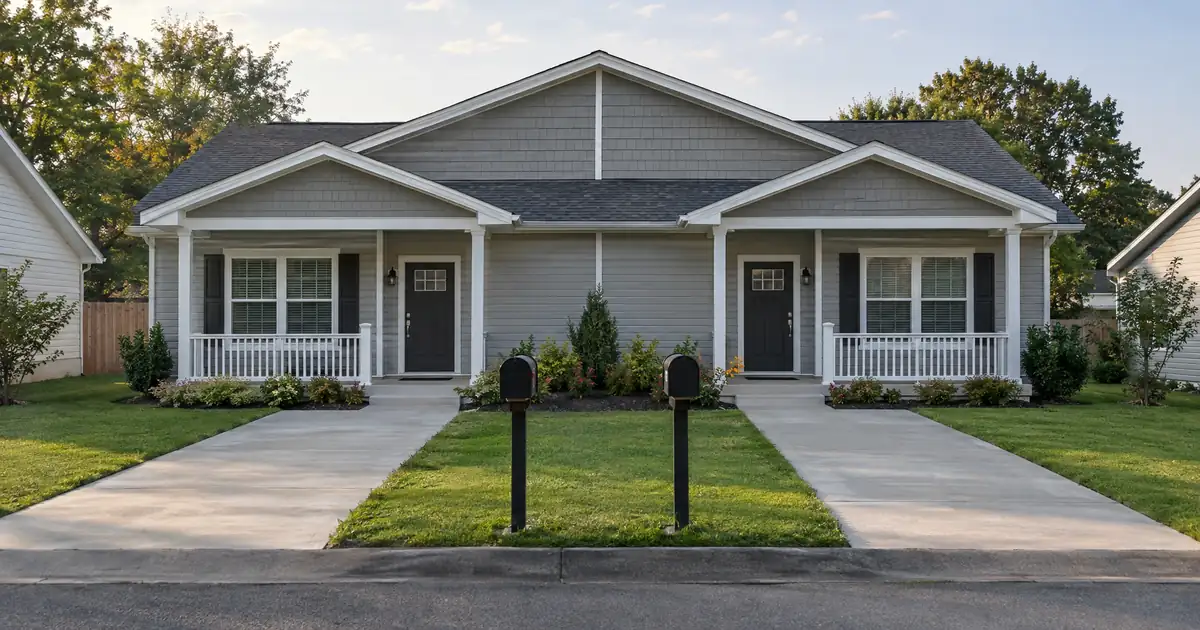
The Quick Read: A conventional cash-out refinance is allowed on a duplex, triplex, or fourplex you live in, but the borrowing cap is lower than on a single-family house. Across the wholesale programs these files go through, the cap is 75% of appraised value on a 2-4 unit home and 80% on a one-unit home. You also need time on title, a seasoned existing loan, a full income-property appraisal, and credit and ratios that clear the lender’s review. All of it is subject to lender guidelines and full file review.
Key Takeaways
- The cap on a 2-4 unit primary home is 75% loan-to-value (LTV). A one-unit home gets 80%.
- Any first mortgage you are paying off must be at least 12 months old.
- You must live in one of the units. Rent from your own unit generally cannot help you qualify. Rent from the other units can, with documentation.
- Expect a full appraisal on the 2-4 unit form. Appraisal waivers generally do not apply.
- Cash in hand is the cap minus your payoff, closing costs, and any other liens paid off. It is never the full gap.
Key Terms Defined
LTV (loan-to-value): the new loan divided by the home’s appraised value.
Cash-out refinance: a new first mortgage that pays off the old one and gives you the leftover equity as cash.
Seasoning: the waiting period a lender wants before you can refinance, counted from the date you took title or the date of your current loan.
Reserves: liquid savings left over after closing, counted in months of housing payments.
Debt-to-income ratio (DTI): your total monthly debts divided by your gross monthly income.
Rent schedule: the appraiser’s estimate of market rent for each unit, reported on the appraisal form.
Limited cash-out (rate-and-term) refinance: a refinance that pays off the old loan and costs, with only incidental cash back.
What Is a Conventional Cash-Out Refinance on a 2-4 Unit Home?
It is a new first mortgage, sold to Fannie Mae or Freddie Mac, that replaces your current loan and hands you part of your equity. You can spend the cash on anything. Many owners use it for repairs, debt payoff, or a buyout of a co-owner.
The occupancy line matters here. Your 2-4 unit building counts as a primary home only if you live in one unit. That is what separates this loan from a rental loan, and it is why the rules below follow owner-occupied guidelines.
Lendmire arranges conventional cash-out refinance programs through wholesale lenders. The lender reviews your file and makes the decision. Lendmire does not lend.
One myth shows up often: that cash-out is not allowed at all on an owner-occupied multi-unit. It is allowed. The current agency eligibility matrix lists a separate cash-out row for 2-4 unit principal residences, and the cap on that row is just lower than the one-unit row.
The Requirements at a Glance
| Requirement | 2-4 Unit Primary Home | One-Unit Primary Home |
|---|---|---|
| Max cash-out LTV | 75% | 80% |
| Existing first mortgage age | At least 12 months | At least 12 months |
| Time on title | 6 months, one borrower | 6 months, one borrower |
| Appraisal form | Small income property report | Standard single-family report |
| Rent from other units | Can count, documented | Not applicable |
| Appraisal waiver | Generally not available | Sometimes available |
Every row is subject to lender guidelines and file review. The sections below explain each one.
How Much Can You Actually Borrow?
You can borrow up to 75% of the appraised value, and the check you receive is smaller than that. The cap sets the ceiling on the new loan. Cash to you is what is left after the old loan, closing costs, prepaid items, and any other liens are paid.
Run it with percentages. Say the building appraises at 100% of value. The new loan can be at most 75% of that. Suppose your current mortgage balance equals 50% of the value. That leaves a 25-point gap. Closing costs and prepaids then come out of those 25 points. What remains is your cash.
Compare that to a one-unit home with the same numbers. The cap is 80%, so the gap is 30 points. The same equity buys you five points less cash on the duplex. On a building worth a lot, five points is real money.
Higher leverage numbers you may have seen do not carry over. Purchase loans on 2-4 unit primary homes reach 95% LTV. Cash-out does not. The two products have different caps, and cash-out sits lower. Final terms depend on the lender’s guidelines, the property type, and the borrower’s complete credit picture.
There is also a separate wholesale lane that reaches 89.99% LTV with no mortgage insurance. It needs a 680 score, a 50% ratio, a thirty-year fixed loan, a primary residence, a conforming balance, and its own six months of seasoning. Treat it as a different product. Whether it fits a particular 2-4 unit building is a question for a specific file, so do not assume it does. Each figure is subject to lender guidelines and a complete review of property type, leverage, and credit.
Mortgage insurance is not the issue at 75%, since it applies above 80% LTV. Pricing adjustments are. The Fannie Mae cash-out refinance rules apply a loan-level price adjustment to many cash-out loans, based on your credit score and LTV. It sits on top of other adjustments. It is not a closing cost, but it changes what the loan costs you over time. Leverage, reserves, and pricing vary by lender and program; the final terms follow the full file review.
The Two Clocks: Seasoning Rules
Two separate waiting periods apply, and a file must clear both. They are easy to confuse.
Clock one is the existing loan. If you are paying off a first mortgage, that loan must be at least 12 months old. The count runs from the note date of the old loan to the note date of the new one. A recent refinance can block you for this reason. The rule does not apply to second liens being paid off, and it is waived when you buy out a co-owner under a legal agreement.
Clock two is title. At least one borrower must have been on the title for 6 months before the new loan funds. The listed exceptions include delayed financing and inheritance or legal-award situations.
Delayed financing is the one to know. If you bought the building for cash within the last six months, you can still do a cash-out refinance. The purchase must have been at arm’s length, and the settlement statement must show no mortgage was used. Confirm that with the lender before you plan around it.
The home also must not be listed for sale. If it was, it has to come off the market on or before funding.
Occupancy: You Have to Live There
On a 2-4 unit primary home, the borrower must occupy one of the units as the principal residence. Lenders look for proof. Common evidence includes your ID address, bills, tax records, and a signed occupancy statement.
Do not treat that statement as a formality. Moving out soon after closing, or marketing the building for sale, can turn a primary-residence loan into a misrepresentation problem. If you plan to move out, tell your loan officer first. A different loan type may fit better.
How Rental Income Counts
Rent from the other units can help you qualify, but rent from your own unit generally cannot. The Fannie Mae rental income rules bar income from the unit you occupy, with limited exceptions for boarders and accessory units. Treatment varies depending on whether you live in the rental property.
In plain terms, a duplex gives you one unit of rent that may count and one that does not. A fourplex gives you three that may count.
Documentation depends on your history. Leases, a signed rent schedule, and the appraiser’s estimate usually come into play. A borrower with no landlord history may see a limit on how much rent the lender allows. The lender sets the exact method, so ask which documents they want up front.
The common mistake is counting all the rent. Plan your qualifying income as your job and other income, plus documented rent from the other units only.
The Appraisal: Expect a Full Report
A 2-4 unit appraisal uses the small residential income property form, Form 1025. It estimates value and also reports market rent for each unit. A two-unit home can use the standard single-family form only in narrow cases, such as when each unit is occupied by a co-borrower as a principal residence.
Appraisal waivers are generally not available on 2-4 unit properties. Do not count on a desktop appraisal.
Appraised value drives everything. It sets the LTV cap and therefore your cash. A low number shrinks the loan before any other rule applies.
Credit, Ratios, and Reserves
Across the wholesale conventional programs, files start at a 620 decision score. A 640 score applies to an adjustable rate under manual underwriting. The automated underwriting finding governs most files, with a total ratio ceiling of 50%. Manually underwritten loans run at 36% or 45%, depending on the credit score and reserve factors in the agency eligibility matrix.
Reserves are the quiet gate on cash-out files. Lenders may want more months of savings when your ratio runs high or when you own other financed properties. The Fannie Mae eligibility matrix carries reserve and score columns for manual files. Lenders can also stack their own requirements on top.
Credit events carry agency waiting periods. They are four years from a chapter 7 discharge, seven from a foreclosure, and four from a short sale or deed-in-lieu. Shorter periods may apply with documented extenuating circumstances.
Loan Size and Closing Costs
The loan must fit the conforming limit for your county and unit count. Limits are higher for more units and higher in costly areas. They change each year, so check the current figure with your loan officer. Above the limit, jumbo programs take over, with their own score and ratio rules.
Closing costs are the upfront charges to get the loan. Your Loan Estimate shows them, and you can use it to compare offers. Some marketing pitches a “no-cost” refinance. In that case, the costs are built into the rate or the balance. They have not gone away.
Funds also do not arrive at signing. On a refinance of your primary home, you get a short cancellation window first. The CFPB explains the right to cancel a refinance, and money moves after that window closes.
Where the General Rule Breaks
A few cases bend the usual path:
- Delayed financing: the all-cash buyer can refinance inside six months, as described above.
- Co-owner buyout: the 12-month rule is waived, though the loan must still meet cash-out leverage. Freddie Mac handles buyouts as a special purpose cash-out refinance. Confirm the current guide text with your lender.
- Limited cash-out: a refinance that pays off the old loan and costs, with only incidental cash back, uses a higher cap than cash-out. If you only need a lower payment or a new term, this may fit.
- Rent-and-live mix: a building where you rent out three of four units follows the same occupancy rule as any other. You still need to live in one.
- Special programs: products such as HomeReady generally follow the standard cash-out matrix. Community Seconds are not permitted with cash-out.
- Texas: a cash-out on a Texas homestead is capped by the state constitution at the agency figure, and the wholesale lane above is not written there.
- Student loans: the cash-out price adjustment is waived when proceeds pay off qualifying student loans.
- Delinquent taxes: financing badly delinquent property taxes is not allowed unless an escrow account is set up.
If You Don’t Fit: What to Do Next
If the 75% cap leaves too little cash, you have four routes. First, wait out a seasoning clock if that is what blocks you. Second, take a limited cash-out refinance if you really need only a new term. Third, ask about a second lien and keep your first mortgage. Fourth, consider a government-backed option if you hold an FHA or VA loan today. The right choice depends on your current loan, your equity, and what the cash is for.
Do the breakeven math before you commit. Cash-out resets your loan and adds costs, and the new loan starts fresh. Compare the full Loan Estimate to what you keep now. Tax treatment can depend on your situation; borrowers should speak with a qualified tax professional before relying on any deduction or credit.
If you are weighing a cash-out refinance against keeping the loan you have, Lendmire can help you compare the programs and the equity each one reaches.
Frequently Asked Questions
Can I do a conventional cash-out refinance on a duplex I live in?
Yes, if you occupy one unit as your principal residence. The cap is 75% of appraised value, compared with 80% on a one-unit home. You also need to clear seasoning, credit, ratio, and reserve rules, all subject to lender guidelines and file review.
How long do I have to own the building before cashing out?
At least one borrower must have been on title for 6 months. The existing first mortgage, if any, must also be at least 12 months old. Delayed financing is the main exception for buyers who paid cash and can document it.
Does the rent from my own unit count toward qualifying?
Generally no. Rent from the unit you live in cannot be used to qualify, with limited exceptions for boarders and accessory units. Rent from the other units can count when documented. Your lender will specify the paperwork.
Will I need a full appraisal?
Expect one. A 2-4 unit property uses an income-property appraisal form that also reports rents, and waivers generally do not apply. The appraised value sets your LTV cap and therefore your available cash.
Is mortgage insurance required on a 2-4 unit cash-out?
Mortgage insurance applies above 80% LTV. Since the standard cash-out cap on a 2-4 unit home is 75%, it usually does not come into play. If you buy at higher leverage, it cancels on request at 80% and ends automatically at 78%, under the usual conditions.
For your own numbers, request a scenario review with Lendmire.
About Lendmire
As a mortgage broker (NMLS# 2371349), Lendmire helps homeowners and home buyers in 16 states with FHA, VA, conventional and jumbo purchase and refinance loans arranged through wholesale lenders. Lendmire is never the lender; program terms are set by the lender and the agency guidelines. Scotsman Guide named Lendmire a Top Mortgage Workplace in both 2025 and 2026.
For the program’s current guidelines, see conventional loan programs.
Get Started
Ready to find the right loan for you?
In about 30 seconds you can review financing options available for your home or investment property. No commitment required.
Informational only. Not a Loan Estimate, approval, or commitment to lend. Program availability and eligibility are subject to lender guidelines, credit approval, property review, and underwriting.
References
1. Fannie Mae Selling Guide: Cash-Out Refinance Transactions
2. Fannie Mae Selling Guide: Rental Income
3. Form 1025
4. Fannie Mae Eligibility Matrix
5. CFPB: Right to Cancel a Refinance
This article is part of Lendmire’s Conventional Loans series — every loan program’s qualification details, guidelines, and scenarios live on the loan options page.
Related reading: How Much Equity a 2-4 Unit Primary Home Needs for Conventional Cash-Out · Conventional Cash-Out Refinance DTI on a 2-4 Unit Primary Home · Conventional Cash-Out Refinance Requirements on a Paid-Off Home
Brandon Miller
Founder & CEO, Mortgage Loan Originator, Lendmire LLC
- Mortgage Loan Originator · NMLS# 1129696 · Verify on NMLS Consumer Access
- North Carolina Real Estate Broker · License# 343312 · Verify on NCREC
- North Carolina Insurance Producer · License# 19053198 · Property, Casualty, Life, Health · Verify on NAIC SBS
- Lendmire LLC · Firm NMLS# 2371349 · Verify firm licensure
Required disclosures. Lendmire (NMLS# 2371349) operates as a licensed mortgage broker, not a direct lender or depository. The discussion in this article is general in nature and should not be relied upon as financial, legal, or tax advice — every investment scenario is unique and should be reviewed by a qualified professional. Any loan inquiry is subject to lender underwriting, and this article is not a commitment to lend or a guarantee of approval. Mortgage rates, loan terms, and program guidelines vary by borrower, property, and state, and may change without notice. Equal Housing Opportunity. Verify licensure at NMLS Consumer Access.