
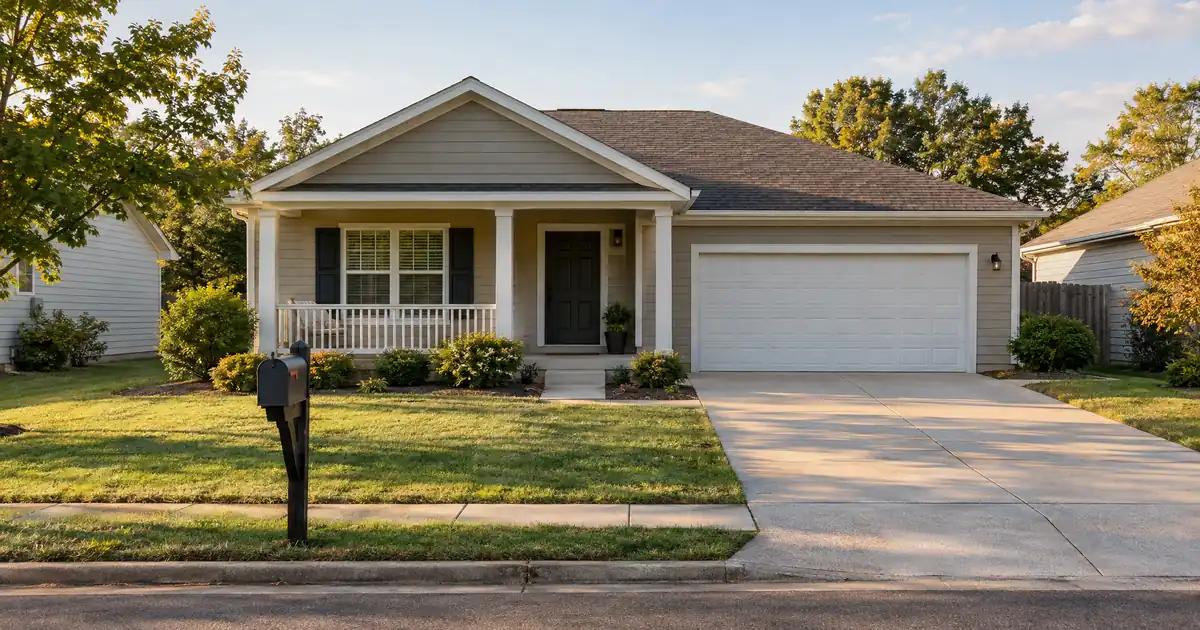
The Quick Read: A cash-out refinance replaces your current first mortgage with a larger one and pays you the difference. The path runs through eight stages: checking eligibility, applying, underwriting, appraisal, title and payoff work, the final disclosure, signing, and a short cancellation window before funds are released. Your appraised value and your program’s leverage cap set the ceiling on cash. Everything else is documentation and timing.
What a Cash-Out Refinance Actually Does
A cash-out refinance is a new first mortgage with no restriction on how you use the proceeds. The new loan pays off the old first mortgage, covers the closing costs, and sends the rest to you.
Here is the part borrowers miss. The new rate and term apply to the whole balance, not just the cash portion. Every dollar of the old loan is refinanced. A cash-out rarely lowers a monthly payment, since you are adding to the balance. VA’s own consumer guidance says the same: VA News notes that cash added to the loan raises the amount owed and the interest paid over time.
Even a paid-off home counts as cash-out. If you own free and clear and borrow against the house, the agencies still treat it as a cash-out transaction.
Step 1: Check the Clocks Before You Apply
Eligibility starts with time, not credit. Across the conventional programs we place files with, three clocks matter most:
- Age of the loan being paid off. The existing first mortgage must be at least 12 months old, counted note date to note date.
- Time on title. At least one borrower must have been on title for 6 months before the new loan funds.
- Recent cash-out. A cash-out refinance on the same property shortly before can disqualify you from the cheaper limited cash-out route.
The Fannie Mae Selling Guide section on cash-out refinances spells out these rules and the exceptions. A home that was listed for sale must be off the market by the time the loan funds. Occupancy matters too: on a primary-residence cash-out, the borrowers live in the home.
Check these first. They are a common reason a file stalls, and none can be fixed by paperwork.
How Much Cash Can You Reach?
Leverage caps decide the size of the check. On conventional loans, a one-unit primary residence cash-out tops out at 80% of the appraised value. Two- to four-unit primary residences and second homes sit at 75%. The Fannie Mae Eligibility Matrix publishes these caps. Manufactured homes face a lower cap still, so confirm that before planning around a number.
The math is simple. Take the appraised value, multiply by the cap, and subtract your current payoff and closing costs. What is left is your cash. A low appraisal shrinks that number directly.
One wholesale lane stretches further. On a thirty-year fixed loan, primary residence, conforming balance, a 680 score and a 50% total ratio, it reaches 89.99% LTV with no mortgage insurance, after its own six months of seasoning. It is not written in Texas, where state law caps homestead cash-out at the agency figure. Eligibility is subject to lender guidelines and full file review.
Not sure which program fits your equity? Compare cash-out refinance programs side by side before you apply.
Step 2: Pick the Loan Type
Four lanes cover most homeowners:
| Loan type | Who it fits | Key limit |
|---|---|---|
| Conventional cash-out | Most borrowers with solid equity | 80% LTV on one-unit primary |
| FHA cash-out | Borrowers with lower scores or higher debt | Primary residence only |
| VA cash-out | Eligible veterans and service members | Must live in the home |
| Jumbo cash-out | Balances above the conforming limit | Stricter score and reserves |
FHA cash-out requires that you have owned and lived in the home as your principal residence for the prior 12 months. An inherited home is an exception, unless you rented it out first. FHA’s leverage cap is tighter than many borrowers expect, so confirm the current figure against HUD’s handbook rather than an old article.
VA cash-out requires a Certificate of Eligibility and occupancy. VA’s cash-out page also lets you refinance a non-VA loan into a VA-backed one. The lender, working with VA, sets credit and income standards. VA publishes no single score floor, so be wary of anyone quoting one as universal.
Step 3: Apply and Read the Loan Estimate
You submit an application, and the lender issues a Loan Estimate. It lays out the loan amount, terms, projected costs, and cash to you. Read it line by line. It is the baseline you will compare against the final disclosure.
Gather your documents before you apply. Salaried borrowers typically supply pay stubs, W-2s, and traditional personal-income documentation. Self-employed borrowers usually add business returns and a profit-and-loss statement. Retirees document pension, Social Security, and retirement account income. Add two months of bank statements, your current mortgage statement, and homeowners insurance.
Credit and ratios come next. The wholesale conventional programs start at a 620 decision score, and the automated finding governs most files, with a total ratio ceiling of 50%. Manually underwritten loans run tighter, at 36% or 45% depending on reserves and score. On Fannie Mae automated files with a ratio above 45%, six months of reserves apply. Everything here is subject to lender guidelines.
Step 4: Underwriting, Step by Step
Underwriting verifies that you can repay the loan. Federal ability-to-repay rules require lenders to confirm the income, assets, and debts they rely on, generally using reasonably reliable third-party records. No single underwriting model is required, so what you are asked for varies by lender and program.
Expect conditions. These are plain requests, not red flags:
1. A letter explaining a large deposit or a gap in employment.
2. A more recent pay stub or bank statement.
3. Proof that a debt was paid off or that an account is closed.
4. Updated insurance, or a corrected name or address on a document.
Answer each one the same day if you can. Stalled files almost always trace to a slow reply on a condition.
Keep your finances still while the file is open. Don’t open new credit, make a large purchase, change jobs, or move money between accounts without a paper trail. Any of these can force a re-review.
Step 5: Appraisal and Title
The appraisal sets your ceiling. The appraiser inspects the home, compares recent nearby sales, and reports a value. Because every cash-out program caps leverage against that value, the number drives your proceeds more than any other input.
What if it comes in low? You have three realistic choices. Take less cash, wait and re-apply after improvements or a rising market, or supply the lender with comparable sales for a review. Do not assume the first opinion is final, but do not count on a reversal either.
A recently purchased home on FHA needs an as-is appraisal, per HUD’s Handbook 4000.1 glossary.
Title work runs alongside. The title company confirms ownership and finds every lien. The new loan pays off the first mortgage. Other liens are paid off or subordinated, depending on the program. A surprise lien, such as an old contractor claim, is the classic title delay.
Step 6: The Closing Disclosure and the Three-Day Wait
The Closing Disclosure is a five-page form showing the final terms, costs, and cash to you. The lender delivers it ahead of closing, per the CFPB, and the exact timing varies by file and lender. Compare it with your Loan Estimate. If a number moved, ask why.
This is your last easy checkpoint to walk away or re-run the numbers.
Step 7: Closing Day
A cash-out closing differs from a purchase. You bring no down payment. The old loan is paid off from the new funds, closing costs come out of proceeds or are added to the balance, and the remainder is yours. You sign the note, the deed of trust or mortgage, and the disclosures. Bring photo ID. Some states require an attorney at the table, which changes who runs the signing.
See what each line costs in Lendmire’s line-by-line breakdown of cash-out closing costs.
Step 8: Rescission, Then Funding
Signing is not the end. On a refinance of your primary home, you get three business days to cancel, no questions asked. The CFPB explains the rescission clock: it starts after the last of three events. You sign the note, receive the Truth in Lending disclosure, and receive two copies of the rescission notice.
Saturdays count as business days. Sundays and legal public holidays do not. So a Friday signing near a holiday stretches the calendar further than borrowers expect. Funds are not released until the window ends.
If a lender fails to deliver the proper notices, the right to cancel can extend up to three years. Federal regulators have also been reviewing whether the rescission and disclosure waiting periods should change for some refinances, so check the CFPB for current rules rather than assuming this stays fixed.
Where the General Rule Breaks
Most files follow the path above. A few do not:
- Delayed financing. If you bought with cash recently, Fannie Mae waives the six-month title wait. It still prices and limits the loan as cash-out. Documentation includes an arm’s-length purchase and a settlement statement showing no mortgage was used.
- Inheritance or divorce award. No waiting period applies under Fannie Mae for property inherited or legally awarded.
- Co-owner buyout. The 12-month seasoning on the loan being paid off does not apply when you buy out a co-owner under a legal agreement.
- HELOC as the first lien. A first-lien HELOC being paid off can qualify as limited cash-out, which is not a cash-taking structure.
- Streamlines. The FHA Streamline and VA IRRRL refinance an existing FHA or VA loan with limited documentation, but neither gives you cash. If you want money out, they are the wrong tool. VA’s cash-out rules also split loans into two types depending on whether the new loan exceeds the payoff, per VA Circular 26-18-30.
- Second homes and multi-unit. Leverage drops to 75% on conventional cash-out.
Key Terms Defined
Seasoning: the required age of your existing loan or your time on title before a cash-out refinance is allowed.
LTV (loan-to-value): the new loan amount divided by the appraised value, expressed as a percentage.
Limited cash-out refinance: a refinance that pays off the old loan and costs, with only a small amount of cash back.
Rescission: your three-business-day right to cancel a refinance on your primary home.
Closing Disclosure: the five-page final statement of loan terms and costs, delivered before closing.
Conditions: specific items an underwriter asks you to document before approving the file.
The Decision in Practice
Cash-out makes sense when the cash does something durable, like a renovation that adds value or paying off debt that costs you more than the new loan will. It gets harder to justify when you would be resetting a loan you like to fund spending.
Run the whole-balance logic honestly. If your current loan is well suited to you, a second lien such as a HELOC can leave the first mortgage alone. A cash-out replaces all of it. Weigh that against the equity each route reaches, and against mortgage insurance. It applies above 80% LTV on conventional loans, can be cancelled at 80% of original value, and ends automatically at 78%, under the Homeowners Protection Act.
Tax treatment can depend on your situation; borrowers should speak with a qualified tax professional before relying on any deduction or credit.
If you are weighing a cash-out refinance against keeping the loan you have, Lendmire can help you compare the programs and the equity each one reaches.
Frequently Asked Questions
Can I take cash out on a home I own outright?
Yes. The same leverage caps apply, so on a one-unit primary residence conventional cash-out generally tops out at 80% of appraised value. Program terms vary by lender, and every file is subject to full review.
Do I have to wait before refinancing a recent purchase?
Usually. Conventional programs want the loan being paid off to be at least 12 months old and a borrower on title for six months. Delayed financing is the main exception for cash buyers, along with inheritance and legal awards. You would still be treated as cash-out.
Does the cancellation period delay my money?
Yes. Funds are not released until the three-business-day rescission window ends. Because Sundays and holidays do not count, a signing before a holiday weekend can push the release later than you planned.
Can an FHA Streamline or VA IRRRL give me cash?
No. Those loans refinance an existing FHA or VA mortgage with limited documentation and require a net tangible benefit. They allow no meaningful cash back. If you need equity, you need a cash-out program.
What if the appraisal comes in low?
Your maximum loan drops, because every program caps leverage against appraised value. You can take less cash, supply comparable sales for a review, or wait and re-apply later. A low value does not make a refinance impossible, but it shrinks the cash.
For your own numbers, request a scenario review with Lendmire.
For current guidelines and terms, see Lendmire’s refinance programs page.
About Lendmire
As a mortgage broker (NMLS# 2371349), Lendmire helps homeowners and home buyers in 16 states with FHA, VA, conventional and jumbo purchase and refinance loans arranged through wholesale lenders. Lendmire is never the lender; program terms are set by the lender and the agency guidelines. Scotsman Guide named Lendmire a Top Mortgage Workplace in both 2025 and 2026.
Get Started
Ready to find the right loan for you?
In about 30 seconds you can review financing options available for your home or investment property. No commitment required.
Informational only. Not a Loan Estimate, approval, or commitment to lend. Program availability and eligibility are subject to lender guidelines, credit approval, property review, and underwriting.
References
1. VA News
2. Fannie Mae Selling Guide B2-1.3-03, Cash-Out Refinance Transactions
3. Fannie Mae Eligibility Matrix
4. VA.gov, Cash-Out Refinance Loan
5. HUD’s Handbook 4000.1 glossary
6. CFPB
This article is part of Lendmire’s Refinance series — every loan program’s qualification details, guidelines, and scenarios live on the loan options page.
Related reading: Cash-Out Refinance File Requirements for Equity-Rich Homeowners · How to Buy Out a Spouse With a Cash-Out Refinance on One Income · Cash-Out Refinance and Stay vs Sell on a Texas Homestead
Brandon Miller
Founder & CEO, Mortgage Loan Originator, Lendmire LLC
- Mortgage Loan Originator · NMLS# 1129696 · Verify on NMLS Consumer Access
- North Carolina Real Estate Broker · License# 343312 · Verify on NCREC
- North Carolina Insurance Producer · License# 19053198 · Property, Casualty, Life, Health · Verify on NAIC SBS
- Lendmire LLC · Firm NMLS# 2371349 · Verify firm licensure
Important disclosures. Lendmire (NMLS# 2371349) is a licensed mortgage brokerage. Lendmire is not a direct lender, depository institution, or financial advisor. All loan inquiries are subject to lender underwriting; this article does not constitute a commitment to lend. Rates, terms, and program guidelines are subject to change without notice and vary by borrower profile, property type, and state. Information in this article is general in nature and is not financial, legal, or tax advice. Equal Housing Opportunity. NMLS Consumer Access: nmlsconsumeraccess.org.