
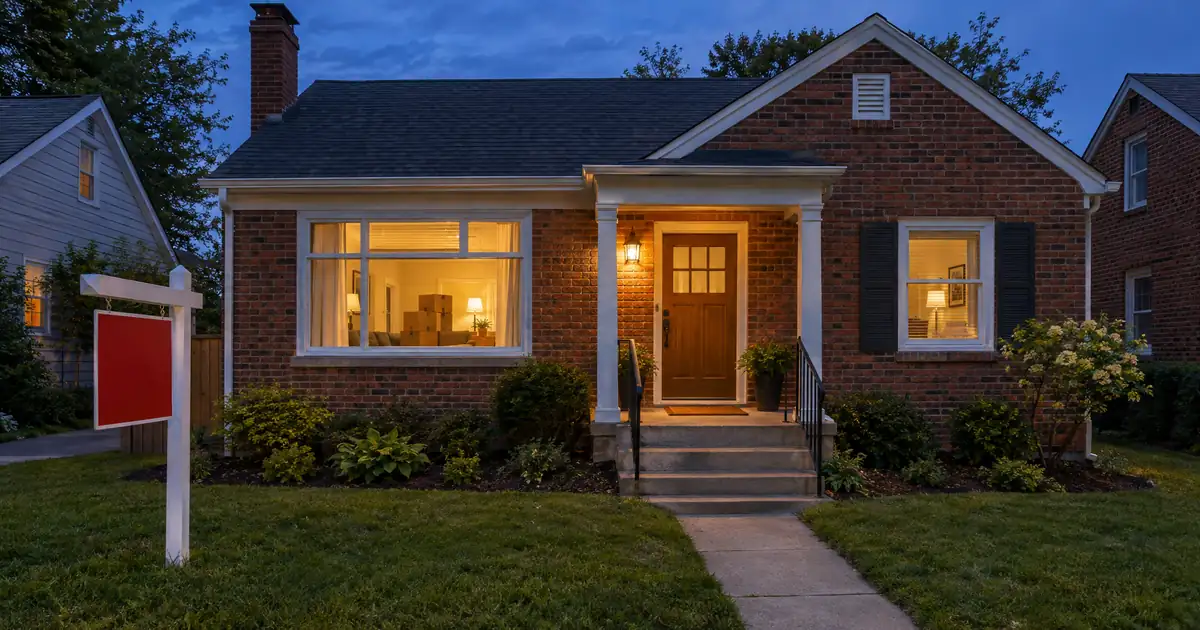
The Quick Read: It can be, but only when you can comfortably carry both housing payments and still keep a cash cushion. A cash-out refinance replaces your current mortgage with a larger one, secured by the home you live in. The cash becomes the down payment on the second home. If you fall behind on either payment, your primary residence is the collateral at risk.
The honest framing is that this is a cash-flow and risk decision, not just an eligibility question. Plenty of people qualify for this move and still shouldn’t make it. Here is how to tell which side you are on.
How Does a Cash-Out Refinance Work for a Second Home Purchase?
A cash-out refinance is a new first mortgage on the home you live in. It pays off your current loan, and you keep the difference as cash. You then use that cash toward the second home, which gets its own separate loan.
That means two loans, two sets of rules, and two approvals. The refinance is underwritten on your primary residence. The second-home purchase is underwritten as its own transaction, with both housing payments counted in your debt ratios.
The Fannie Mae Selling Guide defines a cash-out refinance this way, and it adds a point many owners miss. A new mortgage on a home with no lien at all still counts as cash-out. Owning your house free and clear does not exempt you from the cash-out leverage cap.
Across the wholesale programs Lendmire works with, the sequence matters. The refinance generally closes first, because the cash has to exist before it can fund the purchase. Lendmire’s cash-out refinance programs are built around that primary-residence step.
How Much Cash Can You Actually Pull Out?
On a conventional loan, the cap is 80% loan-to-value (LTV) on a one-unit primary residence. LTV is the new loan balance divided by the home’s appraised value. On a two- to four-unit primary residence, the cap drops to 75%.
So at least 20% of your home’s value has to stay as equity. Your usable cash is the equity above that cushion, minus closing costs. Those costs can be rolled into the new loan, which shrinks the cash you receive.
The Fannie Mae Eligibility Matrix lists these maximums. A wholesale lane reaches 89.99% LTV with no mortgage insurance on a primary residence, but that is a narrow cash-out lane. It requires a 680 score, a 50% ratio ceiling, a thirty-year fixed rate, a conforming loan balance, and its own six months of seasoning. It is not written on Texas homesteads, where the state constitution caps cash-out at the agency figure. Terms vary by lender guidelines, property type, leverage, credit profile, and full file review.
Everything here stays subject to lender guidelines and full file review.
Can You Qualify Right Now?
Two clocks run before you can take cash out. Seasoning is the waiting period a lender requires between events.
- The loan being paid off must be at least 12 months old, measured note date to note date. The note date is the day you signed your current mortgage.
- At least one borrower must have been on title for six months. Exceptions exist for delayed financing, inheritance, and legal awards.
Freddie Mac’s Guide uses the same 12-month and six-month tests. If you bought or refinanced recently, these clocks can rule you out for now.
Delayed financing is the notable exception. If you bought your home with cash, the lender can document that no mortgage was used and skip the six-month wait.
One more screen: a property listed for sale generally is not eligible for cash-out. Confirm the current rule with your loan officer.
What Does the Second Home Itself Have to Be?
Occupancy decides the leverage, so the label matters. A second home on conventional programs can go to 90% LTV on a purchase. Investment property is a different category with lower caps, and it falls outside this article. Exact terms depend on the lender’s guidelines, property type, leverage, and a full review of the borrower’s file.
The Fannie Mae occupancy rules set the test for a second home. It must be:
- a one-unit dwelling;
- occupied by you for some part of the year;
- suitable for year-round living;
- under your exclusive control, not a timeshare or a rental pool run by a management firm.
If the property earns rent, it can still be a second home, but that rent cannot be used to qualify you. If your real plan is a full-time rental, tell your loan officer at the start. It changes the loan category, and you do not want that surprise at the closing table.
Who Should Skip This Strategy?
Skip it if any of these describe you:
- Your current mortgage is a low-rate loan. A cash-out refinance replaces it. Your old rate and terms go away, and the new loan carries today’s terms on a bigger balance.
- You need the second home to pay for itself. You carry two housing payments plus taxes, insurance, upkeep, and any association dues. If the plan only works when rent covers the bill, the plan is fragile.
- Your income is uneven. The payments continue through a job loss or illness.
- You are using nearly all your usable equity. There is no room left if values dip.
The strategy fits better when you have steady income that comfortably supports both homes, real savings left over after closing, and a second home you will actually use.
Is Cash-Out Better Than a HELOC or Home Equity Loan?
It depends on what you want to protect. A cash-out refinance changes your first mortgage. A home equity loan or HELOC (home equity line of credit) adds a second loan and leaves your first mortgage alone.
| Option | Your current mortgage | Payment structure | Best fit |
|---|---|---|---|
| Cash-out refinance | Replaced by a new, larger loan | One new first-mortgage payment | Current loan terms are not worth keeping |
| Home equity loan | Stays in place | Second payment, fixed amount | You want to keep the first loan and borrow once |
| HELOC | Stays in place | Second payment, draws as needed | You want flexibility on timing and amount |
| Savings | Untouched | No new debt | You can fund it without borrowing |
All three borrowing options put your primary home on the line. The CFPB’s guide to using home equity compares them and notes that none lets you turn 100% of your equity into cash. It also says lenders typically want you to keep 10% to 20% of your home’s value as equity.
If your first mortgage is one you would hate to lose, a home equity product is worth pricing against a cash-out refinance. This one is a genuine toss-up for many owners. The refinance wins when your current terms are unremarkable. The equity loan wins when they are not.
What Will Underwriting Look At?
The lender reviews the whole picture at once:
- credit and income;
- your debt-to-income ratio (DTI), which now includes both housing payments;
- reserves;
- the appraisal on your primary home, which sets the 80% cap;
- the second home’s occupancy type.
Conventional programs through our wholesale lenders generally start at a 620 decision score, and the automated underwriting finding governs most files. The total ratio ceiling is 50% on an automated approval. Manually underwritten loans use 36% or 45%, depending on the reserve and score factors in the Eligibility Matrix. Some lenders set stricter floors.
Reserves are the cash you hold after closing, counted in months of full housing payment. That payment is principal, interest, taxes, insurance, and association dues. A second-home purchase requires two months of reserves. A cash-out refinance with DTI above 45% requires six months on automated files. Extra reserves apply when you own several financed properties.
Here is the catch. Reserves shrink by the cash you receive on a refinance, so the cash you pull out generally does not count as a reserve once it goes into the down payment. You need savings beyond the equity you tap. The Fannie Mae reserve rules lay out the details.
Expect to provide proof of income, asset statements, your current mortgage statement, the purchase contract for the second home, and an appraisal.
A Simple Stress Test Before You Apply
Run these checks before you apply. No tool needed, just honest answers.
1. Two-payment test. Could you pay both mortgages, plus taxes, insurance, and upkeep, if you lost 20% of your household income?
2. Cushion test. After closing, would you still hold several months of living expenses in cash, separate from the down payment?
3. Equity test. If home values dipped, would you still have breathing room on the primary residence?
4. Use test. Will you really use the second home, or is it a hopeful rental?
5. Old-loan test. Is your current mortgage worth keeping? If yes, price a home equity option first.
Three or more “no” answers mean you should wait or scale back. That is the cautious read, and caution is cheap here.
What About FHA, VA, and Streamline Loans?
They do not solve this problem. The FHA Streamline and the VA IRRRL (interest rate reduction refinance loan) exist to lower the cost of an existing government loan. Neither pays cash to the borrower.
HUD’s streamline guidance describes the FHA version as a way to lower the payment on a current FHA loan with no cash back beyond minor closing adjustments. The VA IRRRL works the same way for an existing VA loan. FHA and VA each have separate cash-out products with their own occupancy rules, generally for a primary residence. Check current HUD and VA guidance for the details.
If you hold a government loan and want cash, you are looking at a cash-out product, not a streamline.
What About Taxes?
Tax treatment can depend on your situation; borrowers should speak with a qualified tax professional before relying on any deduction or credit.
Key Terms Defined
- Cash-out refinance: a new, larger first mortgage that pays off the old one and gives you the difference in cash.
- LTV (loan-to-value): the loan balance divided by the home’s value.
- Seasoning: the required waiting period before you can refinance or take cash out.
- Reserves: money you hold after closing, counted in months of housing payments.
- DTI (debt-to-income): your monthly debts divided by your monthly gross income.
- Second home: a one-unit home you occupy part of the year that you control, without rental-pool or management-firm control.
Frequently Asked Questions
Can I use a cash-out refinance for the down payment on a second home?
Yes, if you meet the timing and equity rules. The new loan on your primary residence generally tops out at 80% LTV on a one-unit home, and the cash is yours to use. The second home then needs its own approval, with both payments counted in your ratios. Subject to lender guidelines and full file review.
Is it smart to take cash out of my home to buy a vacation property?
Only if you can carry both payments through a bad year. The risk is concentrated: your primary home secures the cash. Owners with steady income, strong reserves, and a mortgage they were ready to replace anyway are the best fits.
What happens to my current mortgage terms?
They disappear. A cash-out refinance is a new loan, so your rate and term reset on a larger balance. That matters most when your existing mortgage has terms you would not match today. A home equity loan or HELOC leaves the first mortgage alone.
Can I rent out the second home?
You can, within limits. Rent cannot be used to qualify you, and you must occupy the property for part of the year with exclusive control. A property bought mainly to rent is generally classified differently, with different leverage and reserves.
How soon after buying my home can I do this?
You need the loan being refinanced to be at least 12 months old and a borrower on title for six months, unless an exception such as delayed financing applies. Recent buyers and recent refinancers often hit these clocks first.
If you are weighing a cash-out refinance against keeping the loan you have, Lendmire can help you compare the programs and the equity each one reaches.
For your own numbers, request a scenario review with Lendmire.
For current guidelines and terms, see Lendmire’s refinance programs page.
About Lendmire
Lendmire — NMLS# 2371349 — is a mortgage broker that arranges FHA, VA, conventional and jumbo home purchase and refinance financing in 16 states through wholesale lenders. Every option is subject to the lender’s guidelines and full underwriting. Scotsman Guide named Lendmire a Top Mortgage Workplace in both 2025 and 2026.
Get Started
Ready to find the right loan for you?
In about 30 seconds you can review financing options available for your home or investment property. No commitment required.
Informational only. Not a Loan Estimate, approval, or commitment to lend. Program availability and eligibility are subject to lender guidelines, credit approval, property review, and underwriting.
References
1. Fannie Mae Selling Guide B2-1.3-03, Cash-Out Refinance Transactions
2. Fannie Mae Eligibility Matrix
3. Freddie Mac Guide Section 4301.5, Cash-out refinance Mortgages
4. Fannie Mae Selling Guide B2-1.1-01, Occupancy Types
5. CFPB, Using home equity to meet financial needs
6. Fannie Mae Selling Guide B3-4.1-01, Minimum Reserve Requirements
7. HUD Handbook 4155.1, Streamline Refinances
This article is part of Lendmire’s Refinance series — every loan program’s qualification details, guidelines, and scenarios live on the loan options page.
Related reading: Primary vs Second Home Cash-Out Refinance for a Down Payment · Cash-Out Refinance Reserve Rules for Second-Home Owners Pulling Equity · Cash-Out Refinance Rescission Rules for a Second Home
Brandon Miller
Founder & CEO, Mortgage Loan Originator, Lendmire LLC
- Mortgage Loan Originator · NMLS# 1129696 · Verify on NMLS Consumer Access
- North Carolina Real Estate Broker · License# 343312 · Verify on NCREC
- North Carolina Insurance Producer · License# 19053198 · Property, Casualty, Life, Health · Verify on NAIC SBS
- Lendmire LLC · Firm NMLS# 2371349 · Verify firm licensure
Compliance and disclosures. Lendmire (NMLS# 2371349) is a licensed mortgage broker and is not a direct lender, depository institution, financial advisor, or tax professional. Content in this article is general market analysis and educational information — not financial, legal, or tax advice for any specific situation. Lendmire does not guarantee loan approval; every transaction is subject to underwriting by the funding lender. Mortgage pricing and loan program guidelines are subject to change at any time without notice and vary by borrower characteristics, property type, and state regulations. Lendmire complies with Equal Housing Opportunity. Licensure verification: NMLS Consumer Access.