
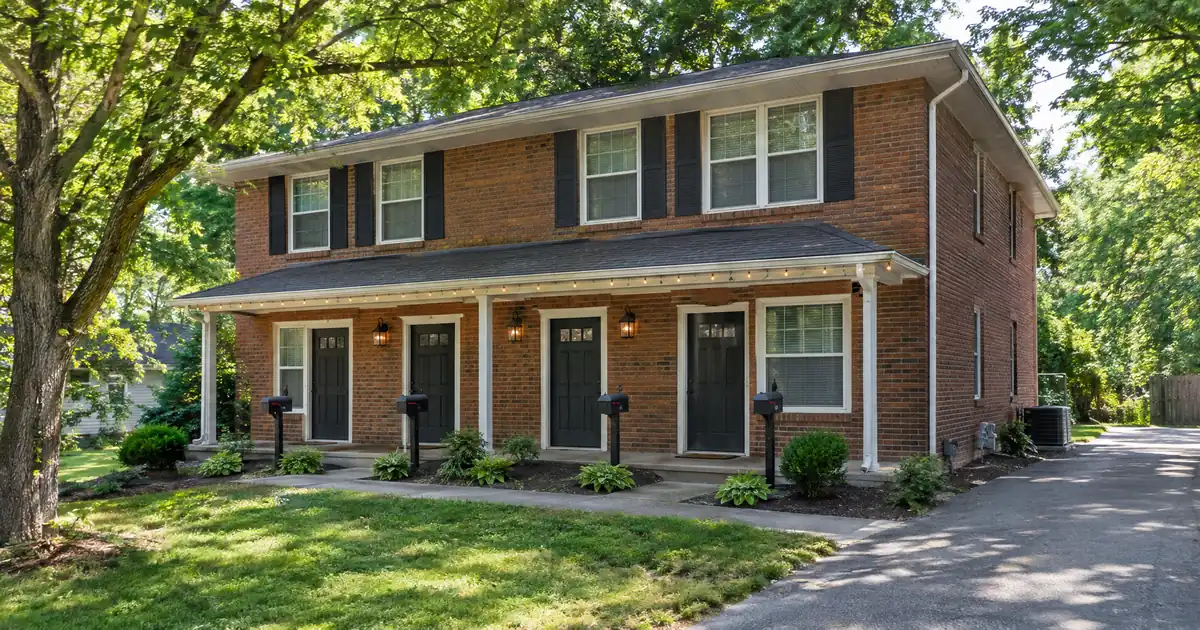
The Quick Read: A bank statement loan lets a self-employed buyer qualify on documented deposit history instead of tax-return net income, and 2-4 unit properties are eligible collateral under many programs. The lender totals 12 months of business or personal deposits, strips out transfers and one-time credits, applies an expense factor to business accounts, and uses the result as monthly qualifying income. Occupancy decides which rules apply to the file.
- Qualifying income comes from deposit averages, not from taxable income after write-offs.
- Business accounts carry an expense factor set by the lender, not by the borrower.
- Owner-occupied 2-4 units (house hacks) are consumer mortgages. Pure rentals are business-purpose.
- Primary-residence purchase leverage runs up to 90% LTV on select programs. Investment cash-out tops out around 75% LTV.
- If the building’s rent is strong and personal income is thin, a DSCR loan may fit better. Final terms depend on lender guidelines, property type, leverage, and the borrower’s complete credit picture.
Self-employed investors often hit the same wall. Deductions shrink taxable income, and the tax return then says the borrower earns less than the bank account shows. A bank statement loan starts from the account instead. This guide walks through how underwriting reads those statements on a duplex, triplex, or fourplex, where the general rule breaks, and how to choose between this path and a DSCR loan. The program mechanics here come from files the brokerage places across a wholesale network of select lenders. Every file is underwritten individually, and nothing here is a commitment to lend.
What your deposits qualify you for.
Alt-doc programs read 12 months of business or personal bank deposits instead of tax returns. Enter your average monthly deposits and see the income a lender would credit you.
The expense factor is set by the lender from your business type and profit-and-loss statement; it is not a number you choose. This widget quotes no rate and no payment.
Program parameters shown update from Lendmire’s centralized guideline source.
Estimate
Illustrative estimate only — not a quote, Loan Estimate, approval, or commitment to lend. Deposit average, expense factor, and housing ratio are editable assumptions; the expense factor a lender applies is set from your business type and documentation. No interest rate or monthly payment is quoted here. Purchase capacity is a simplified illustration and does not account for taxes, insurance, HOA dues, or other debts. Alt-doc income documentation is available on consumer mortgages in the states where Lendmire is licensed for consumer lending; actual terms vary by lender, borrower, and property.
What Does “Bank Statement Loan” Mean on a 2-4 Unit?
A bank statement loan is a non-QM mortgage. The borrower is reviewed on documented income under the applicable program, subject to lender guidelines, with income drawn from 12 months of personal or business statements. It is fully underwritten. Credit, assets, reserves, and the property all get reviewed.
A 2-4 unit counts as residential. Five or more units moves into commercial lending, which is a different product with different underwriting. That boundary is why duplexes through fourplexes are the sweet spot for this kind of loan.
Two things the loan is not:
- It is not a rent-based loan. The borrower’s cash flow qualifies the file, not the building’s rent.
- It is not a shortcut around documentation. It swaps one document set (traditional personal-income documentation) for another (statements).
For the broader picture of how investor loans are built, the complete DSCR loans guide covers the property-income side.
Key Terms Defined
Bank statement loan: A non-QM mortgage that qualifies the borrower on average deposits rather than tax-return income.
Expense factor: The percentage of business deposits treated as operating cost and removed before income is counted. The lender sets it.
Non-QM: A mortgage that falls outside the standard qualified-mortgage box and follows the individual investor’s program sheet.
DSCR: Debt service coverage ratio, meaning the property’s rent measured against its housing payment.
Occupancy: Whether the borrower lives in the property (owner-occupied) or rents all of it out (non-owner-occupied).
Vesting: How title is held, whether personal name, LLC, or trust.
Reserves: Liquid assets the borrower holds after closing, measured in months of the housing payment.
How Does Underwriting Read Your Statements?
Underwriting follows a repeatable sequence. The order below is how most programs in the network handle it, though each lender sets its own details.
1. Pick the account type and window. Business, personal, or both, over 12 consecutive months. The lender’s guideline set controls the choice, not borrower preference.
2. Total the eligible deposits. Underwriters remove transfers between accounts, loan proceeds, refunds, gifts, and one-time items. Letters of explanation for odd deposits help here.
3. Average the deposits. Eligible deposits divided by the number of months gives the monthly figure.
4. Apply the expense factor on business accounts. Monthly qualifying income equals the average eligible deposit multiplied by one minus the expense factor. A Scotsman Guide trade piece describes the standard pattern: 12 to 24 months of statements, a lender-applied expense factor, or a P&L or expense statement from a third-party tax professional as an alternative. Personal statements usually carry no factor. A CPA-prepared expense ratio can support a different figure only where the program allows it. Never assume a number.
5. Run debt-to-income. The qualifying income feeds a DTI test against the new housing payment (principal, interest, taxes, insurance, dues) plus the borrower’s other debts.
6. Review credit, assets, reserves, and the property. Reserves commonly run around six months of the housing payment on select programs.
The expense factor and the deposit cleanup are the biggest income levers. A borrower with identical gross deposits can land on very different qualifying income depending on how many credits survive screening.
One point on the worked math. Take deposits that average out to a round monthly total after cleaning, apply a half-off expense factor, and the borrower counts only half. That is why gross deposits never equal income, and why the factor is the first thing to ask about on any program.
How Does Rental Income Fit In?
It depends on the program and the occupancy. On a 2-4 unit, whether rent offsets the payment in the DTI test varies by lender. When rent is counted, the appraisal supports it through the rent schedule on the agency Form 1025, the small residential income property report used for 2-4 units. Leases may be required if rent is counted.
| Rent type | Typical treatment |
|---|---|
| Leased units with signed leases | Often counted, program-dependent |
| Vacant or proposed units | Often supported by appraisal rent schedule, program-dependent |
| Short-term rental income | Varies by program and documentation |
| Rent deposited into your business account | Can be screened as non-business credit |
That last row is a quiet friction point. Tenant rent landing in the same account as business revenue can get flagged, stripped, or double-counted depending on how the file is documented. Keep rent in a separate account where possible.
Short-term rental rules can vary by city, county, HOA, and property type, so investors should confirm local rules before relying on projected rental income.
Owner-Occupied or Pure Rental: Why Occupancy Decides the Rules
An owner-occupied 2-4 unit is a consumer mortgage. A bank statement loan on a non-owner-occupied rental, including a short-term rental, is business-purpose and exempt from TRID. State which one applies before the file goes in, because the property’s occupancy sets the disclosure regime and the documentation burden.
The house hack is the common edge case. A buyer lives in one unit and rents the others. That is consumer-purpose, so full income documentation applies, and bank statements are often the practical route for a self-employed buyer.
On the regulatory side, the CFPB’s Regulation Z commentary says unit count alone does not decide whether credit is business or consumer. The call turns on purpose and the facts of the loan, and the lender’s compliance team makes it. Loans to a non-natural person such as an LLC also fall under the business-purpose exemption in 12 CFR Part 1026. Whether a bank statement program permits an LLC borrower varies by program, so ask before assuming.
For consumer-purpose files, the lender must verify the income it relies on using the borrower’s own records. The Federal Register preamble to the ability-to-repay rule says that verification rests on evidence of the individual’s own income or assets. That is why underwriters screen deposits so closely.
What Leverage Is Available?
Leverage depends on occupancy and transaction type. These are the figures from select lenders in the wholesale network, framed as typical and subject to lender guidelines.
| Scenario | Typical ceiling |
|---|---|
| Primary residence, purchase or rate-term | Up to 90% LTV |
| Primary residence, asset-depletion alternative | Up to 80% LTV |
| Owner-occupied cash-out (primary or second home) | Up to 80% LTV, fixed expense ratio; 75% with accountant-prepared ratio |
| Investment property cash-out | Around 75% LTV |
| Investment property purchase | Varies by lender |
Loan sizes generally run from $125,000 to $3,500,000. Stronger files, meaning cleaner deposits, higher credit, and deeper reserves, earn the top of each range. A 2-4 unit house hack can use the primary-residence figures only when the borrower truly occupies a unit.
Investment purchase leverage on bank statement documentation is the soft spot. It moves lender to lender, and investor-focused leverage guidance belongs to the DSCR side. Cash-out on a rental is where the 75% ceiling matters, and it does not borrow from the 90% purchase figure.
Term length follows each lender’s program sheet. Forty-year and interest-only structures are DSCR-side offerings, so do not plan a bank statement file around them.
Duplex, Triplex, or Fourplex: What Changes?
The documentation set stays the same across 2, 3, and 4 units. What shifts is how much the property contributes and how the appraiser and lender treat it.
- Appraisal: all three use Form 1025 with a rent schedule.
- Reserves: more units can mean more scrutiny, but the network’s baseline is around six months of the housing payment.
- Payment load: a larger building usually carries a bigger payment, which pressures DTI harder.
- Lender appetite: some programs are friendlier on duplexes than fourplexes, and mixed-use or condotel buildings are typically carved out by overlay.
Ask a broker for program fit by unit count before choosing the building. The numbers on the income side may clear a duplex and strain a fourplex.
Bank Statement or DSCR? Choose by Which Side Is Weaker
The choice is about what gets qualified, the borrower or the property.
| Situation | Better fit |
|---|---|
| Strong personal cash flow, rent doesn’t cover payment | Bank statement |
| Strong rent, thin or irregular personal income | DSCR |
| Borrower will live in one unit | Bank statement (DSCR is for non-owner-occupied) |
| Pure rental, rent clearly covers payment | DSCR |
| Rehab-stage or under-leased building | Bank statement |
DSCR loans are designed for non-owner-occupied investment properties. Because they are business-purpose investor loans, they are reviewed differently from a standard owner-occupied mortgage. Programs below a 1.00 coverage ratio are available through select lenders in the network, though leverage and terms adjust. For a side-by-side, see DSCR loan vs bank statement loan for investors.
What Gets Flagged Before You Apply?
These are the habits that shrink qualifying income or stall a file:
- Commingled accounts. A personal account used occasionally for business needs support to be counted as business income.
- Large unexplained deposits. Each one needs a letter or gets removed.
- Transfers between your own accounts. Underwriters strip them, so label them.
- Overdrafts and NSFs. Repeated ones can limit eligibility. That is a lender overlay, not a universal rule.
- Declining income. A falling trend across the window can lower the figure the lender will use.
- Mismatched entity. If title will sit in an LLC, confirm the program allows it before you apply, subject to program terms.
Seasonal or growing income is a window question. A longer window smooths lumpy months, while a strong recent run can favor a shorter one, and the lender’s guidelines decide which is allowed.
What Documents Go in the File?
Expect to assemble:
- 12 months of consecutive statements
- Evidence of business ownership and tenure
- Credit report
- Asset and reserve statements
- Leases, if rent is counted
- Appraisal on Form 1025
- Vesting information, personal name or entity
Clean documentation does not guarantee approval. It gives the lender fewer preventable gaps to chase.
What Bank Statements Won’t Do
They prove the borrower’s cash flow. They do not prove the building performs. Approval says nothing about whether a fourplex cash-flows after vacancy and repairs. Bank statement pricing also runs higher than conventional, which is the trade for flexible documentation. Tax treatment varies; consult a qualified professional.
Frequently Asked Questions
Can I use a bank statement loan to buy a duplex, triplex, or fourplex?
Yes, on many programs, for both purchase and refinance. Occupancy changes the leverage and the rules, so tell the broker upfront whether you will live in a unit.
Do I need leases on every unit?
It depends on the program. If rent is counted toward qualifying, leases or an appraisal rent schedule typically support it. Vacant units may be handled through the appraisal rent schedule on select programs.
Can I close in an LLC?
Some programs permit it and some do not.
Can I use personal statements instead of business statements?
Yes, many programs accept either. Personal statements usually carry no expense factor, while business statements do. The lender’s guideline set decides.
What if my income is irregular?
Choose the window with the lender. A longer window smooths seasonality, and a shorter one can favor growth. Declining deposits can reduce what counts.
Is cash-out available on a 2-4 unit rental?
Yes, up to around 75% LTV on investment property cash-out, subject to lender guidelines. Owner-occupied cash-out can reach 80% LTV under fixed expense ratio terms.
Call 828-256-2183 or request a quote.
About Lendmire
Lendmire (NMLS# 2371349) is a DSCR-focused mortgage broker that helps arrange investor financing across 41 markets, including Washington, D.C., through wholesale and investor-lending channels. DSCR eligibility is generally reviewed by the lender around the property’s rental income rather than personal income documentation, subject to lender guidelines. Scotsman Guide named Lendmire a Top Mortgage Workplace in both 2025 and 2026.
Get Started
Ready to find the right loan for you?
In about 30 seconds you can review financing options available for your home or investment property. No commitment required.
Informational only. Not a Loan Estimate, approval, or commitment to lend. Program availability and eligibility are subject to lender guidelines, credit approval, property review, and underwriting.
References
1. Scotsman Guide – Rev Up the Engine for Non-QM Lending
2. CFPB – Regulation Z § 1026.3 Exempt transactions
3. eCFR – 12 CFR Part 1026 Subpart A
This article is part of Lendmire’s bank statement loan program — full qualification details, guidelines, and scenarios live on the program page.
Related reading: How to Pick Bank Statements or Returns With a W-2 Spouse · Can You Get a Bank Statement Loan With Only 12 Months of Statements? · How to Decide Between 12 and 24 Bank Statements
Brandon Miller
Founder & CEO, Mortgage Loan Originator, Lendmire LLC
- Mortgage Loan Originator · NMLS# 1129696 · Verify on NMLS Consumer Access
- North Carolina Real Estate Broker · License# 343312 · Verify on NCREC
- North Carolina Insurance Producer · License# 19053198 · Property, Casualty, Life, Health · Verify on NAIC SBS
- Lendmire LLC · Firm NMLS# 2371349 · Verify firm licensure
Important disclosures. Lendmire (NMLS# 2371349) is a licensed mortgage brokerage. Lendmire is not a direct lender, depository institution, or financial advisor. All loan inquiries are subject to lender underwriting; this article does not constitute a commitment to lend. Rates, terms, and program guidelines are subject to change without notice and vary by borrower profile, property type, and state. Information in this article is general in nature and is not financial, legal, or tax advice. Equal Housing Opportunity. NMLS Consumer Access: nmlsconsumeraccess.org.