
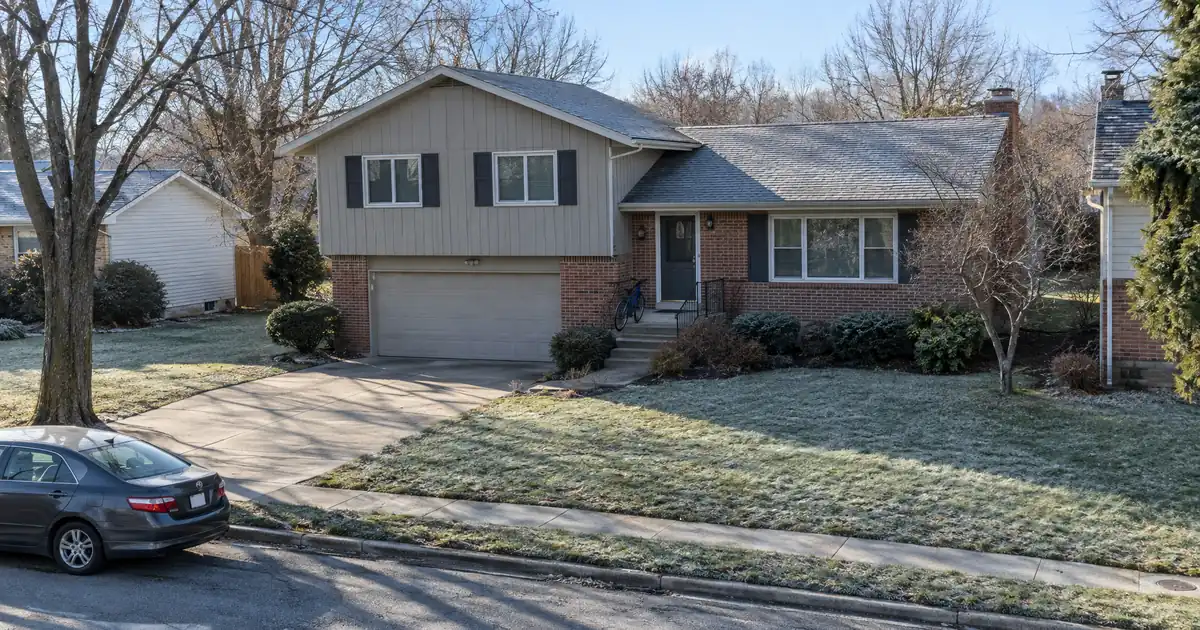
The Quick Read: Yes, some bank statement programs allow a non-owner-occupied investment property, but the terms are stricter than on a primary home, and a pure rental purchase often fits a DSCR loan better because that product tests the property’s rent instead of your personal deposits. The right choice depends on which side of your file is stronger. A DSCR loan is a rental-property loan that qualifies primarily on property-level rental income covering the payment, subject to lender guidelines.
- Bank statement loans qualify you on documented income under the applicable program, usually from 12 months of business or personal statements.
- Investment cash-out on bank statement documentation tops out around 75% LTV. Investment purchase leverage varies by lender.
- Loan sizes run roughly $125,000 to $3,500,000, and reserves commonly sit near 6 months of the housing payment.
- Your personal debt-to-income ratio still matters on this path. It does not on a DSCR loan.
- Every file is underwritten individually, and nothing here is a commitment to lend.
What Does a Bank Statement Loan Actually Test?
It tests you, not the property. The lender reads your deposit history and works out how much income your accounts support. HousingWire’s non-QM guide describes lenders reviewing 12 to 24 months of deposits. On business accounts, the lender applies an expense factor to arrive at usable income. The same guide stresses that income analysis is not simply adding up deposits.
What your deposits qualify you for.
Alt-doc programs read 12 months of business or personal bank deposits instead of tax returns. Enter your average monthly deposits and see the income a lender would credit you.
The expense factor is set by the lender from your business type and profit-and-loss statement; it is not a number you choose. This widget quotes no rate and no payment.
Program parameters shown update from Lendmire’s centralized guideline source.
Estimate
Illustrative estimate only — not a quote, Loan Estimate, approval, or commitment to lend. Deposit average, expense factor, and housing ratio are editable assumptions; the expense factor a lender applies is set from your business type and documentation. No interest rate or monthly payment is quoted here. Purchase capacity is a simplified illustration and does not account for taxes, insurance, HOA dues, or other debts. Alt-doc income documentation is available on consumer mortgages in the states where Lendmire is licensed for consumer lending; actual terms vary by lender, borrower, and property.
Why does this product exist? Self-employed investors often have large legitimate write-offs. Depreciation, payroll, contractor costs, equipment and vehicle expenses all shrink taxable income on paper. Cash flow can look strong in the bank while the tax return looks thin. Bank statements tell the other half of the story.
A DSCR loan flips the question. It asks whether the rent covers the debt on that one property. Two loans, two different tests.
How Do Deposits Turn Into Qualifying Income?
The lender screens your deposits, applies an expense factor, and compares the result against your obligations. Qualifying income usually lands well below raw deposits. The exact expense factor varies by lender and by business type, so never assume one universal formula.
Across the wholesale network Lendmire works with, most programs ask for 12 months of statements. Here is the flow, using a borrower whose business account shows steady deposits all year:
| Step | What the underwriter does | Effect on income |
|---|---|---|
| 1. Collect | Pulls 12 months of statements | Sets the raw deposit base |
| 2. Screen | Removes transfers and one-off deposits | Lowers the base |
| 3. Apply factor | Subtracts a business-expense share | Lowers it again |
| 4. Average | Spreads the result across the period | Produces qualifying income |
| 5. Compare | Tests income against all debts, new payment included | Sets your debt-to-income |
Notice step five. A bank statement loan stays tied to your personal debt-to-income ratio, which is your monthly debts measured against your qualifying income. A common myth says bank statement loans skip that test. They don’t.
The bigger myth says non-QM means no documentation. Wrong again. The underwriter still reviews credit, assets, debts and the property.
What Changes When the Property Is a Rental?
Terms tighten. On a primary residence, select lenders go up to 90% LTV on a purchase or rate-and-term refinance. LTV means loan-to-value, the loan as a share of the property’s value. That 90% does not carry over to a rental. Terms depend on the lender’s guidelines, the property type, the leverage, and a full review of the credit profile.
For an investment property, the picture looks like this:
- Investment cash-out: tops out around 75% LTV, subject to lender guidelines.
- Investment purchase: leverage varies by lender. Some programs allow it and some don’t, so ask before you assume.
- Owner-occupied cash-out (primary or second home): up to 80% LTV with a fixed expense ratio, or 75% with an accountant-prepared ratio.
- Loan size: roughly $125,000 to $3,500,000 across the network.
- Reserves: commonly around 6 months of the housing payment.
These are typical ranges from select lenders, not promises. Stronger credit, bigger reserves and cleaner deposits earn better terms. Weaker files get lower leverage or a different program.
Not every bank statement program accepts investment occupancy at all. That is the first filter.
Bank Statement or DSCR: Which Side of Your File Is Stronger?
Match the loan to your strong side. If your deposits are steady and the property barely covers its own costs, a bank statement loan fits. If the rental covers its payment with room to spare but your personal income is messy, DSCR fits.
| Factor | Bank statement | DSCR |
|---|---|---|
| What gets tested | Your deposits | The property’s rent |
| Personal DTI | Yes | No |
| Documents | 12 months of statements | Lease or market rent, property review |
| Scaling | Each loan uses your income | Each property stands alone |
| Best fit | Strong deposits, thin rent | Strong rent, messy income |
Scaling is where the difference bites. Every new bank statement mortgage stacks against the same personal income. Eventually you hit a ceiling. DSCR files are reviewed property by property, so a fifth rental doesn’t crowd out the first.
Here’s a genuine toss-up worth thinking through. Say a property covers its payment only barely, and your deposits are strong. The DSCR route may still work through a select sub-1.00 program, though LTV and terms adjust. The bank statement route might offer cleaner terms. Running both is the honest answer, and a broker who sees many lenders’ guidelines can do that side by side.
DSCR programs typically set 1.00 coverage as a select-program floor, meaning the rent roughly equals the full monthly obligation. Rent that comfortably clears the obligation strengthens the file. Anything below 1.00 depends on the lender and the leverage.
For the full picture of how that loan works, Lendmire’s complete DSCR loans guide covers it end to end.
Why Do Bank Statement Applications Stall?
Most stalls come from messy statements, not weak borrowers. Underwriters scrutinize anything that doesn’t look like business income. A few fixes help before you apply:
- Transfers between your own accounts. These get excluded. Label them or keep them out of the account you submit.
- Commingled accounts. Mixing personal spending with business deposits makes the expense factor harder to apply. Separate them well ahead of time.
- Large one-off deposits. A property sale or family gift looks like income but isn’t. Expect to document it or lose it.
- Thin reserves. The lender wants to see cash left after closing. The amount of reserves required varies by lender and by file.
- Short history. A new business with a few months of deposits gives the lender little to average.
Fix these first. It beats explaining them after the fact.
Another reason files fail: the borrower picks the wrong product. A buyer with a strong rental and spotty deposits gets pushed toward bank statements when DSCR was the better door. (It happens more than anyone likes to admit.)
What About Owner-Occupied Units and Second Homes?
Occupancy decides which rulebook applies, and that matters more than most borrowers expect. A bank statement loan on a non-owner-occupied rental, including a short-term rental, is a business-purpose loan. Business-purpose investor loans are reviewed differently from a standard owner-occupied mortgage, and they are exempt from TRID, the consumer mortgage disclosure rules. An owner-occupied file is a consumer mortgage, and TRID applies.
The federal rule behind this is Regulation Z. Its text at CFPB § 1026.3 treats credit to acquire, improve or maintain non-owner-occupied rental property as business-purpose, whatever the number of units. The same text says that treatment fails if you expect to occupy the property for more than 14 days in the coming year.
That 14-day line catches vacation-home buyers. A second home you plan to use heavily is not a rental in the rule’s eyes.
Owner-occupied small multifamily is a gray zone. A law-firm guide on the business-purpose exemption explains that when you live in one unit, acquisition credit is generally deemed business-purpose only above 2 units. Improvement or maintenance credit generally needs more than 4 units. Below those thresholds, the loan is not automatically consumer credit. It becomes a case-by-case call.
Practical takeaway: if you plan to live in the property, tell the lender at the start. Occupancy changes the program, the leverage and the paperwork. Consumer bank statement loans through Lendmire’s channels are available in 16 states.
Can You Scale With Bank Statement Loans?
You can, but you’ll feel the limits. Each new loan adds a payment to your personal debt load. Your qualifying income stays the same. The math tightens with every closing.
Some investors use a mix. They use bank statements for a primary residence or a first rental, then move to DSCR for the portfolio. Others reverse it, using DSCR for stabilized rentals and bank statements for a property that can’t meet rent coverage yet.
Title matters too. If you want to hold property in an LLC, confirm the specific program permits it before you apply. DSCR programs commonly fit entity borrowers, subject to program terms.
Cash-out is its own conversation. Because investment cash-out on bank statement documentation tops out around 75% LTV, the proceeds are usually smaller than on an owner-occupied file.
One more thing: this path usually costs more than conforming financing. You pay for the flexibility. Tax treatment varies by how the funds are used and how the property is held, so keep clear records and consult a qualified tax professional.
Key Terms Defined
Bank statement loan: A mortgage that is reviewed around documented income taken from your deposit history rather than traditional personal-income documentation.
Expense factor: The share of business deposits a lender treats as operating costs, which reduces usable income.
LTV (loan-to-value): The loan amount as a percentage of the property’s value.
DSCR (debt service coverage ratio): Monthly rent divided by the full monthly debt obligation. A ratio of 1.00 means rent roughly equals the obligation.
Non-owner-occupied: A property you do not live in, such as a rental.
Reserves: Cash or liquid assets you hold after closing, usually counted in months of the housing payment.
Frequently Asked Questions
Can I use a bank statement loan to buy a rental property?
Sometimes. Some programs accept investment occupancy and others only allow owner-occupied homes. Investment purchase leverage varies by lender, and terms are usually stricter than on a primary residence. If the rental’s income is strong, a DSCR loan may fit better.
Do I need traditional personal-income documentation for a bank statement loan?
The file is reviewed on documented income under the applicable program, subject to lender guidelines, and that income comes from bank statements. Typically that means 12 months of business or personal statements. The lender still reviews credit, assets, debts and the property, so expect a full file even without returns.
Does the property’s rent count toward qualifying?
Lenders still review the property and may look at market rent. On a DSCR loan, the property’s rent is the main qualifier, subject to lender guidelines.
How much can I borrow on a bank statement investment loan?
Loan sizes run roughly $125,000 to $3,500,000 across the network. Investment cash-out tops out around 75% LTV, while investment purchase leverage varies by lender. Credit, reserves and deposit strength all move the number.
Is a bank statement loan better than DSCR for investors?
Neither wins every time. Bank statement fits when your deposits are strong and the property is thin. DSCR fits when the property cash-flows and your personal income is hard to document. DSCR also scales better, since each property is reviewed on its own rent.
Next Step
Reach the team at 828-256-2183 or request a quote.
About Lendmire
A DSCR-focused mortgage broker, Lendmire (NMLS# 2371349) places investor financing across 41 markets — 40 states plus Washington, D.C. — with DSCR eligibility generally reviewed by the lender on property cash flow instead of tax returns, subject to lender guidelines. Scotsman Guide named Lendmire a Top Mortgage Workplace in 2025 and 2026.
Get Started
Ready to find the right loan for you?
In about 30 seconds you can review financing options available for your home or investment property. No commitment required.
Informational only. Not a Loan Estimate, approval, or commitment to lend. Program availability and eligibility are subject to lender guidelines, credit approval, property review, and underwriting.
References
1. HousingWire, Non-QM loans guide
2. Consumer Financial Protection Bureau, Regulation Z § 1026.3 Exempt transactions
3. Doss Law, Business Purpose Exemption Simplified
This article is part of Lendmire’s bank statement loan program — full qualification details, guidelines, and scenarios live on the program page.
Related reading: In an LLC 24-Month Bank Statement Loan vs Portfolio Loan · In an LLC DSCR Loan vs Bank Statement Loan · How to Add a W-2 Co-Borrower to a Bank Statement Loan
Brandon Miller
Founder & CEO, Mortgage Loan Originator, Lendmire LLC
- Mortgage Loan Originator · NMLS# 1129696 · Verify on NMLS Consumer Access
- North Carolina Real Estate Broker · License# 343312 · Verify on NCREC
- North Carolina Insurance Producer · License# 19053198 · Property, Casualty, Life, Health · Verify on NAIC SBS
- Lendmire LLC · Firm NMLS# 2371349 · Verify firm licensure
Legal disclosures. Lendmire (NMLS# 2371349) is a state-licensed mortgage brokerage that arranges financing through wholesale lender relationships. Lendmire is not a direct lender, depository institution, or registered financial advisor. The discussion above is general informational content about real estate financing — it is not financial, legal, or tax advice, and readers should consult licensed professionals for guidance on their individual circumstances. Loan inquiries are subject to lender underwriting; this article does not represent a commitment to lend. Loan terms, rates, and qualification standards vary by borrower, property, and state, and are subject to change at any time. Equal Housing Opportunity. NMLS Consumer Access: nmlsconsumeraccess.org.