
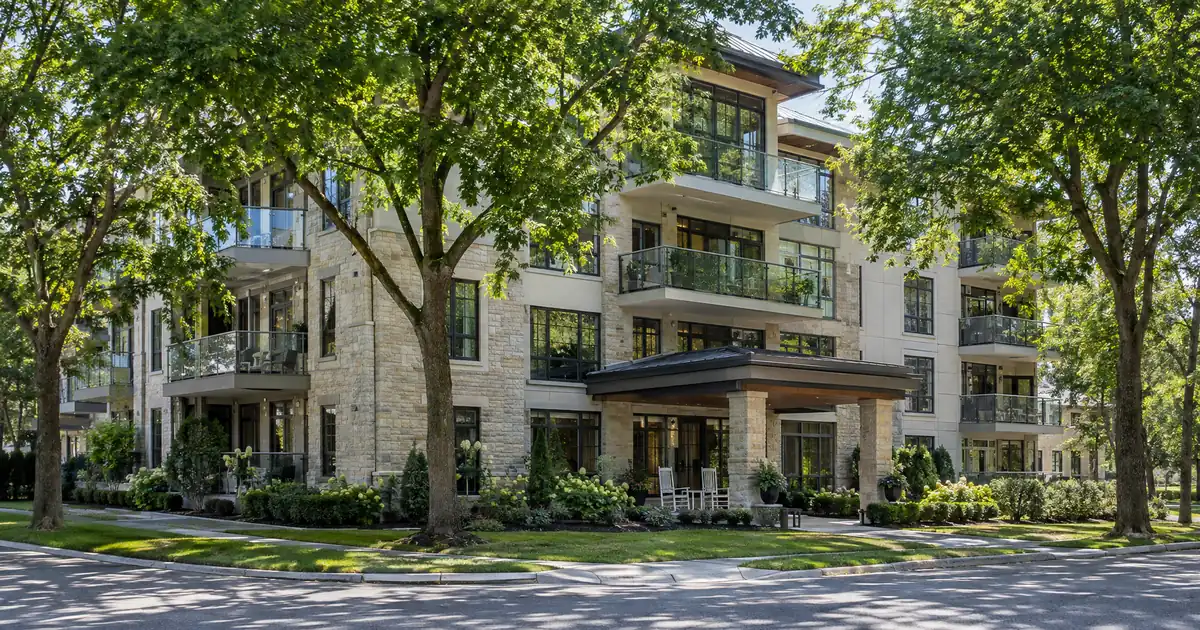
The Quick Read: Usually yes, because a bank statement loan changes how your income is documented, not which property types are eligible, but the condo building gets its own separate review before the file can move forward. Two approvals run side by side: yours, based on deposits, and the building’s, based on its finances and ownership mix.
- Qualifying income comes from 12 months of business or personal bank statements, averaged with lender-specific expense factors.
- On a primary residence, leverage reaches up to 90% LTV on a purchase or rate-term refinance, with the top of the range reserved for stronger files.
- An owner-occupied cash-out on a primary or second home tops out at 80% LTV, and an investment-property cash-out at about 75% LTV.
- Loan amounts run roughly $125,000 to $3,500,000, with reserves commonly around 6 months of the housing payment.
- Warrantable buildings usually get better leverage than non-warrantable ones, and some lenders will not take certain buildings at all.
Self-employed buyers hit a familiar wall: the traditional personal-income documentation shows less income than the bank account does. Write-offs lower taxable income, and a conventional underwriter sees only the lower number. Deposits tell a fuller story. Condos add a wrinkle that single-family homes don’t have, because the lender is also financing a share of a shared building. This piece walks through how both reviews work, where files stall, and when a different program fits better.
What your deposits qualify you for.
Alt-doc programs read 12 months of business or personal bank deposits instead of tax returns. Enter your average monthly deposits and see the income a lender would credit you.
The expense factor is set by the lender from your business type and profit-and-loss statement; it is not a number you choose. This widget quotes no rate and no payment.
Program parameters shown update from Lendmire’s centralized guideline source.
Estimate
Illustrative estimate only — not a quote, Loan Estimate, approval, or commitment to lend. Deposit average, expense factor, and housing ratio are editable assumptions; the expense factor a lender applies is set from your business type and documentation. No interest rate or monthly payment is quoted here. Purchase capacity is a simplified illustration and does not account for taxes, insurance, HOA dues, or other debts. Alt-doc income documentation is available on consumer mortgages in the states where Lendmire is licensed for consumer lending; actual terms vary by lender, borrower, and property.
Two Approvals, Not One
A condo file has a borrower approval and a property approval, and either one can end the deal. Reviewers treat them as separate questions.
| Factor | Borrower file | Property file |
|---|---|---|
| What’s reviewed | Deposits, credit, assets, debts | HOA budget, reserves, ownership mix |
| Who supplies it | You and your accountant | HOA or management company |
| Typical failure | Deposits don’t support the loan | Litigation, thin reserves, heavy renter share |
| Fix | Different income method or lender | Different lender or different unit |
A strong borrower cannot rescue a building the lender won’t accept. A great building cannot rescue deposits that don’t support the loan amount. Investors who understand this early avoid the most common surprise: a clean income file that stalls on the HOA paperwork.
Across Lendmire’s wholesale network, the pattern is consistent. Borrowers spend weeks preparing statements and almost no time on the building, then discover the building is the real variable. Ordering HOA documents early is the most affordable insurance a condo buyer has.
How Deposits Become Income
Lenders add up eligible deposits over the statement period, subtract an expense factor for business accounts, and divide to get monthly qualifying income. That number then drives the debt-to-income calculation.
The steps run like this:
1. The lender reviews 12 months of statements, either personal or business, with every page included. 2. Transfers between your own accounts and one-time deposits are generally excluded, since they aren’t income. 3. On business accounts, an expense factor is applied to estimate what the owner can actually take home. Some files use a fixed ratio, and some use an accountant-prepared ratio. Factors differ by lender, so no single formula applies. 4. The resulting monthly figure is tested against your proposed housing payment and your other debts.
Picture a consultant whose business account shows steady deposits, but whose tax return shows heavy deductions. On a personal-statement program, the deposits carry the file with little adjustment. On a business-statement program, the expense factor trims the usable amount. Same borrower, different qualifying income, depending on the account and the lender.
This is not stated income. The loan is reviewed on documented income under the applicable program, subject to lender guidelines, and credit, assets, and reserves still count. Debts still count too. Bank statement programs test you against your other liabilities, which is a real difference from property-cash-flow programs.
Which Condos Work and Which Don’t
A non-warrantable building fails one or more of the standard project-eligibility tests lenders apply to condo developments. Non-QM and portfolio programs are where those buildings usually end up financed, and each lender sets its own project rules.
| Building type | Likely path | What it means for you |
|---|---|---|
| Warrantable | Broadest lender pool | Best shot at top leverage |
| Non-warrantable | Fewer lenders | Lower leverage, more reserves likely |
| Condotel or hotel-style | Very limited | Some lenders decline outright |
| Investor-heavy building | Case by case | Severity drives terms |
| Short-term-rental building | Depends on HOA rules | Income story gets harder |
The label describes the building. It says nothing about you or the unit. Many sound buildings are non-warrantable simply because they have a lot of rentals, commercial space, or a developer still controlling the association.
Lendmire’s piece Warrantable Condo Leverage on a Super Jumbo Bank Statement Loan goes deeper on how building status moves leverage at larger loan sizes.
The Building Red-Flag Checklist
Run this list before you make an offer, not after. Practitioners point to the same issues again and again, and any one of them can be enough to change the outcome:
- High share of renter-occupied units, or one owner holding many units
- Commercial space in the building
- HOA litigation or a pending special assessment
- Thin reserves or an underfunded budget
- Gaps in master insurance coverage
- Developer-controlled HOA or unfinished construction
- Condotel features, rental pooling, or heavy short-term-rental use
Not every flag kills a deal. Some only narrow the list of lenders or push leverage down. Litigation and insurance gaps tend to be the most serious, because they raise questions about the collateral itself. Heavy investor concentration usually changes terms rather than ending the conversation. Severity decides, and the answer varies by lender.
The Condo Questionnaire and What It Does to Your Timeline
The lender sends the HOA a project questionnaire, and the answers decide whether the building is acceptable collateral. The process generally runs in this order:
1. Your loan team requests the questionnaire from the HOA or its management company.
2. The HOA completes it and supplies the budget, master insurance certificate, house rules, recent meeting minutes, and any litigation statements.
3. The wholesale lender runs its own private project review. It doesn’t use the agency review tools that conventional loans use.
4. The lender decides on the building, then weighs it alongside your borrower file.
Management companies control that pace, not you. Ask for the documents the moment you have an accepted offer, or earlier if the contract allows. Non-QM does not mean no project review. The lender still has to be comfortable with the building as collateral.
Occupancy Changes the Picture
Whether you live in the unit, use it as a second home, or rent it out changes both leverage and the type of loan you’re getting. Here is how the pieces line up:
| Occupancy | Typical bank-statement leverage | Loan type |
|---|---|---|
| Primary residence | Up to 90% LTV on purchase or rate-term | Consumer mortgage (TRID applies) |
| Primary or second home, cash-out | Up to 80% LTV | Consumer mortgage (TRID applies) |
| Investment property, cash-out | About 75% LTV | Business-purpose (TRID-exempt) |
| Investment purchase | Varies by lender | Business-purpose (TRID-exempt) |
All figures depend on lender guidelines, credit, loan size, and the building itself. Condo status can pull any of them lower.
A bank statement loan on a rental is a business-purpose loan, so it is reviewed differently from an owner-occupied mortgage. If you plan to live in the condo, expect the consumer-mortgage disclosure process. A low-profile detail: consumer mortgage licensing for this lane covers 16 states, so availability depends on where the property sits. For the broader picture on program types, see the complete DSCR loans guide.
Asset depletion is another route worth knowing. Instead of deposits, the borrower is reviewed against liquid assets, up to about 80% LTV on a primary residence. It suits borrowers with large balances but irregular income. Terms depend on the lender’s guidelines, the property type, the leverage, and a full review of the credit profile.
When a Different Program Fits Better
For an investment condo, the better question is often whether your income or the property’s income should carry the file. A bank statement loan is reviewed for you. A DSCR loan is reviewed for the property, based on rent covering the full monthly obligation, subject to lender guidelines.
Bank-statement programs still test your other liabilities, while cash-flow investor programs look at the subject property.
Consider two investors buying condos. The first has strong deposits and few debts, and the unit’s HOA dues are high. Rent may barely cover the monthly obligation, so property coverage looks tight, and bank statements may fit better. The second owns several rentals and carries heavy personal debt. Personal income would strain, but the condo’s rent clears coverage comfortably. DSCR fits better. High dues and an investor-heavy building can pressure coverage, which is analysis rather than a rule, so run both paths before choosing.
Sub-1.00 coverage programs exist through select lenders in the network, but leverage and terms adjust when coverage falls short. If your deposits are strong and the condo’s rent is weak, that’s often the cleaner signal to use the income-documented path.
If the Condo Gets Turned Down
A decline on the building is not the end; it points to one of four next steps.
- Switch lenders. Project rules differ widely, and one lender’s problem building is another’s acceptable one.
- Switch income methods. If the issue is a coverage problem on an investment unit, a different program may change the file.
- Restructure. More cash down or lower leverage can offset a building issue where the lender allows it.
- Switch units. Sometimes the building across the street is simply the easier file.
Resale matters here too. If buyers can’t get conventional financing into a building, your own exit gets narrower later, so a decline is also useful information about future liquidity.
Common Mistakes
- Assuming non-QM means no building review. The lender still reviews the project.
- Treating non-warrantable as a verdict on the buyer. It describes the building.
- Calling it a no-doc loan. Credit, assets, reserves, and the property are all underwritten.
- Treating a bank statement loan and a DSCR loan as the same product. One qualifies you, the other qualifies the property.
- Waiting on HOA documents. The building review often sets the pace.
- Assuming every condo fits every program. Acceptance varies by lender and program.
Key Terms Defined
Bank statement loan: A mortgage that is reviewed around average deposits over 12 months of statements instead of tax-return income.
Non-warrantable condo: A building that fails one or more of the project eligibility standards conventional lenders apply to condo buildings, and is usually financed through non-QM or portfolio programs.
Condotel: A condo with hotel-style features, such as rental pooling or front-desk operations, which many lenders avoid.
Expense factor: The percentage a lender subtracts from business deposits to estimate the owner’s usable income.
Project review: The lender’s own check of the HOA, budget, insurance, and ownership mix.
The federal ability-to-repay rule does not ban any loan type; it asks that a lender reasonably confirm a consumer can repay, per the CFPB ATR/QM compliance guide. Credit made primarily for a business purpose is exempt from that framework under the federal truth-in-lending rulebook, which is why investment-property files are handled differently.
Frequently Asked Questions
Can I use a bank statement loan on a non-warrantable condo?
Often, though it narrows the lender pool. Not every program accepts non-warrantable buildings, and those that do tend to lower leverage and look harder at reserves. Severity of the issue usually drives the outcome, so a building with heavy rentals is treated differently than one with active litigation.
Does a bank statement loan work for a second-home condo?
Yes, subject to lender guidelines. A second home is an owner-occupied file, so it follows the consumer mortgage process, and a cash-out on a second home tops out at 80% LTV, while a purchase follows the lender’s own leverage limits. The building still has to clear its own review.
Can I buy a rental condo with bank statements?
Often yes, but leverage on an investment purchase varies by lender. A cash-out on an investment property tops out around 75% LTV. If the unit’s rent is strong, a DSCR loan may suit the file better, since it qualifies the property rather than your personal income.
Does the condo review add time?
It can, because the HOA has to complete the questionnaire and supply documents. How long that takes depends on the management company. Requesting documents early keeps the building from becoming the bottleneck.
Can I refinance a condo I already own on bank statements?
Yes, subject to the building review. A rate-term refinance on a primary residence reaches up to 90% LTV, and a cash-out on a primary or second home reaches up to 80%. The cash-out ceiling is lower than the purchase ceiling, so don’t plan around the higher number. The exact numbers vary by lender and program and follow a full review of property, leverage, and credit.
Ready to Compare Options?
Lendmire is a mortgage broker that arranges financing through select lenders in its wholesale network. Reach the team at 828-256-2183 or request a quote. Every file is underwritten individually, and nothing here is a commitment to lend.
Tax treatment varies; consult a qualified professional.
For current guidelines and terms, see Lendmire’s bank statement loan programs page.
About Lendmire
A DSCR-focused mortgage broker, Lendmire (NMLS# 2371349) places investor financing across 41 markets — 40 states plus Washington, D.C. — with DSCR eligibility generally reviewed by the lender on property cash flow instead of traditional personal-income documentation, subject to lender guidelines. Scotsman Guide named Lendmire a Top Mortgage Workplace in 2025 and 2026.
Get Started
Ready to find the right loan for you?
In about 30 seconds you can review financing options available for your home or investment property. No commitment required.
Informational only. Not a Loan Estimate, approval, or commitment to lend. Program availability and eligibility are subject to lender guidelines, credit approval, property review, and underwriting.
References
1. CFPB ATR/QM Small Entity Compliance Guide
2. CFPB Truth in Lending Act compilation (Reg Z §1026.3)
This article is part of Lendmire’s bank statement loan program — full qualification details, guidelines, and scenarios live on the program page.
Related reading: How a 1099 Contractor Qualifies for a Bank Statement Loan · Can a Bank Statement Loan Be Used for a Jumbo Mortgage? · Can You Get a Bank Statement Loan With 1099 Income Only?
Brandon Miller
Founder & CEO, Mortgage Loan Originator, Lendmire LLC
- Mortgage Loan Originator · NMLS# 1129696 · Verify on NMLS Consumer Access
- North Carolina Real Estate Broker · License# 343312 · Verify on NCREC
- North Carolina Insurance Producer · License# 19053198 · Property, Casualty, Life, Health · Verify on NAIC SBS
- Lendmire LLC · Firm NMLS# 2371349 · Verify firm licensure
Compliance and disclosures. Lendmire (NMLS# 2371349) is a licensed mortgage broker and is not a direct lender, depository institution, financial advisor, or tax professional. Content in this article is general market analysis and educational information — not financial, legal, or tax advice for any specific situation. Lendmire does not guarantee loan approval; every transaction is subject to underwriting by the funding lender. Mortgage pricing and loan program guidelines are subject to change at any time without notice and vary by borrower characteristics, property type, and state regulations. Lendmire complies with Equal Housing Opportunity. Licensure verification: NMLS Consumer Access.