
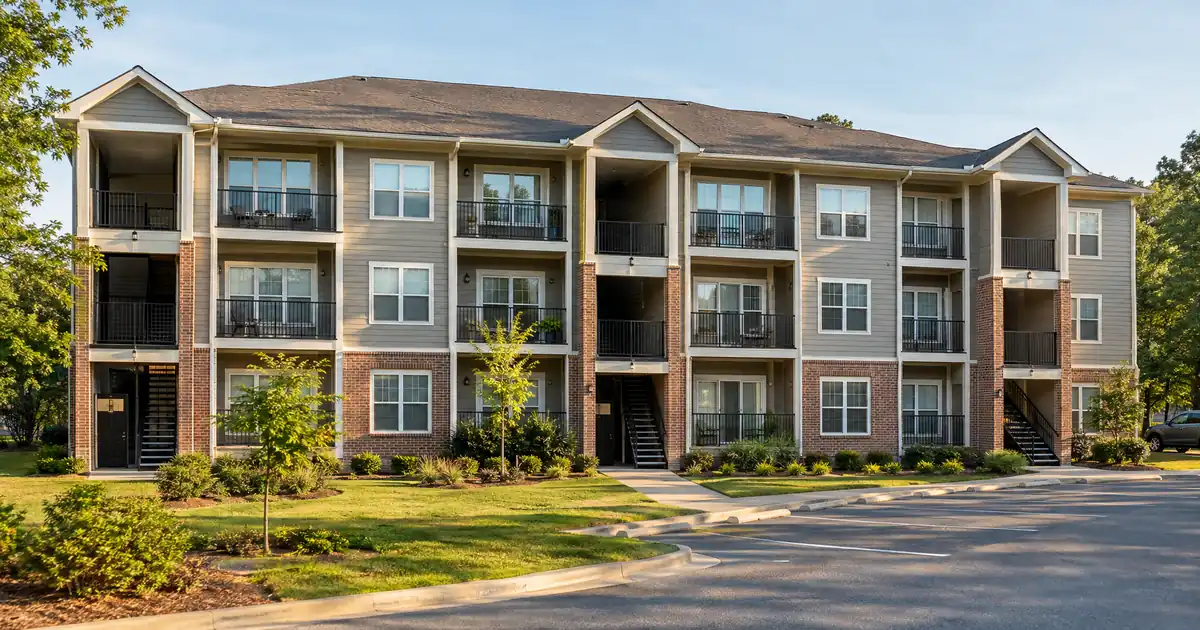
The Quick Read: Qualifying starts with deciding which lane the file belongs in, because a 5+ unit building is underwritten like commercial property while bank statement income documents the borrower. Where a program overlaps the two, the lender reviews your deposits, the building’s rent roll and operating statement, and your credit and liquidity together. Every file is underwritten individually, and the terms below are typical ranges, not promises.
- Bank statement income is built from 12 months of deposits, with lender-specific expense factors applied.
- A building with five or more units is classed as commercial, so the property file gets heavier.
- The rent roll and the trailing-12 operating statement have to agree before the file goes in.
- Loan amounts typically run from $125,000 to $3,500,000, with reserves commonly around 6 months.
- On an investment cash-out, leverage tops out around 75% LTV, subject to lender guidelines.
Most investors who ask this question are self-employed. Their traditional personal-income documentation shows deductions, not cash flow. A 5+ unit purchase through a traditional commercial lender asks for personal tax returns anyway. That mismatch is the reason this loan type gets searched.
What your deposits qualify you for.
Alt-doc programs read 12 months of business or personal bank deposits instead of tax returns. Enter your average monthly deposits and see the income a lender would credit you.
The expense factor is set by the lender from your business type and profit-and-loss statement; it is not a number you choose. This widget quotes no rate and no payment.
Program parameters shown update from Lendmire’s centralized guideline source.
Estimate
Illustrative estimate only — not a quote, Loan Estimate, approval, or commitment to lend. Deposit average, expense factor, and housing ratio are editable assumptions; the expense factor a lender applies is set from your business type and documentation. No interest rate or monthly payment is quoted here. Purchase capacity is a simplified illustration and does not account for taxes, insurance, HOA dues, or other debts. Alt-doc income documentation is available on consumer mortgages in the states where Lendmire is licensed for consumer lending; actual terms vary by lender, borrower, and property.
What Is a 5+ Bank Statement Loan, Really?
It is two tools stacked together. The 5+ side describes the property. The bank statement side describes how your income is documented. Neither one implies the other, so a program that does both is a narrower product than either half alone.
Across Lendmire’s wholesale network, bank statement documentation is a consumer-style alt-doc tool built for self-employed borrowers. Qualifying income comes from deposit averages over 12 months of business or personal statements. The loan is reviewed on documented income under the applicable program, subject to lender guidelines. It is not a no-doc loan. The lender is verifying income, just from a different record.
The five-unit line is a classification line, not a physical difference. Once a building has five or more units, lenders treat it as commercial multifamily. Residential-style products, and the securitization channels behind many non-QM loans, generally stop at four units.
That is why many bank statement programs flatly say 1-4 units only. A few select lenders in the network will look at 5+ files under a separate commercial or small-balance program. Check which one you are in before you gather a single statement.
Which Income Lane Is Your File In?
Pick the lane first. A bank statement file qualifies the borrower from deposits. A DSCR file qualifies primarily on property-level rental income covering the payment, subject to lender guidelines. They solve different problems. If your personal deposits are strong and the building is still being stabilized, the bank statement route may fit. If the building’s income is the strength, the DSCR route often fits better.
At 5+ units, even the DSCR route changes. The calculation tends to be driven by net operating income, not gross rent. Programs vary here, so treat any single rule of thumb with suspicion. Lendmire’s complete DSCR loans guide covers the property-income side in full.
| Factor | Bank statement path | DSCR path |
|---|---|---|
| What qualifies | Borrower deposits | Property income |
| Main documents | 12 months of statements | Rent roll, T-12, leases |
| Who is reviewed | Borrower first | Building first |
| Best for | Self-employed, low tax-return income | Strong in-place rents |
How Do Deposits Become Qualifying Income?
The lender totals eligible deposits over the statement period and strips out anything that is not income. Transfers between your own accounts, loan proceeds and one-off credits come out. On business accounts, an expense factor is then applied. The result is divided by the number of months to produce monthly qualifying income.
The expense factor is lender-specific. Some lenders accept an accountant-prepared ratio in place of a flat default. Personal statements are treated differently from business statements, and many programs count personal deposits more fully. Never assume a universal formula, and never assume the factor you saw on one program sheet carries to the next.
Deposit hygiene decides more files than people expect. Keep these habits in the 12 months before applying:
1. Run business income through one clearly labeled account where you can.
2. Avoid large unexplained deposits. Underwriters ask for a letter on each one.
3. Document transfers between your own accounts so they can be excluded cleanly.
4. Keep personal spending out of the business account if you can.
5. Pull every page of every statement, including the blank-looking ones.
A missing page is a preventable gap. So is a transfer nobody can explain.
How Does Underwriting Treat the Building?
This is where a 5+ file differs most from a 1-4 file. The appraisal shifts from a comps-based residential report to a narrative commercial appraisal built on income. Market rents, vacancy and operating expenses produce a net operating income. Pricing and available terms vary by lender, borrower profile, property type, and full underwriting review.
Two documents carry the property file:
- The rent roll lists each unit, its rent and lease terms. It is a snapshot of in-place gross income.
- The T-12 is the trailing 12 months of the property’s profit and loss.
Underwriters usually want the trailing year, sometimes two, plus year-to-date figures and sample leases.
Here is the failure mode. The rent roll says one thing and the operating statement says another. Rents on the roll exceed collected rents on the T-12. A unit shows as occupied but the deposits never show up. Files where the two already reconcile move through review with far fewer questions. Fix the mismatch before submission, not after.
Federal bank supervisors frame the same logic for commercial lending. The OCC’s Comptroller’s Handbook on commercial real estate lending says income-producing property underwriting should weigh the property’s cash flow and debt coverage, among other factors. It governs banks, not non-QM lenders, but it shows the template commercial reviewers carry in their heads.
What Decides the Outcome?
Five things carry most files:
- Whether the rent roll and T-12 reconcile.
- Occupancy and how stabilized the building is.
- Property condition.
- Borrower credit, liquidity and experience.
- Clean, seasoned documents, meaning statements and entity papers that are complete and consistent.
Reserves matter on any commercial-style file. Programs in the network commonly look for around 6 months of reserves, and larger or less seasoned files can draw more. Reserves documentation needs the same care as the statements: account statements showing the funds, in the borrower’s or entity’s name.
Experience is the soft factor. A borrower buying a first 5+ building often faces tighter terms than someone with a prior multifamily track record. Say so in the application. Include a schedule of real estate owned.
Where the Rule Breaks: Edge Cases
Owner-occupied versus investor purchase. Occupancy decides which disclosure regime applies. A bank statement loan on an owner-occupied property is a consumer mortgage. A loan on a non-owner-occupied rental is business-purpose. The CFPB’s truth-in-lending examination procedures treat credit to acquire non-owner-occupied rental property as business-purpose credit. For a pure investor purchase, TRID does not apply. Do not mix the two regimes on one file. An owner who lives in one unit of a 5+ building is a different case from a pure investor, because the loan is judged on its purpose, not just the property type.
Business purpose is not a blank check. The Federal Register’s ability-to-repay rule places business-purpose and investment-purpose loans outside its scope, so the consumer ability-to-repay test does not drive a true investor file. The lender still underwrites for its own risk and its investors’ risk. Nothing about the exemption loosens documentation.
Mixed-use buildings. Ground-floor retail changes the analysis. Mixed-use limits are set program by program, so ask which share of space and income a lender will accept before you rely on a building.
Investment cash-out. On an investment property, cash-out leverage tops out around 75% LTV. Purchase leverage on bank statement documentation varies by lender, so treat any purchase figure you hear as a question to put to the specific program, not a given. The owner-occupied cash-out ceiling of up to 80% LTV does not carry over to a rental building.
Gross rent versus NOI. For 5+ unit properties, how the lender reviews DSCR varies by program: some lean on gross rents, while others look closer at operating expenses and net operating income. Ask each program which approach it uses before you build your numbers, and have both a gross-rent view and an expense-adjusted view of the property ready.
Pre-Application Readiness Checklist
Before a broker takes the file to a lender, assemble the following:
1. Twelve months of business or personal bank statements, every page.
2. Entity documents if buying through an LLC, subject to lender program eligibility.
3. A current rent roll and the trailing-12 operating statement, reconciled.
4. Sample leases for several units.
5. A schedule of real estate owned.
6. Proof of reserves.
7. A letter explaining any large deposits.
8. An accountant-prepared expense ratio, if the program accepts one.
A full-documentation commercial lender typically wants more: personal financial statement, two years of personal and business returns, global debt analysis. The bank statement route exists so a self-employed borrower does not have to be judged mainly on net income after write-offs.
Choosing the Right Path
This is a genuine toss-up on many files. Bank statement fits when your deposits are strong, your traditional personal-income documentation understates cash flow and the building is not yet fully stabilized. DSCR fits when in-place rents are strong and the building’s income carries the file. Traditional commercial financing fits when your returns are clean and you can accept full documentation and a heavier process.
Scaling is its own friction. The commercial appraisal and the document reconciliation add cost compared with a 2-4 unit file. Budget for that.
Tax treatment can depend on how the funds are used and how the property is held; investors should keep clear records and speak with a qualified tax professional before relying on any deduction.
Lendmire is a mortgage broker that arranges financing through select lenders in its wholesale network, and consumer mortgage licensing covers 16 states. For a broader overview, see Lendmire’s multifamily 5+ bank statement loan complete guide. Call 828-256-2183.
Key Terms Defined
- Rent roll: A unit-by-unit list of rents and lease terms showing in-place gross income.
- T-12: The property’s profit and loss for the trailing 12 months.
- Net operating income (NOI): Income left after operating expenses, before debt service.
- Expense factor: The percentage a lender removes from business deposits to estimate income.
- Capitalization rate: The ratio used to convert NOI into an estimated property value.
- Business-purpose loan: Credit taken mainly for investment or commercial use, not personal or household use.
- Reserves: Liquid funds held after closing, shown through account statements.
Frequently Asked Questions
Can I use a bank statement loan on 5+ units?
Sometimes, but not on most programs. Many bank statement products stop at four units and send 5+ buyers to a commercial program. A few select lenders in Lendmire’s network review 5+ files on documented income under the applicable program, subject to lender guidelines.
How many months of statements are needed?
Twelve months of business or personal statements is the typical documentation. Qualifying income comes from deposit averages after non-income credits are removed and an expense factor is applied.
How much can I borrow, and how much cash do I need?
Loan amounts typically run from $125,000 to $3,500,000, and reserves commonly sit around 6 months. Investment cash-out tops out around 75% LTV. Purchase leverage on bank statement documentation varies by lender, so it is set program by program.
Does the building’s rent count toward qualifying?
The file reviews both the borrower and the building. Deposits document your income, while the rent roll and T-12 document the property. Whether rent supplements your qualifying income depends on the program.
Is this a no-doc loan?
No. The lender verifies income from deposits, and a 5+ file also requires a full property package. Business-purpose status removes the consumer ability-to-repay test on a true investor loan, not underwriting itself.
For current guidelines and terms, see Lendmire’s bank statement loan programs page.
About Lendmire
Lendmire, NMLS# 2371349, is a mortgage brokerage focused on investor financing, arranging DSCR loans in 40 states plus Washington, D.C. — 41 markets total. For bank statement and other alt-doc files, Lendmire arranges financing through select lenders in its wholesale network, where the borrower is reviewed on documented income under the applicable program, subject to lender guidelines. Scotsman Guide named Lendmire a Top Mortgage Workplace in both 2025 and 2026.
Get Started
Ready to find the right loan for you?
In about 30 seconds you can review financing options available for your home or investment property. No commitment required.
Informational only. Not a Loan Estimate, approval, or commitment to lend. Program availability and eligibility are subject to lender guidelines, credit approval, property review, and underwriting.
References
1. OCC Comptroller’s Handbook, Commercial Real Estate Lending
2. CFPB TILA Examination Procedures
This article is part of Lendmire’s bank statement loan program — full qualification details, guidelines, and scenarios live on the program page.
Related reading: How to Qualify for a Bank Statement Loan in Tennessee · How to Qualify for a Bank Statement Loan in Montana · How to Qualify for a 24-Month Bank Statement Loan as a 1099 Contractor
Brandon Miller
Founder & CEO, Mortgage Loan Originator, Lendmire LLC
- Mortgage Loan Originator · NMLS# 1129696 · Verify on NMLS Consumer Access
- North Carolina Real Estate Broker · License# 343312 · Verify on NCREC
- North Carolina Insurance Producer · License# 19053198 · Property, Casualty, Life, Health · Verify on NAIC SBS
- Lendmire LLC · Firm NMLS# 2371349 · Verify firm licensure
Required disclosures. Lendmire (NMLS# 2371349) operates as a licensed mortgage broker, not a direct lender or depository. The discussion in this article is general in nature and should not be relied upon as financial, legal, or tax advice — every investment scenario is unique and should be reviewed by a qualified professional. Any loan inquiry is subject to lender underwriting, and this article is not a commitment to lend or a guarantee of approval. Mortgage rates, loan terms, and program guidelines vary by borrower, property, and state, and may change without notice. Equal Housing Opportunity. Verify licensure at NMLS Consumer Access.