
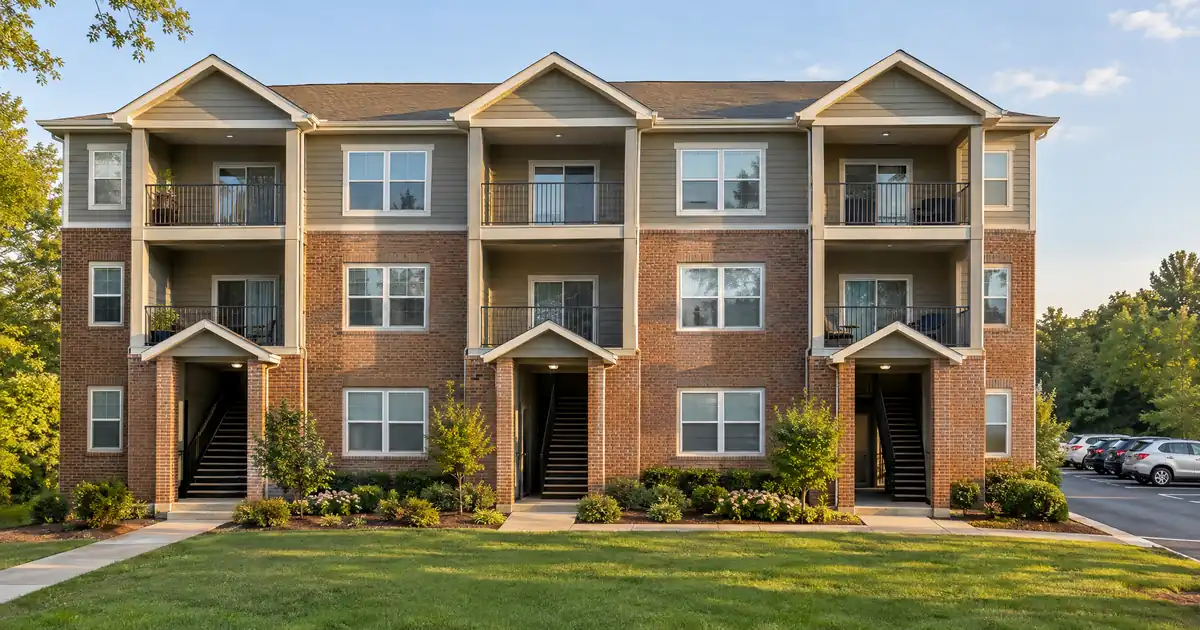
The Quick Read: Buildings with five or more units are underwritten as commercial multifamily, so the property’s net operating income carries qualification. Your 1099 history usually matters only as supporting evidence, or when you plan to live in the building and a lender has a program that allows it. That changes how you prepare.
- A 1099 loan documents personal income. A 5+ unit loan documents the building’s income.
- Net operating income (NOI) divided by debt service sets the coverage number, not gross rent over the payment.
- Expect an income-based appraisal, a rent roll, operating statements, and entity paperwork.
- Credit, liquidity, and reserves still matter, even when personal income is not the test.
- Bank statement programs target owner-occupied homes. A pure rental building usually lands on the investor side.
What a 1099-Only Loan Actually Is
Non-QM means the loan sits outside the standard Qualified Mortgage box. The lender looks at your Form 1099 income instead of traditional personal-income documentation. It still underwrites you.
What your deposits qualify you for.
Alt-doc programs read 12 months of business or personal bank deposits instead of tax returns. Enter your average monthly deposits and see the income a lender would credit you.
The expense factor is set by the lender from your business type and profit-and-loss statement; it is not a number you choose. This widget quotes no rate and no payment.
Program parameters shown update from Lendmire’s centralized guideline source.
Estimate
Illustrative estimate only — not a quote, Loan Estimate, approval, or commitment to lend. Deposit average, expense factor, and housing ratio are editable assumptions; the expense factor a lender applies is set from your business type and documentation. No interest rate or monthly payment is quoted here. Purchase capacity is a simplified illustration and does not account for taxes, insurance, HOA dues, or other debts. Alt-doc income documentation is available on consumer mortgages in the states where Lendmire is licensed for consumer lending; actual terms vary by lender, borrower, and property.
Why does the product exist? Self-employed people write off expenses, and those write-offs shrink the net income on a tax return. A 1099 program lets a lender look at gross receipts and apply an expense factor. Factors differ by lender, so no formula is universal.
Across the wholesale network Lendmire works with, the related program is the bank statement loan. It uses 12 months of business or personal bank statements. Qualifying income comes from deposit averages, with lender-specific expense factors. A file like that is reviewed on documented income under the applicable program, subject to lender guidelines.
Both products are built for people who live in the home. That is the first clue about why they rarely fit a 5+ unit building.
Why Five Units Changes the Rules
Four units is the dividing line between residential and commercial treatment. At five units the building is analyzed as commercial multifamily. The appraisal, the coverage math, and the documents all shift.
| Factor | 1–4 Units | 5+ Units |
|---|---|---|
| Treatment | Residential | Commercial multifamily |
| Coverage math | Gross rent over full payment | NOI over debt service |
| Appraisal | Rent-schedule forms | Income-based narrative |
| Personal income | Depends on program | Usually not the test |
A 5+ unit investor buying as a business typically is reviewed on the building. Select lenders in the network offer investor programs that qualify primarily on property-level income covering the payment, subject to lender guidelines. See the complete DSCR loans guide for the basics.
DSCR loans are designed for non-owner-occupied investment properties. Because they are business-purpose investor loans, they are reviewed differently from a standard owner-occupied mortgage. The CFPB’s commentary on business-purpose credit says a borrower who expects to occupy the property more than 14 days in the coming year is not treated as non-owner-occupied. Occupancy decides which rulebook applies, so settle it before you pick a program.
How Lenders Underwrite a 5+ Unit Step by Step
Underwriting a 5+ unit building moves through six steps, and your 1099 income is not one of them.
1. Confirm purpose and occupancy. You buy as an investor and you will not live there. You sign a business-purpose statement. Pulling cash out for personal spending can undercut that status.
2. Classify the building. At five units or more, the deal works to commercial-style analysis. Mixed-use buildings with ground-floor retail or office are handled differently by some programs.
3. Build the income picture. The lender starts with the rent roll and leases to estimate effective gross income. Then it subtracts vacancy, management, maintenance, owner-paid utilities, and replacement reserves. What remains is NOI.
4. Appraise on income. A 5+ unit property typically gets a commercial narrative appraisal built on income. Residential rent-schedule forms (1007 and 1025) cover 1–4 units and do not apply.
5. Compute coverage. Divide NOI by annual debt service. Compare the result to the program’s minimum.
6. Check the borrower layer. The lender reviews credit, entity documents, liquidity, reserves, and experience.
Here is an illustration with made-up ratios. Say a building’s NOI covers its debt service about 1.3 times. That clears a typical investor-program minimum. Now say vacancy runs higher than the underwriter assumed and coverage drops to roughly 1.1 times. The file may still work, but leverage and terms can tighten.
Programs below 1.00 coverage are available through select lenders in the network. Leverage and terms adjust when coverage is thin. Clearing the ratio also does not mean the deal cash flows. Repairs, turnover, and capital projects sit outside the coverage number.
Where 1099 Income Still Matters
The general rule breaks in a few named places. Know them before you assume your 1099s are irrelevant.
You plan to live in the building. A 1099 or bank statement program applies to owner-occupied homes. Owner-occupied 5+ unit buildings are largely outside residential alt-doc programs. If you truly plan to live in one, a lender has to confirm which program fits. Expect that answer to depend on the lender.
The lender wants sponsor strength. Some commercial-style lenders look at the guarantor’s finances as well as the property. Your 1099 documentation can then serve as supporting evidence of income and stability. That is a lender choice, not a universal requirement.
You are financing your own home alongside the investment. A self-employed investor often needs a primary residence too. That purchase or refinance can run on bank statements or 1099 income. On a primary residence, bank statement programs reach up to 90% LTV on a purchase or rate-term refinance through select lenders, and stronger files earn the top of the range. LTV is loan-to-value, the loan amount as a percentage of the property’s value.
You want to pull equity from the home to fund the building. An owner-occupied cash-out on a primary residence or second home goes up to 80% LTV. Bank statement cash-out on an investment property tops out around 75% LTV. Those are cash-out ceilings, not purchase figures. Every figure here varies by lender and program — guidelines, property type, leverage, and credit profile all apply.
Mixed-use or unusual buildings. A building with commercial space can change the appraisal approach and the leverage. Ask early.
For a deeper look at the business-purpose side, read Lendmire’s piece Complete Guide For A 1099-only Loan On Multifamily 5+ Properties.
The Documentation Checklist
Plan for two packages: one about you, one about the building.
Borrower package
- Government ID and entity documents (operating agreement, EIN letter).
- Credit authorization.
- Proof of liquid funds and reserves.
- A real estate experience summary.
- If an alt-doc program applies: 12 months of business or personal bank statements, or 1099 forms plus proof of self-employment.
Property package
- Current rent roll and signed leases.
- Up to two years of monthly operating statements, where available.
- Expense records and service contracts.
- A unit mix summary and a capital-expenditure summary.
- Insurance and purchase contract.
Lenders vary on exact lists, so ask for theirs before you order anything. Thin or messy records are the most common reason a 5+ unit file stalls. A clean rent roll does more for you than a perfect 1099 stack.
Entity and Vesting Questions
Most investors buy a 5+ unit building through an LLC. Entity vesting is common above four units, per a law-firm analysis of 5+ unit DSCR loans. Entity eligibility depends on program terms, so confirm it with the lender.
Your 1099 income is reported in your personal name. The building’s income sits in the entity. That mismatch is one reason property-level underwriting fits better. The lender does not need to trace your personal income into the LLC. It needs the building’s income, your credit, and your guarantee where required.
Credit, Reserves, and Loan Size
Credit still matters on property-focused files. Higher scores generally earn better leverage and terms. The exact minimum varies by lender and program, so treat any single number you read online with caution.
On the alt-doc side, reserves commonly run around 6 months of the housing payment. Loan sizes run roughly $125,000 to $3,500,000 on that side. Term length follows each lender’s program sheet. Do not assume extended terms carry over from investor programs.
Reserves matter more when documentation is lighter. Lenders want to see that you can carry the building through a slow month. Liquid cash, not a stock of rent checks you hope to collect, is what counts.
Common Reasons for Decline and How to Fix Them
- Thin coverage. NOI is too low against debt service. Lower the loan amount, add down payment, or look at a different building.
- Messy books. Rents and expenses do not reconcile. Clean up the operating statements before you apply.
- Unclear purpose. A checked business-purpose box with no support behind it can fall short. The Cornell LII text of the Reg Z official interpretations treats credit to acquire non-owner-occupied rental property as business purpose, regardless of unit count. Keep your documents consistent with that story.
- Wrong program. You applied under a personal-income product when the property qualifies you. Switch to the investor side.
- Light liquidity. Reserves fall short. Build cash or reduce leverage.
- Entity gaps. Missing operating agreements or inconsistent ownership paperwork. Fix them first.
1099-Only Versus Other Options
| Option | Reviewed on | Best Fit |
|---|---|---|
| 1099 program | Gross 1099 income | Owner-occupied home |
| Bank statement | 12 months of deposits | Self-employed, home or small rental |
| Investor DSCR | Property income | Rentals, including 5+ units |
| Full documentation | Traditional personal-income documentation | Clean returns, high net income |
If you are buying a pure rental building, the investor side usually wins. You avoid the write-off problem, because deductions on your return do not shrink the building’s income. Each building is judged on its own NOI, so a personal debt-to-income limit does not stack up as the portfolio grows.
The trade-offs are real. You face an income-based appraisal, heavier property documentation, and leverage that is often lower than a residential program. For a closer look at smaller buildings, see Lendmire’s guide How to Qualify for a DSCR Multifamily Loan for 5 to 10 Unit Properties.
What the Investor Decision Looks Like
Picture a self-employed contractor, paid entirely on 1099s, who wants a small apartment building. The contractor spends the first week gathering a rent roll and operating statements, not 1099 forms. The question is whether the building’s NOI covers its debt service with room to spare.
Now picture the same contractor buying a primary residence. Here bank statements or 1099 income carry the file, because the home is owner-occupied. One investor, two files, two different documentation paths. Matching the program to the occupancy is the whole game.
Key Terms Defined
1099 loan: A non-QM mortgage that uses Form 1099 income instead of traditional personal-income documentation to qualify a self-employed borrower.
Non-QM: A loan that falls outside Qualified Mortgage standards. It still gets underwritten.
NOI (net operating income): Rental income minus vacancy and operating expenses, before debt service.
DSCR (debt service coverage ratio): Income divided by debt service. On 5+ units, it is NOI over annual debt service.
LTV (loan-to-value): The loan amount as a percentage of the property’s value.
Rent roll: A unit-by-unit list of tenants, rents, and lease terms.
Business-purpose loan: A loan for an investment or commercial use rather than a personal home.
Vesting: The name in which the property title is held, such as an LLC.
Reserves: Liquid funds a lender wants you to hold after closing.
Not Legal or Tax Advice
This article is general education, not legal or tax advice. Consult a qualified professional, such as an attorney or CPA, about your own situation. Tax treatment can depend on how the funds are used and how the property is held; investors should keep clear records and speak with a qualified tax professional before relying on any deduction. Every file is underwritten individually, and nothing here is a commitment to lend.
For a 5+ unit rental, the team can also walk you through the investor-side structures.
Frequently Asked Questions
Can I use a 1099 loan to buy a 5+ unit building?
Rarely. 1099 programs target owner-occupied homes, and 5+ unit buildings are generally underwritten as commercial multifamily. If you plan to live in the building, a lender would have to confirm whether any program fits. For a pure rental, the property’s income usually carries the file.
Do I need traditional income documentation for a 5+ unit investor loan?
Often not on the investor side, where qualification runs primarily on property-level income covering the payment, subject to lender guidelines. You still provide credit, entity documents, liquidity, and property records. Some commercial lenders do review sponsor finances, so requirements vary.
What leverage can I expect?
It depends on the program, the property, and your credit. On a primary residence, bank statement programs reach up to 90% LTV on a purchase or rate-term refinance. Cash-out on an investment property tops out around 75% LTV. Investment purchase leverage on alt-doc varies by lender, and 5+ unit leverage is typically lower than residential.
Does a coverage ratio above 1.0 mean the building cash flows?
No. The ratio compares NOI to debt service. Capital repairs, turnover, and some management costs can sit outside it. Select lenders offer programs below 1.00, though leverage and terms adjust.
Should I buy a 5+ unit building in my name or an LLC?
Many investors use an LLC, and entity vesting is common above four units. Whether an entity is allowed depends on program terms, so confirm with the lender before you sign a contract.
For current guidelines and terms, see Lendmire’s DSCR loan programs page.
About Lendmire
Lendmire is a non-QM mortgage brokerage (NMLS# 2371349) arranging DSCR investor loans in 41 markets, including Washington, D.C. DSCR eligibility is generally reviewed around property-level rental income rather than personal income, subject to lender and program guidelines, a fit for self-employed investors and LLC-owned portfolios. Lendmire was recognized as a Scotsman Guide Top Mortgage Workplace in 2025 and 2026.
Get Started
Ready to find the right loan for you?
In about 30 seconds you can review financing options available for your home or investment property. No commitment required.
Informational only. Not a Loan Estimate, approval, or commitment to lend. Program availability and eligibility are subject to lender guidelines, credit approval, property review, and underwriting.
References
1. CFPB, Official Interpretations of Regulation Z, Section 1026.3
2. Munoz Ghezlan, DSCR Loans for 5+ Unit Properties
3. Cornell Legal Information Institute, Regulation Z Official Interpretations
This article is part of Lendmire’s self-employed mortgage guides — full qualification details, guidelines, and scenarios live on the program page.
Related reading: How to Qualify for a Bank Statement Loan as a Solo Consultant · Interest-Only DSCR Loan or 24-Month Bank Statement Loan for a First Rental? · 1099-Only Loan vs Bank Statement Mortgage for a Consultant
Brandon Miller
Founder & CEO, Mortgage Loan Originator, Lendmire LLC
- Mortgage Loan Originator · NMLS# 1129696 · Verify on NMLS Consumer Access
- North Carolina Real Estate Broker · License# 343312 · Verify on NCREC
- North Carolina Insurance Producer · License# 19053198 · Property, Casualty, Life, Health · Verify on NAIC SBS
- Lendmire LLC · Firm NMLS# 2371349 · Verify firm licensure
Disclosures. The information presented in this article is general market commentary, not financial, legal, or tax advice. Lendmire is a mortgage brokerage (NMLS# 2371349) — not a direct lender or depository institution — and loan placement is subject to lender underwriting. Nothing in this content represents a commitment to lend. Loan terms, pricing, and program availability vary based on borrower qualifications, property characteristics, and state of subject property, and are subject to change at any time. Lendmire complies with Equal Housing Opportunity requirements. Consumer access: nmlsconsumeraccess.org.