
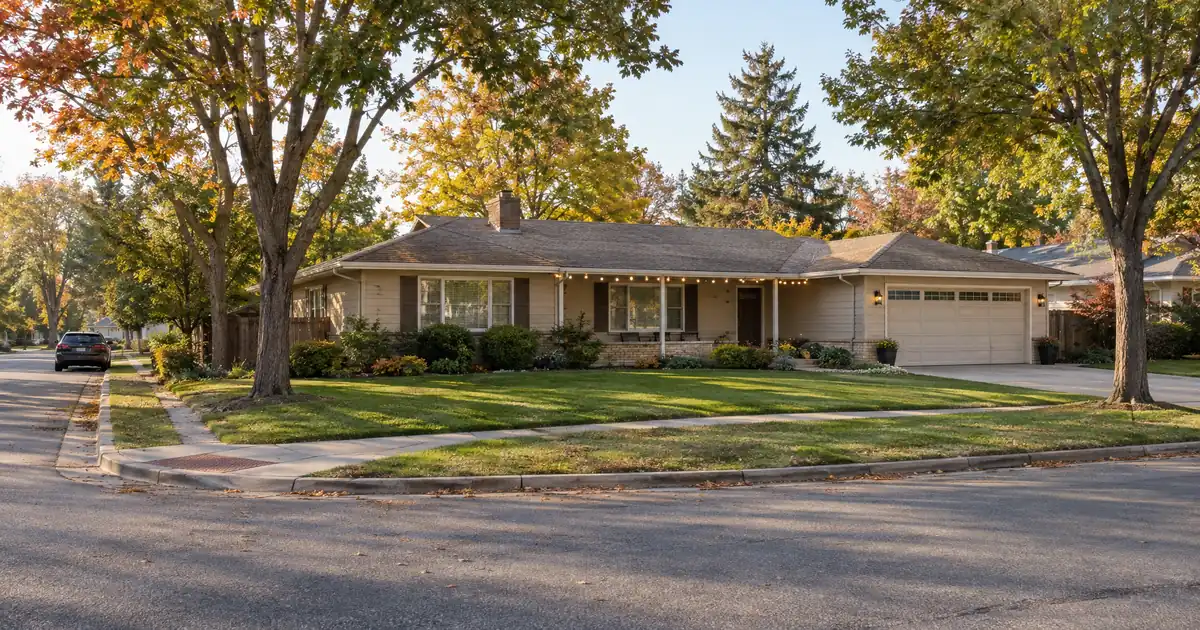
The Quick Read: To qualify, you show that the contractor income on your 1099 forms is steady and still coming in, then pair it with solid credit, cash reserves, and a single-family home you plan to live in, since this loan judges your income and not the property’s rent. A pure rental purchase usually belongs on a different loan.
- The lender builds your qualifying income from 1099 receipts after an expense adjustment. It does not use your tax-return net.
- Most programs want a steady record of self-employment and proof that income continues this year.
- This product fits a primary residence or second home. A rental you will not occupy usually moves to a property-based loan.
- Reserves of roughly six months of the housing payment are common, and each file is underwritten individually.
Key Terms Defined
Non-QM loan: a mortgage that falls outside the standard rules agency-backed loans follow, which lets lenders document income in other ways.
1099-NEC: the IRS form a business files to report what it paid you as a contractor, rather than as an employee.
Expense factor: the percentage a lender subtracts from your gross 1099 receipts to estimate the cost of earning them.
DTI (debt-to-income ratio): your monthly debts, including the new housing payment, divided by your monthly qualifying income.
LTV (loan-to-value): the loan amount as a percentage of the property’s value or price.
Reserves: liquid savings left over after closing, counted in months of the housing payment.
DSCR (debt service coverage ratio): a rental property’s monthly rent divided by its monthly debt payments, used to underwrite investor loans on the property instead of the borrower.
What your deposits qualify you for.
Alt-doc programs read 12 months of business or personal bank deposits instead of tax returns. Enter your average monthly deposits and see the income a lender would credit you.
The expense factor is set by the lender from your business type and profit-and-loss statement; it is not a number you choose. This widget quotes no rate and no payment.
Program parameters shown update from Lendmire’s centralized guideline source.
Estimate
Illustrative estimate only — not a quote, Loan Estimate, approval, or commitment to lend. Deposit average, expense factor, and housing ratio are editable assumptions; the expense factor a lender applies is set from your business type and documentation. No interest rate or monthly payment is quoted here. Purchase capacity is a simplified illustration and does not account for taxes, insurance, HOA dues, or other debts. Alt-doc income documentation is available on consumer mortgages in the states where Lendmire is licensed for consumer lending; actual terms vary by lender, borrower, and property.
What Is a 1099-Only Loan, and Why Does It Exist?
A 1099-only loan is a non-QM income-documentation program. The lender reads your 1099 forms, usually one or two years of them, in place of traditional personal-income documentation or W-2s. It then turns those forms into a monthly qualifying income figure.
The product exists because of write-offs. A contractor can earn strong gross receipts and still report a thin net on a tax return, since deductions shrink the bottom line. Standard underwriting reads that bottom line. A 1099 program starts higher, at gross receipts, and applies its own expense adjustment.
“Only” does not mean “undocumented.” The lender still has to verify the income it relies on with reliable records. Your 1099s are the starting point, and the file usually adds proof that the income is current, such as a year-to-date earnings statement, pay stubs, or bank statements. Credit review, DTI, an appraisal, and title all still apply.
Across Lendmire’s wholesale network, no single 1099 rulebook exists. Each lender writes its own program sheet, so documentation windows, expense factors, and property eligibility differ. Everything below describes how most programs behave, and your file is always underwritten individually.
Who Qualifies for a 1099-Only Loan?
You are the target borrower if contractor income is your main earnings, you have a steady history of it, and you will live in the home. Most programs want about two years in the same line of work, though a few lenders accept a shorter record when the prior work was closely related.
| Requirement | Why lenders ask | How you document it |
|---|---|---|
| Steady 1099 income | Shows income will continue | One or two years of 1099s |
| Current-year income | Confirms nothing has dropped | Year-to-date statement, stubs, deposits |
| Credit profile | Drives eligibility and leverage | Credit report |
| Reserves | Cushion for uneven income | Asset statements |
| Occupancy | Decides the program and rules | Application and lender review |
Treat the details as lender-specific. Minimum credit, down payment, and expense treatment come from the program sheet, so ask which sheet your file lands on before you gather paperwork.
How Underwriting Treats Your 1099 Income, Step by Step
Underwriting follows a predictable path, even though each lender changes the numbers.
1. The pay-source check. The underwriter confirms each 1099-NEC is real and was issued to you. Under the IRS instructions for Forms 1099-MISC and 1099-NEC, 1099-NEC reports nonemployee compensation, and payers file it for people paid at least $2,000 for services in the course of business. Smaller payments may show up as deposits without a form.
2. The documentation window. One year or two, depending on the program. Two years show more history and smooth out a spike or dip.
3. Current-year proof. The lender wants evidence that this year looks like the last. A year-to-date earnings statement, recent pay stubs, or bank statements usually do the job.
4. Gross to qualifying income. The lender takes your gross receipts, subtracts an expense factor, and divides by the months in the window. The expense factor is the most program-specific number in the file, so never assume one.
5. The usual layers. Credit, DTI, reserves, appraisal, and title run alongside the income review. Self-employed borrowers face the same basic expectations on income, debt, and credit as W-2 borrowers. Only the documentation changes.
6. The judgment call. Underwriters weigh continuity of income, how many payers you have, credit, reserves, occupancy, and leverage. They also ask whether your gross receipts translate into steady cash flow.
Picture two contractors with identical 1099 totals. One runs lean and reports a healthy net. The other writes off heavily and reports a thin one. A tax-return lender sees them as very different borrowers. A 1099 lender sees the same starting figure, applies the same kind of expense adjustment, and compares each borrower’s DTI. That is the whole appeal.
One caution runs the other way. If your actual business costs are much higher than a standard expense adjustment assumes, the program can flatter you on paper. Lenders know this, so they also look at deposits, which is why some files drift toward bank statement documentation.
Why Single-Family Homes Fit (and What Changes by Occupancy)
Single-family is the cleanest property type for this loan. One unit means one appraisal approach, simple title, and no rental-unit math to layer on. Condos add association review. Two-to-four unit properties add rent schedules. Eligibility on each type follows the lender’s sheet.
Occupancy matters far more than property type. It decides which program you are in and which disclosure rules apply.
| Occupancy | Loan type | Typical fit |
|---|---|---|
| Primary residence | Consumer mortgage | Strong fit |
| Second home | Consumer mortgage | Sometimes eligible |
| Non-owner-occupied rental | Business-purpose loan | Usually a different program |
An owner-occupied file is a consumer mortgage, so the consumer disclosure rules known as TRID apply. A bank-statement loan on a non-owner-occupied rental, including a short-term rental, is business-purpose and exempt from TRID. Keep those two lanes separate in your head, because a property you will live in and a property you will rent out are underwritten differently.
Leverage, Reserves, and Loan Size
Leverage depends on occupancy, credit, and the program. Documented-income programs in the network, including bank statement and similar alt-doc loans, typically reach up to 90% LTV on a primary-residence purchase or rate-and-term refinance, with stronger files earning the top of that range. Qualifying from liquid assets instead of income can run to about 80% LTV on a primary residence. The 1099-only variant follows its own lender sheet, so treat 90% as the ceiling for the category, not a promise.
Cash-out has a lower ceiling. On an owner-occupied cash-out, a primary residence or second home, alt-doc programs typically top out at 80% LTV with a fixed expense ratio, or 75% with an accountant-prepared ratio, depending on loan size and credit. Investment-property cash-out on this kind of documentation tops out around 75% LTV.
Loan amounts commonly run from roughly $125,000 to $3,500,000. Reserves around six months of the housing payment are common, and they are one of the file’s main stabilizers when income is uneven. All of this is typical of select lenders’ guidelines and subject to the file.
Edge Cases Where the Rule Bends
Payments made to your company. If clients pay your LLC or S-corporation, those payments generally are not 1099-NEC income to you personally. Some programs require 1099s issued to you by name. If you own a meaningful share of a business, bank statement or profit-and-loss documentation is the more natural program.
Mixed W-2 and 1099 income. Combining them can change which program fits best. A recent switch from salary to contracting is the sharpest version, because the record of self-employment is short.
1099-MISC and 1099-NEC. Contractor pay was moved from 1099-MISC to 1099-NEC for payments a few years back, so a two-year file can contain both. Underwriters expect that. Other 1099 types, such as those reporting interest, dividends, or rent, are different income. Only earned contractor income fits the program as designed. Payment-platform income varies by lender and often needs deposit support.
A house-hack. If you will live in one unit or room, the loan stays consumer-purpose, and a 1099 program can work. The business-purpose rules treat a property you expect to occupy for more than 14 days in the coming year as owner-occupied, so a rental you plan to use yourself does not get investor treatment. Eligibility on multi-unit properties varies by lender.
Short-term rentals. Short-term rental rules can vary by city, county, HOA, and property type, so investors should confirm local rules before relying on projected rental income.
Where the 1099 Route Stops Working: Pure Rentals
If you are buying a single-family home only to rent it out, a 1099-only loan is usually the wrong tool. It adds an income review and a personal DTI test to a deal that the property can carry by itself.
DSCR loans are designed for non-owner-occupied investment properties. Because they are business-purpose investor loans, they are reviewed differently from a standard owner-occupied mortgage. The federal rule behind that distinction, Regulation Z section 1026.3, exempts credit extended primarily for business purposes and gives a single-family house rented to another person as an example. DSCR loans are also exempt from TRID.
In practice, this means the property is the test. A DSCR file qualifies primarily on property-level rental income covering the payment, subject to lender guidelines. Select lenders in the network also review ratios below 1.00, though leverage and terms adjust when they do. Longer interest-only structures are also a DSCR-side offering. Lendmire’s piece How to Qualify for an Interest-Only DSCR Loan on Single-Family Properties covers that path.
Scaling is the structural reason investors switch lanes. Every mortgage you add raises your personal DTI under an income-based program. After a few rentals, that stops working, and property-level underwriting takes over. The complete DSCR loans guide walks through that side in full.
Why 1099 Files Get Stuck
Most stalled files trace back to a handful of mismatches.
- 1099s that do not match deposits. Underwriters compare the forms to your bank statements. Gaps need an explanation.
- A recent change of payer. Losing your largest client mid-year raises questions about continuity.
- A thin self-employment record. Under two years in the field can lead some programs to decline, though lenders differ on how much history they require.
- Existing rental debt. Mortgages on other properties count in your DTI, which can squeeze an otherwise strong file.
- Income that is not 1099 income. Rent, interest, and platform payouts do not convert the way contractor receipts do.
- Thin reserves. Uneven income plus little cash is a combination lenders treat carefully.
Most fixes are about preparation. Explain gaps in writing before the underwriter asks, line up year-to-date proof, and keep personal and business deposits easy to tell apart.
Which Documentation Type Fits You?
| Loan type | Judges | Best fit |
|---|---|---|
| 1099-only | Your gross contractor income | Contractor with clean 1099s |
| Bank statement | Your deposit history | Mixed or business income |
| Profit-and-loss | A prepared P&L | Established business owner |
| DSCR | The property’s rent | Rental purchase, no occupancy |
If your 1099s tell the full story, the 1099 route is the simplest. If they do not, bank statement documentation usually fits better. Qualifying income comes from 12 months of business or personal deposits, with lender-specific expense factors. If the property is a rental, skip the personal-income route entirely.
Document Prep Checklist
Gather these before you talk to a lender:
- One to two years of 1099 forms.
- A year-to-date earnings statement, recent pay stubs, or bank statements.
- Recent statements for the accounts holding your reserves.
- A short written note explaining any gap or change of payer.
- A list of your current debts, including other mortgages.
From there the path runs in order. You choose the program, the lender reviews your documents, an appraisal and title follow, and underwriting reaches a decision. The calculator on this page is an illustrative estimate and can help you test leverage before you apply.
Next Steps
If you are self-employed and want to see how the numbers work, Lendmire can help you compare documented-income options based on your deposits, the property, credit profile, leverage, and your goals. Lendmire is a broker that arranges financing through select lenders in its wholesale network. Consumer licensing for these programs covers 16 states, and qualification is on documented income under the applicable program, subject to lender guidelines. Some borrowers also compare a 1099 program against a no-ratio DSCR structure, and Lendmire’s piece How to Qualify for a No-Ratio DSCR Loan on Single-Family Properties is a useful side-by-side. This is not a commitment to lend.
This article is general information, not legal or tax advice. Tax treatment can depend on how the funds are used and how the property is held; investors should keep clear records and speak with a qualified tax professional before relying on any deduction. Consult an attorney or CPA about your own situation.
Frequently Asked Questions
Can I use a 1099-only loan to buy a rental property?
Rarely. A 1099-only loan judges your personal income, which makes it a fit for a primary residence or second home. For a rental you will not occupy, a DSCR loan usually fits better because it qualifies primarily on property-level rental income covering the payment, subject to lender guidelines.
How long do I need to be self-employed?
Most programs look for about two years of steady self-employment. A few lenders accept a shorter record when your prior work was closely related. Each lender’s program sheet sets the rule, so ask before you apply.
Is my gross 1099 income what the lender uses?
Not in full. Lenders start from gross receipts and apply an expense factor, which differs by program. Your qualifying income comes out lower than gross and usually higher than a heavily deducted tax-return net.
Do I still need reserves?
Yes. Reserves around six months of the housing payment are common. Uneven contractor income makes cash reserves one of the stronger compensating factors in a file.
What if my 1099s are not enough?
Bank statement documentation is the usual alternative. It qualifies from 12 months of deposits, with lender expense factors, and it works well for borrowers with several income streams or business-owned receipts.
For current guidelines and terms, see Lendmire’s self-employed mortgage programs page.
About Lendmire
Lendmire (NMLS# 2371349) is a mortgage broker that arranges documented-income financing for self-employed borrowers through select lenders in its wholesale network, with qualification on documented income under the applicable program, subject to lender guidelines. Consumer mortgage programs like those described here are offered in 16 states. Scotsman Guide named Lendmire a Top Mortgage Workplace in 2025 and 2026.
Get Started
Ready to find the right loan for you?
In about 30 seconds you can review financing options available for your home or investment property. No commitment required.
Informational only. Not a Loan Estimate, approval, or commitment to lend. Program availability and eligibility are subject to lender guidelines, credit approval, property review, and underwriting.
References
1. IRS Instructions for Forms 1099-MISC and 1099-NEC
This article is part of Lendmire’s self-employed mortgage guides — full qualification details, guidelines, and scenarios live on the program page.
Related reading: How to Qualify for a P&L Only Jumbo Loan · How to Qualify for a Bank Statement Loan for Law Firm Partners · Should a Luxury STR Operator Choose Interest-Only on a Super Jumbo Loan?
Brandon Miller
Founder & CEO, Mortgage Loan Originator, Lendmire LLC
- Mortgage Loan Originator · NMLS# 1129696 · Verify on NMLS Consumer Access
- North Carolina Real Estate Broker · License# 343312 · Verify on NCREC
- North Carolina Insurance Producer · License# 19053198 · Property, Casualty, Life, Health · Verify on NAIC SBS
- Lendmire LLC · Firm NMLS# 2371349 · Verify firm licensure
Important disclosures. Lendmire (NMLS# 2371349) is a licensed mortgage brokerage. Lendmire is not a direct lender, depository institution, or financial advisor. All loan inquiries are subject to lender underwriting; this article does not constitute a commitment to lend. Rates, terms, and program guidelines are subject to change without notice and vary by borrower profile, property type, and state. Information in this article is general in nature and is not financial, legal, or tax advice. Equal Housing Opportunity. NMLS Consumer Access: nmlsconsumeraccess.org.