
The Quick Read: A newly self-employed buyer is reviewed on documented income under the applicable program, subject to lender guidelines. The file shows 12 months of clean bank deposits and proof the business is real. Occupancy picks the product, and time in business is the main hurdle.
- Because you will live in the property, the loan is an owner-occupied, documented-income mortgage. A rental-income (DSCR) loan is the wrong tool.
- Lenders average 12 months of eligible deposits. Business accounts take an expense factor.
- Under two years of self-employment is not an automatic no. Documented work in the same or a related field often carries the file.
- On a primary residence purchase, select lenders in Lendmire’s network go up to 90% LTV on the strongest files.
- Clean deposits, reserves around six months of the housing payment, and solid credit decide most outcomes.
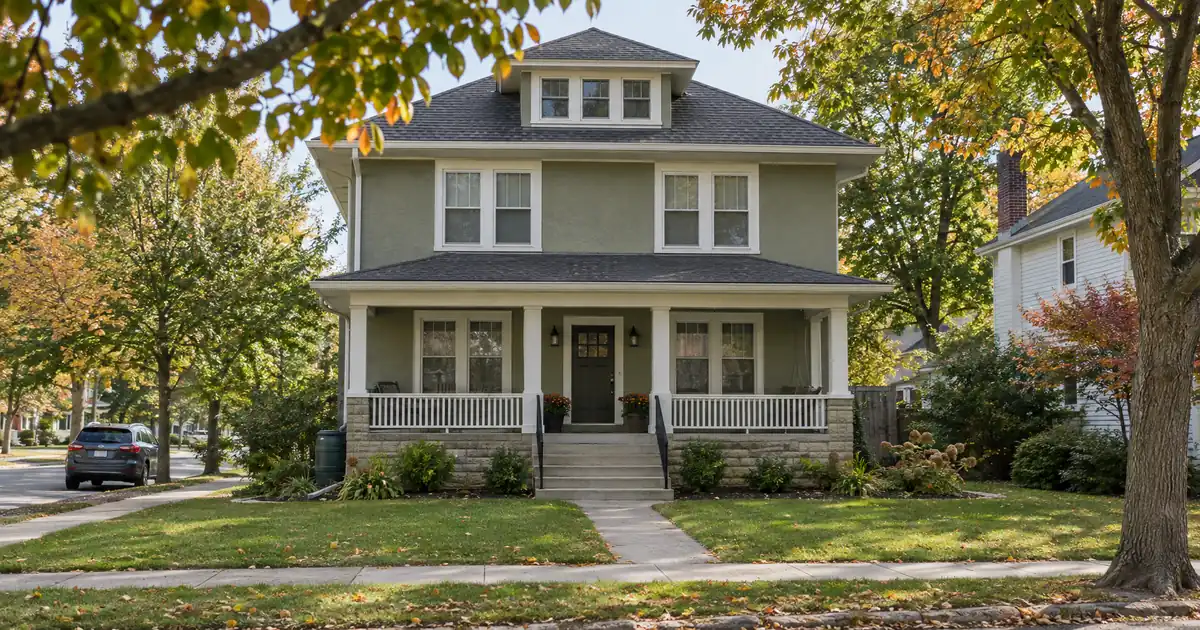
Here is the plain-English version. You left a paycheck, started a business, and now want to buy a duplex or fourplex, live in one unit, and rent the rest. Your first tax return probably looks thin. A bank statement loan exists for exactly that gap.
What your deposits qualify you for.
Alt-doc programs read 12 months of business or personal bank deposits instead of tax returns. Enter your average monthly deposits and see the income a lender would credit you.
The expense factor is set by the lender from your business type and profit-and-loss statement; it is not a number you choose. This widget quotes no rate and no payment.
Program parameters shown update from Lendmire’s centralized guideline source.
Estimate
Illustrative estimate only — not a quote, Loan Estimate, approval, or commitment to lend. Deposit average, expense factor, and housing ratio are editable assumptions; the expense factor a lender applies is set from your business type and documentation. No interest rate or monthly payment is quoted here. Purchase capacity is a simplified illustration and does not account for taxes, insurance, HOA dues, or other debts. Alt-doc income documentation is available on consumer mortgages in the states where Lendmire is licensed for consumer lending; actual terms vary by lender, borrower, and property.
Key Terms Defined
Bank statement loan: a non-QM mortgage (a loan outside standard agency rules) that is reviewed around deposits in your bank accounts instead of tax-return income.
House-hack: buying a small multi-unit property, living in one unit, and renting the others.
Expense factor: the percentage of business deposits a lender treats as overhead rather than your income.
LTV (loan-to-value): the loan amount divided by the property’s value. Higher LTV means less cash down.
Reserves: liquid savings left over after closing, usually counted in months of the housing payment.
Seasoning (time in business): how long you have been self-employed. Lenders use it to judge whether your income will last.
Asset depletion: qualifying from liquid savings and investments instead of monthly deposits.
Why Do Bank Statements Work for a New Business Owner?
Bank statements show what actually came in the door. Traditional personal-income documentation shows what is left after write-offs. For a new owner who invested heavily in equipment, software, or marketing, those two numbers can be far apart.
Scotsman Guide describes bank statement loans as a way for self-employed borrowers to qualify on actual income rather than the figure on their returns. It also notes that underwriters have to look at every account the business uses. A one-size-fits-all expense factor can wrongly penalize asset-heavy or low-overhead businesses.
Both points matter to you. Missing an account can sink a file. And the way a lender treats your business type can swing your qualifying income.
Does Being Newly Self-Employed Disqualify You?
No. It makes the file harder, and the answer depends on the program. Across the wholesale network Lendmire works with, length of self-employment is the single biggest hurdle for a new owner. Some programs lean toward two years. Others will look at about a year if you can document prior experience in the same or a related field.
That is why you hear conflicting advice. One lender says come back in two years. Another says send the file. They are often describing different programs, or different overlays (a lender’s own extra rules on top of the program). Neither is lying.
What helps a short history:
- Prior W-2 work in the same trade or industry.
- A business license, registration, or CPA letter confirming ownership.
- Strong credit and reserves.
- Deposits that are steady and growing, not one big lump.
| Your situation | Likely route | What to document |
|---|---|---|
| W-2 to 1099, same field | Bank statements, with experience credit | Prior pay history, new contracts, 12 months of deposits |
| Side business gone full-time | Bank statements, possibly business accounts | Deposit history from the side business, license, CPA letter |
| Career changer | Harder file; may need more time or assets | Larger reserves, strong credit, deposit consistency |
| Savings-heavy, thin deposits | Asset-depletion route | Liquid account statements |
Each lender decides its own cutoffs. Treat the table as a starting map, not a verdict.
How Does House-Hacking Change the Loan?
Occupancy decides everything. If you will live in the property, you need an owner-occupied, documented-income mortgage. A DSCR loan is reviewed primarily on the property’s rental income covering the payment, and those programs are built for non-owner-occupied investment property. Not for you. Not yet.
Federal rules draw the same line. The CFPB’s Regulation Z commentary treats credit on a non-owner-occupied rental as business-purpose. It also says a property the owner expects to occupy beyond a brief stay cannot be treated as non-owner-occupied. A house-hacker lives there, so the shortcut is gone.
In practice, a duplex purchase where you live in one unit is a consumer mortgage, and consumer disclosure rules (TRID) apply. Three- and four-unit owner-occupied purchases can fall on the business-purpose side federally. The lender’s own program rules still decide how the file is documented, so never assume.
Consumer loans must clear an ability-to-repay test. This is why a bank statement loan is a documented-income loan, not a loophole. Hard money is also off the table here, since those lenders generally avoid owner-occupied homes.
How Do Lenders Turn Deposits Into Income?
Underwriters follow a repeatable sequence. Knowing it lets you prepare the file before anyone asks.
1. Pick the account type. Programs use personal or business statements, depending on how you are paid.
2. Screen the deposits. The lender strips out transfers between your own accounts, loan proceeds, refunds, and unexplained credits. Only your real income stays.
3. Average what is left. Eligible deposits are totaled and divided by the months in the window. Most programs Lendmire places files with use 12 months.
4. Apply the expense factor. Business deposits are discounted for overhead. Personal-account programs often skip the discount, depending on the program. If you own only part of the business, your ownership share applies.
5. Test the housing payment. Qualifying income is compared to the proposed housing payment under the program’s own ratio.
6. Check credit, reserves, and the property. Same as any non-QM file.
Run a quick illustration, using made-up index numbers rather than dollars. Say your eligible business deposits average 100 points a month. Suppose a lender’s factor keeps 60 of them. Your qualifying income is 60 points, no matter how big the gross deposits looked. That 60 is a hypothetical, not a program figure. Factors vary by lender and business type, and an accountant-prepared expense ratio can sometimes replace the default.
Here is where experience shows. Borrowers often think the gross deposit total is their income. It almost never is, because transfers and refunds disappear first. A file that looks strong on gross deposits can shrink by a third after screening. Running that screen yourself before applying prevents the unpleasant surprise.
What Documents Will You Need?
Expect a checklist like this. Each item answers a question the underwriter has.
| Document | Why the lender wants it |
|---|---|
| 12 months of bank statements | Source of qualifying income |
| Statements for every account | Missing accounts can sink the file |
| Proof of ownership (license, CPA letter) | Confirms the business exists and is yours |
| Prior employment history | Supports a short self-employment record |
| Asset statements | Reserves, typically around six months of housing payment |
| Credit report | Credit tier drives leverage and eligibility |
| Purchase contract and appraisal | Property and unit-count review |
Loan sizes in this lane generally run from about $125,000 to $3,500,000, subject to lender guidelines. Multi-unit appraisals usually come on the multi-unit form (Form 1025). That is an appraisal form, not an eligibility rule.
How Does Rent From the Other Units Fit In?
This is the question most borrowers ask last and should ask first. Whether projected rent from the other units can offset the payment is a program-guideline question. It differs from lender to lender. Some count a portion of it. Others review the file against deposit income alone and treat rent as a bonus.
So don’t build your plan around rent counting. Build it around your own income covering the full housing payment, and treat rent as a cushion. Then ask the loan officer how each program treats it before you pick a property.
Stress-test the building, too. If one rented unit sits empty, can your income and reserves carry it? A DSCR loan ignores repairs, vacancy, and capex, and so does your napkin math until you add them. Model them separately.
Deposit Hygiene: What to Do Before You Apply
Clean statements win files. Messy ones stall them.
- Route income into one account. Customer payments should land in your business or primary account, not scattered across five apps.
- Stop mixing money. Personal spending from a business account muddies the picture, and the reverse does too.
- Document odd deposits. A one-time gift or asset sale needs a paper trail, or it gets excluded.
- Skip transfer shuffles. Moving money between your own accounts inflates nothing. It just creates items to explain.
- Protect credit and reserves. Don’t open new debt right before applying.
Start about a year out if you can. Over the first months, tidy accounts and keep deposits steady. Midway through, gather your license, CPA letter, and work history. By application day, the file should need no explanations.
Which Route First? (Honest Options If You Are Not Ready)
The right move depends on where you are today. Honestly, a borrower at month nine with thin deposits may do better waiting three months than pushing a weak file. The stronger play is usually the one that can be documented without apologies.
| Route | Best for | Tradeoff |
|---|---|---|
| Bank statement loan | Strong deposits, short tax history | Needs clean statements and reserves |
| Profit-and-loss program | Accountant-prepared financials | Depends on the preparer and lender |
| Asset depletion | Large savings, uneven deposits | Up to about 80% LTV on a primary residence |
| Traditional owner-occupied path | Same-field W-2 experience | Usually wants tax-return history |
| Wait and build | Under a year, weak records | Costs time, protects the file |
On leverage: select lenders in Lendmire’s network go up to 90% LTV on a primary residence purchase or rate-term refinance, with the top of that range reserved for stronger files. A later owner-occupied cash-out tops out around 80% LTV. An investment-property cash-out tops out around 75%. Investment purchase leverage on bank statement documentation varies by lender, so investor leverage questions belong on the DSCR side.
Why Do These Files Stall?
A few patterns repeat:
- Statements missing an account the business uses.
- Large unexplained deposits.
- A short history with no same-field experience to back it.
- Thin reserves once the down payment is spent.
- Credit that slipped between pre-approval and the application.
- A property type or unit mix the lender’s program does not allow.
Mixed-use buildings deserve a special flag. Some lenders accept them when most of the building is residential. The exact share is a lender rule, so confirm it before you write an offer.
What Happens After You Move Out?
Owner-occupied financing typically asks you to live in the home for at least a year, and you keep the loan after you move out, as BiggerPockets’ house-hacking guide explains. That is the ladder. A bank statement loan on the live-in property comes first. DSCR financing on later rentals follows, once you have moved out and the next purchase is a pure investment.
For a deeper look at the DSCR side, see Lendmire’s complete DSCR loans guide. For the borrower profile here, Lendmire’s piece How a Newly Self-Employed Borrower Gets a Bank Statement Mortgage covers the same ground from a different angle.
Tax treatment can depend on how the funds are used and how the property is held; investors should keep clear records and speak with a qualified tax professional before relying on any deduction.
Frequently Asked Questions
Can I qualify with less than two years of self-employment?
Sometimes. Many programs prefer two years, but others will review about a year when you can document prior work in the same or a related field. Strong credit, reserves, and steady deposits also help. Exceptions are lender-specific, so confirm against the program before you make an offer.
Is a bank statement loan the same as a no-documentation loan?
No. It is reviewed on documented income under the applicable program, subject to lender guidelines. The lender verifies your deposits with third-party records. What changes is the document: statements replace tax-return income.
Can I use a DSCR loan to buy a duplex I will live in?
Generally not. DSCR programs are designed for non-owner-occupied investment property, and they qualify primarily on property-level rental income covering the payment. An owner-occupied duplex needs a documented-income program instead. Once you move out, later purchases can move to DSCR.
How much can I borrow against a house-hack?
On a primary residence purchase, select lenders in the network go up to 90% LTV on stronger files, typically with reserves around six months of the housing payment. Your credit, unit count, and loan size all move the number. Every file is underwritten individually.
Do personal or business statements work better?
It depends on how you are paid. Business statements usually take an expense factor, while personal-account programs often skip it. If your business has low overhead, an accountant-prepared expense ratio may help. Ask which window and account type each program accepts.
Where to Start
Consumer mortgage licensing in this lane covers 16 states. Reach the team at 828-256-2183 or request a quote, subject to lender guidelines and not a commitment to lend.
The cleanest house-hack files are built months before the offer, because a spotless 12-month deposit record outsells any explanation you can write at the last minute.
About Lendmire
Lendmire, NMLS# 2371349, is a non-QM mortgage broker serving real estate investors in 41 markets, including Washington, D.C., through DSCR investor loan programs. Qualification is generally reviewed around the subject property’s rental income, not the borrower’s W-2 history — a practical fit for LLC-titled portfolios and self-employed investors. All scenarios remain subject to lender review and program guidelines. Two consecutive Scotsman Guide Top Mortgage Workplace recognitions (2025, 2026).
Get Started
Ready to find the right loan for you?
In about 30 seconds you can review financing options available for your home or investment property. No commitment required.
Informational only. Not a Loan Estimate, approval, or commitment to lend. Program availability and eligibility are subject to lender guidelines, credit approval, property review, and underwriting.
References
1. Scotsman Guide, Don’t Shut the Door on Quality Borrowers
2. CFPB, Regulation Z §1026.3 commentary
3. BiggerPockets, House Hacking Strategy
This article is part of Lendmire’s bank statement loan program — full qualification details, guidelines, and scenarios live on the program page.
Related reading: How to Qualify for a Bank Statement Loan on Assets After Retiring · How to Qualify on Business Deposits for a Texas Bank Statement Loan · Bank Statement Loan vs Conventional Mortgage for a Self-Employed Buyer
Brandon Miller
Founder & CEO, Mortgage Loan Originator, Lendmire LLC
- Mortgage Loan Originator · NMLS# 1129696 · Verify on NMLS Consumer Access
- North Carolina Real Estate Broker · License# 343312 · Verify on NCREC
- North Carolina Insurance Producer · License# 19053198 · Property, Casualty, Life, Health · Verify on NAIC SBS
- Lendmire LLC · Firm NMLS# 2371349 · Verify firm licensure
Important disclosures. Lendmire (NMLS# 2371349) is a licensed mortgage brokerage. Lendmire is not a direct lender, depository institution, or financial advisor. All loan inquiries are subject to lender underwriting; this article does not constitute a commitment to lend. Rates, terms, and program guidelines are subject to change without notice and vary by borrower profile, property type, and state. Information in this article is general in nature and is not financial, legal, or tax advice. Equal Housing Opportunity. NMLS Consumer Access: nmlsconsumeraccess.org.