
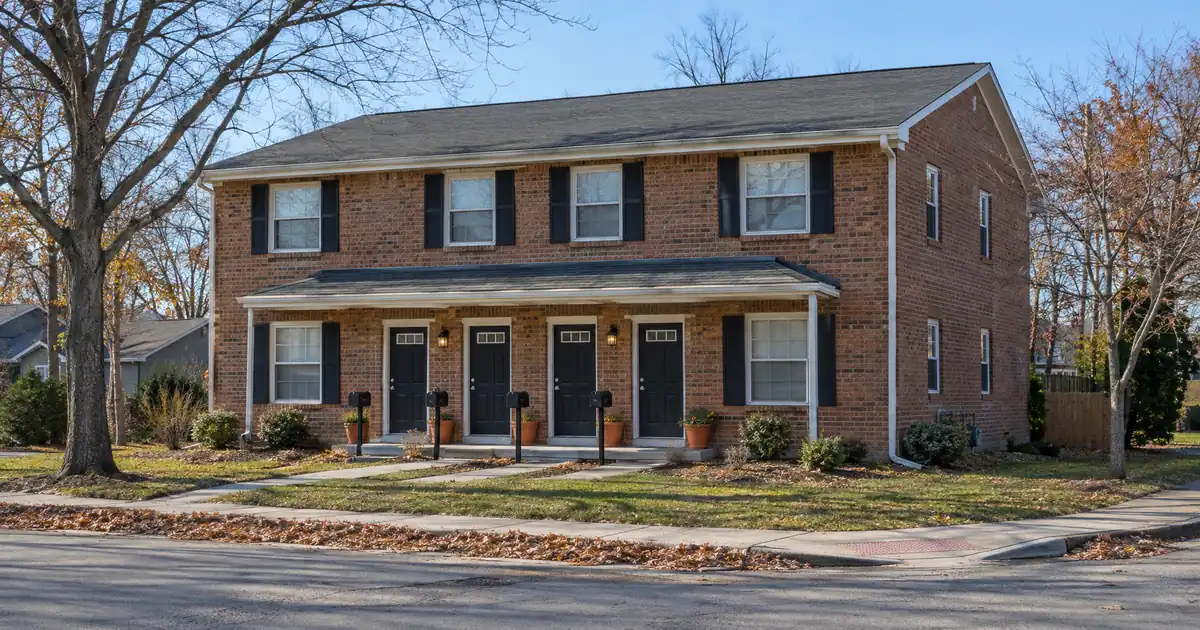
The Quick Read: Financing a duplex, triplex or fourplex on bank statements means the lender averages twelve months of your deposits, strips out transfers and loan proceeds, applies an expense factor to business accounts, and reviews the file around that documented income under the applicable program, subject to lender guidelines, instead of relying on traditional personal-income documentation or the building’s rent.
- What gets tested: you do. Your deposits and your total debts carry the file, not the property’s rent.
- Documentation: 12 months of business or personal bank statements across the wholesale network Lendmire works with.
- Leverage depends on occupancy: typically up to 90% LTV on a primary-residence purchase or rate-term refinance, which covers a house hack where you live in one unit. Investment-property purchase leverage varies by lender, and investment cash-out tops out around 75% LTV.
- Size and cash: loan amounts run roughly $125,000 to $3,500,000, with reserves commonly around 6 months of the housing payment.
- Main limit: each loan lands on your personal debt load, so scaling a portfolio this way stacks everything on one income.
Can a Rental Investor Finance a 2-4 Unit This Way?
Yes, when your traditional personal-income documentation understates what your business actually deposits. Self-employed landlords often write off enough expenses that taxable income looks thin. Bank statements show the cash that really moved through your accounts.
What your deposits qualify you for.
Alt-doc programs read 12 months of business or personal bank deposits instead of tax returns. Enter your average monthly deposits and see the income a lender would credit you.
The expense factor is set by the lender from your business type and profit-and-loss statement; it is not a number you choose. This widget quotes no rate and no payment.
Program parameters shown update from Lendmire’s centralized guideline source.
Estimate
Illustrative estimate only — not a quote, Loan Estimate, approval, or commitment to lend. Deposit average, expense factor, and housing ratio are editable assumptions; the expense factor a lender applies is set from your business type and documentation. No interest rate or monthly payment is quoted here. Purchase capacity is a simplified illustration and does not account for taxes, insurance, HOA dues, or other debts. Alt-doc income documentation is available on consumer mortgages in the states where Lendmire is licensed for consumer lending; actual terms vary by lender, borrower, and property.
The loan is a non-QM product. Non-QM means the file does not fit the standard agency mold, so the lender writes its own underwriting rules. That does not mean easy or undocumented. A lender still reviews credit, reserves, the appraisal and your total debts. It simply reads your income from a different document.
Brokers see two questions on every 2-4 unit file. Does your deposit income carry the loan? Or does the property’s rent carry it? The first is a bank statement loan. The second is a DSCR loan, where DSCR stands for debt service coverage ratio: monthly rent divided by the full monthly housing payment. Lendmire’s complete DSCR loans guide covers the second path in depth.
Why Are 2-4 Units Treated Like Houses?
A building with two to four units is generally handled as residential property, not commercial. That matters for three practical reasons. Lenders can use residential-style underwriting. The appraiser uses a residential income-property report. Borrowers can use personal-income programs, including bank statements.
For the appraisal, the standard report on a two- to four-unit property is Form 1025, the Small Residential Income Property Appraisal Report, per Fannie Mae’s Selling Guide. The form is cited here only for its name. Bank statement programs follow their own lender sheets, not agency rules.
How Do Bank Statements Turn Into Qualifying Income?
The lender totals your eligible deposits, averages them by month, and applies an expense factor if the account is a business account. Then it compares the result to the new payment and your other debts. Each step has a place where files gain or lose income.
Trade press describes the same basic pattern. A Scotsman Guide report on non-QM lending says self-employed borrowers typically provide 12 to 24 months of personal or business statements. It uses a 50% expense factor as its example. It also notes that a profit-and-loss statement or an expense statement from a third-party tax professional can stand in for the default.
Across the wholesale network Lendmire places files with, the window is 12 months, and the factor is the lender’s call. Treat 50% as an illustration, not a rule. Here is how the steps run:
1. Pick the statement set. Business accounts, personal accounts, or both, depending on how you actually collect rent and revenue.
2. Screen the deposits. Transfers between your own accounts, loan proceeds, refunds and one-time windfalls generally come out.
3. Average the rest. Eligible deposits divided by the number of months, adjusted for your ownership share of the business.
4. Apply the expense factor. Business-account deposits take a haircut for the costs of running the business. Personal-account programs may skip that haircut, depending on the program.
5. Test your debts. The result is compared with the new housing payment plus your other monthly obligations. That comparison is your debt-to-income ratio, or DTI.
6. Order the appraisal. The Form 1025 report values the building and records each unit’s rent status.
A Worked Example in Index Points
The table below uses index points instead of dollars, so you can follow the logic without any real figures. These are modeled assumptions, not market data or a quote.
| Step | Illustration |
|---|---|
| Gross deposits, 12 months | 1,320 points |
| Transfers and loan proceeds removed | 120 points |
| Eligible deposits | 1,200 points |
| Monthly average | 100 points |
| Expense factor (50% example) | 50 points qualifying |
Notice what happened. Deposits that looked like 100 points a month shrank to 50 points of qualifying income. That is why deposit hygiene matters so much.
Now the lever. If a third-party tax professional documents a lower expense ratio, each ten-point drop in the factor adds ten points of qualifying income per 100 points of eligible deposits. The program has to accept that documentation, and the paper has to support it. A CPA letter or P&L is the tool. A promise is not.
Where Does the Building’s Own Rent Fit?
On a bank statement file, the building’s rent is usually secondary. The income that carries the loan is yours, so a new or not-yet-leased fourplex can still work if your deposits are strong. Whether a lender also credits some of the subject property’s rent depends on the program sheet.
Two cautions apply. First, never let the same rent count twice. If tenants pay into the account you are submitting, that money is already in the deposits. Second, expect the appraiser’s rent schedule to matter. Form 1025 records each unit’s rent status, so the lender sees the property side of the story either way.
Bank Statement or DSCR? Decide What You Want Tested
The choice comes down to which side of the deal is stronger. If the rent covers the payment with room to spare, the property can carry the file. If your personal deposits are strong but the rent is thin, the borrower can carry it.
| Factor | Bank statement | DSCR |
|---|---|---|
| What is tested | You: deposits and DTI | The property’s rent vs. payment |
| Documents | 12 months of statements | Leases, rent schedule, appraisal |
| Debt load | Counts against your DTI | Judged property by property |
| Best fit | Strong deposits, thin rent | Rent that covers the payment |
| Occupancy | Owner-occupied or investor | Investment property |
DSCR programs below 1.00 coverage do exist through select lenders in the network, but leverage and terms adjust. They are not a free pass for a weak building. For a side-by-side with more detail, see this comparison of DSCR loans versus bank statement loans for investors.
Four questions settle most files:
- Does the rent cover the full housing payment on its own? If yes, DSCR often wins.
- Are your deposits strong while the rent is thin, new or unleased? Bank statements may win.
- Do you plan to live in one unit? Then the owner-occupied path applies.
- Are you adding several properties? DSCR keeps each loan off your personal DTI. Bank statements stack them there.
Duplex, Triplex, Fourplex: What Changes in the File
Unit count changes risk more than it changes the paperwork. The documents stay the same. The cost of a bad month does not.
| Unit count | What shifts |
|---|---|
| Duplex | One vacancy removes half the rent |
| Triplex | A vacancy removes a third, with more repair exposure |
| Fourplex | Vacancy risk spreads out, but repair costs scale |
A fourplex usually smooths income better than a duplex, since one empty unit hurts less. The tradeoff is more units to maintain, more tenants to manage and a larger loan. Lender appetite also shifts at the top of the range. Some programs are happy with a duplex and pickier on a fourplex, even though the file looks identical.
Owner-Occupied or Investor: The Fork That Changes the Rules
Occupancy decides which disclosure regime applies. An owner-occupied 2-4 unit, such as a house hack, is a consumer mortgage. TRID applies, which means the standard consumer mortgage disclosures. Lenders must also verify the borrower’s ability to repay. Nolo’s explainer on the ability-to-repay rule lists what gets checked: income or assets, employment status, the mortgage payment, simultaneous loans, and property obligations like taxes, insurance and HOA dues.
A bank statement loan on a non-owner-occupied rental is different. It is a business-purpose investor loan and exempt from TRID. Under the CFPB’s ability-to-repay rulemaking notice in the Federal Register, business-purpose loans fall outside those consumer provisions, and investment-purpose loans count as business-purpose.
Business-purpose is not a free pass, though. Lenders still underwrite, and state licensing rules can still apply. Gray areas exist, such as an owner who occupies a unit part of the time or cash-out proceeds spent on personal expenses. That is a question for counsel and the lender, not a rule of thumb.
Consumer mortgage licensing in this lane covers 16 states, so availability for owner-occupied files is narrower than for investor programs. Leverage follows occupancy:
- Primary residence, purchase or rate-term: typically up to 90% LTV, with the strongest files earning the top of the range.
- Primary residence with asset depletion: qualifying from liquid assets runs to about 80% LTV.
- Owner-occupied cash-out (primary or second home): up to 80% LTV with a fixed expense ratio, or 75% with an accountant-prepared ratio, by loan size and credit.
- Investment cash-out: tops out around 75% LTV.
- Investment purchase: varies by lender, so treat any single figure with suspicion.
All of this is typical of select wholesale-network guidelines and is subject to lender guidelines. It is not a commitment to lend.
Title and Entity: A Quiet Deal-Killer
Bank statement income belongs to a person. That makes vesting a real question. A loan to an LLC, subject to lender program eligibility, may need personal guarantees, extra documents or a different program entirely. Some programs want the loan in your personal name. Others accept an entity, and this varies by lender sheet.
If you plan to hold title in an LLC, raise it before you choose a program. Retitling afterward can create its own problems with the lender and the property insurer. Entity-heavy investors often end up on the DSCR side for this reason alone.
Deposit Hygiene: What Underwriters Want to See
The cleanest files separate personal money from business money at least a few months before applying. Underwriters see the same patterns again and again.
- Commingled accounts: personal and business deposits in one account must be sorted before income is counted, which usually adds steps to the file.
- Lumpy deposits: a single large deposit invites questions, and one-time windfalls are generally excluded.
- Declining trends: a falling deposit average can lower qualifying income and may signal weakening business.
- Transfers: moving money between your own accounts looks like income but is not.
- Business under two years: underwriters may weigh credit and liquid assets more heavily.
Gather the statements for every account you plan to use, the property’s lease or rent schedule, entity documents if any, and an accountant-prepared expense statement if you plan to argue for a lower factor. A business-purpose or occupancy certification is also common on investor files.
Cash, Reserves and a Break-Even Check
Qualifying is not the same as the building performing. Reserves of roughly 6 months of the housing payment are common, and larger or riskier files may need more. Reserves come from your own liquid funds.
Run a simple break-even check before you commit. Add the full housing payment, estimated repairs and a vacancy cushion. Then ask what share of the units must be rented to cover it. A fourplex that needs three of four units occupied just to break even is a thin deal, no matter how strong your deposits look. Taxes and insurance vary by county, so price them in before you trust the number.
Tax treatment can depend on how the funds are used and how the property is held; investors should keep clear records and speak with a qualified tax professional before relying on any deduction.
When This Is the Wrong Loan
Skip bank statements when the rent clearly covers the payment and you plan to keep buying. DSCR keeps each property on its own legs. Skip them if your deposits are falling, commingled beyond repair, or too new to average. Skip them if you need the longest-term structures, since alt-doc terms follow individual lender program sheets and the extended-term options sit on the DSCR side.
This loan also costs more in effort than a plain-vanilla purchase. Expect more paperwork, individual underwriting and lender-to-lender variation. If your traditional personal-income documentation already shows enough income, a conventional loan may be simpler.
Key Terms Defined
Non-QM: a loan that falls outside standard agency guidelines, with underwriting set by each lender’s own program rules.
Expense factor: the percentage of business deposits treated as operating costs, which lowers qualifying income.
DTI (debt-to-income ratio): your monthly debts, including the new payment, compared with your monthly qualifying income.
DSCR (debt service coverage ratio): monthly rent divided by the full monthly housing payment, used to test the property instead of the borrower.
PITIA: principal, interest, taxes, insurance and association dues, the full monthly housing obligation.
LTV (loan-to-value): the loan amount as a percentage of the property’s value.
Frequently Asked Questions
Can I use bank statements to buy a duplex as an investment property?
Often yes, though investment-purchase leverage varies by lender on this documentation. If you will live in one unit, the primary-residence rules and higher leverage apply. For a pure rental, many investors compare the property-based DSCR route first.
Do I need leases or rental income to qualify?
Not as the main qualifier, since the file runs on your documented income. The appraiser still records each unit’s rent status, and a program may credit some of it. Rent that is thin or not yet leased does not automatically block a file.
Does a bank statement loan work for a refinance?
Yes. A primary-residence rate-term refinance can reach up to 90% LTV, owner-occupied cash-out tops out around 80% LTV, and investment-property cash-out around 75% LTV. Each is subject to lender guidelines and credit.
What deposits get excluded from income?
Transfers between your own accounts, loan proceeds, and other non-income deposits are generally excluded, since they don’t reflect earnings. Business deposits that remain are then subject to an expense factor, which the lender sets and a tax professional’s documentation can sometimes support lowering.
Can I close in an LLC?
It depends on the program. Because bank statement income is tied to an individual, entity vesting varies by lender, and some files need personal guarantees. Raise it before you pick a program.
Next Step
For a broader look at the income-documentation side, the bank statement loans overview is a useful starting point.
The deciding question on any small multifamily is simple: whose income should carry the building, yours or the tenants’?
For current guidelines and terms, see Lendmire’s bank statement loan programs page.
About Lendmire
Lendmire — NMLS# 2371349 — is a DSCR and non-QM mortgage brokerage with investor loan programs in 41 markets, including Washington, D.C. DSCR eligibility is commonly reviewed by the lender around property-level rent rather than personal income documentation, subject to lender guidelines, and the brokerage helps arrange financing for LLC-owned portfolios beyond conventional financed-property limits. Recognized by Scotsman Guide as a Top Mortgage Workplace in 2025 and 2026.
Get Started
Ready to find the right loan for you?
In about 30 seconds you can review financing options available for your home or investment property. No commitment required.
Informational only. Not a Loan Estimate, approval, or commitment to lend. Program availability and eligibility are subject to lender guidelines, credit approval, property review, and underwriting.
References
2. Scotsman Guide: Rev Up the Engine for Non-QM Lending
3. Nolo’s explainer on the ability-to-repay rule
4. Federal Register: CFPB Ability-to-Repay and Qualified Mortgage Standards
This article is part of Lendmire’s bank statement loan program — full qualification details, guidelines, and scenarios live on the program page.
Related reading: How to Finance a 2-4 Unit Property on Bank Statements · Can You Qualify With Business Bank Statements Only? · How to Finance a New-Construction Home on Bank Statements
Brandon Miller
Founder & CEO, Mortgage Loan Originator, Lendmire LLC
- Mortgage Loan Originator · NMLS# 1129696 · Verify on NMLS Consumer Access
- North Carolina Real Estate Broker · License# 343312 · Verify on NCREC
- North Carolina Insurance Producer · License# 19053198 · Property, Casualty, Life, Health · Verify on NAIC SBS
- Lendmire LLC · Firm NMLS# 2371349 · Verify firm licensure
Important disclosures. Lendmire (NMLS# 2371349) is a licensed mortgage brokerage. Lendmire is not a direct lender, depository institution, or financial advisor. All loan inquiries are subject to lender underwriting; this article does not constitute a commitment to lend. Rates, terms, and program guidelines are subject to change without notice and vary by borrower profile, property type, and state. Information in this article is general in nature and is not financial, legal, or tax advice. Equal Housing Opportunity. NMLS Consumer Access: nmlsconsumeraccess.org.