
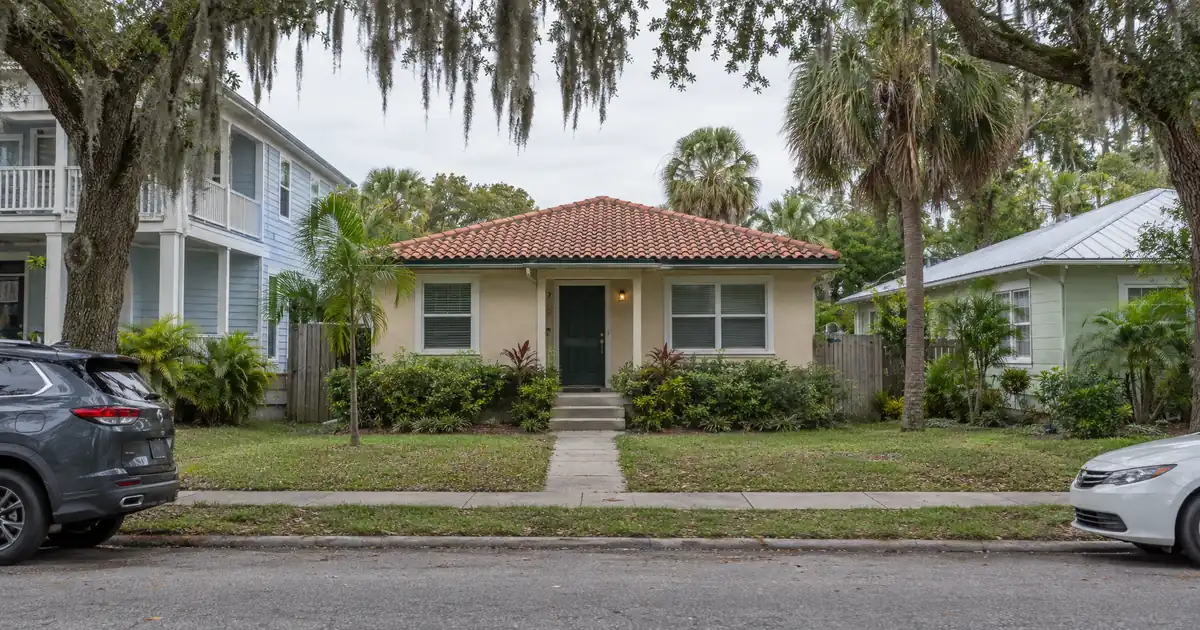
The Quick Read: You qualify by documenting 12 months of consecutive bank statements, showing steady deposits that still hold up after the lender’s expense adjustment, and pairing that income with solid credit, about six months of reserves, and a debt load the file can carry. Every file is underwritten individually, and approval is subject to lender guidelines. Florida buyers follow the same underwriting steps as borrowers anywhere else.
- Documentation: 12 months of business or personal statements, averaged into monthly income.
- Primary residence leverage: typically up to 90% LTV on a purchase or rate-term refinance, with the top of the range reserved for stronger files.
- Cash-out leverage: typically up to 80% LTV on an owner-occupied primary or second home, and around 75% LTV on an investment property.
- Loan size and cushion: roughly $125,000 to $3,500,000, with reserves commonly near six months of the housing payment.
- Alternative path: qualifying from liquid assets runs to about 80% LTV on a primary residence.
Key Terms Defined
Skim these first. The rest of the article uses them freely.
- Bank statement loan: a mortgage reviewed around the deposits in your bank accounts instead of the net income on your traditional personal-income documentation.
- Non-QM: short for non-qualified mortgage, meaning a loan that does not follow the standard rules for agency-style mortgages but is still fully underwritten.
- Expense factor: the share of your business deposits the lender assumes goes to running the business, which gets subtracted before income is counted.
- Lookback period: the number of months of statements the lender reviews.
- NSF: a non-sufficient-funds event, such as a bounced payment or overdraft, which underwriters read as a sign of tight cash.
- DTI: debt-to-income ratio, which compares your monthly debts to your qualifying monthly income.
- Reserves: liquid savings left over after closing, counted in months of the housing payment.
- LTV: loan-to-value ratio, meaning the loan amount divided by the property’s value.
What your deposits qualify you for in Florida.
Alt-doc programs read 12 months of business or personal bank deposits instead of tax returns. Enter your average monthly deposits and see the income a lender would credit you.
The expense factor is set by the lender from your business type and profit-and-loss statement; it is not a number you choose. This widget quotes no rate and no payment.
Program parameters shown update from Lendmire’s centralized guideline source.
Estimate
Illustrative estimate only — not a quote, Loan Estimate, approval, or commitment to lend. Deposit average, expense factor, and housing ratio are editable assumptions; the expense factor a lender applies is set from your business type and documentation. No interest rate or monthly payment is quoted here. Purchase capacity is a simplified illustration and does not account for taxes, insurance, HOA dues, or other debts. Alt-doc income documentation is available on consumer mortgages in the states where Lendmire is licensed for consumer lending; actual terms vary by lender, borrower, and property.
What a Bank Statement Loan Actually Is
A bank statement loan is a non-QM mortgage built for borrowers whose traditional personal-income documentation understates what they really earn. Self-employed owners often write off enough expenses to shrink their taxable income. Conventional underwriting reads that smaller number. A bank statement program reads the cash that actually moved through your accounts.
The loan is not a shortcut around underwriting. The borrower still is reviewed on documented income under the applicable program, subject to lender guidelines. The lender still checks credit, reserves, debts and the property. The only thing that changes is the income record.
Lendmire is a broker. It arranges these loans through select lenders in its wholesale network, and those lenders review and decide each file. Availability depends on the state and the property.
Who This Loan Fits
This loan fits people with real cash flow and messy traditional personal-income documentation. Typical borrowers include contractors, consultants, restaurant and shop owners, rideshare and gig workers, and commission earners. Seasonal operators fit too, which matters in places where tourism and hospitality drive income.
NerdWallet notes that most lenders want at least two years of steady self-employment. The borrower who left a W-2 job six months ago usually cannot use this product yet. Lendmire’s piece How to Use Same-Field W-2 History to Qualify for a Bank Statement HELOC covers one way history in the same line of work can help.
The loan fits poorly when your deposits are thin or shrinking. It also fits poorly when a rental simply covers its own payment, because a different tool qualifies that property directly. The comparison section below covers that choice.
How Underwriters Turn Deposits Into Income
Underwriters follow a repeatable sequence, and the borrower controls only some of the steps. Here is how a typical file moves.
1. Pick the lookback. The standard here is 12 months of consecutive statements, every page, for each account the lender uses. Some programs use longer lookbacks.
2. Total the eligible deposits. The underwriter strips out transfers between your own accounts. Loan proceeds, gifts and refunds come out too, along with any deposit that cannot be tied to income.
3. Apply the expense factor on business accounts. The program sets the factor, not you. It comes from a fixed percentage or from an expense ratio an accountant prepares.
4. Adjust for ownership share. If you own part of the business, only your share counts.
5. Divide by the months in the lookback. That gives monthly qualifying income.
6. Run the debt-to-income test. Credit, reserves and the source of your down payment get reviewed alongside it.
7. Check large deposits and trends. Expect to source big deposits, and expect screening for NSFs and falling income.
Most programs Lendmire places files with follow this shape. No lender chooses the same expense factor, so any figure you read online describes that lender and not the market.
The same deposits can produce different qualifying incomes depending on the account type and documentation path.
| Path | How deposits are treated | What to expect |
|---|---|---|
| Personal statements | Larger share counts as income | Works when deposits are clearly yours |
| Business statements, fixed factor | Program expense factor applied | Predictable, often more conservative |
| Business statements, accountant ratio | Prepared ratio replaces the fixed one | Can help or hurt, depending on real costs |
Run the numbers both ways before you apply. A borrower with lean expenses often gains from an accountant-prepared ratio. A borrower with heavy costs may do better with the fixed approach.
What Underwriters Flag in Your Statements
Underwriters read statements for patterns, not just totals. The table shows what helps, what hurts, and the fix.
| Signal | Reads as | Fix |
|---|---|---|
| Steady, recurring deposits | Stable income | Keep deposits flowing to one account |
| Transfers between your accounts | Not income | Label and avoid moving money in circles |
| Large one-time deposit | Needs a source | Keep the paper trail |
| NSFs or overdrafts | Tight cash | Hold a buffer for several months |
| Falling monthly totals | Declining business | Explain it, or wait for a recovery |
| Personal and business mixed | Hard to trace | Separate the accounts going forward |
A falling trend is the hardest one to overcome. Strong credit and reserves help, but a shrinking deposit line shortens the list of programs that will look at the file.
The Core Requirements, One at a Time
Self-employment history. Plan on about two years of steady self-employment, as the NerdWallet guidance above suggests. Proof can include a business license or an accountant letter.
Statement period. The network standard is 12 months of statements, business or personal.
Credit. Minimum scores vary by lender and by leverage. A stronger score typically earns more leverage and more program choices.
Down payment and leverage. On a primary residence purchase or rate-term refinance, leverage runs up to 90% LTV through select lenders, which means a down payment as small as roughly 10% on the strongest files. Owner-occupied cash-out, on a primary or second home, tops out near 80% LTV with a fixed expense ratio, or 75% LTV when an accountant prepares the ratio. Investment-property cash-out tops out around 75% LTV. Investment purchase leverage on bank statement documentation varies by lender, so investors should compare it against the DSCR route.
Debt-to-income. Your monthly debts, including the new housing payment, are measured against the income the deposits produce. Each added mortgage stacks against your personal ratio.
Reserves. Programs commonly look for about six months of the housing payment left after closing.
Loan size. Loans run from roughly $125,000 to $3,500,000. Larger loans bring tighter credit and reserve expectations.
Asset-depletion alternative. If your deposits are uneven but your liquid assets are strong, qualifying from assets runs to about 80% LTV on a primary residence. The lender still reviews your debts. Every figure here varies by lender and program — guidelines, property type, leverage, and credit profile all apply.
All of these are typical ranges, subject to lender guidelines, credit approval and property review.
The Documents to Gather
Most files need a similar set of papers:
- Every page of each statement in the lookback, for every account used.
- Proof the business exists, such as a license or registration.
- An accountant or tax preparer letter, or an accountant-prepared expense ratio, where used.
- Written explanations for large deposits.
- Evidence of where your down payment and reserves came from.
Gather these before you talk to a lender. Missing pages slow a file more than almost anything else.
Get Ready Before You Apply
The best qualification work happens months before the application. A practical plan looks like this.
Three to six months out:
- Route business revenue into one account, and stop mixing personal spending into it.
- Cut back on transfers between your own accounts.
- Build a buffer so overdrafts stop appearing.
- Pay down revolving balances that inflate your debt ratio.
One to two months out:
- Download complete statements for the lookback.
- Write a short note for each unusual deposit.
- Ask your accountant whether a prepared expense ratio would help.
- Decide the occupancy plan, because it changes the paperwork.
Before you sign a contract:
- Confirm your reserves after the down payment.
- Compare a bank statement structure with other options for the same property.
Occupancy Sets the Rulebook
Occupancy decides which disclosure regime governs the loan. An owner-occupied file, meaning a primary residence or second home, is a consumer mortgage, so the TRID disclosure rules apply.
A rental works differently. Bank statement loans on non-owner-occupied rentals, including short-term rentals, are business-purpose loans, so they are reviewed differently from a standard owner-occupied mortgage. They are exempt from TRID. The CFPB’s Regulation Z section on exempt credit covers business-purpose credit, and the lender decides each case by looking at the loan’s purpose, not the property label.
One more point belongs here. Non-QM does not mean no standards. The NCUA’s supervisory letter on ability-to-repay explains that a non-QM loan is allowed when the lender makes a reasonable, good-faith determination that the borrower can repay, using factors such as income or assets. That is why a bank statement loan is fully underwritten, not a no-documentation product.
Does Florida Change the Rules?
The underwriting steps do not change in Florida. The mechanics above apply to a borrower in Miami, Tampa or anywhere else. What changes is the borrower mix and a few property details.
Many Florida self-employed borrowers earn through seasonal or tourism-linked work. That makes the deposit trend important, so a few strong months cannot hide a weak stretch. Condominiums often get extra project review from the lender. Taxes and insurance, which vary by county and property, count toward the housing payment in your debt ratio.
Why Files Get Declined, and the Fix
| Reason | What to do |
|---|---|
| Under two years self-employed | Wait, or look at the W-2 history route |
| Deposits falling | Wait for recovery, or compare DSCR for a rental |
| Unsourced large deposits | Document each one |
| Thin reserves | Build savings before applying |
| Debt ratio too high | Pay down balances, or lower the loan size |
| Low credit | Improve it, or lower leverage |
Bank Statement or DSCR?
A bank statement loan is reviewed for the borrower. A DSCR loan is reviewed for the property, which means the lender checks whether the rent covers the full monthly obligation. The complete DSCR loans guide covers how DSCR files work and when they beat a bank statement structure for an investor.
| Factor | Bank statement | DSCR |
|---|---|---|
| What qualifies | Your deposits | The property’s rent |
| Personal DTI | Each mortgage stacks | Reviewed per property |
| Best for | Strong deposits, owner-occupied | Rentals that cover their payment |
| Weak spot | Falling deposits | Thin rent |
Bank statements can win when a rental is vacant, new or in lease-up but your deposits are strong. DSCR often wins when you are scaling a portfolio, when deposits are uneven, or when rent clearly covers the payment. Select lenders in the network offer DSCR programs below 1.00 coverage, with adjusted LTV and terms.
What If You Do Not Qualify Yet?
Not qualifying today is usually a timing problem. If you lack two years of history, keep building the record and revisit. If deposits are uneven, smooth them and wait several months. If reserves are thin, save first.
Alternatives exist. Asset depletion works when liquid assets are large. DSCR works when the property is a rental. A bank statement purchase now can also be refinanced later, once your traditional income documentation catches up with your income. Tax treatment can depend on how the funds are used and how the property is held; investors should keep clear records and speak with a qualified tax professional before relying on any deduction.
Frequently Asked Questions
Can I qualify with less than two years of self-employment?
Usually not. Most programs want about two years of steady self-employment. Some files with prior work in the same field can be reviewed differently, subject to lender guidelines. Check with a broker before you assume either way.
Do large deposits count as income?
Not automatically. Underwriters ask where a large deposit came from and remove it if it is a transfer, loan, gift or refund. Keep records so real income gets counted.
Can I use personal statements only?
Yes, many programs accept personal statements and typically count a larger share of deposits than on business accounts. The lender still reviews the source of each deposit. Business accounts get the expense factor.
Do I still need conventional personal-income paperwork?
On a bank statement file, the statements carry the income documentation under the applicable program. Lenders may still ask for supporting items like a business license or an accountant letter. Requirements vary by lender.
Does 1099 income count?
Often, yes, when the deposits show up in the accounts and the work history is steady. The lender reviews the deposits and your history, not the label on the income.
Next Step
If you are self-employed and want to see how the numbers work, reach the team at 828-256-2183 or request a quote to compare bank statement loan options based on your deposits, the property, credit profile, leverage, and goals.
About Lendmire
Lendmire is a non-QM mortgage brokerage (NMLS# 2371349) arranging DSCR investor loans in 41 markets, including Washington, D.C. DSCR eligibility is generally reviewed around property-level rental income rather than personal income, subject to lender and program guidelines, a fit for self-employed investors and LLC-owned portfolios. Lendmire was recognized as a Scotsman Guide Top Mortgage Workplace in 2025 and 2026.
Get Started
Ready to find the right loan for you?
In about 30 seconds you can review financing options available for your home or investment property. No commitment required.
Informational only. Not a Loan Estimate, approval, or commitment to lend. Program availability and eligibility are subject to lender guidelines, credit approval, property review, and underwriting.
References
1. NerdWallet: self-employed mortgage requirements
3. NCUA Supervisory Letter 14-01
This article is part of Lendmire’s bank statement loan program — full qualification details, guidelines, and scenarios live on the program page.
Related reading: How to Qualify for a Bank Statement Loan for Franchise Owners · Can Cash After a Sale Help Qualify a Super Jumbo Bank Statement Loan? · How a La Jolla Bank Statement Jumbo Loan Works
Guides: Bank Statement Loans in Florida
Brandon Miller
Founder & CEO, Mortgage Loan Originator, Lendmire LLC
- Mortgage Loan Originator · NMLS# 1129696 · Verify on NMLS Consumer Access
- North Carolina Real Estate Broker · License# 343312 · Verify on NCREC
- North Carolina Insurance Producer · License# 19053198 · Property, Casualty, Life, Health · Verify on NAIC SBS
- Lendmire LLC · Firm NMLS# 2371349 · Verify firm licensure
Disclosures. The information presented in this article is general market commentary, not financial, legal, or tax advice. Lendmire is a mortgage brokerage (NMLS# 2371349) — not a direct lender or depository institution — and loan placement is subject to lender underwriting. Nothing in this content represents a commitment to lend. Loan terms, pricing, and program availability vary based on borrower qualifications, property characteristics, and state of subject property, and are subject to change at any time. Lendmire complies with Equal Housing Opportunity requirements. Consumer access: nmlsconsumeraccess.org.