
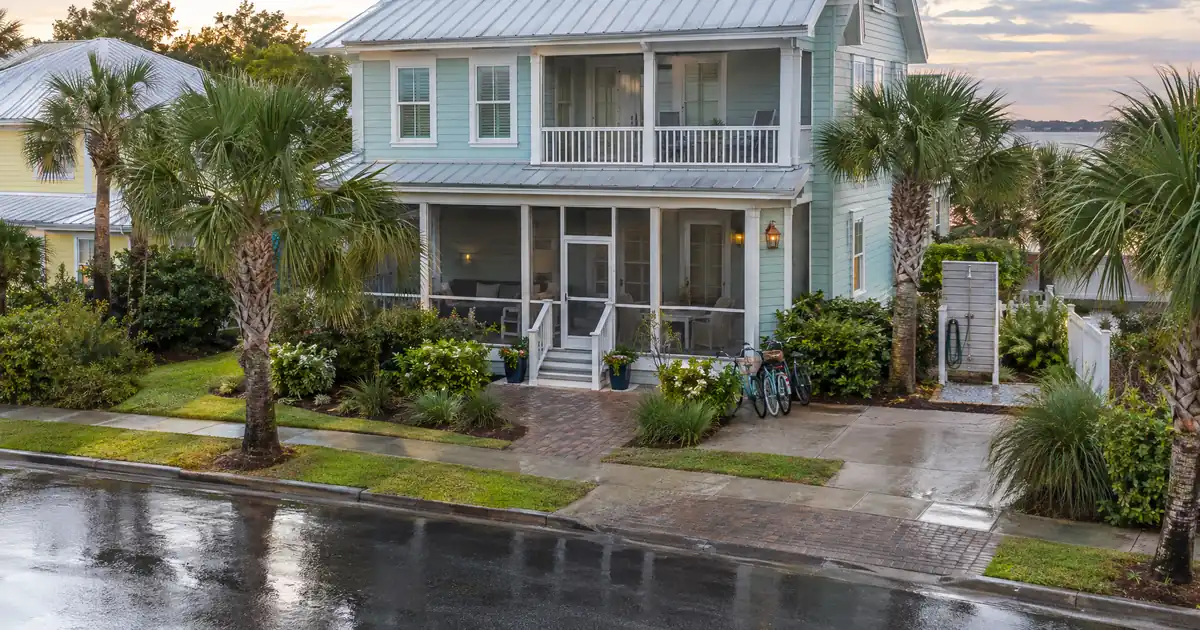
The Quick Read: Qualifying for an oceanfront purchase on bank statements means proving income through 12 or 24 months of deposits instead of traditional personal-income documentation. A separate property review then decides whether the house can be insured and appraised. The deposits answer one question. The insurance answers the other.
- Income comes from eligible deposits after an expense ratio, not from your tax return.
- Leverage steps down as the loan grows, and every file above $4,000,000 is reviewed case by case.
- Flood and wind coverage on the house can sink a file that the income fully supports.
- Bank statements fit a home you will use yourself. A pure rental often fits a property-income loan better.
- Programs change, and nothing here is a commitment to lend. All figures come through select wholesale programs, subject to full underwriting.
Key Terms Defined
Bank statement loan: a mortgage where the lender reviews your file on deposits in personal or business accounts rather than on tax-return income.
Non-QM: a loan that sits outside the standard conforming box. It is still underwritten, just with different documents.
Expense ratio: the share of business deposits the lender removes before counting the rest as your income.
DSCR: debt service coverage ratio. It compares a property’s rent to its monthly obligation, so the property qualifies instead of you.
LTV: loan-to-value. The loan amount divided by the home’s value or price.
Reserves: liquid savings left after closing, counted in months of the full housing obligation.
NFIP: the National Flood Insurance Program, the federal flood policy that most coastal lenders treat as the baseline.
Special Flood Hazard Area: a mapped zone with a high flood risk, which on the open coast usually means a V, VE, or AE designation.
Why Is an Oceanfront Loan Really Two Underwriting Questions?
Because the borrower and the collateral are reviewed separately, a strong answer on one does not rescue a weak answer on the other. Across our wholesale network, deals rarely fail on deposits. They fail because the house cannot be insured on acceptable terms.
The first question is yours. Can your deposit history support the payment, the taxes, the insurance, and your other debts? That is ordinary bank statement underwriting.
The second question belongs to the house. Is it in a flood zone? What will wind coverage cost, and will an insurer renew it? Can an appraiser support the value with real comparable sales? Oceanfront homes are unusual properties, and lenders treat them that way.
This is why a founder with excellent deposits can still stall. The loan officer can document income in a day. The insurance quote is what moves the file.
How Does Bank Statement Income Get Calculated?
Lenders take consecutive monthly statements, remove deposits that are not true income, apply an expense ratio, and divide by the number of months. The result is your monthly qualifying income. Across the programs we place files with, the steps look like this.
1. Choose the statement period. The portfolio non-QM program accepts 12 or 24 consecutive months. The bank portfolio program uses 12. Statements must be consecutive. A transaction history printout never substitutes.
2. Choose personal or business accounts. A loan officer typically runs both and uses whichever fits the file. Business statements require at least 25% ownership of the business.
3. Screen the deposits. Refunds, loan proceeds, and transfers between your own accounts are not income. The exception is a transfer from your own business into your personal account, which counts in full.
4. Apply the expense ratio. For business statements, programs use fixed ratios that vary with the type and size of the business. A service business with no employees gets the lowest ratio, a business with a few employees gets a higher one, and a business with six or more employees or any product business gets the highest. An accountant-provided ratio can replace the fixed one. A profit-and-loss method is also available, subject to a cap that varies by program.
5. Divide by the months. Eligible deposits after the ratio, divided by the statement months, give the income figure.
6. Test the whole file. Debt-to-income can run up to 50%, and credit and reserves are reviewed alongside it. The new payment counts in your personal ratios.
A quick picture, with no dollar amounts. Say a founder runs a product business with a team of twenty. Her business account shows steady deposits, and the 50% ratio keeps half of the average monthly deposit as qualifying income. If her tax return shows a fraction of that, because depreciation and write-offs shrank the taxable number, the bank statement path counts what actually flowed through the account. That gap is exactly why high earners use this lane.
Alternative documentation is still documentation. The lender must reasonably determine you can repay, and bank and investment account statements are an accepted way to verify that. The difference is which records carry the proof.
Which Path Fits: Bank Statements, Property Income, or Assets?
The right path follows how you will use the house. Bank statements fit a primary residence or second home you will occupy. A property-income loan fits a rental. An asset-based path fits a borrower with large liquid holdings and uneven income.
| Path | Reviewed on | Best fit |
|---|---|---|
| Bank statements | Deposits after expense ratio | Primary or second home |
| DSCR | Property rent vs. obligation | Rental or short-term rental |
| Asset allowance | Liquid assets ÷ 36, 60, or 84 months | Primary or second home |
| Assets-only | Liquid assets vs. loan plus costs | Primary or second home |
Here is how the asset paths work. Asset allowance divides your liquid assets by 36 months (supplemental, with debt-to-income at or below 60%), 60 months (supplemental, above 60%), or 84 months (standalone, or any loan above $3,500,000). It applies to primary and second homes, at 80% maximum. Assets-only needs no debt-to-income test. It requires U.S. liquid assets equal to the loan amount plus closing costs, plus sixty months of any net loss on other residential property. Retirement accounts count at 70%, or 80% at age 59½ and older. Business funds, gifts, unvested stock, and cryptocurrency never count.
Bank statement files can also run on investment property, at lower leverage. If the rent genuinely covers the full monthly obligation, a DSCR loan is often cleaner, because it measures the property alone. A DSCR loan leaves your personal debt-to-income out of the qualification, so the purchase does not stack on top of your other debts. DSCR loans for LLC-titled borrowers are available subject to lender program eligibility. Bank statement second-home files typically want title in your personal name.
Oceanfront rentals deserve one extra note. Short-term rental rules can vary by city, county, HOA, and property type, so investors should confirm local rules before relying on projected rental income.
What Size and Leverage Can You Expect?
Leverage drops as the loan grows. Second homes run about five points below primary residences up to $3,000,000, and the gap widens to ten points between $3,000,000 and $4,000,000. The table shows typical ceilings on a purchase through select wholesale programs, subject to full underwriting and credit tier.
| Loan size | Primary residence | Second home |
|---|---|---|
| To $1,000,000 | 90% | 85% |
| $1M to $2M | 85% | 80% |
| $2M to $3M | 80% | 75% to 80% |
| $3M to $4M | 75% | 65% |
| Above $4M | Case by case | Case by case |
Credit requirements rise with the size. Programs start at a 660 floor on the portfolio program, 680 on the bank program, and 700 above the super-jumbo line. That line sits at $3,500,000 on a primary residence and $3,000,000 on a second home or investment property. Higher leverage in a band usually requires the upper credit tiers.
Above $4,000,000, the bank portfolio program takes over the top of the range. Files at that size are reviewed case by case before submission. On a primary residence purchase, that program’s ladder runs 65% to $5,000,000, 60% to $10,000,000, and 55% to $30,000,000, all on review. Second homes and investment properties sit lower.
Above the super-jumbo line, overlays tighten. Expect a 700 credit floor and a clean housing history with no 30-day lates in 24 months. A credit event needs 48 months of seasoning. Borrowers must be U.S. citizens or permanent residents, with no non-occupant co-borrowers. Rural property is excluded, acreage tops out at ten acres, and cash-out proceeds cannot count toward reserves.
Reserves run 3 months to $500,000, 6 months to $1,500,000, and 9 months above that. Add 2 months per additional financed property, up to a 12-month maximum. First-time investors need 12 months. A coastal borrower should also hold extra liquidity for percentage-based hurricane deductibles. That is a practical cushion, not a program requirement.
What Makes Oceanfront Different From Any Other Second Home?
Three things: the flood zone, the wind exposure, and the difficulty of valuing a one-of-a-kind property. Each one can change the loan amount, the leverage, or whether a lender will touch the file at all.
Flood. The lender orders a flood zone determination on the current federal map. On the open coast, the answer is usually a V/VE or AE zone, and that means a required flood policy. As the Federal Reserve’s Consumer Compliance Outlook explains, the required coverage is the lesser of the loan balance or the maximum NFIP coverage available. The NFIP maximum for a single-family building is $250,000. Individual programs may impose stricter requirements than that.
Here is the part that surprises first-time coastal buyers. The federal purchase mandate is enforced by the lender, and it binds regulated lenders. A loan placed with a private, non-regulated investor may not be covered by the statute itself. Do not treat that as a loophole. Each program sets its own flood requirement in its guidelines, and a house in a high-hazard zone is very hard to finance, and risky to own, without coverage.
Wind. Standard homeowners policies do not cover flood. Wind and hurricane coverage is a separate matter. Insurers weigh roof age, wind mitigation, elevation, and deductibles, which are often a percentage of the insured value. Settle insurability before you choose the property, because VE zones carry the strictest standards.
Appraisal. Oceanfront comparable sales are scarce, and every lot has its own frontage, setback, and erosion profile. An appraiser may stretch for comps. If value comes in low, leverage is calculated on the lower number, and your cash to close changes. Walk into contract assuming the appraisal needs support, and ask your broker which programs have deeper experience with coastal valuations.
Property type. Warrantable condos run to 85% LTV on a purchase through select programs, and non-warrantable condos to 80%. Condotels run 75% on a purchase, and 50% on the bank program. An oceanfront condo adds building-level risks like the association’s master policy and special assessments. Second homes are limited to one unit. Exact terms depend on the lender’s guidelines, property type, leverage, and a full review of the borrower’s file.
Does the Insurance Bill Change Your Qualifying Math?
Yes. Flood premiums, wind premiums, taxes, and any association dues all feed the monthly housing obligation, and that obligation sits in your debt-to-income ratio on a bank statement file. On a DSCR file, the same costs sit in the denominator of the coverage ratio.
Picture an investor who finds an oceanfront duplex whose rent looks strong. Run the rent against the full obligation with real flood and wind quotes in the denominator, and the coverage can slip from comfortable toward 1.0x. Oceanfront insurance can cut or erase the cushion that rent seemed to provide. That is why quotes belong in the file before any ratio is run. If an early insurance quote is later replaced by a higher one, many lenders treat the original ratio as unreliable and may require the file to be reworked.
Renewal is the longer-term risk. A policy that binds at purchase may reprice or be non-renewed during your hold. Percentage deductibles are out-of-pocket exposure, and your reserves should reflect them. Our read is that this is the quiet risk in oceanfront ownership. Deposit income can absorb a bad renewal. A thin rental ratio often cannot.
If the property does not cover itself, a bank statement file can carry it, because it leans on you instead of the rent. Select lenders in the network also review sub-1.00 DSCR scenarios, with leverage and terms adjusting.
Where the General Rule Breaks
The general rule is that a strong deposit history plus insured collateral gets you a workable file. These edge cases are where that rule fails.
Coastal barrier areas. Some stretches of shoreline are designated as protected coastal barrier areas, where federal flood insurance is generally prohibited, with limited exceptions. Some programs will not lend there at all. Confirm the status before you sign a contract.
Lenders that decline where federal coverage is unavailable. A lender may keep a policy of declining loans where federal flood insurance cannot be written. Programs vary, and a file declined by one can sometimes fit another.
The coverage cap versus the home’s value. The $250,000 federal cap is a ceiling on the building, not a replacement-cost solution. A multi-million-dollar oceanfront home usually needs private or excess flood coverage on top. Where the loan is large, the required coverage is capped by the NFIP maximum, but your own risk is not.
Occupancy switches. If you plan to rent the home, a second-home bank statement file is the wrong product. The occupancy you state has to match the use. A new short-term rental with no operating history may rely on an appraiser’s analysis or a market projection, and only some lenders accept projections.
Elevation certificates. A certificate can support a map amendment or lower premiums. On true V-zone oceanfront it rarely removes the flood requirement, so treat it as a premium tool.
Above $4,000,000. Everything is case by case, and rural, non-citizen, and thin-credit files hit overlays quickly.
How Should You Prepare Your Statements?
Treat statement hygiene as part of the purchase. Lenders reviewing a luxury file read the account for patterns, and clean accounts make a short file.
- Keep business and personal flows separate where you can. Commingling forces extra explanations.
- Explain large deposits in writing before the lender asks.
- Do not open or close accounts mid-file unless you must.
- Show seasonal income honestly. A 24-month average often smooths a lumpy business better than a 12-month one.
- Pull every page. Consecutive means no missing months, and a printout of transactions is not a statement.
- Line up an accountant letter if you believe your true expense ratio is below the fixed one.
- Hold your down payment in your own name, since business funds, gifts, and most trusts do not count toward asset paths.
The mistakes that trip files up are predictable. They include deposits that are really transfers, a down payment that arrives from the wrong source, and a purchase contract signed before the insurance quote arrived.
Tax treatment can depend on how the funds are used and how the property is held; investors should keep clear records and speak with a qualified tax professional before relying on any deduction.
What Does the Process Look Like Step by Step?
Order matters more than speed on a coastal file. This sequence keeps surprises out.
1. Decide the use. Primary, second home, or rental. That sets the product.
2. Check the flood zone and coastal status of the address before you make an offer.
3. Get insurance quotes for flood, wind, and hazard, with deductibles stated.
4. Choose a documentation lane with your broker, and run personal and business statements both ways.
5. Submit the file with statements, assets, and explanations.
6. Order the appraisal and be ready to support the value.
7. Bind coverage and provide proof for closing. Escrow for insurance is typical.
For a deeper look at how second homes are handled on business deposits, see Lendmire’s piece How to Finance a Second Vacation Home on Business Bank Statements. Lendmire’s complete DSCR loans guide covers the rental side in full.
When Is This Not the Right Fit?
Bank statements are the wrong tool in a few situations. If your traditional personal-income documentation already shows strong income, standard documentation may be simpler. If the house is a pure rental and the rent covers its obligation, a DSCR loan keeps the property off your personal ratios. If your income is mostly assets and uneven deposits, the asset allowance or assets-only path can carry the file.
A broker’s value here is comparison. Different programs have different expense ratios, overlays, and coastal appetites, and a file that does not fit one lender may fit another.
Frequently Asked Questions
Can I use bank statements to buy an oceanfront home as a second home?
Yes, through select wholesale programs, subject to full underwriting. Second homes run lower in leverage than primary residences at every size, and they must be single-unit properties. You still need flood and wind coverage on acceptable terms.
Does flood insurance count in my qualifying numbers?
It does. Flood, wind, taxes, and dues feed the monthly housing obligation, which counts in your personal debt-to-income on a bank statement file. Debt-to-income can run up to 50% on these programs. Get actual insurance quotes before you lock in a purchase.
Is a federal flood policy enough for an expensive oceanfront house?
Usually not. The building cap is $250,000 for a single-family residence. A multi-million-dollar home typically needs private or excess flood coverage, and wind coverage is separate from both.
Should I use bank statements or DSCR if I plan to rent the house?
If the rent covers the full monthly obligation, DSCR is usually the cleaner lane because the property is reviewed on its own income, subject to lender guidelines. If the coverage is thin, a bank statement file on investment property can lean on your deposits instead, at lower leverage.
What if the appraisal comes in low on an oceanfront property?
Leverage is calculated on the appraised value, so a lower value means more cash from you. Your broker can discuss appraisal support and which programs have more coastal experience. Above $4,000,000, the review is case by case.
Next Step
Lendmire’s consumer mortgage work covers AL, CA, CO, FL, GA, IN, MI, MT, NM, NC, OH, PA, TN, TX, VA, and WA, so confirm your state before you start.
For current guidelines and terms, see Lendmire’s super jumbo bank statement loan programs page. Self-employed borrowers can compare both super jumbo programs on Lendmire’s self-employed mortgages page.
Get Started
Ready to find the right loan for you?
In about 30 seconds you can review financing options available for your home or investment property. No commitment required.
Informational only. Not a Loan Estimate, approval, or commitment to lend. Program availability and eligibility are subject to lender guidelines, credit approval, property review, and underwriting.
About Lendmire
Lendmire is a non-QM mortgage brokerage (NMLS# 2371349) arranging DSCR investor loans in 41 markets, including Washington, D.C. DSCR eligibility is generally reviewed around property-level rental income rather than personal income, subject to lender and program guidelines, a fit for self-employed investors and LLC-owned portfolios. Lendmire was recognized as a Scotsman Guide Top Mortgage Workplace in 2025 and 2026.
This article is part of Lendmire’s super jumbo bank statement loan program — full qualification details, guidelines, and scenarios live on the program page.
Related reading: How Entrepreneurs Qualify for a Jumbo Mortgage With Bank Statements · How to Qualify for Super Jumbo Bank Statements in the Same Field · How to Finance a Second Home With Bank Statements
Brandon Miller
Founder & CEO, Mortgage Loan Originator, Lendmire LLC
- Mortgage Loan Originator · NMLS# 1129696 · Verify on NMLS Consumer Access
- North Carolina Real Estate Broker · License# 343312 · Verify on NCREC
- North Carolina Insurance Producer · License# 19053198 · Property, Casualty, Life, Health · Verify on NAIC SBS
- Lendmire LLC · Firm NMLS# 2371349 · Verify firm licensure
Compliance and disclosures. Lendmire (NMLS# 2371349) is a licensed mortgage broker and is not a direct lender, depository institution, financial advisor, or tax professional. Content in this article is general market analysis and educational information — not financial, legal, or tax advice for any specific situation. Lendmire does not guarantee loan approval; every transaction is subject to underwriting by the funding lender. Mortgage pricing and loan program guidelines are subject to change at any time without notice and vary by borrower characteristics, property type, and state regulations. Lendmire complies with Equal Housing Opportunity. Licensure verification: NMLS Consumer Access.