
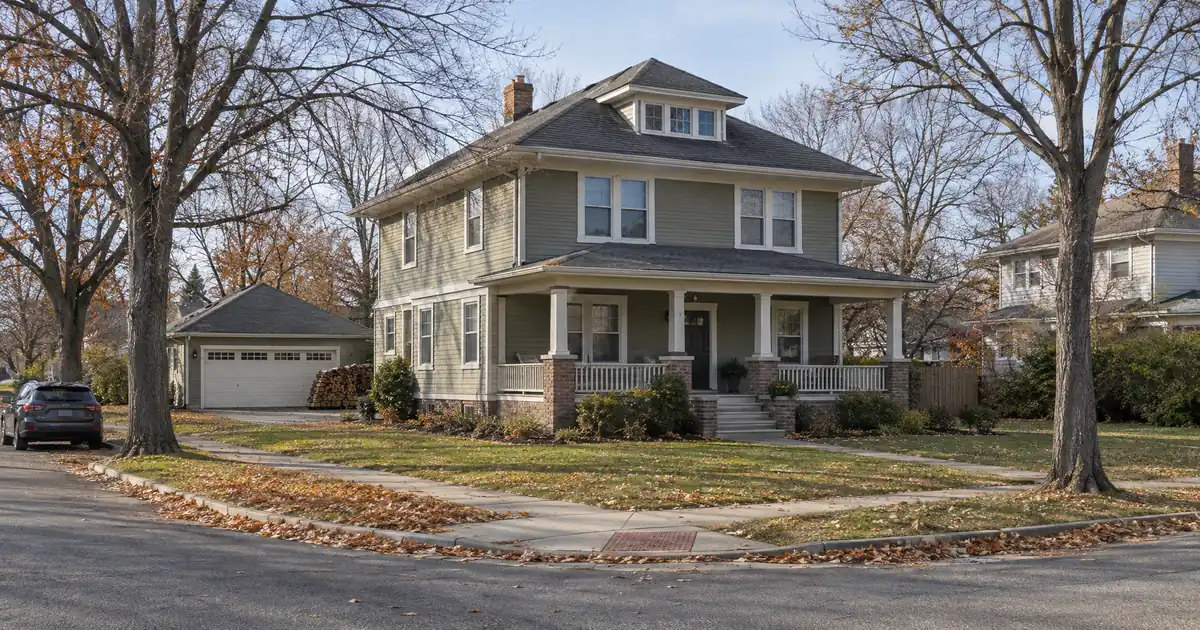
The Quick Read: It depends on whose risk you measure, because the loan product is the same but the stakes shift with occupancy. On a primary home, the borrower risks the roof over their head and the lender carries more compliance work, while on a rental the borrower gets fewer consumer protections and usually faces tighter terms.
- A primary residence is priced as the lowest-risk occupancy class, yet it carries the highest personal consequence if payments fail.
- On the network’s programs, primary-residence purchase and rate-term loans reach up to 90% LTV, while an investment-property cash-out tops out around 75% LTV.
- Owner-occupied files are consumer mortgages, so the federal consumer-mortgage disclosure regime applies. A bank-statement loan on a non-owner-occupied rental is business-purpose and TRID-exempt.
- Both versions qualify on documented income under the applicable program, subject to lender guidelines.
- A rental that cash flows may fit a property-income loan better than a deposit-based one.
Self-employed borrowers ask this question constantly, usually after a lender has treated their primary home and their rental very differently. The honest answer needs four separate measures of risk: the lender’s credit risk, the borrower’s payment risk, how bad a default would be, and which legal protections attach to the file. Each one points in a different direction.
What your deposits qualify you for.
Alt-doc programs read 12 months of business or personal bank deposits instead of tax returns. Enter your average monthly deposits and see the income a lender would credit you.
The expense factor is set by the lender from your business type and profit-and-loss statement; it is not a number you choose. This widget quotes no rate and no payment.
Program parameters shown update from Lendmire’s centralized guideline source.
Estimate
Illustrative estimate only — not a quote, Loan Estimate, approval, or commitment to lend. Deposit average, expense factor, and housing ratio are editable assumptions; the expense factor a lender applies is set from your business type and documentation. No interest rate or monthly payment is quoted here. Purchase capacity is a simplified illustration and does not account for taxes, insurance, HOA dues, or other debts. Alt-doc income documentation is available on consumer mortgages in the states where Lendmire is licensed for consumer lending; actual terms vary by lender, borrower, and property.
Key Terms Defined
Bank statement loan: A mortgage that qualifies the borrower on 12 months of business or personal deposits instead of traditional personal-income documentation.
Non-QM: A loan that falls outside the standard qualified-mortgage box, so each lender sets its own underwriting rules.
Occupancy: How the borrower will use the property, whether as a primary home, second home, or investment.
Ability to repay: The consumer-loan duty to make a reasonable, good-faith judgment that the borrower can afford the payment.
DSCR loan: A business-purpose investor loan that qualifies primarily on property-level rental income covering the payment, subject to lender guidelines.
Why Do Lenders Call This Loan Riskier?
Lenders see added risk because the income is documented differently and the loan sits outside standard agency channels. Deposits stand in for traditional personal-income documentation, so the underwriter has to interpret cash flow rather than read a line on a form. That interpretation takes judgment, and judgment is where files go wrong.
Across the wholesale network, the mechanics are consistent. A lender averages eligible deposits over 12 months and applies an expense factor. Transfers between accounts, loan proceeds, and one-off deposits come out. What remains is the qualifying income. No program in the network promises a universal formula, and each lender’s expense factor differs.
That is also why lenders ask for reserves, commonly around six months of the housing payment. Reserves are the cushion for the volatility the deposits cannot show.
Riskier for the Lender or for You?
For a primary home, much of the added burden lands on the lender. For a rental, more of it lands on you. That split is the part most borrowers never hear.
Pricing tells the lender’s story. A primary residence is the lowest-risk occupancy class because people protect the home they live in. An investment property is higher risk because owners can walk away from a rental more easily. So the same borrower, with the same deposits, typically sees stronger leverage on the home than on the rental.
The borrower’s story runs the other way. If a primary-home payment fails, the cost is housing itself. If a rental payment fails, the cost is a business asset. Nobody enjoys losing either one, but the severity is not equal.
| Factor | Primary home | Investment property |
|---|---|---|
| Lender credit risk | Lowest occupancy class | Higher |
| Borrower consequence of default | Loss of residence | Loss of business asset |
| Review basis | Documented deposits | Deposits or property income |
| Federal consumer protections | Broader | Generally fewer |
| Income offset if deposits dip | None from the property | Rent may help |
| Typical leverage | Higher | Lower |
Primary Home: Where the Risk Sits
On a primary home, the risk is concentrated in your own income staying steady. Nothing in the property pays you back. If deposits fall, the full payment comes from the same business account that just got smaller.
The upside is leverage. Select lenders in the network go up to 90% LTV on a primary-residence purchase or rate-term refinance, and stronger files earn the top of that range. For borrowers with large liquid holdings but uneven deposits, an asset-depletion alternative runs to about 80% LTV on a primary residence. Loan sizes run roughly $125,000 to $3,500,000.
Higher leverage means less equity cushion. A borrower who stretches to the ceiling and also has lumpy income is stacking two risks. That combination is the one worth stress-testing before committing.
A cash-out on the same home works under a tighter ceiling. Owner-occupied cash-out, on a primary residence or second home, runs up to 80% LTV with a fixed expense ratio, or 75% with an accountant-prepared ratio, depending on loan size and credit. That is the cash-out ceiling, not the purchase ceiling. Each figure is subject to lender guidelines and a complete review of property type, leverage, and credit.
Investment Property: Where the Risk Sits
On an investment property, the risk shifts toward leverage limits and the borrower’s thinner legal cushion. An investment-property cash-out tops out around 75% LTV. Investment purchase leverage on bank-statement documentation varies by lender, so it can’t be summarized in one number.
Rent is the main difference. A rental that is leased can offset part of its own obligation, which a primary home never does. That makes the stress test friendlier. If your deposits dip, tenants still pay.
Here’s the catch. A bank-statement loan on a rental still counts against your personal debt-to-income picture, which limits how far the strategy scales. An investor with several rentals on deposit-based loans will hit a ceiling that a property-income structure avoids. Investors who plan to keep buying should read Lendmire’s comparison of bank statement and DSCR loans for investors before locking in a path.
How Does Occupancy Change Your Protections?
Occupancy decides which disclosure and consumer-protection regime governs the loan. An owner-occupied file is a consumer mortgage. A non-owner-occupied rental is business-purpose credit.
The CFPB’s official comment to Regulation Z § 1026.3 treats credit to acquire, improve or maintain a rental that is not owner-occupied as business-purpose, whatever the number of units. Business-purpose credit is exempt from the consumer-credit rules, as the federal regulation text on govinfo.gov confirms.
In practice, that means a primary-home file carries consumer disclosure and an ability-to-repay review that verifies the income relied on. A rental file does not. Neither regime means “no verification.” Both still use documented income.
Two edge cases deserve attention. An owner-occupied two-to-four-unit property is not automatically business-purpose, because the comment weighs purpose factors below certain unit counts. And if you expect to use a property more than 14 days in the coming year, it can’t be treated as non-owner-occupied. A beach house the owner uses for a month each year is the comment’s own example, and vacation or short-term-rental properties sit right on that line. Short-term rental rules can vary by city, county, HOA, and property type, so investors should confirm local rules before relying on projected rental income.
Stress Test: What Happens When Deposits Dip?
Picture two self-employed borrowers whose business deposits both fall meaningfully for a few months. One owns a primary home on a bank-statement loan. The other owns a leased rental on the same documentation. These are illustrative scenarios, not forecasts.
The homeowner’s obligation is unchanged, and nothing offsets it. Reserves become the only buffer. If those run out, the home is at risk. A borrower who qualified near the edge of the debt-to-income limit has the least room.
The rental owner has a second income stream. A leased unit produces rent that covers some or most of its own obligation, so the dip in business deposits hurts less. The exposure is vacancy. If the unit sits empty during the same stretch, the buffer vanishes and the owner faces the full obligation from shrinking deposits.
The lesson is not that one is safe. Rent offsets income volatility only while the unit is occupied by a paying tenant. Reserves matter in both cases.
When a Rental Points to a Property-Income Loan Instead
If the property cash flows on its own, a DSCR loan may fit better than a deposit-based one. A DSCR loan is reviewed primarily on property-level rental income covering the payment, subject to lender guidelines, so your personal deposits stop being the deciding variable.
Many self-employed investors end up with a split. The primary home goes on a bank-statement loan, and the rentals go on a business-purpose investor product. That keeps personal debt-to-income cleaner as the portfolio grows. For the full picture, see Lendmire’s complete DSCR loans guide.
The flip point is simple. If your write-offs shrink taxable income but the property clearly covers its own costs, DSCR often pencils better. If the property is thin on rent coverage and your deposits are strong, a bank-statement structure may carry the file. Programs below 1.00 coverage are available through select lenders in the network, but leverage and terms adjust, so a thin property is a reason to examine the numbers, not a free pass.
Tax treatment can depend on how the funds are used and how the property is held; investors should keep clear records and speak with a qualified tax professional before relying on any deduction.
Occupancy Misrepresentation: What Not to Do
Never claim primary-residence occupancy to get primary-home terms on a property you will rent out. That is an integrity and compliance problem, not just a pricing one, and it can end badly for the borrower.
The temptation is understandable. Primary-home leverage is higher, and the gap against an investment file is real. But occupancy is verified, and the consequences of misstating it fall on the borrower.
Legitimate paths exist if your plans change. If you are relocating and will convert your home to a rental, tell the lender at the start. The file can be structured around the true occupancy, and a later rewrite as a business-purpose loan is a separate decision made with full disclosure.
How to Reduce Risk on Either One
The most reliable protections are reserves, conservative sizing, and clean statements. None of them are glamorous.
- Keep reserves above the minimum. Roughly six months of housing payment is a typical requirement, and more is better when income is seasonal.
- Borrow below the ceiling. Just because a primary home can go up to 90% LTV on a purchase doesn’t mean it should.
- Keep deposits clean. Mixed personal and business transfers get stripped out of the average. A 12-month stretch of clearly labeled business income helps the file.
- Match the loan to the property’s use. Occupancy drives terms. Forcing a rental onto a home loan, or the reverse, creates mismatches that show up later. Leverage, reserves, and pricing vary by lender and program; the final terms follow the full file review.
Which Fits You? A Decision Guide
The right structure depends on investor profile more than on the loan product.
- Self-employed, one home, no rentals: A bank-statement loan on the primary residence is the natural fit. Keep leverage moderate and reserves generous.
- Self-employed, buying a first rental: Compare a deposit-based loan against a property-income loan. If rent covers the payment with room to spare, DSCR usually scales better.
- Multiple rentals: Personal debt-to-income becomes the bottleneck. A business-purpose structure is typically the only practical lane at that point.
- W-2 borrower with clean returns: Conventional financing may cost less and carry fewer moving parts. Bank statements solve a documentation problem you may not have.
- Planning to convert a home to a rental: Disclose it up front and plan the structure around the true occupancy.
Reach the team at 828-256-2183 or request a quote. Consumer bank-statement lending is available in 16 states, and qualification is subject to lender guidelines. This is not a commitment to lend.
Frequently Asked Questions
Are bank statement loans riskier than conventional mortgages?
For the lender, yes, because they sit outside standard qualified-mortgage channels and rely on interpreted income. For the borrower, the added risk usually comes from thinner equity at high leverage and income that fluctuates. A borrower with steady deposits, solid reserves, and moderate leverage can carry one comfortably.
Does a bank statement loan skip income verification on a primary home?
No. It is reviewed on documented income under the applicable program, subject to lender guidelines. Deposits are the documentation. Owner-occupied files are consumer mortgages, so the lender must make a reasonable repayment determination, and unexplained deposits get excluded from the average.
Can I use a bank statement loan on a rental property?
Yes, through select lenders. Purchase leverage varies by lender. If the property cash flows well, a DSCR loan may fit better and keeps the file off your personal debt-to-income ratio.
What happens if I rent out my primary home later?
Tell the lender and plan around the real occupancy. Converting a home to a rental is a legitimate change of plans. Misstating occupancy at the start to get higher leverage is the problem, because it creates compliance exposure for the borrower.
Is a short-term rental treated as a primary home or an investment?
It depends on how you use it. A property you do not occupy is business-purpose. Purpose and actual use control, not the label.
For current guidelines and terms, see Lendmire’s bank statement loan programs page.
About Lendmire
Lendmire — NMLS# 2371349 — is a DSCR and non-QM mortgage brokerage with investor loan programs in 41 markets, including Washington, D.C. DSCR eligibility is commonly reviewed by the lender around property-level rent rather than personal income documentation, subject to lender guidelines, and the brokerage helps arrange financing for LLC-owned portfolios beyond conventional financed-property limits. Recognized by Scotsman Guide as a Top Mortgage Workplace in 2025 and 2026.
Get Started
Ready to find the right loan for you?
In about 30 seconds you can review financing options available for your home or investment property. No commitment required.
Informational only. Not a Loan Estimate, approval, or commitment to lend. Program availability and eligibility are subject to lender guidelines, credit approval, property review, and underwriting.
References
1. CFPB – Regulation Z § 1026.3 and Official Comment
This article is part of Lendmire’s bank statement loan program — full qualification details, guidelines, and scenarios live on the program page.
Related reading: How to Qualify for a Bank Statement Loan in an LLC · How to Qualify for a Bank Statement Purchase Loan for a Primary Home · Bank Statement Loan vs DSCR for a 1099 Buyer’s Vacation Home
Brandon Miller
Founder & CEO, Mortgage Loan Originator, Lendmire LLC
- Mortgage Loan Originator · NMLS# 1129696 · Verify on NMLS Consumer Access
- North Carolina Real Estate Broker · License# 343312 · Verify on NCREC
- North Carolina Insurance Producer · License# 19053198 · Property, Casualty, Life, Health · Verify on NAIC SBS
- Lendmire LLC · Firm NMLS# 2371349 · Verify firm licensure
Disclosure information. Lendmire is a state-licensed mortgage brokerage under NMLS# 2371349. Lendmire is not a depository institution, direct lender, or financial advisor — all loans referenced are placed through wholesale lender partners and are subject to each lender's underwriting standards. This article is provided for general informational purposes and is not a commitment to lend, nor does it constitute financial, legal, or tax advice. Loan programs, terms, rates, and qualification standards change without notice and depend on borrower profile, property type, and the state in which the subject property is located. Equal Housing Opportunity provider. NMLS Consumer Access: nmlsconsumeraccess.org.