
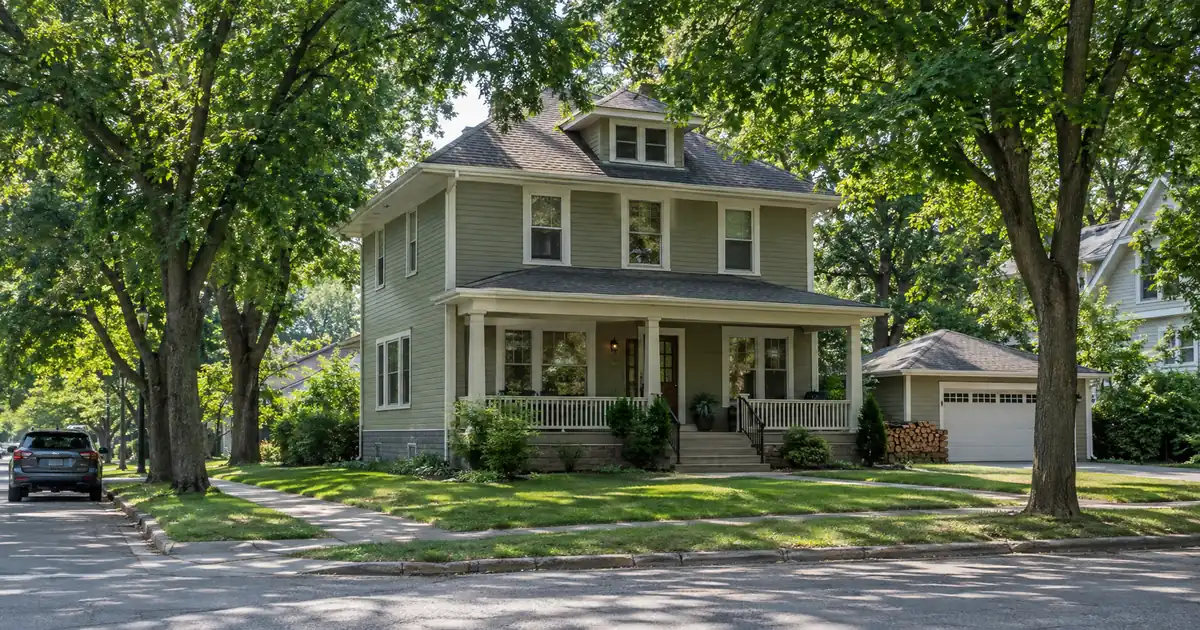
The Quick Read: No, a second home does not qualify the way an investment property does, even when bank statements document the income for both, because lenders classify a property by how you will actually use it, and the occupancy you declare decides the program, the leverage, the reserves, and whether rent can help you qualify at all. Bank statements are a documentation method. Occupancy is a separate decision that sits on top of it.
- A second home is reviewed on your personal income, so a bank-statement program reads your deposits and applies an expense factor.
- An investment property can instead qualify primarily on property-level rental income covering the payment, subject to lender guidelines, and your statements then prove reserves and the source of funds.
- Rent from a second home is generally not counted toward qualifying.
- Owner-occupied cash-out, which includes a second home, goes up to 80% LTV with select lenders. Investment-property cash-out tops out around 75% LTV.
- Declaring the wrong occupancy can cost you far more than the pricing difference it was meant to avoid.
What Does “Investment on Bank Statements” Actually Mean?
The phrase carries two meanings, and they lead to different places. Some readers mean an investment account, such as a brokerage statement that shows holdings. This article does not cover that. Others mean a loan on an investment property where bank statements are part of the file. That is the topic here.
What your deposits qualify you for.
Alt-doc programs read 12 months of business or personal bank deposits instead of tax returns. Enter your average monthly deposits and see the income a lender would credit you.
The expense factor is set by the lender from your business type and profit-and-loss statement; it is not a number you choose. This widget quotes no rate and no payment.
Program parameters shown update from Lendmire’s centralized guideline source.
Estimate
Illustrative estimate only — not a quote, Loan Estimate, approval, or commitment to lend. Deposit average, expense factor, and housing ratio are editable assumptions; the expense factor a lender applies is set from your business type and documentation. No interest rate or monthly payment is quoted here. Purchase capacity is a simplified illustration and does not account for taxes, insurance, HOA dues, or other debts. Alt-doc income documentation is available on consumer mortgages in the states where Lendmire is licensed for consumer lending; actual terms vary by lender, borrower, and property.
Even within the loan meaning, bank statements play two roles. In a bank-statement income program, the lender uses 12 months of business or personal statements to establish what you earn. In a rental-coverage file, the statements do a quieter job: they show reserves, the source of your down payment, and that your funds have been in your account long enough to count.
Keep those two roles apart. Most of the confusion about this question comes from treating them as one.
Does Bank-Statement Documentation Change the Classification?
It does not. Documentation type and occupancy are two independent choices.
Occupancy answers one question: who lives in or uses the property? You can answer it with a primary residence, a second home, or an investment property. Documentation answers a different question: how does the lender verify what you can afford? You can answer it with traditional personal-income documentation, bank statements, assets, or the property’s own rent.
Across the wholesale network Lendmire works with, bank-statement programs commonly cover primary residences and second homes, and some lenders extend them to investment properties. Which combinations are open depends on the lender’s program sheet, so a bank-statement file starts with the occupancy declaration, not the other way around.
Lendmire is a mortgage broker. It arranges these files through select lenders, and each lender reviews eligibility and underwrites the loan individually.
What Makes a Property a Second Home?
A second home is a residence you personally use, in addition to your main one. Lenders look at facts, not labels. Most programs expect the following:
- One unit. A single-family home, condo, or townhome fits. A fourplex does not.
- Suitable for year-round living. It needs to be a real home, not a seasonal shack.
- Exclusive control. You decide who stays there and when, and no one else holds the right to occupy it.
- No rental pool or management arrangement. Handing the property to a rental manager or a shared-income program points toward an investment.
- Reasonable distance from your main home. A weekend place two hours away reads very differently from a second home down the street. Lenders weigh the geography, because a nearby “second home” looks like a rental.
A lake house you use in summer and some holiday weekends fits the profile. A condo you bought because the rent looks good does not, whatever you call it on the application.
Key Terms Defined
Second home: a one-unit residence you use personally and keep available for your exclusive use, in addition to your primary residence.
Investment property: a property you do not occupy, held to produce rent or resale profit.
Bank-statement documentation: an income method where a lender averages the deposits in 12 months of business or personal statements and applies an expense factor to get qualifying income.
DSCR (debt service coverage ratio): monthly rent divided by the full monthly housing obligation, which tells the lender whether the property’s income covers its own payment.
Reserves: liquid funds left after closing, commonly around six months of the housing payment on bank-statement files, subject to lender guidelines.
Occupancy declaration: your written statement on the application of how you will use the property.
Second Home vs. Investment Property: Side by Side
| Factor | Second home | Investment property |
|---|---|---|
| Purpose | Personal use | Rental or resale income |
| Loan type | Consumer mortgage | Business-purpose loan |
| Income path | Personal income, such as deposit analysis | Rental coverage or alt-doc, by lender |
| Rent counts toward qualifying | Generally no | Yes, on a rental-coverage file |
| Cash-out ceiling | Up to 80% LTV (owner-occupied) | Around 75% LTV |
| Relative strictness | Lower risk class | Highest risk class |
The legal frame follows occupancy as well. An owner-occupied file, including a second home, is a consumer mortgage, so the standard consumer disclosure rules known as TRID apply. A non-owner-occupied rental is business purpose and exempt from TRID. That includes a short-term rental.
The line between the two is specific. The CFPB’s Regulation Z commentary treats credit for a non-owner-occupied rental as business purpose. It also says that if you expect to occupy the property for more than 14 days in the coming year, it cannot be treated as non-owner-occupied. That one sentence explains why the “I’ll just stay there sometimes” approach changes the file.
How Income Is Calculated on Each Path
On a second home, you qualify on your own income. The underwriter reviews 12 months of statements, totals the eligible deposits, and applies an expense factor to arrive at qualifying income. That figure is then compared with the full housing payment on the new home plus your other debts. The expense factor is set by each lender, so no universal formula exists, and a business with heavy operating costs lands differently from a consultant with light ones.
On an investment property, the property can carry the file. The lender compares market rent, taken from a lease or the appraiser’s rent schedule, with the full monthly obligation, including taxes, insurance, and any HOA dues. The file qualifies primarily on property-level rental income covering the payment, subject to lender guidelines. Your bank statements then show reserves and where your down payment came from. They do not set your income.
This is why a self-employed investor whose traditional personal-income documentation shows modest income, because of write-offs, may not need income documentation of that kind on a rental. Lendmire’s complete DSCR loans guide covers how that path works in detail.
Some select lenders in the network will review a rental-coverage file below break-even, but leverage and terms adjust when coverage is thin.
Can Rent Help You Qualify?
On a second home, generally no. Lenders want the home to stand on your personal income, so projected rent does not offset the payment. If you plan to rent the property to cover its cost, you are describing an investment, and the second-home label will not hold.
On an investment property, rent is the point. That is where the rental-coverage path fits. If you want to pay down the mortgage with rent, buy the property as an investment, and let the rent carry the qualification.
A third option sits between the two. If you are self-employed and the numbers work on your own deposits, a bank-statement loan on a second home can make sense when you truly intend to use it yourself. The question to ask is whether rent is essential to making the purchase work. If it is, the property belongs in the investment column.
One related caution applies to cash-out. A law firm’s guide to the business-purpose exemption gives the example of a cash-out refinance on a rental used to pay personal bills, which is treated as consumer purpose. What you do with the proceeds can matter, even on a rental. Lendmire’s piece on whether a self-employed borrower can cash out a second home on bank statements walks through that route.
Four Scenarios
The summer lake house. You buy a single-family cabin, use it most summers and holidays, and rent it out a few weekends to offset costs. If your own use dominates, the lender can treat it as a second home, and your deposits establish income. Occasional rental does not automatically reclassify it. A rental-listing pattern that looks like a business will.
The mostly rented condo. You buy near a ski resort and plan to rent it most of the year, using it a couple of times yourself. This is an investment property no matter how often you visit. Short-term rental rules can vary by city, county, HOA, and property type, so investors should confirm local rules before relying on projected rental income. Property-rent-based lender review is the better fit.
The retirement home bought early. You buy a house in a city where you plan to retire in a few years and rent it out until then. You are not using it now, and the lender looks at present use. Declare it as an investment, and revisit financing when you move in.
The rental pool unit. You buy a resort condo that must join a managed rental program. Because someone else controls occupancy, it fails the exclusive-control test and is treated as an investment.
What Happens If the Occupancy Claim Is Wrong?
Misstating occupancy is misrepresentation, and the pricing gap does not justify it. Market surveys report that a second home typically needs a smaller down payment, often 10% to 20%, while an investment property usually needs at least 20%, according to a STRATMOR Group summary of occupancy fraud. Pricing also runs higher for investment properties, because lenders see investment as the highest-risk class.
On Lendmire’s network, the figures that apply to your file are the ones in the program sheet. For owner-occupied cash-out, which includes a second home, that means up to 80% LTV, and 75% with an accountant-prepared expense ratio. Investment cash-out is around 75% LTV. Investment purchase leverage on bank-statement files varies by lender.
Lenders test occupancy claims against facts. An out-of-town job, a homestead exemption on another home, or a rental listing that appears right after closing can all raise questions. A second-home loan also carries a rider in which you agree to occupy the property personally, and lenders may verify occupancy after closing. Consequences can include the lender calling the loan due. Pick the label that matches your plan.
An LLC borrower points toward investment treatment, since a true second home is normally titled in your own name. Loans to an LLC are subject to program terms and lender eligibility.
Tax treatment varies, and a property’s tax classification is a separate question from its loan classification, so consult a qualified professional.
How to Decide
Work through these questions in order:
1. Will you personally use it, and would you keep it if it never earned rent? If yes, a second home is the likely fit, and bank-statement income can qualify you.
2. Does the plan depend on rent to make sense? If yes, buy it as an investment. Rental coverage may carry the file, subject to lender guidelines.
3. Is it one unit, under your control, outside any rental program? If not, it cannot be a second home.
4. Is your traditional personal-income documentation low because of write-offs? Bank statements can show your real cash flow on a second home, and a rental-coverage loan can skip personal income on an investment.
5. Where is the down payment coming from? Gifts and business cash follow their own rules. Lendmire’s pieces on using gift funds for a second-home down payment and using business cash as reserves on a second home cover both.
Frequently Asked Questions
Does using bank statements change a property’s occupancy type?
No. Bank statements only document income or assets. Occupancy is set by how you will use the property, and the lender tests that claim against the facts.
Can I count rental income to qualify on a second home?
Generally no. A second home is reviewed on your personal income, and projected rent is not used to offset the payment. If rent is central to the plan, the property is an investment and belongs on a rental-coverage path.
Can I rent out a second home occasionally?
Occasional rental is not automatically disqualifying, but heavy rental use, a listing pattern that looks like a business, or a management arrangement can reclassify the property. The lender decides under its own written program guidelines.
Is the 14-day rule the same for lenders and for taxes?
No. The 14-day line in the consumer-credit rule governs whether a rental can be treated as business purpose. Tax rules use a different personal-use test, so one does not settle the other.
What do I need to show for reserves and a down payment on a second home?
Expect 12 months of statements, a source for any large deposit, and reserves commonly around six months of the housing payment, subject to lender guidelines. Loan sizes run from roughly $125,000 to $3,500,000.
If you are self-employed and want to see how the numbers work, Lendmire can help you compare bank statement loan options based on your deposits, the property, credit profile, leverage, and your goals.
An investor who picks the occupancy label that matches the plan, then chooses the documentation path to fit it, usually ends up with the cleaner file.
About Lendmire
Lendmire, NMLS# 2371349, is a mortgage brokerage focused on investor financing, arranging DSCR loans in 40 states plus Washington, D.C. — 41 markets total. Qualification is based on the property’s income rather than personal income documentation, subject to lender guidelines, making it a fit for LLC-held rentals and scaling portfolios. Scotsman Guide named Lendmire a Top Mortgage Workplace in both 2025 and 2026.
Get Started
Ready to find the right loan for you?
In about 30 seconds you can review financing options available for your home or investment property. No commitment required.
Informational only. Not a Loan Estimate, approval, or commitment to lend. Program availability and eligibility are subject to lender guidelines, credit approval, property review, and underwriting.
References
1. CFPB Regulation Z §1026.3 and commentary
2. Doss Law: Business Purpose Exemption Simplified
3. STRATMOR Group: What Is Mortgage Occupancy Fraud
This article is part of Lendmire’s bank statement loan program — full qualification details, guidelines, and scenarios live on the program page.
Related reading: How a Luxury Home Bank Statement Loan Works in Florida · How Big Can a Super Jumbo Bank Statement Second-Home Loan Be? · How a Luxury Home Bank Statement Mortgage Works
Brandon Miller
Founder & CEO, Mortgage Loan Originator, Lendmire LLC
- Mortgage Loan Originator · NMLS# 1129696 · Verify on NMLS Consumer Access
- North Carolina Real Estate Broker · License# 343312 · Verify on NCREC
- North Carolina Insurance Producer · License# 19053198 · Property, Casualty, Life, Health · Verify on NAIC SBS
- Lendmire LLC · Firm NMLS# 2371349 · Verify firm licensure
Compliance and disclosures. Lendmire (NMLS# 2371349) is a licensed mortgage broker and is not a direct lender, depository institution, financial advisor, or tax professional. Content in this article is general market analysis and educational information — not financial, legal, or tax advice for any specific situation. Lendmire does not guarantee loan approval; every transaction is subject to underwriting by the funding lender. Mortgage pricing and loan program guidelines are subject to change at any time without notice and vary by borrower characteristics, property type, and state regulations. Lendmire complies with Equal Housing Opportunity. Licensure verification: NMLS Consumer Access.