
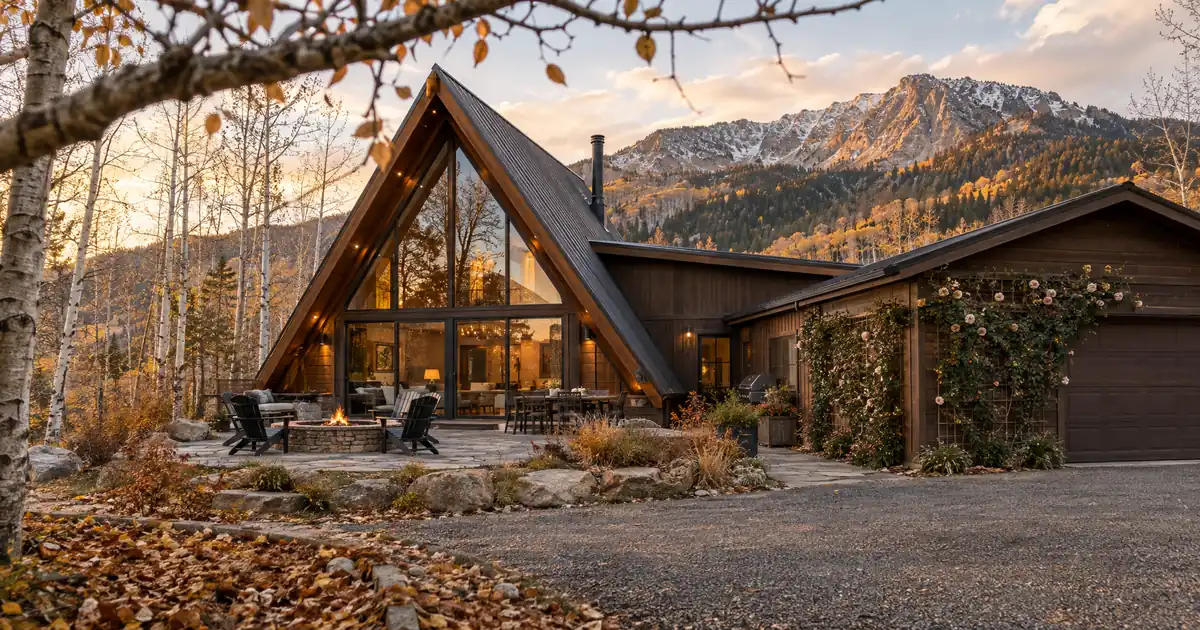
The Quick Read: It depends on how the chalet is classified and how large the loan is, but a second-home purchase on a bank statement loan typically needs about 15% down on smaller loans and 20% or more as the balance grows, through select wholesale programs, subject to full underwriting.
- On a second-home purchase, the ceiling is typically 85% LTV on smaller loans and steps down as the loan amount rises. LTV means loan-to-value, the loan as a percentage of the price.
- Investment-property purchases run on nearly the same ladder at the lower loan sizes, but the property’s rent does not help you qualify on a second home.
- Above $3,000,000 in loan amount, leverage drops sharply, and above $4,000,000 every file is reviewed case by case before submission.
- Reserves (cash left after closing) typically run 3, 6 or 9 months depending on loan size.
- A chalet you rent out regularly can be treated as an investment property, so classify it honestly at the start.
Why the Down Payment Isn’t One Number
You will see 10% down advertised for vacation homes. That figure usually describes the strongest borrower on the smallest loan.
Across the wholesale network, three things move the number. The first is occupancy: second home or investment property. The second is the loan amount, because lenders cut leverage as balances rise. The third is the property itself, since condos, condotels and remote chalets each carry their own ceilings.
Market surveys put second-home down payments at 10% or more and investment properties at 15% to 25%, per ValuePenguin. Those are conventional-loan benchmarks. Bank statement files run on a different ladder, shown below.
What the Ladder Looks Like by Loan Amount
A primary residence on a purchase can reach 90% LTV on loans to $1,000,000. Second homes and investment properties run about five points lower at every size. Chalets are second homes or rentals, so the lower ladder is the one that matters. The exact numbers vary by lender and program and follow a full review of property, leverage, and credit.
These are typical ceilings on a purchase, through select wholesale programs, subject to full underwriting. The credit score shown is the minimum for that cell.
| Loan amount | Second home, purchase | Investment, purchase |
|---|---|---|
| $300K–$1M | 85% LTV, 700+ | 85% LTV, 700+ |
| $1M–$1.5M | 80% LTV, 680+ | 80% LTV, 680+ |
| $1.5M–$2M | 80% LTV, 700+ | 80% LTV, 700+ |
| $2M–$2.5M | 80% LTV, 720+ | 80% LTV, 720+ |
| $2.5M–$3M | 75% LTV, 720+ | 75% LTV, 720+ |
| $3M–$4M | 65% LTV, 760+ | 60% LTV, 700 floor |
| Above $4M | Case by case | Case by case |
Subtract the LTV from 100 to get the minimum down payment percentage. An 85% LTV means 15% down. An 80% LTV means 20% down. Final terms depend on the lender’s guidelines, the property type, and the borrower’s complete credit picture.
Above $3,000,000 on a second home or investment property, extra overlays apply. These include a 700 credit floor, a clean 0x30x24 housing history, 48 months of seasoning after any credit event, and U.S. citizen or permanent resident status. Rural properties and non-occupant co-borrowers are excluded. For chalets in this range, plan on well over 30% down, and above $4,000,000 expect the leverage to be set on review. Each figure is subject to lender guidelines and a complete review of property type, leverage, and credit.
Second Home or Investment Property?
This choice rarely changes the leverage ceiling at lower sizes. It changes who carries the file.
Your occupancy is declared on the application, as SmartAsset notes, and it drives reserves and eligibility from there. On a true second home, the chalet’s rent does not count. Your deposit history carries the whole file.
If you plan to rent the chalet through ski season, the better tool is often a DSCR loan. DSCR stands for debt service coverage ratio. That loan is reviewed primarily on property-level rental income covering the payment, subject to lender guidelines. Our complete DSCR loans guide covers how that works.
Here is the rule of thumb. If you use the chalet mainly for yourself and rent it only occasionally, it is a second home. If renting is the plan, it is an investment property. A second home that is rented out regularly can be reclassified by the lender. Second homes are also one-unit only, so a duplex chalet is an investment property by definition.
Vesting matters too. A second-home loan usually goes to you personally. Buying through an LLC generally points to a business-purpose investment loan, subject to lender program eligibility.
DSCR loans are designed for non-owner-occupied investment properties. Because they are business-purpose investor loans, they are reviewed differently from a standard owner-occupied mortgage. Federal rules treat credit to acquire non-owner-occupied rental property as business purpose. They also exempt credit extended to someone other than a natural person.
Tax treatment can depend on how the funds are used and how the property is held; investors should keep clear records and speak with a qualified tax professional before relying on any deduction.
How Bank Statement Income Sets Your Ceiling
A bank statement loan is reviewed around documented income under the applicable program, subject to lender guidelines. The lender reads 12 or 24 consecutive months of personal or business deposits instead of traditional personal-income documentation.
On business statements, you need at least 25% ownership. The lender takes eligible deposits, divides by the statement months, and applies an expense ratio that varies with the type and size of the business, as shown below.
- The lowest ratio applies to a service business with no employees.
- A middle ratio applies to a business with a small number of employees.
- The highest ratio applies to larger businesses with more employees, or to any product business.
An accountant-provided ratio is another option. A profit-and-loss method is capped at 80%. Transfers from your own business into your personal account count in full.
Most programs set a 660 credit floor, rising to 700 above the super-jumbo line. Debt-to-income can reach 50%. Verification still happens. It just starts from bank records instead of returns.
Some wealthy borrowers qualify on assets instead. An asset allowance divides liquid assets by 36, 60 or 84 months to create qualifying income, on primary and second homes only. Retirement accounts count at 70%, or 80% at age 59½ and older. Business funds, gifts and cryptocurrency never count toward these paths.
Ski Chalet Specifics
Chalets are not ordinary houses to a lender. Three features change the math.
Condos and condotels. Warrantable condos reach 85% LTV and non-warrantable condos reach 80%. Condotels (condo units run like hotels) cap at 75% on a purchase. Your occupancy ladder and the property-type ceiling both apply, so the lower number generally governs.
Remote locations. Rural properties are limited to 80% LTV on ten acres or less and are never eligible above $3,000,000. A chalet at the end of a mountain road may trigger that review. Leverage, reserves, and pricing vary by lender and program; the final terms follow the full file review.
Short-term rental rules. Short-term rental rules can vary by city, county, HOA, and property type, so investors should confirm local rules before relying on projected rental income.
A Worked Chalet Scenario
Picture a physician who owns a practice and files returns that show far less income than her deposits. She wants a one-unit chalet that her family will use most weekends. Her loan amount lands in the $1,000,000 to $1,500,000 band.
On a second-home purchase in that band, the ceiling is typically 80% LTV with a 680 minimum credit score, through select wholesale programs. She needs at least 20% down. She also needs 6 months of reserves, plus 2 months for each additional financed property, such as her primary home. Closing costs and prepaid items come on top of the down payment.
Now change one fact. She decides to rent the chalet most winter weeks. The occupancy becomes investment property. The leverage ceiling in that band stays at 80% LTV on a purchase, but the file may move to a DSCR structure where the chalet’s rent carries the qualification. Leverage on DSCR files follows its own ladder and can differ, so compare both before choosing. Terms vary by lender guidelines, property type, leverage, credit profile, and full file review.
Brokers see this pattern often. Borrowers pick the occupancy that sounds more affordable, then discover reserves or documentation that do not fit. The stronger approach is to decide how you will actually use the chalet, then pick the program built for that use. Misstating occupancy is hard to defend later.
Where the Cash Can Come From
The lender verifies where your down payment sits and where it came from. Large deposits with no explanation slow a file down.
Business-account funds are a common issue for self-employed buyers. The deposits that qualify you can be business money, but the cash you close with usually has to be in your personal accounts. Borrowed funds, such as a HELOC on another property, are reviewed case by case. Lendmire’s piece How to Source a Down Payment on a Second-Home Bank Statement Loan walks through the options.
Should You Put Down More Than the Minimum?
Sometimes yes. Lower leverage strengthens a file, and it matters most when your credit score sits near a tier line or your reserves are thin.
But cash in the house is cash you cannot use elsewhere. Chalets carry seasonal costs and steady upkeep. A buyer who puts every dollar down and keeps no cushion can end up house-rich and cash-poor.
This one is a genuine toss-up. For borrowers with strong reserves, the minimum down payment keeps more capital free for a business or a second property. For borrowers with variable income, a bigger down payment and a thicker reserve buffer is usually the safer play.
Key Terms Defined
Down payment: the cash you put toward the price, equal to 100% minus the LTV.
LTV (loan-to-value): the loan amount divided by the purchase price or appraised value, whichever is lower.
Reserves: liquid money left after closing, counted in months of the housing payment.
Second home: a one-unit property you occupy for part of the year and do not rent out as the main purpose.
Investment property: a property bought mainly to rent, which can be financed as a business-purpose loan.
Bank statement loan: a mortgage that is reviewed around deposits over 12 or 24 months instead of traditional personal-income documentation.
Pre-Application Checklist
1. Decide how you will use the chalet and classify it that way. 2. Gather 12 or 24 consecutive months of statements, personal or business. 3. Confirm your ownership share if you use business statements. 4. Check your credit score against the minimum that applies to your loan size, since the 700 line applies mainly to the largest loans and smaller loans may use a lower minimum. 5. Line up reserves for the new loan and for each other financed property. 6. Confirm whether the unit is a condo, a condotel or a standalone home.
Frequently Asked Questions
Can I use ski-season rent to qualify on a second-home bank statement loan?
Generally no. Rent from a true second home does not qualify you. Your deposits carry the file. If rent is the point, a DSCR loan is reviewed primarily on the property’s rental income covering the payment, subject to lender guidelines.
Is 10% down possible on a ski chalet?
Not through the second-home ladder in Lendmire’s network. Exact terms still depend on the lender’s guidelines, property type, leverage, and a full review of the borrower’s file.
Not through the second-home ladder in Lendmire’s network. The 90% LTV ceiling applies to a purchase on a primary residence up to $1,000,000. A second home on a purchase tops out at 85% LTV on smaller loans, about 15% down, through select wholesale programs, subject to full underwriting. Every figure here varies by lender and program — guidelines, property type, leverage, and credit profile all apply.
Do closing costs count toward the down payment?
No. They are separate. Plan for the down payment, closing costs, prepaid items and reserves as four distinct cash needs.
Does a condo or condotel chalet need more down?
Often yes. Condotels cap at 75% LTV on a purchase, which means at least 25% down. Non-warrantable condos cap at 80%. The occupancy ladder still applies, so the lower figure generally governs.
What changes above $3,000,000?
Leverage drops and the overlays tighten. A second-home purchase falls to 65% LTV with a 760 credit score, and an investment-property purchase falls to 60%. Above $4,000,000 each file is reviewed case by case before submission. Final terms depend on lender guidelines, property type, leverage, and the borrower’s complete credit picture.
Next Step
If you are financing a high-balance property on business or personal bank statements and want to see how the numbers work, Lendmire can help you compare super jumbo bank statement loan options based on your deposits, the property, credit profile, leverage, and your goals. Lendmire is a broker, so it shops multiple wholesale programs for you. Its consumer lending is licensed in 16 states, and nothing here is a commitment to lend.
Lendmire’s self-employed mortgages page presents both super jumbo programs, bank statement and DSCR, side by side.
About Lendmire
Lendmire (NMLS# 2371349), a non-QM mortgage broker serving investors in 41 markets including Washington, D.C., helps structure DSCR scenarios commonly evaluated around a property’s rental income rather than personal income paperwork, subject to lender guidelines. A Scotsman Guide Top Mortgage Workplace in 2025 and 2026, Lendmire places loans through wholesale investor lenders and is not a direct lender.
Get Started
Ready to find the right loan for you?
In about 30 seconds you can review financing options available for your home or investment property. No commitment required.
Informational only. Not a Loan Estimate, approval, or commitment to lend. Program availability and eligibility are subject to lender guidelines, credit approval, property review, and underwriting.
References
1. ValuePenguin, Second Homes vs. Investment Properties
2. SmartAsset, Second Home vs. Investment Property
4. Cornell Legal Information Institute, 12 CFR 1026.3
This article is part of Lendmire’s super jumbo bank statement loan program — full qualification details, guidelines, and scenarios live on the program page.
Related reading: How to Get a Super Jumbo Bank Statement Loan With a Law Practice · Bank Statement Loan vs Asset Depletion Loan for Attorneys · Bank Statement Loan vs Asset Depletion Loan for Actors
Brandon Miller
Founder & CEO, Mortgage Loan Originator, Lendmire LLC
- Mortgage Loan Originator · NMLS# 1129696 · Verify on NMLS Consumer Access
- North Carolina Real Estate Broker · License# 343312 · Verify on NCREC
- North Carolina Insurance Producer · License# 19053198 · Property, Casualty, Life, Health · Verify on NAIC SBS
- Lendmire LLC · Firm NMLS# 2371349 · Verify firm licensure
Compliance and disclosures. Lendmire (NMLS# 2371349) is a licensed mortgage broker and is not a direct lender, depository institution, financial advisor, or tax professional. Content in this article is general market analysis and educational information — not financial, legal, or tax advice for any specific situation. Lendmire does not guarantee loan approval; every transaction is subject to underwriting by the funding lender. Mortgage pricing and loan program guidelines are subject to change at any time without notice and vary by borrower characteristics, property type, and state regulations. Lendmire complies with Equal Housing Opportunity. Licensure verification: NMLS Consumer Access.