
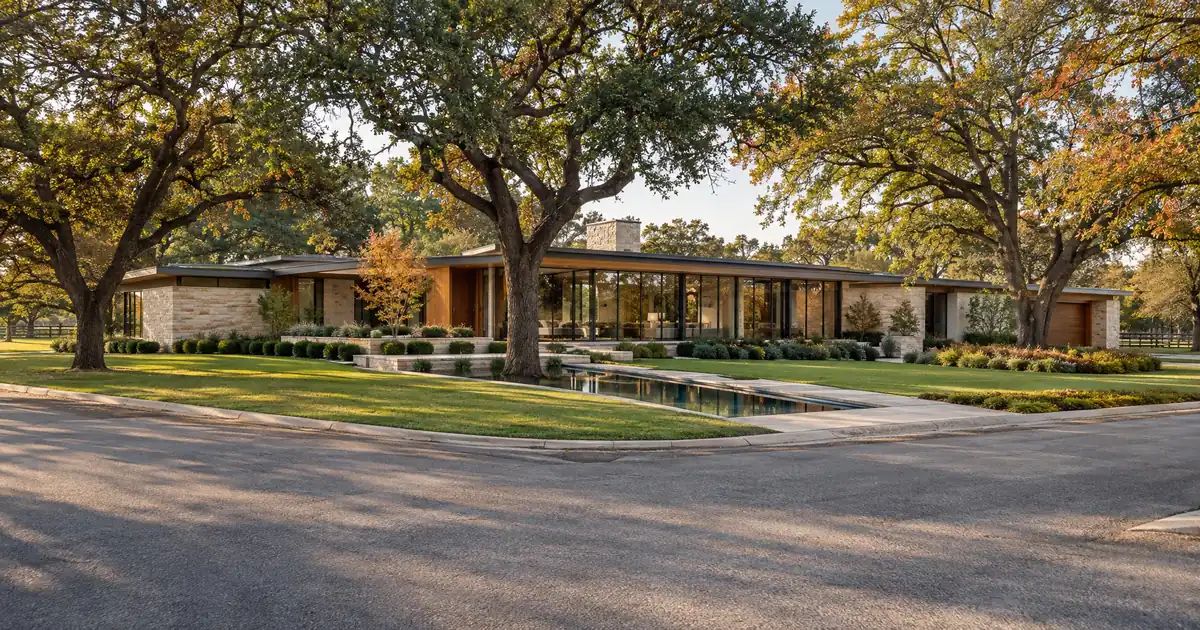
The Quick Read: It depends on loan size, acreage and how the lender classifies the area. Below $3,000,000, some wholesale programs will review rural collateral with tighter leverage. At $3,000,000 and above, rural property is generally excluded outright, on every occupancy. Above the super jumbo line, ten acres is the ceiling even for non-rural land.
- Below $3,000,000: rural estates on ten acres or less can reach about 80% leverage, through select wholesale programs, subject to full underwriting.
- The super jumbo line: it sits at $3,500,000 on a primary residence and $3,000,000 on a second home or investment property.
- Rural cutoff: rural property is not available at $3,000,000 and above, whatever the occupancy.
- Above the line: a 700 credit floor, a clean housing history and a ten-acre maximum apply.
- The workaround: shrink the loan, split the land, or move to a different lender type. Final terms depend on lender guidelines, property type, leverage, and the borrower’s complete credit picture.
What Counts as “Super Jumbo” on a Rural Property?
Super jumbo is a lender-defined tier, not a legal category. No regulator sets the line. Each program picks its own size where the rules tighten.
Across the wholesale programs we place files with, the line sits at $3,500,000 on a primary residence. On a second home or investment property it drops to $3,000,000. Cross it and the overlays stack up. You need a 700 credit score, a clean 0x30x24 housing history (no 30-day late payments in 24 months) and 48 months of seasoning after any credit event. Borrowers must be U.S. citizens or permanent residents. Non-occupant co-borrowers are out. These specifics are subject to lender guidelines and a full review of property, leverage, and credit.
Two rules matter most for you. Rural property is never available at $3,000,000 and above, on any occupancy. And above the super jumbo line, the acreage maximum is ten acres.
Notice what that means. A 30-acre ranch above the line fails the acreage test whether or not anyone calls it rural. A 6-acre estate in a remote county fails the rural test once the loan reaches $3,000,000. Both are separate gates.
Why Does Rural Raise the Bar?
Lenders think about the day they might have to sell. A large estate has a thin pool of buyers. A large estate in a remote area has a thinner pool still. Comparable sales may be miles away, sparse, or years old.
Every program in our network handles that risk the same way. It lowers leverage as loan size climbs, and it narrows the property types it will take. At small sizes, a lender can absorb an odd property. At large sizes, one bad resale can wipe out the loss cushion.
That is why the answer changes with size. The rural question at $1,500,000 is not the rural question at $4,500,000.
How Is “Rural” Defined?
There is no single definition. The Census Bureau counts areas with fewer than 2,000 housing units and 5,000 residents as rural. A separate federal “nonmetro” label uses counties and commuting patterns.
Lenders draw their own lines. Some use a third-party mapping tool. Some judge how built-up the surrounding area is. Some look at distance to the nearest town. Two lenders can read the same address differently.
Here is what that means for you. A property in a small town can be flagged rural by one program and cleared by another. Ask early, before you spend money on an appraisal.
The Size Bands: Where Rural Works and Where It Stops
Below $3,000,000, rural is a cap. At $3,000,000 and above, rural is an exclusion. Here is how it plays out.
| Loan size | Rural estate | Acreage |
|---|---|---|
| Under $3,000,000 | Reviewed, tighter leverage | Ten acres or less for rural |
| $3,000,000 and above | Not available | Ten acres or less above the super jumbo line |
| Above $4,000,000 | Not available | Non-rural files reviewed case by case |
Within the rural window, leverage tops out at about 80% on ten acres or less. That is a ceiling, not a promise. The size ladder also applies, and the lower of the two typically governs.
On a primary residence, the ladder steps down as the loan grows. It runs 90% on a purchase up to $1,000,000. It is 85% to $2,000,000, then 80% to $3,000,000. A rural estate near the top of that band lands at 80% on a purchase on a primary residence at best, and often less. Second homes and investment property run their own ladders, usually lower. Every figure is a ceiling, through select wholesale programs, subject to full underwriting.
Above $4,000,000, every file is reviewed case by case before submission. A rural parcel at that size is not a case that gets reviewed. It is excluded.
How Acreage Enters the File
The appraiser separates the home and the land that supports it from excess acres. The excess may be valued lightly or left out of the value the lender uses.
Say you buy a house on 40 acres. The price bundles the land in. The lender may count only the house and a reasonable homesite. The appraisal can come in below the price, and the loan shrinks with it. You cover the gap in cash.
Rural comps add a second problem. Comparable sales may sit far away and need written justification. Large estates often need a second appraisal. The more unusual the property, the more scrutiny.
Three things keep this manageable:
- Ask the appraiser how the parcel will be treated before you commit.
- Ask whether the lender counts the whole parcel or just the homesite toward the acreage limit.
- Ask whether a parcel split is realistic.
Residential or Agricultural?
Working land is a separate red flag. Pasture leased to a rancher, orchards, crops and large barns can push an appraiser toward a farm classification. That brings different appraisal standards. Some programs count only the residential part of the value.
A quiet country estate with a house, a garage, a guest cottage and some woods usually reads as residential. A house attached to a hay operation usually does not. Features that tell the appraiser the land earns money push you toward agricultural. Features that tell them it is a home push you the other way.
The same applies to rental income. A parcel dedicated to farming or recreation, such as a hunting lodge or a campground, is usually outside investor programs. Standard utilities, a normal septic system and a layout like nearby homes help.
Can You Use a DSCR Loan Instead?
Maybe, if the property is truly an investment. A DSCR loan is reviewed primarily on property-level rental income covering the payment, subject to lender guidelines. It does not look at your traditional personal-income documentation.
DSCR loans are designed for non-owner-occupied investment properties. Because they are business-purpose investor loans, they are reviewed differently from a standard owner-occupied mortgage. You cannot put a cabin you plan to use yourself on a DSCR loan. Putting the property in an LLC does not change that.
For investment rentals, rural collateral faces a second hurdle: thin rental comps. A lender needs proof that someone will rent the place. Remote areas can have few comparable leases. Our complete DSCR loans guide explains how coverage is measured. Some programs also review ratios below 1.00, with leverage and terms adjusted.
The same size line applies. On an investment property, the overlays begin at $3,000,000, and rural stops there.
What if You Live in It? The Bank Statement Path
Owner-occupants with business income often use bank statement programs. These qualify on 12 or 24 months of deposits after an expense ratio instead of traditional personal-income documentation. Transfers from your own business into a personal account count in full.
Rural rules still apply. Rural property on ten acres or less can go to 80%, and never above $3,000,000. Documentation does not override acreage. Strong deposits do not rescue a property the lender will not take.
For the full property-side picture, see Lendmire’s piece Can a Twenty-Acre Estate Qualify for a Super Jumbo Bank Statement Loan?. It covers the acreage question in more depth.
Three Scenarios
These are hypothetical. Real files depend on the borrower, the property and the lender.
Scenario one: the one that fits. A self-employed buyer wants a primary residence on eight acres, in an area the lender does not flag as rural-remote. The loan lands in the $2,000,000 to $2,500,000 band. The ladder allows about 80% on a purchase on a primary residence, with a 720 credit tier. Reserves run 9 months at this size. This is a workable structure, through select wholesale programs, subject to full underwriting.
Scenario two: too much land. A buyer finds a 45-acre estate priced above $4,000,000. Two overlays fail. The parcel is over ten acres, and the lender flags it rural. Rural property is not available at that size, and every file there is reviewed case by case before submission. This one is not a candidate. Options: split off the excess acreage, buy only the homesite, or use a lender outside the super jumbo tier.
Scenario three: the retreat that rents. An investor wants a lodge on six rural acres to rent out. The loan would sit near $3,200,000. That is above the $3,000,000 investment line. Rural stops there. The investor can lower the loan size with a bigger down payment, or pursue a different property.
Which Loan Path Fits?
| Path | Rural tolerance | Best fit |
|---|---|---|
| Super jumbo bank statement | Ten acres, under $3,000,000 | Self-employed, owner-use |
| DSCR investor loan | Rural reviewed, rent proof needed | Rental properties |
| Rural or agricultural lender | Higher, but different product | Larger or working land |
| Asset-based paths | Same property rules | Deep liquid assets |
Asset-based paths change how you qualify, not what the property must be. Asset allowance divides liquid assets by 36, 60 or 84 months. Assets-only needs liquidity equal to the loan plus costs. The collateral rules do not move.
How Does the Conforming Limit Fit In?
The conforming limit is the only federal line in this space. The Federal Housing Finance Agency set the baseline for one-unit properties at $832,750 for most of the country. In high-cost areas, the ceiling is $1,249,125. HousingWire confirms both figures and notes the limit adjusts yearly.
Above your county’s limit, a loan is jumbo. Super jumbo is where each program draws its own tighter line. DSCR and bank statement loans are non-agency products, so the conforming limit is a reference point, not a program rule.
If Your Estate Does Not Fit
Work through these in order of effort.
1. Lower the loan. More cash down can bring it under the line. Leverage falls as loans grow, so the equity needs rise.
2. Choose purchase or rate-and-term. Cash-out ladders run lower than purchase ladders. On a super jumbo, cash-out proceeds cannot satisfy reserves.
3. Exclude excess acres. A parcel split can leave you with a clean homesite.
4. Change the property. A similar home closer to town may clear the rural flag.
5. Use a different lender type. Rural and agricultural lenders exist for this. Different product, different terms.
Before you apply, check three things:
- Confirm the parcel size against the ten-acre cap.
- Ask how the lender defines rural for your address.
- Confirm the loan size against the $3,000,000 and $3,500,000 lines.
Exit liquidity matters too. A large rural estate can be hard to sell, and a future buyer may struggle to find financing. Lenders price that in, and you should as well.
Key Terms Defined
Super jumbo: a lender-defined loan tier above standard jumbo, with tighter rules on credit, reserves and property type.
Rural property: land a lender classifies as remote or sparsely built-up. Definitions vary by program.
Seasoning: the waiting period after a credit event or a purchase before a lender will count it as clear.
Reserves: liquid savings a lender wants you to hold after closing, counted in months of the payment.
Excess acreage: land beyond what the lender treats as supporting the home. It may be left out of value.
DSCR: the debt service coverage ratio. It measures whether a property’s rent covers its monthly obligations.
Not Legal or Tax Advice
This article is educational. It is not legal or tax advice. Tax treatment can depend on how the funds are used and how the property is held; investors should keep clear records and speak with a qualified tax professional before relying on any deduction. Talk to an attorney or CPA about your own situation. Program terms change and every file is underwritten individually.
Frequently Asked Questions
Is a rural estate always declined above $3,000,000?
Rural property is not available at $3,000,000 and above in the programs we place files with, on any occupancy. Above the super jumbo line, the property also has to be ten acres or less. A non-rural estate near town can still qualify, subject to full underwriting.
How many acres is too many?
Ten acres is the ceiling above the super jumbo line. Below it, rural property on ten acres or less can reach about 80% leverage. Past ten acres, the excess land may be left out of the appraised value, or the file may not fit a program at all.
Do strong bank deposits fix a rural problem?
No. Deposits prove income, not collateral fit. Acreage, rural classification and size band can end the search before income is reviewed. Fix the property side first.
Can I use an LLC to make a cabin DSCR-eligible?
No. A cabin you plan to use yourself is not a business-purpose property, and an LLC does not change that. Bank statement loans are the usual path for owner-use properties, with the same rural and acreage limits.
What does case by case mean above $4,000,000?
Every file is reviewed before submission. Leverage is not a flat figure. Expect lower percentages as loans grow, and expect rural parcels to be excluded.
For more on the self-employed side, read Lendmire’s complete guide to super jumbo mortgages for self-employed borrowers.
For current guidelines and terms, see Lendmire’s super jumbo bank statement loan programs page.
Lendmire’s self-employed mortgages page presents both super jumbo programs, bank statement and DSCR, side by side.
About Lendmire
Lendmire (NMLS# 2371349) is a mortgage brokerage focused on DSCR investor financing, helping arrange programs through wholesale and investor-lending channels in 41 markets, including Washington, D.C. DSCR loans are evaluated by the lender on property cash flow rather than personal income, subject to lender guidelines, supporting LLC closings and accommodating investors with four or more financed properties. Scotsman Guide Top Mortgage Workplace in both 2025 and 2026.
Get Started
Ready to find the right loan for you?
In about 30 seconds you can review financing options available for your home or investment property. No commitment required.
Informational only. Not a Loan Estimate, approval, or commitment to lend. Program availability and eligibility are subject to lender guidelines, credit approval, property review, and underwriting.
References
1. FHFA 2026 conforming limits release
2. HousingWire: 2026 conforming loan limit
This article is part of Lendmire’s super jumbo bank statement loan program — full qualification details, guidelines, and scenarios live on the program page.
Related reading: Jumbo Loan vs Super Jumbo for a Retiree on Asset Depletion · How Assets-Only Qualification Works for a Super Jumbo Mortgage · How Non-Real-Estate Collateral Rules Work for Private-Bank Super Jumbo Clients
Brandon Miller
Founder & CEO, Mortgage Loan Originator, Lendmire LLC
- Mortgage Loan Originator · NMLS# 1129696 · Verify on NMLS Consumer Access
- North Carolina Real Estate Broker · License# 343312 · Verify on NCREC
- North Carolina Insurance Producer · License# 19053198 · Property, Casualty, Life, Health · Verify on NAIC SBS
- Lendmire LLC · Firm NMLS# 2371349 · Verify firm licensure
Disclosure information. Lendmire is a state-licensed mortgage brokerage under NMLS# 2371349. Lendmire is not a depository institution, direct lender, or financial advisor — all loans referenced are placed through wholesale lender partners and are subject to each lender's underwriting standards. This article is provided for general informational purposes and is not a commitment to lend, nor does it constitute financial, legal, or tax advice. Loan programs, terms, rates, and qualification standards change without notice and depend on borrower profile, property type, and the state in which the subject property is located. Equal Housing Opportunity provider. NMLS Consumer Access: nmlsconsumeraccess.org.