
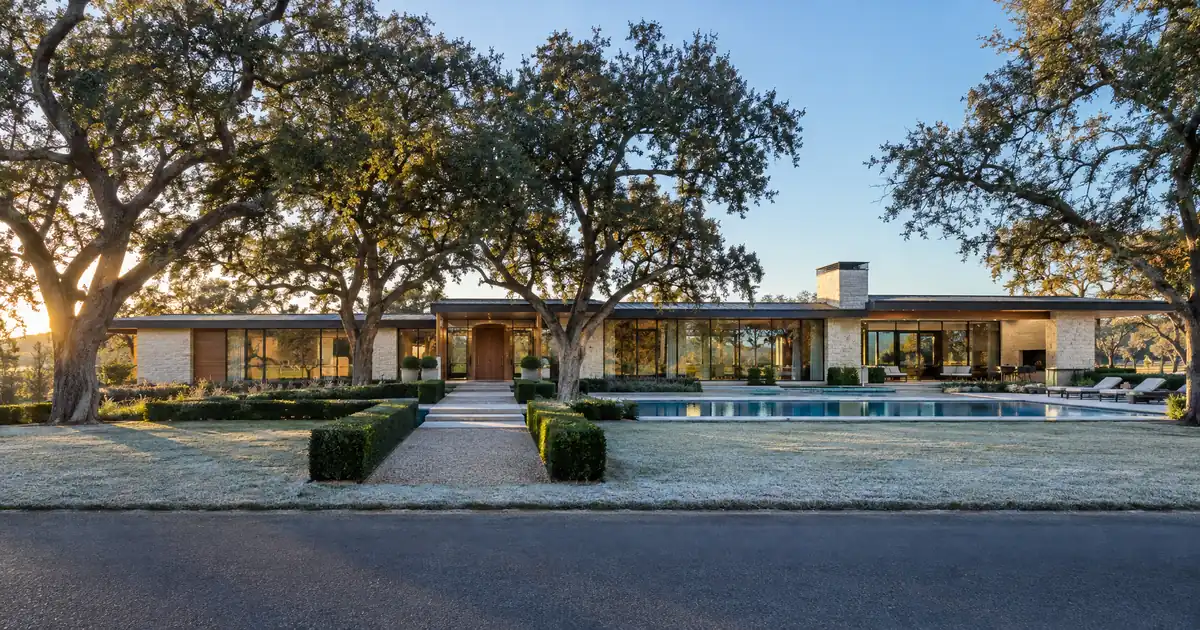
The Quick Read: A bank statement loan on acreage is limited by two separate tests: your deposits set how much income you can show, while the property’s size, use, and location set how much leverage and which program the file can reach, and the land side tightens as the loan grows past $3,000,000 through select wholesale programs, subject to full underwriting.
- Income is read from 12 or 24 months of deposits, not traditional personal-income documentation. Strong deposits cannot fix a property that fails its own test.
- Through select wholesale programs, rural property is typically allowed at up to 80% leverage on ten acres or less, and never above $3,000,000.
- Above $3,500,000 on a primary residence, and above $3,000,000 on a second home or investment property, the overlays rule out rural property and cap acreage at ten acres.
- Every file above $4,000,000 is reviewed case by case before submission, so a leverage figure at that size is a ceiling on review, not an offer.
- Lendmire is a broker. It compares programs across its wholesale network and does not lend or approve.
Key Terms Defined
Bank statement loan: A mortgage that is reviewed around deposits in personal or business bank accounts instead of traditional personal-income documentation.
Super jumbo: A loan so far above the conforming limit that lenders apply tighter leverage, credit, and reserve rules. No official definition exists, so each program draws its own line, usually in the low millions.
Expense ratio: The share of business deposits the lender treats as operating cost, not income.
Eligible deposits: Deposits that represent real earnings. Transfers between your own accounts, loan proceeds, refunds, and one-off credits come out.
Rural property: A home the appraiser or program flags as rural because of its location, land size, or use. It is a collateral label, not a credit one.
Acreage limit: The most land a program will accept under one residential loan.
Reserves: Liquid savings you must keep after closing, counted in months of the property’s obligations.
Why Do Two Separate Tests Decide the File?
The borrower and the property are underwritten independently. You can pass one and fail the other.
The borrower test asks whether your deposits support the loan. The property test asks whether the land and home fit the program. Most acreage surprises come from the second test, because borrowers prepare for income questions and forget that collateral gets its own review.
| Factor | Income test | Property test |
|---|---|---|
| What is checked | Deposits and expense ratio | Acres, use, location, comps |
| Documents | 12 or 24 months of statements | Appraisal, survey, zoning |
| Typical failure | Deposits scrubbed too far | Rural flag or acreage cap |
| Can it offset the other? | No | No |
That last row is the practical point. A large deposit history does not buy extra acres, and a trophy property does not rescue thin documented income.
How Does Underwriting Turn Deposits Into Income?
The lender picks a statement window, scrubs the deposits, applies an expense ratio where needed, and divides by the number of months. That result is your qualifying income.
Scotsman Guide’s non-QM coverage describes the same setup. A self-employed borrower without a W-2 supplies 12 to 24 months of personal or business statements. The lender applies a standard expense factor, with 50% as the usual illustration. A profit-and-loss statement or an expense statement from a tax professional can substitute.
Here is how the steps run across the programs in Lendmire’s network, through select wholesale programs, subject to full underwriting.
1. Choose the window. Twelve or 24 consecutive months of personal or business statements. The bank portfolio program uses 12. Statements must be consecutive, and a transaction history never substitutes.
2. Scrub the deposits. Own-account transfers, loan proceeds, and refunds come out.
3. Apply the expense ratio on business accounts. Fixed ratios are set by the program and vary by business type and size, with a lower ratio for a service business with no employees and higher ratios as headcount grows or for any product business. An accountant-provided ratio is the alternative. Business statements need at least 25% ownership, and your share of the deposits is what counts.
4. Skip the ratio on personal accounts. Transfers from your own business into your personal account count in full.
5. Divide by the months. Deposits after the ratio, divided by 12 or 24, give monthly income.
6. Run debt-to-income. Programs typically allow up to 50%.
Run the logic on a founder with a product business and a full year of business statements. The 50% ratio halves the eligible deposits before the division. Move the same cash through to a personal account as owner transfers, and it counts in full. That difference is why account structure matters so much. Model your income at the ratio the lender will use, never at gross deposits.
How Does Acreage Change the Property Test?
Acreage is an appraisal and collateral issue, not a borrower issue. No federal rule caps acres on a non-agency loan. Each program sets its own.
Three things drive the review.
Classification. The appraiser and program decide whether the home is suburban, rural, or something else. Through select wholesale programs, rural property is typically allowed to 80% leverage on ten acres or less, and never above $3,000,000. Once you cross that dollar line, rural is off the table.
Comparable sales. The appraiser has to support the residential value with sales of similar homes on similar land. On large parcels, nearby comps are often thin. A conservative appraisal can sink the leverage even when acreage is within the cap.
Use and excess land. Lenders value the home as a residence. Land beyond what a typical residential lot would carry may be capped or given little contributory value. A working farm, or land zoned agricultural, is treated differently from a house on extra acres.
Agency loans are a different animal. Their land rules do not govern these programs, and a property that fails one set of rules can still fit another, so check before you assume a decline is final.
Where Do the Limits Tighten as the Loan Grows?
Leverage steps down with size, and the land rules go from allowed to excluded. Two wholesale programs cover the range from $300,000 to $30,000,000. A portfolio non-QM program carries files to $6,000,000. A bank portfolio program takes twelve-month-statement files up to $30,000,000 on its own ladder.
The table shows purchase leverage ceilings at typical credit tiers, through select wholesale programs, subject to full underwriting.
| Loan size | Primary purchase | Investment purchase | Rural / acreage |
|---|---|---|---|
| To $1,000,000 | 90% | 85% | Rural to 80%, 10 acres or less |
| $1M to $2M | 85% | 80% | Same |
| $2M to $3M | 80% | 80%, then 75% over $2.5M | Same, never above $3M |
| $3M to $4M | 75%, top credit tier | 60% | No rural property |
| $4M to $5M | 65% on review | 65% on review | Case by case |
Read the first two columns as ceilings, not offers. On a second home, expect figures about five points lower at every size.
The super-jumbo overlays kick in above $3,500,000 on a primary residence and above $3,000,000 on a second home or investment property. They include a 700 credit floor, a clean 24-month housing history, 48 months of seasoning after any credit event, U.S. citizen or permanent resident status, no non-occupant co-borrowers, no rural property, and a ten-acre maximum. Cash-out proceeds also cannot count toward reserves.
Everything above $4,000,000 is reviewed case by case before submission. The bank portfolio program’s ladder begins above $4,000,000 and overlaps the first program to $6,000,000. It runs 65% to $5,000,000, 60% to $10,000,000, and 55% to $30,000,000 on review, with interest-only at 60% or the band’s ceiling, whichever is lower. Above $6,000,000 it stands alone.
Credit follows the same pattern. The portfolio program’s floor is 660, and 700 applies above the super-jumbo line. Pricing and available terms vary by lender, borrower profile, property type, and full underwriting review. Reserves typically run 3 months to $500,000, 6 months to $1,500,000, and 9 months above that, with two more months for each additional financed property up to a 12-month maximum. First-time investors need 12 months.
What Structures and Variations Exist?
Deposits are not the only road. Through select wholesale programs, a few other paths change how income is documented.
Profit-and-loss path. A P&L, capped at 80%, can replace the expense ratio for borrowers with complicated statements or several business lines.
Asset allowance. Liquid assets are divided by 36 months when it supplements income and your debt-to-income is at or below 60%. It is divided by 60 months above that, and by 84 months when assets stand alone or the loan exceeds $3,500,000. This path is for primary and second homes, with an 80% maximum.
Assets-only. No debt-to-income is calculated. U.S. liquid assets must equal the loan plus costs plus sixty months of any net loss on other residential property. Retirement accounts count at 70%, or 80% at age 59.5 or older. Business funds, gifts, most trusts, unvested stock, and cryptocurrency never count.
Interest-only. On purchase and rate-and-term files, the portfolio program allows interest-only up to 85% leverage with a 700 credit floor. The bank program stops at 60%. Neither raises a cash-out ceiling. Final terms depend on lender guidelines, property type, leverage, and the borrower’s complete credit picture.
Cash-out. Proceeds are unlimited at or below 60% leverage. Above 60%, the portfolio program caps cash in hand at $1,500,000. The best cash-out ceiling on a primary residence is 80%, and it falls steeply as the loan grows. For the documentation side, see Lendmire’s piece Super Jumbo Bank Statement Cash-Out Documentation Without Tax Returns. These specifics are subject to lender guidelines and a full review of property, leverage, and credit.
Where Does the General Rule Break?
The rule that income is separate from collateral holds almost everywhere. These are the named exceptions.
Rental acreage. DSCR means debt service coverage ratio, and it tests the property’s rent against its monthly obligations instead of your personal income. DSCR loans are designed for non-owner-occupied investment properties. Because they are business-purpose investor loans, they are reviewed differently from a standard owner-occupied mortgage. If you plan to rent the acreage, ask which path fits. A bank statement file qualifies you personally, while a DSCR file qualifies the rent, subject to lender guidelines. For the full picture, read the complete DSCR loans guide.
Dollar line beats acreage line. A five-acre property is fine at $2,500,000 and flagged rural above $3,000,000. The land did not change. The program did.
Multi-business borrowers. Several entities and cross-account transfers make deposit scrubbing slow. A P&L from a tax professional is the usual cleanup tool, as Scotsman Guide notes.
Ownership below 25%. Business statements do not qualify under that threshold. Personal statements may be the path.
Citizenship and co-borrowers. Above the overlay line, non-citizens and non-occupant co-borrowers are out through these programs.
Texas home-equity loans. A 50(a)(6) loan takes a five-point leverage reduction and stops at $3,000,000 on the portfolio program.
Condos and units. Warrantable condos run to 85% and non-warrantable to 80%. Condotels run 75% on purchase and 65% on cash-out, or 50% on the bank program. Two-to-four unit properties run to 85%, and second homes are one unit only.
What Do You Do When the Property Doesn’t Fit?
You adjust the loan, the land, or the program. The aim is to move the file under the line that is blocking it.
- Lower the balance. Dropping below $3,000,000 can restore rural eligibility at up to 80% on ten acres or less. A larger down payment is often the cleanest fix.
- Reduce the parcel. Ten acres or fewer clears the cap. Splitting off excess land into a separate parcel can change which program applies.
- Change the occupancy. Primary residence ceilings run higher than second home or investment ones at every size.
- Switch the qualification method. An asset path or DSCR may succeed where deposits fall short, or the reverse.
- Sequence the work. Check acreage, zoning, and comps before ordering the appraisal, not after a decline.
Be honest about the tradeoff. A smaller loan costs you leverage, but it often saves the deal. A different program may carry its own overlays, so compare more than one.
Tax treatment can depend on how the funds are used and how the property is held; investors should keep clear records and speak with a qualified tax professional before relying on any deduction.
Does No Tax Returns Mean No Documentation?
No. These loans use different documents, and the lender still has to confirm you can repay. The CFPB’s compliance guide for the ability-to-repay rule says lenders may write their own underwriting standards if they consider the required factors and verify what they rely on. Bank statements are one lender-chosen way to do that.
The super-jumbo label has no legal meaning, either. A jumbo loan is one above the conforming limit. The current baseline for a one-unit property is $832,750, and the high-cost-area ceiling is $1,249,125. Anything the lender calls super jumbo sits well above those lines by its own definition.
Frequently Asked Questions
Is there a maximum acreage on a bank statement loan?
Yes, but it depends on the program and loan size. Through select wholesale programs, rural property is typically allowed on ten acres or less at up to 80% leverage, and never above $3,000,000. Above the super-jumbo overlay line, the ten-acre cap stays and rural property is excluded. Subject to full underwriting.
Can strong deposits make up for a property that exceeds the acreage cap?
No. The income test and the property test run separately. Deposits determine whether you can afford the loan, while acreage, use, and location determine whether the collateral fits. When the land is the problem, the fix is a smaller parcel, a lower balance, or a different program.
Do bank statement loans work for a hobby farm or working farmland?
A residence on extra land can fit, depending on comps and use. Land zoned agricultural, or a property run as a working farm, is generally treated differently and often falls outside residential programs. Ask for the use test early.
How is my income calculated if I own part of the business?
Business statements require at least 25% ownership, and only your share of eligible deposits counts after the expense ratio. If you move your share into a personal account, those transfers count in full. Through select wholesale programs, the exact treatment varies by program.
Is a loan above $4,000,000 on acreage even possible?
It can be, but only on review. Everything above $4,000,000 is reviewed case by case before submission, and leverage drops to 65% or lower at that size on a purchase. The bank portfolio program carries files up to $30,000,000 on a twelve-month-statement basis, with its own ladder and review.
Next Step
If you are financing a high-balance property on business or personal bank statements and want to see how the numbers work, Lendmire can help you compare super jumbo bank statement loan options based on your deposits, the property, credit profile, leverage, and your goals. Lendmire is a broker that places files with select wholesale programs. It does not lend or approve, and nothing here is a commitment to lend. Its consumer mortgage lending is licensed in 16 states: AL, CA, CO, FL, GA, IN, MI, MT, NM, NC, OH, PA, TN, TX, VA, and WA.
Lendmire’s self-employed mortgages page presents both super jumbo programs, bank statement and DSCR, side by side.
About Lendmire
Lendmire, NMLS# 2371349, is a mortgage brokerage focused on investor financing, arranging DSCR loans in 40 states plus Washington, D.C. — 41 markets total. Qualification is based on the property’s income rather than personal income documentation, subject to lender guidelines, making it a fit for LLC-held rentals and scaling portfolios. Scotsman Guide named Lendmire a Top Mortgage Workplace in both 2025 and 2026.
Get Started
Ready to find the right loan for you?
In about 30 seconds you can review financing options available for your home or investment property. No commitment required.
Informational only. Not a Loan Estimate, approval, or commitment to lend. Program availability and eligibility are subject to lender guidelines, credit approval, property review, and underwriting.
References
1. Scotsman Guide, “Rev Up the Engine for Non-QM Lending”
2. CFPB ATR/QM Small Entity Compliance Guide
3. Orrick InfoBytes, FHFA conforming loan limit increases
4. Calculated Risk, FHFA baseline conforming limit announcement
This article is part of Lendmire’s super jumbo bank statement loan program — full qualification details, guidelines, and scenarios live on the program page.
Related reading: How to Support an Acreage Appraisal on a Super Jumbo Bank Statement Loan · How to Get a Super Jumbo Bank Statement Loan With a Law Practice · How to Blend Assets and Deposits on a Super Jumbo Bank Statement Loan
Brandon Miller
Founder & CEO, Mortgage Loan Originator, Lendmire LLC
- Mortgage Loan Originator · NMLS# 1129696 · Verify on NMLS Consumer Access
- North Carolina Real Estate Broker · License# 343312 · Verify on NCREC
- North Carolina Insurance Producer · License# 19053198 · Property, Casualty, Life, Health · Verify on NAIC SBS
- Lendmire LLC · Firm NMLS# 2371349 · Verify firm licensure
Important disclosures. Lendmire (NMLS# 2371349) is a licensed mortgage brokerage. Lendmire is not a direct lender, depository institution, or financial advisor. All loan inquiries are subject to lender underwriting; this article does not constitute a commitment to lend. Rates, terms, and program guidelines are subject to change without notice and vary by borrower profile, property type, and state. Information in this article is general in nature and is not financial, legal, or tax advice. Equal Housing Opportunity. NMLS Consumer Access: nmlsconsumeraccess.org.