
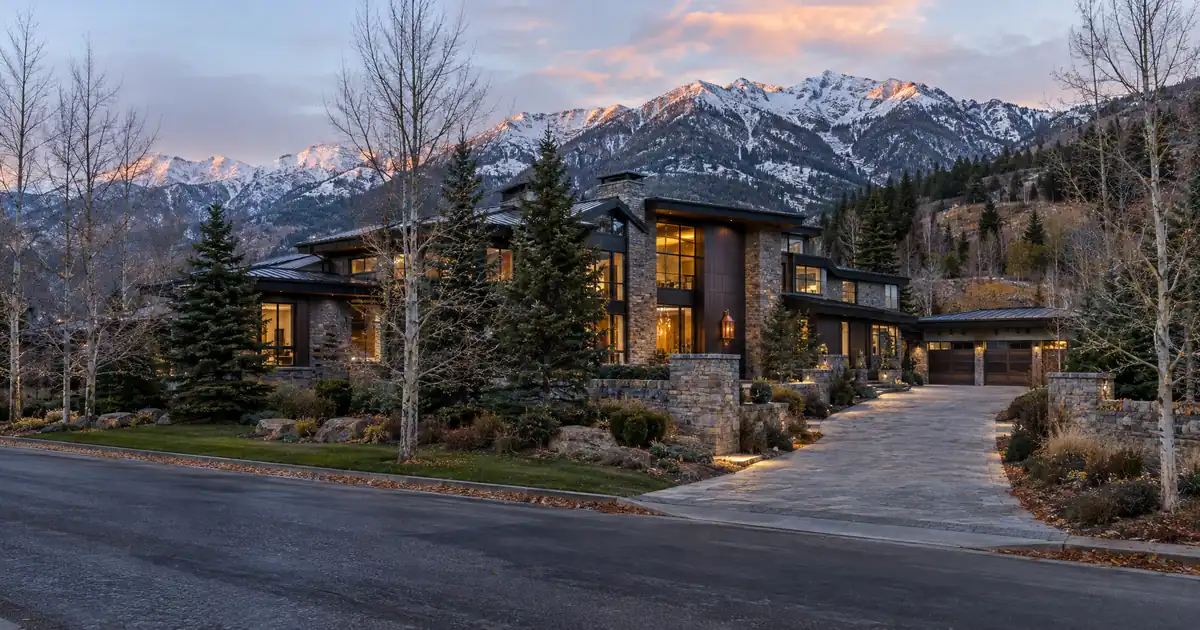
The Quick Read: Jumbo loan reserves and occupancy rules work together. Reserves are the liquid money you must still hold after closing, counted in months of the full payment on the new loan. Occupancy is the promise that you will actually use the home as a second home. Each jumbo lender sets its own reserve months, and the occupancy you declare drives both your leverage and your cushion.
Key Terms Defined
Jumbo loan: A mortgage larger than the conforming limit for the county where the home sits. The loan amount decides this, not the purchase price.
Reserves: Liquid assets you still hold after closing, measured in months of the full housing payment.
Full payment (PITIA): Principal, interest, taxes, insurance and any association dues on the new loan.
Second home: A home you personally occupy for part of the year, as opposed to a primary residence or a rental.
Occupancy certification: The signed statement on your application saying how you will use the property.
Seasoning: How long money has sat in your account, which helps a lender trust where it came from.
Jumbo payment estimate
The starting figures are an example price in the jumbo range with ten percent down on a thirty-year fixed. Replace them with yours.
Editable benchmark: 7.40% as of October 15, 2026 · Freddie Mac 30-year average via FRED®. A conventional market reference, not a jumbo loan quote.
Illustrative starting assumptions: a $1,000,000 price in the jumbo range, ten percent down on the top-leverage lane, a thirty-year fixed structure at the current Freddie Mac conforming benchmark, and property taxes and insurance estimated at typical national rates. Every field is editable.
Illustrative estimate only — not a Loan Estimate, approval, quote, or commitment to lend. The rate field carries the weekly Freddie Mac thirty-year conforming benchmark, a market reference and not a jumbo loan quote; jumbo rates are set by the lender and the lane at lock and differ from the conforming benchmark. An adjustable-rate scenario is shown at the benchmark for the whole term; the rate after the initial period is unknown. Reserve months and appraisal counts follow the lane sheet for the amount band; the automated finding may require more. Taxes, insurance and dues are editable estimates; closing costs are not included. On most lanes the conforming limit for the county decides whether a loan is jumbo at all; two lanes start at a stated dollar floor instead. Licensed in sixteen states for consumer mortgages.
Who Sets the Rules on a Jumbo Second Home?
The lender and its investor set them. No public body writes one national reserve standard for jumbo loans.
A jumbo starts one dollar above the county’s conforming limit. FHFA sets those limits each year, and they are higher in expensive counties. So the same loan can be jumbo in one county and conforming in another. Check your county’s limit on FHFA’s data page before you assume anything.
Above that limit, Fannie Mae and Freddie Mac do not buy the loan. Each wholesale lender writes its own guidelines. Across the programs Lendmire places files with, reserves are measured in months of the full payment and rise as the loan amount rises. Two lenders can give different answers on the same file. That is normal, not a red flag.
Agency rules still work as a reference point for how lenders think. Fannie Mae’s Selling Guide counts reserves in months of the payment and asks for two months on a second home in its automated process. That is a conforming number. A jumbo lender can ask for more, less, or treat assets differently. Think of the agency figure as a floor for your imagination, not a promise.
Lendmire’s jumbo loan programs are arranged through wholesale lenders, and Lendmire brokers the loan rather than lending the money. Lenders in the network offer fixed, adjustable and interest-only structures. Figures here are subject to lender guidelines and full file review, and nothing is a commitment to lend.
What Does the Jumbo Envelope Look Like?
Here is the range the wholesale lanes work within. The headline lane starts at a 660 decision score. Leverage reaches 90% on the top lane, and several lanes reach 89.99% combined loan-to-value. The rest stop at 80%. Loans go up to $5,000,000 on the largest lanes.
The ratio ceiling is 50% on the fixed lanes. It is 45% on the adjustable lanes and 43% on the interest-only lanes. That ratio compares your monthly debts, including both housing payments, to your income.
Two things scale with the loan amount: reserves and appraisals. Bigger loans ask for more months of reserves. Above a lane’s threshold amount, the lender wants two appraisals. Primary, second-home and investment occupancy each carry their own leverage on a given lane. Second homes usually get less leverage than a primary home. Every lane differs, so ask for the specific limits on yours.
How Do Reserves Work on a Jumbo Second Home?
Reserves are counted in months of the new loan’s full payment. A jumbo payment is bigger, so the same number of months demands more cash.
Say you buy a lake house with a jumbo loan at 80% of the price. The lender takes the full payment on that loan, including taxes, insurance and dues. It multiplies by its required months. You must show that much liquid money left after paying your down payment and closing costs.
Three things move the number:
- Loan amount. Larger loans carry more months.
- Leverage. Putting less down usually raises the ask.
- Occupancy. A second home generally asks for more cushion than a primary home on the same lane.
Interest-only structures deserve a warning. Many lenders test reserves against a fully amortizing payment, not the lower interest-only one. Ask how your lender measures it before you pick that structure.
Do Reserves Cover the Home You Already Own?
Often, yes. Many lenders add reserves when you own other financed properties. Fannie Mae’s guide says required reserves vary with the number of other financed properties you hold. Jumbo lenders commonly go further and want a cushion for the home you keep.
This is why a second-home buyer’s reserve number grows faster than a first-time buyer’s. Your current mortgage still counts in your ratio. The lender wants proof you can carry both homes if your income wobbles.
What Counts as Reserves, and What Doesn’t?
Reserves must be liquid, verifiable and yours. The table shows the usual split. Treatment varies by lender.
| Source | Usually counts? | Common condition |
|---|---|---|
| Checking and savings | Yes | Recent statements |
| Brokerage accounts | Yes | Documented value |
| Vested retirement funds | Often | Some lenders discount them |
| Unvested or private stock | Rarely | Hard to value or sell |
| Home equity | No | Not liquid cash |
| Borrowed funds | No | Adds debt, not cushion |
| Gift funds | Sometimes | Fannie allows eligible gifts for reserves |
Fannie Mae’s guide allows eligible gift funds, though not gifts of equity, to satisfy reserves. A jumbo lender may be stricter. Ask early.
Where the money comes from matters too. Sale proceeds from your old home can count once they land in your account and are documented. Money pulled from retirement may count at a discount, and taxes or penalties shrink the usable amount. Tax treatment can depend on your situation; borrowers should speak with a qualified tax professional before relying on any deduction or credit.
How Does the Lender Verify the Money?
The lender wants a paper trail. Expect recent bank and investment statements covering the full period the lender asks for. Large deposits that do not match your normal pattern get questions. A transfer between your own accounts is easy to explain. A big cash deposit with no history is not.
Seasoning helps. Money that has sat in your account for a while needs little explaining. Money that arrived last week needs a document, such as a sale statement or a gift letter. Moving funds around right before applying is a common way to create a problem where none existed.
What Makes a Property a True Second Home?
A second home is one you occupy yourself for part of the year, and the home must pass a few simple tests. Fannie Mae’s occupancy rules are the clearest public benchmark.
- You occupy it for some portion of the year.
- It is a one-unit dwelling.
- It is suitable for year-round use.
- You have exclusive control over it.
- It is not a rental property or timeshare.
A jumbo lender writes its own version, and it is usually at least this strict. Condo-hotel units and rental-pool arrangements conflict with exclusive control, so they tend to fail. A cabin without year-round access can face questions, and the appraiser’s comparable sales then matter.
What about distance? There is no single universal mileage rule in the public guidance. Lenders still ask whether the location makes sense as a second home. A vacation house a short drive from your main home may need a clearer explanation.
How Does the Lender Confirm Occupancy?
You sign an occupancy certification on the application, and the rest of the file has to agree with it. The lender looks at your income and assets, the property type, the location, and even the insurance policy. Fannie Mae’s quality-control guidance lists red flags, such as insurance inconsistent with the declared use. Lenders can re-check occupancy after closing.
Misstating how you will use the home is a serious problem. A lender can re-underwrite the loan under different terms. Do not call a rental a second home to get better leverage. Tell the lender the truth, and let the right program fit it.
What If You Want to Rent It Out Sometimes?
Occasional rental and a rental business are not the same thing. Under Fannie Mae’s rules, a second home must not be a rental property. If rental income shows up, the loan can still be a second home, as long as that income is not used to qualify. Jumbo lenders may be stricter, and a rental-pool or management arrangement that controls your use can disqualify the home outright.
Practical takeaway: qualify on your own income and assets, and treat any rent as a bonus. If renting is the plan, tell your loan officer at the start so the file gets the right occupancy.
One more rule gets confused with all this. Under federal consumer-credit rules, a property you expect to occupy for more than 14 days in the coming year cannot be treated as non-owner-occupied. That test decides which disclosure rules apply. It does not make a home a second home. Keep the two ideas separate.
Second Home, Primary Home, Investment Property
Occupancy is the one declaration that sets leverage, cushion and paperwork. This comparison is qualitative because exact terms differ by lane.
| Factor | Primary home | Second home | Investment |
|---|---|---|---|
| Leverage room | Most | Less | Least |
| Reserve ask | Lower | Higher | Highest |
| Rent to qualify | Not applicable | Generally no | Program-specific |
| Paperwork | Standard | Occupancy proof | Heavier |
How Does It Play Out for a Buyer Keeping a Current Home?
Picture a buyer purchasing a mountain home at 80% leverage while keeping the primary residence. Here is the sequence. Each figure is subject to lender guidelines and a complete review of property type, leverage, and credit.
1. The lender checks the loan amount against the county limit and confirms it is jumbo.
2. The buyer declares second-home use and signs the certification.
3. The lender counts both housing payments in the ratio against the lane’s ceiling.
4. The buyer documents the down payment, closing costs and then reserves for the new loan.
5. The lender may ask for extra cushion because the current home is still financed.
6. The appraisal confirms value and year-round suitability.
Where does this file fail? Usually in one of three places. The ratio is too high once both payments are counted. The reserve money is not liquid, such as equity or unvested stock. Or the cash came from a deposit the buyer cannot document. Fix those before applying.
Where the General Rule Breaks
- Seasonal-access homes. Year-round suitability can be questioned, and appraisal comparables matter.
- Condo-hotels and rental pools. These conflict with exclusive control.
- Non-warrantable condos. Two lanes in the network accept them, but the terms are lane-specific.
- Interest-only loans. Reserves may be tested on a higher payment than you pay.
- Many financed properties. Fannie Mae caps a second-home borrower at ten financed properties, and extra reserves apply as the count rises. A jumbo lender may cap lower.
- Cash-out on a second home. Leverage is lower than on a purchase, and the largest lanes carry a cash cap.
Ways to Strengthen the File
Lenders weigh the whole picture. These moves may help, subject to lender guidelines:
- A larger down payment, which lowers leverage.
- More liquid assets than the minimum.
- A stronger credit score than the 660 floor.
- A lower ratio, through paying off other debts.
- Clean, seasoned statements with no unexplained deposits.
Self-Check Before You Apply
1. Is your loan above your county’s conforming limit?
2. Can you describe how and when you will personally use the home?
3. Is it one unit with year-round access and no rental pool?
4. Do your ratios hold with both housing payments counted?
5. Are your reserve funds liquid, documented and seasoned?
6. Do you know which lane and structure you want?
7. Have you told your loan officer about any rental plans?
If you are buying a home and want to see whether a jumbo loan fits your file, Lendmire can help you compare the options and what each one asks of the file. Call 828-256-2183.
Frequently Asked Questions
How many months of reserves does a jumbo second home need?
It depends on the lender, the loan amount, your leverage and how many properties you finance. Reserves rise with the amount across the wholesale lanes. Fannie Mae’s two months for a second home is a conforming reference only. Ask for the exact months on the specific lane.
Can I use expected rental income to qualify?
Generally not. Under Fannie Mae’s second-home rules, rental income cannot be used to qualify, so you qualify on your own income and assets. Jumbo lenders may be stricter. If the home will mainly be a rental, it belongs in a different occupancy category.
Does a jumbo loan depend on the purchase price?
No. It depends on the loan amount compared with your county’s conforming limit. A large down payment can keep a high-priced home under the limit.
Do retirement accounts count as reserves?
Often, if the funds are vested and documented, though some lenders discount them. Home equity does not count, and unvested stock rarely does. Check how your lender treats each account.
Will the lender check how I use the home later?
Lenders can re-verify occupancy after closing, and mismatched insurance is a known red flag. Declare the use you truly plan.
For your own numbers, request a scenario review with Lendmire.
About Lendmire
Lendmire (NMLS# 2371349) is a mortgage brokerage serving homeowners and home buyers in 16 states. FHA, VA, conventional and jumbo purchase and refinance loans are arranged through wholesale lending channels; Lendmire brokers the financing and the lender underwrites each application. Scotsman Guide named Lendmire a Top Mortgage Workplace in both 2025 and 2026.
Get Started
Ready to find the right loan for you?
In about 30 seconds you can review financing options available for your home or investment property. No commitment required.
Informational only. Not a Loan Estimate, approval, or commitment to lend. Program availability and eligibility are subject to lender guidelines, credit approval, property review, and underwriting.
References
1. FHFA – Conforming Loan Limit Values
2. Fannie Mae Selling Guide B3-4.1-01 Minimum Reserve Requirements
3. Fannie Mae Selling Guide B2-1.1-01 Occupancy Types
4. Fannie Mae – Getting It Right (occupancy QC)
5. CFPB Regulation Z §1026.3 Exempt Transactions
6. Fannie Mae Selling Guide B2-2-03 Multiple Financed Properties
This article is part of Lendmire’s jumbo loan program — full qualification details, guidelines, and scenarios live on the program page.
Related reading: How Jumbo Loan Rules Work for a New-Construction Second Home · How to Buy a Second Home With a Jumbo Loan as an Early Retiree · Jumbo Loan vs. a Lower-Priced Home for a High-Earning W-2 Buyer
Brandon Miller
Founder & CEO, Mortgage Loan Originator, Lendmire LLC
- Mortgage Loan Originator · NMLS# 1129696 · Verify on NMLS Consumer Access
- North Carolina Real Estate Broker · License# 343312 · Verify on NCREC
- North Carolina Insurance Producer · License# 19053198 · Property, Casualty, Life, Health · Verify on NAIC SBS
- Lendmire LLC · Firm NMLS# 2371349 · Verify firm licensure
Disclosure information. Lendmire is a state-licensed mortgage brokerage under NMLS# 2371349. Lendmire is not a depository institution, direct lender, or financial advisor — all loans referenced are placed through wholesale lender partners and are subject to each lender's underwriting standards. This article is provided for general informational purposes and is not a commitment to lend, nor does it constitute financial, legal, or tax advice. Loan programs, terms, rates, and qualification standards change without notice and depend on borrower profile, property type, and the state in which the subject property is located. Equal Housing Opportunity provider. NMLS Consumer Access: nmlsconsumeraccess.org.