
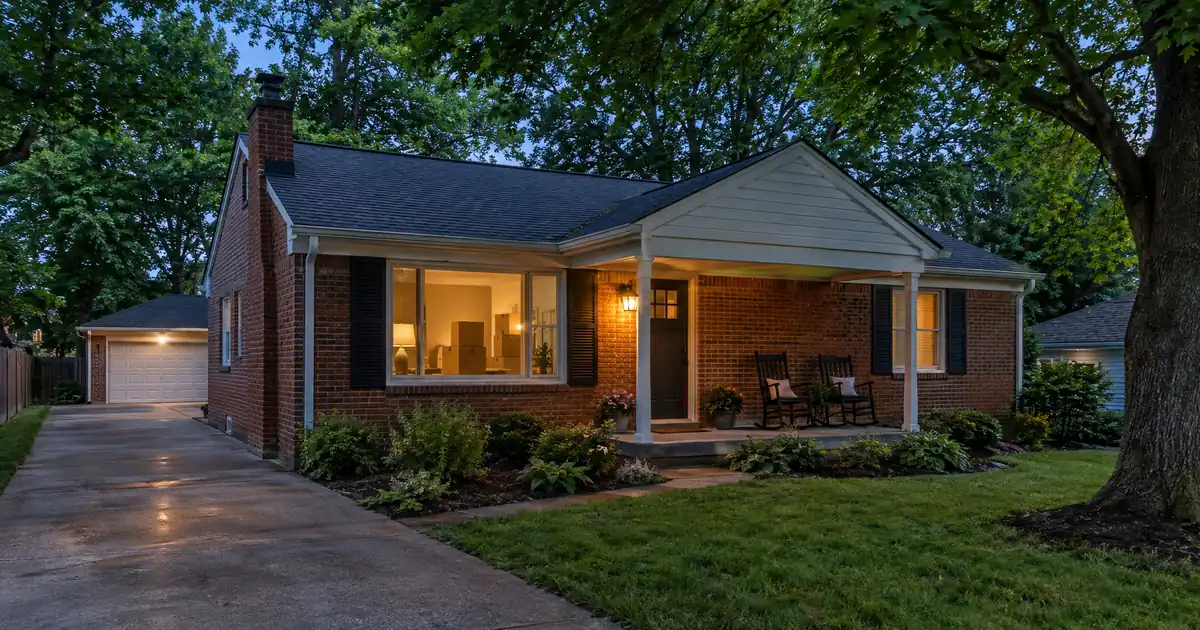
The Quick Read: Yes, in some form, on every program. What counts as proof depends on the loan type and the kind of refinance. On a standard conventional refinance, your signed statement on the application does most of the work, and the lender checks that the rest of your file agrees with it. Government streamlines and cash-out loans each add their own wrinkles, covered below.
What Does “Primary Residency” Mean to a Lender?
A primary residence is the home you live in as your main address. Lenders sort every home into one of three buckets: primary residence, second home, or investment property. The bucket drives your eligibility and how much leverage you can use.
Refinance savings and break-even estimate
The starting figures are an example value with a balance in proportion and a placeholder for costs. Replace them with yours, and enter the current rate from your statement.
Editable benchmark: 7.40% as of October 15, 2026 · Freddie Mac 30-year average via FRED®. A conventional market reference, not a refinance quote.
Illustrative starting assumptions: a $350,000 home value, a $245,000 current balance, a current rate you enter and a remaining term seeded at twenty-five years, closing costs seeded at $5,000 as an editable placeholder (not a fee quote) and rolled into the new loan, a thirty-year term at the current Freddie Mac benchmark, and property taxes and insurance estimated at typical national rates. Every field is editable.
Illustrative estimate only — not a Loan Estimate, approval, quote, or commitment to lend. The new rate field carries the weekly Freddie Mac thirty-year conventional benchmark, a market reference and not a refinance quote; a refinance is priced by the lender at lock, and the current rate, the remaining term and the closing costs are figures you enter. The current payment is estimated from the balance, the current rate and the remaining term; the break-even divides the closing costs by the monthly saving and ignores the interest effect of a longer term. On the VA IRRRL the funding fee is added to the loan unless the veteran is exempt. Taxes and insurance are editable estimates. Licensed in sixteen states for consumer mortgages; Lendmire is a broker, never the lender.
Fannie Mae's Selling Guide defines all three types. For a principal residence with several borrowers, only one has to live there and take title.
You can have only one primary residence at a time. Time spent in the home, your commute to work, and where your mail and records point all tell the same story.
Why Do Lenders Ask for Proof?
Occupancy changes the risk, so it changes the loan. Across the wholesale programs placed through Lendmire, the principal residence gets the most generous leverage. A rate-and-term refinance on a one-unit principal residence can reach 95% LTV. LTV means loan-to-value: the loan balance as a percentage of the home's value. A second home or investment property has tighter limits. Every figure here varies by lender and program: guidelines, property type, leverage, and credit profile all apply.
Mortgage insurance is part of that picture. It is required above 80% LTV, and you can ask to cancel it at 80% of the original value. The servicer must end it automatically at 78%. Those are the Homeowners Protection Act rules, and they apply to the home you live in.
So lenders have a financial reason to confirm the home is what you say it is. They also have a fraud-prevention reason. A loan priced as owner-occupied but run as a rental carries more risk than the lender agreed to take.
How Does the Lender Check Occupancy?
The check is layered. The application and your signature come first. Then the lender compares the claim against everything else in your file.
1. Application declaration. You state how the home will be used. The Uniform Residential Loan Application tells you to choose "Primary Residence" if at least one borrower intends to occupy the property that way. The FHFA's URLA instructions spell out the alternatives: second home and investment property.
2. Underwriting. Occupancy type sets the maximum LTV and credit-score limits under the agencies' Eligibility Matrix. Underwriters then look for contradictions. Examples: a homeowner's insurance policy written for rental use, mail going to a different address, or a credit file showing another home as your residence.
3. Appraisal. The appraisal establishes value and condition.
4. Closing certification. The mortgage document you sign carries an occupancy promise.
5. After closing. Fannie Mae's guidance to lenders says they should have processes to reverify occupancy and catch discrepancies. Checks do not necessarily stop at the closing table.
One more point. The agency sources do not set a fixed document checklist for conventional occupancy. In practice you sign a certification, and the lender confirms your file hangs together. Some lenders and loan types ask for more, which brings us to the next section.
How Does Proof Change by Refinance Type?
It changes a lot. The more cash you take out, the more scrutiny you should expect. Here is the side-by-side.
| Refinance type | What lenders typically want | Who must occupy |
|---|---|---|
| Conventional, no cash out | Signed certification; file consistency | At least one borrower |
| FHA Streamline | Limited review; no-appraisal version if not occupied | Not required, with an appraisal restriction |
| FHA cash-out | Documentary proof, such as utility bills or employment records | Borrower, for a set period before the case number |
| VA IRRRL | Certification of current or prior occupancy | Current or former occupant |
A few details sit behind that table.
Conventional, no cash out. On a rate-and-term refinance, the new loan pays off your existing first mortgage and closing costs with only incidental cash back. On a one-unit principal residence, the wholesale programs placed through Lendmire reach 95% LTV, subject to lender guidelines and full file review.
Conventional cash-out. A cash-out refinance replaces your loan with a larger one and hands you the difference. On a one-unit principal residence it tops out at 80% LTV, and the first mortgage being paid off must be at least 12 months old. Lendmire's piece How Lenders Count Your Payoff When Sizing a Cash-Out Refinance walks through that math. These specifics are subject to lender guidelines and a full review of property, leverage, and credit.
FHA Streamline. An FHA Streamline refinances an existing FHA loan with no appraisal and limited credit review. HUD's streamline page says properties you do not occupy as a principal residence can only be refinanced without an appraisal. Occupancy shapes what version of the loan is available.
FHA cash-out. This is the strictest case. The lender reviews documents such as employment records or utility bills to show you lived there for a period before the case number was assigned. That is why FHA cash-out files often ask for paper where other files do not.
VA IRRRL. The interest rate reduction loan has its own occupancy rule. You certify that you live in the home now or used to live in it. The VA's own consumer page says exactly that. VA Pamphlet 26-7, Chapter 6 adds that the veteran, or the spouse of an active servicemember, certifies prior occupancy. It contrasts this with the intent-to-occupy rule on other VA loans.
Which Documents Carry the Most Weight?
There is no universal list. When a lender does ask for support, these are the usual candidates.
| Document | What it shows | Strength |
|---|---|---|
| Driver's license or state ID | Address of record | Supporting |
| Utility bills | Service at the home in your name | Strong |
| Employment records or pay stubs | Address tied to your job | Strong |
| Insurance declarations page | Owner-occupied policy type | Strong |
| Voter registration, official mail | Address history | Supporting |
| Bank or credit card statements | Where you receive mail | Supporting |
Strong documents show where you actually live and pay for services. Supporting ones show your address on file. Lenders tend to want a couple that agree with each other.
Here is the honest pitfall. A document that disagrees with the rest of the file does more damage than a missing one. Fix mismatches before you apply.
What If Your Paperwork Does Not Line Up?
This is where most borrowers get tripped up, and most mismatches have a clean fix.
| Problem | Typical fix |
|---|---|
| License shows an old address | Update it with your state's motor vehicle office before applying |
| Bills go to a P.O. Box | Switch the billing address to the home |
| Bills are in a spouse's name | Provide a bill or record in your own name, or explain the household |
| Utilities are included in rent or HOA dues | Provide other documents: insurance, pay records, bank statements |
| You just moved in | Use the closing or lease paperwork plus a first bill |
If a lender flags a problem, you usually get a condition: a request for more paper or an explanation. Answer it plainly and with real records. Never fill a gap with a guess.
What About Special Situations?
Married couples and co-borrowers. Fannie Mae needs only one borrower to occupy and take title on a principal residence. Freddie Mac is stricter on manually underwritten loans above 90% LTV, where every borrower whose income is used to qualify must occupy. A co-borrower who does not live there may help on a no-cash-out refinance, but not on a cash-out. Terms depend on the lender's guidelines, the property type, the leverage, and a full review of the credit profile.
Active-duty military. A borrower on active duty and temporarily absent because of service is treated as an owner-occupant by Fannie Mae.
Inherited or court-awarded property. Fannie Mae's limited cash-out rules carve out exceptions to the owner-on-title requirement for inheritance, divorce and similar court awards, and for revocable-trust beneficiaries.
A former home now rented. A VA IRRRL still works with a prior-occupancy certification. An FHA Streamline is limited to the no-appraisal version. A conventional refinance would treat the home as an investment property, which changes the leverage.
Second homes. A second home must be a one-unit dwelling you occupy for part of the year, with no rental or timeshare use. Leverage runs lower than on a primary residence. If you are weighing the two, Lendmire's piece Vacation Home Cash-Out Refinance vs Primary Home for a Second-Home Owner covers the tradeoff.
Moving soon. This one is a toss-up of judgment, not a rule. Intent at signing is the key. If you plan to live in the home when you sign, that is a true statement. If you already know you are leaving, say so before you apply, and talk through other options with your loan officer.
What Happens If You Move After Closing?
Plans change. A job transfer or a family emergency does not automatically make the loan fraudulent. The standard mortgage document allows exceptions, including the lender's written consent and extenuating circumstances beyond your control.
Knowingly false statements are a different matter. Misrepresenting your occupancy to get better terms can lead to a denied application, a loan called due, or legal consequences. This is general information, not legal advice. If your situation is unclear, speak with an attorney.
Tax treatment can depend on your situation; borrowers should speak with a qualified tax professional before relying on any deduction or credit.
Does Occupancy Affect Your Appraisal and Closing Costs?
Sometimes. Where a lender orders an appraisal, you are entitled to a copy. Under CFPB Regulation B, section 1002.14, creditors must give you a copy of any appraisal or written valuation on a first-lien dwelling loan, and the timing of that delivery depends on the file and the lender.
Streamlines can skip the appraisal on certain properties, and that affects your costs. Occupancy decides which version you can use.
Two Quick Borrower Pictures
Rate-and-term, simple file. You own a one-unit home you have lived in for years. Your license, bills and insurance all show the same address. You sign the occupancy declaration, the lender sees no conflicts, and the deal works on. You are likely sitting in the 95% LTV lane at most, subject to guidelines. The exact numbers vary by lender and program and follow a full review of property, leverage, and credit.
Cash-out with a split household. You and a co-borrower want cash out. Only one of you lives in the home. A broker can test that before you apply.
Pre-Application Checklist
- Confirm every document shows your current address.
- Update your license and voter registration if they are stale.
- Move billing for at least one utility into your name at the home.
- Check that your homeowner's insurance is written for owner-occupancy.
- Decide who is on the loan and who actually lives in the home.
- Tell your loan officer about any move you expect in the near term.
If you are weighing a refinance and want the break-even run on your own numbers, Lendmire can help you compare the refinance programs on the same home.
Key Terms Defined
Primary residence: the home you live in as your main address.
Occupancy certification: your signed statement of how you will use the home.
LTV (loan-to-value): the loan balance as a percentage of the home's value.
Rate-and-term refinance: a new loan that replaces the old one with only incidental cash back.
Cash-out refinance: a new, larger loan that pays off the old one and gives you the difference.
Non-occupying borrower: someone on the loan who does not live in the home.
Frequently Asked Questions
Will a lender make me submit a utility bill to refinance?
Not always. Conventional loans and the VA IRRRL mostly rely on your signed certification. FHA cash-out is the case where documents such as utility bills or employment records are called for. Any lender can still ask for support if your file looks inconsistent.
Can I refinance if I live in the home but my spouse does not?
Often yes, on a no-cash-out refinance. Fannie Mae needs only one borrower to occupy and take title, so the spouse who lives there can carry the occupancy. Cash-out is different: Freddie Mac requires all borrowers to occupy, and lender guidelines vary. Whether a non-occupying spouse is on the loan or the title changes the answer, so test the file before you apply.
Does a VA streamline require me to still live in the home?
No. VA says you can certify that you live there now or used to live there. Prior occupancy is enough, which is why former homes can still qualify.
Is moving out after closing considered fraud?
Not automatically. Intent at signing is what counts. The mortgage document allows exceptions, including lender consent and circumstances beyond your control. Contact your servicer before you move.
What if my driver's license has an old address?
Update it before you apply, and pair it with a bill or insurance document at the home. A mismatch is a common reason for extra conditions, and it is easy to prevent.
For your own numbers, request a scenario review with Lendmire.
About Lendmire
As a mortgage broker (NMLS# 2371349), Lendmire helps homeowners and home buyers in 16 states with FHA, VA, conventional and jumbo purchase and refinance loans arranged through wholesale lenders. Lendmire is never the lender; program terms are set by the lender and the agency guidelines. Scotsman Guide named Lendmire a Top Mortgage Workplace in both 2025 and 2026.
Get Started
Ready to find the right loan for you?
In about 30 seconds you can review financing options available for your home or investment property. No commitment required.
Informational only. Not a Loan Estimate, approval, or commitment to lend. Program availability and eligibility are subject to lender guidelines, credit approval, property review, and underwriting.
References
1. Fannie Mae Selling Guide: Occupancy Types
3. HUD: FHA Streamline Refinance
4. VA: Interest Rate Reduction Refinance Loan
5. VA Pamphlet 26-7, Chapter 6
This article is part of Lendmire’s Refinance series — every loan program’s qualification details, guidelines, and scenarios live on the loan options page.
Related reading: Does a 2-4 Unit Primary Home Cash-Out Refinance Need Higher Credit? · How the Appraisal Works on a Cash-Out Refinance · Can You Do a No-Cost Cash-Out Refinance on a Primary Home?
Brandon Miller
Founder & CEO, Mortgage Loan Originator, Lendmire LLC
- Mortgage Loan Originator · NMLS# 1129696 · Verify on NMLS Consumer Access
- North Carolina Real Estate Broker · License# 343312 · Verify on NCREC
- North Carolina Insurance Producer · License# 19053198 · Property, Casualty, Life, Health · Verify on NAIC SBS
- Lendmire LLC · Firm NMLS# 2371349 · Verify firm licensure
Compliance and disclosures. Lendmire (NMLS# 2371349) is a licensed mortgage broker and is not a direct lender, depository institution, financial advisor, or tax professional. Content in this article is general market analysis and educational information — not financial, legal, or tax advice for any specific situation. Lendmire does not guarantee loan approval; every transaction is subject to underwriting by the funding lender. Mortgage pricing and loan program guidelines are subject to change at any time without notice and vary by borrower characteristics, property type, and state regulations. Lendmire complies with Equal Housing Opportunity. Licensure verification: NMLS Consumer Access.