
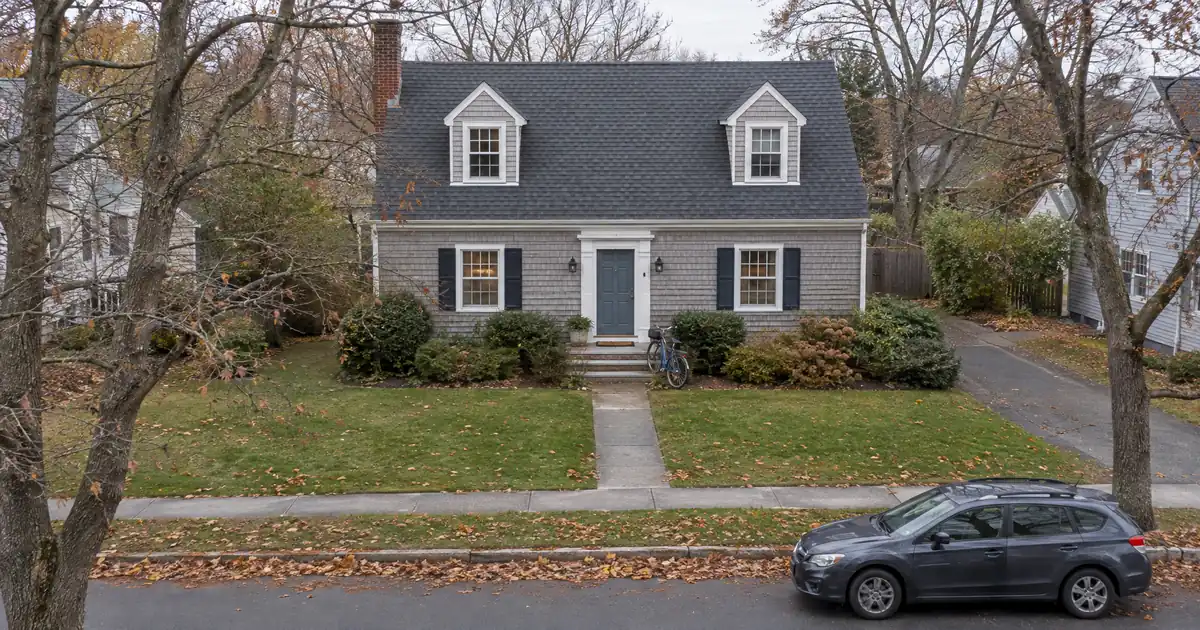
The Quick Read: For a first-year agent buying a pure rental, a DSCR loan is usually the cleaner fit when the rent carries the property’s payment, because it tests the property and not a short, lumpy commission history. A bank statement loan tests the borrower’s deposits instead, so it fits better when the agent will occupy the home or the rent is thin. Both are alternative-documentation products, and neither is a shortcut.
- A DSCR loan is reviewed primarily on property-level rental income covering the payment, subject to lender guidelines.
- A bank statement loan is reviewed on documented income under the applicable program, subject to lender guidelines.
- Occupancy is the first gate: a rental held at arm’s length points toward DSCR, while an owner-occupied purchase points toward bank statements.
- A first-year agent has a short, uneven deposit record. That hurts a bank statement file more than a DSCR file.
- Credit and reserves matter on both paths.
Who Each Option Is Really For
The honest split is simple. DSCR is built for non-owner-occupied investment property and looks at what the rent does against the monthly obligation. A bank statement loan is built for self-employed borrowers whose traditional personal-income documentation understates what they earn, and it covers more occupancy types.
What your deposits qualify you for.
Alt-doc programs read 12 months of business or personal bank deposits instead of tax returns. Enter your average monthly deposits and see the income a lender would credit you.
The expense factor is set by the lender from your business type and profit-and-loss statement; it is not a number you choose. This widget quotes no rate and no payment.
Program parameters shown update from Lendmire’s centralized guideline source.
Estimate
Illustrative estimate only — not a quote, Loan Estimate, approval, or commitment to lend. Deposit average, expense factor, and housing ratio are editable assumptions; the expense factor a lender applies is set from your business type and documentation. No interest rate or monthly payment is quoted here. Purchase capacity is a simplified illustration and does not account for taxes, insurance, HOA dues, or other debts. Alt-doc income documentation is available on consumer mortgages in the states where Lendmire is licensed for consumer lending; actual terms vary by lender, borrower, and property.
A first-year agent sits in an awkward spot. Most agents are paid as independent contractors, which makes them self-employed for lending purposes. NerdWallet notes that lenders generally count 1099 contractors and Schedule C filers as self-employed, and that most lenders want about two years of steady self-employment. Freddie Mac’s Guide sets the same two-year expectation for conventional files, with exceptions. That is the baseline that pushes new agents toward alternative documentation in the first place.
No published data looks at first-year agents specifically. What follows comes from how these files tend to behave across Lendmire’s wholesale network, not from a survey.
Side-by-Side
The table shows published industry norms for both products. Program specifics for any file come from the individual lender’s sheet.
| Factor | DSCR Loan | Bank Statement Loan |
|---|---|---|
| What is tested | The property’s rent against its obligation | The borrower’s deposit history and debts |
| Income documents | Lease or market rent opinion | Business or personal statements |
| Typical history | Limited focus on work history | 12 months in many programs; lender-specific |
| Property types | Non-owner-occupied investment | Primary, second home, or investment |
| Entity vesting | Commonly an LLC, per program terms | Program-specific; confirm per lender |
| Personal DTI | Generally not the test | Central to the test |
| Reserves | Expected; varies by lender | Commonly around 6 months |
| Disclosure regime | Business-purpose | Consumer if owner-occupied; business-purpose on a non-owner-occupied rental |
Entity vesting on DSCR loans is subject to lender program eligibility. A rental held in an LLC is common, and the loan is typically recourse to the members through a personal guarantee.
How Each Loan Reads a First-Year Agent’s File
On a bank statement file, the underwriter pulls 12 months of personal or business statements. It screens out transfers, refunds and loan proceeds, then averages what is left. Business accounts usually get an expense factor, which varies by lender, while personal-account programs treat deposits differently. The resulting monthly figure runs against debt-to-income along with the new payment.
Commission income makes that average hard to read. A closing in month three and another in month nine produces gaps, and brokerage splits and referral fees show up as deposits in different shapes. If the agent started mid-year, the statement history may simply be short. A new agent’s deposits may also be thin at the moment of purchase, which pulls the average down.
On a DSCR file, the deposit history is mostly beside the point. The underwriter looks at eligible rent, from a signed lease or a market rent opinion, divided by the full monthly obligation: principal, interest, taxes, insurance and any HOA dues. Income irregularity shows up mostly in reserves. A first-year agent with uneven deposits and thin cash after closing will get more scrutiny on that line than on anything else.
When DSCR Is the Better Fit
DSCR is the better fit when the property is a pure rental and the rent covers the obligation with room to spare. Four situations come up most.
1. The rental is held at arm’s length. The agent will not live in it or use it personally. The file stays lighter on the personal side, though credit and reserves still apply.
2. Deposit history is short or lumpy. The property carries the test, so a two-closing quarter does not drag down qualifying income.
3. Personal debt is already high. Existing obligations do not enter a DTI calculation the way they do on a bank statement file.
4. The agent plans to add more rentals. Each new property is tested on its own ratio. Under bank statement underwriting, every newly financed property enters personal DTI.
A scenario: picture an agent buying a rental with rent that clears roughly 1.2x against the full obligation, using about 25% down on a standard rental, and holding several months of reserves. Deposits are uneven because two big commissions landed in the same quarter. On a DSCR file, that unevenness barely registers. On a bank statement file, it could push the average below what the purchase needs. The exact numbers vary by lender and program and follow a full review of property, leverage, and credit.
Programs below 1.00 coverage are available through select lenders in the network, but leverage and terms adjust. A property whose rent does not carry itself is a weaker DSCR candidate, and the structure is reviewed accordingly. The 40-year and interest-only structures are DSCR-side options in some programs; they are not a promise on any bank statement file.
For the broader mechanics, Lendmire’s complete DSCR loans guide covers the ratio, documents and leverage in full.
When a Bank Statement Loan Is the Better Fit
A bank statement loan is the better fit when the property is not a pure arm’s-length rental, or when the rent cannot carry the obligation but the agent’s deposits can.
1. The agent will occupy the home. A primary residence is outside DSCR entirely. On a primary residence, bank statement programs reach up to 90% LTV on a purchase or rate-and-term refinance through select lenders, with stronger files earning the top of that range.
2. The agent might use the property personally. Under Regulation Z § 1026.3, credit for a non-owner-occupied rental is treated as business-purpose, but if the owner expects to occupy the property for more than 14 days in the coming year, it is not treated as non-owner-occupied. A “rental” the agent also plans to use as a vacation home can fall on the other side of that line.
3. The rent is thin. If the numbers do not clear a DSCR test, a bank statement file is reviewed on documented income under the applicable program, subject to lender guidelines. The trade-off is personal DTI and the deposit record.
4. Deposits are large and steady. An agent with strong, consistent statements and low existing debt can make this path work.
Loan sizes in this lane run roughly $125,000 to $3,500,000, with reserves commonly around 6 months of the housing payment. An asset-depletion alternative qualifies from liquid assets and reaches up to 80% LTV on a primary residence. On cash-out, a primary residence tops out at 80% LTV with a fixed expense ratio (75% with an accountant-prepared ratio), a second home at 75%, and an investment property at about 75%.
The disclosure regime follows occupancy. An owner-occupied bank statement file is a consumer mortgage, and TRID disclosures apply. A bank statement loan on a non-owner-occupied rental, including a short-term rental, is business-purpose and exempt from TRID. Investment purchase leverage on bank statement documentation varies by lender, so investor-focused leverage guidance belongs to the DSCR side. The consumer lane’s licensing footprint covers 16 states, so availability depends on where the property sits.
Decision Sequence for a First-Year Agent
Run the questions in this order. Each one narrows the lane.
1. Occupancy. Will the agent live in it, or use it personally more than a couple of weeks a year? If yes, bank statements. If it is a true rental, both remain in play.
2. Rent strength. Does eligible rent cover the full monthly obligation with margin? If yes, DSCR is the natural lead. If not, look at a lower-leverage structure or a bank statement file.
3. Deposit history. How many clean months exist, and do business and personal funds stay separate? Short or mixed records make a bank statement file harder to underwrite.
4. Existing debt. A high debt load strains a bank statement file and does not enter the DSCR test the same way.
5. Reserves. Both paths ask for them. A first-year agent should count them honestly.
DSCR vs. conventional financing
There are two common ways to finance an investment property, and they qualify you differently — here’s how investors weigh them.
Why investors choose it
- Qualifies on the property’s rental income — no personal tax returns, W-2s, or pay stubs needed to document income.
- No personal debt-to-income ceiling to clear, so existing mortgages and obligations don’t cap your borrowing the same way.
- Can be closed in an LLC, keeping the property inside a business entity.
- Built for scaling — not held to the limit on number of financed properties that conventional financing applies.
- Underwriting centers on the deal: generally qualifies when the rent covers the payment, a 1.00x coverage ratio being a common baseline (confirmed in underwriting).
- Designed specifically for investment property, including long-term and, where the program allows, short-term rentals.
Where it’s strong
- Often the lowest ongoing financing cost for a buyer who fully qualifies on personal income — a fit for a first property or a cost-first purchase.
Trade-offs for investors
- Requires full personal income documentation and must fit within a debt-to-income limit — salary, existing debts, and other mortgages all count.
- Typically held in your personal name rather than a business entity.
- Caps how many financed properties you can carry, which can become a ceiling as a portfolio grows.
- Evaluates you as a borrower as much as the property, which usually means more paperwork.
How investors usually choose: a first or single property often optimizes for the lowest financing cost; portfolio builders often optimize for leverage, vesting in an LLC, and scaling past conventional caps. The right answer depends on your goals, the property, and current guidelines — both paths run through select lenders in Lendmire’s wholesale network, with eligibility and terms confirmed in underwriting.
When Both Sides Look Weak
Some files fail both tests: thin rent and short, inconsistent deposits. The options are practical, not clever.
- Look at a different property whose rent covers the obligation more cleanly.
- Put more cash down, which can improve the ratio on a DSCR file.
- Wait for more statement months, so a bank statement file has a fuller record.
- Consider a co-borrower with stronger documented income.
- Use a mixed strategy later: bank statements for a primary residence, DSCR for the rentals.
Waiting is a real answer. A first-year agent whose deposits grow month over month may be materially stronger on paper after a few more closings.
Documents to Gather Now
For DSCR: a signed lease or the property’s rent schedule, entity documents if vesting in an LLC, proof of reserves, the property’s insurance quote and HOA information where relevant. The appraisal normally includes a rent schedule, on form 1007 for single-family or form 1025 for small residential income property up to four units.
For a bank statement loan: 12 months of business or personal statements, with business and personal accounts kept separate, a profit-and-loss statement or expense statement where the program calls for one, credit documentation, proof of reserves and the purchase contract.
Neither loan is a no-paperwork product. Both verify something. Scotsman Guide notes that non-QM lenders still must confirm ability to repay, though they have flexibility in how.
Key Terms Defined
DSCR: The debt service coverage ratio, found by dividing eligible rent by the property’s full monthly obligation.
Bank statement loan: A non-QM mortgage that converts deposit averages into qualifying income instead of using traditional personal-income documentation.
Expense factor: A percentage a lender applies to business deposits to estimate real income after costs.
DTI: Debt-to-income ratio, the share of monthly income that goes to debt payments.
Business-purpose loan: A loan made to acquire or hold an investment property, reviewed differently from a standard owner-occupied mortgage.
Reserves: Liquid funds the borrower holds after closing, counted in months of the housing payment.
Balanced Verdict
For a first-year agent buying a rental to hold, DSCR is usually the cleaner path, provided the rent carries the property and the agent has reserves to show. The short, uneven commission record that makes a bank statement file hard does not drive the DSCR test. For a home the agent will occupy, a second home, or a rental whose rent cannot stand on its own, a bank statement loan is the tool built for the job. Neither is universally better, and every file is underwritten individually, subject to lender guidelines, credit approval and property review.
If you are self-employed and want to see how the numbers work, Lendmire can help you compare bank statement and DSCR options based on your deposits, the property, credit profile, leverage and your goals. Two related Lendmire pieces go deeper on the first-rental choice: a first-rental comparison of a 40-year DSCR loan and a 12-month bank statement loan and a similar comparison using a 24-month bank statement loan.
Frequently Asked Questions
Can a first-year agent qualify for either loan at all?
Often yes, but the path differs. A DSCR file leans on the property’s rent, credit and reserves, so a short work history matters less. A bank statement file depends on the length and quality of the deposit record, and history requirements vary by lender program.
Can I use both products?
Yes. Many borrowers use bank statements for a primary residence and DSCR for rentals. Each loan is underwritten separately, so the two do not have to match.
Does a DSCR loan need a lease?
Eligible rent comes from a signed lease or a market rent opinion in the appraisal. Which applies depends on the property and the lender’s program.
Do I need an LLC?
Not necessarily. DSCR loans are commonly closed in an LLC, subject to program terms, and a personal guarantee is typical. Entity vesting on bank statement loans is program-specific.
How does DTI differ between the two?
A bank statement loan runs your personal DTI, so existing debts and the new payment both count. A DSCR loan tests the property’s rent against its own obligation, so personal DTI is generally not the measure.
Is a 1099 enough to show income?
A 1099 records payments but does not by itself establish qualifying income. Lenders look at deposits, expenses and the documentation the program requires.
About Lendmire
As a mortgage broker (NMLS# 2371349), Lendmire helps self-employed and high-net-worth borrowers in 16 states qualify on bank statements, a profit-and-loss statement, 1099s or liquid assets instead of tax returns, through wholesale lenders. Lendmire is never the lender; program terms are set by the lender and its guidelines. Scotsman Guide named Lendmire a Top Mortgage Workplace in both 2025 and 2026.
Get Started
Ready to find the right loan for you?
In about 30 seconds you can review financing options available for your home or investment property. No commitment required.
Informational only. Not a Loan Estimate, approval, or commitment to lend. Program availability and eligibility are subject to lender guidelines, credit approval, property review, and underwriting.
References
1. NerdWallet: self-employed mortgage requirements
4. Scotsman Guide: Rev Up the Engine for Non-QM Lending
This article is part of Lendmire’s bank statement loan program — full qualification details, guidelines, and scenarios live on the program page.
Related reading: Can You Blend Bank Statement and W-2 Income on One Loan? · Portfolio DSCR vs Bank Statement Loan for an S-Corp Owner · DSCR vs Bank Statement Loan for Lean Tax Returns: Which Fits
Brandon Miller
Founder & CEO, Mortgage Loan Originator, Lendmire LLC
- Mortgage Loan Originator · NMLS# 1129696 · Verify on NMLS Consumer Access
- North Carolina Real Estate Broker · License# 343312 · Verify on NCREC
- North Carolina Insurance Producer · License# 19053198 · Property, Casualty, Life, Health · Verify on NAIC SBS
- Lendmire LLC · Firm NMLS# 2371349 · Verify firm licensure
Legal disclosures. Lendmire (NMLS# 2371349) is a state-licensed mortgage brokerage that arranges financing through wholesale lender relationships. Lendmire is not a direct lender, depository institution, or registered financial advisor. The discussion above is general informational content about real estate financing — it is not financial, legal, or tax advice, and readers should consult licensed professionals for guidance on their individual circumstances. Loan inquiries are subject to lender underwriting; this article does not represent a commitment to lend. Loan terms, rates, and qualification standards vary by borrower, property, and state, and are subject to change at any time. Equal Housing Opportunity. NMLS Consumer Access: nmlsconsumeraccess.org.