
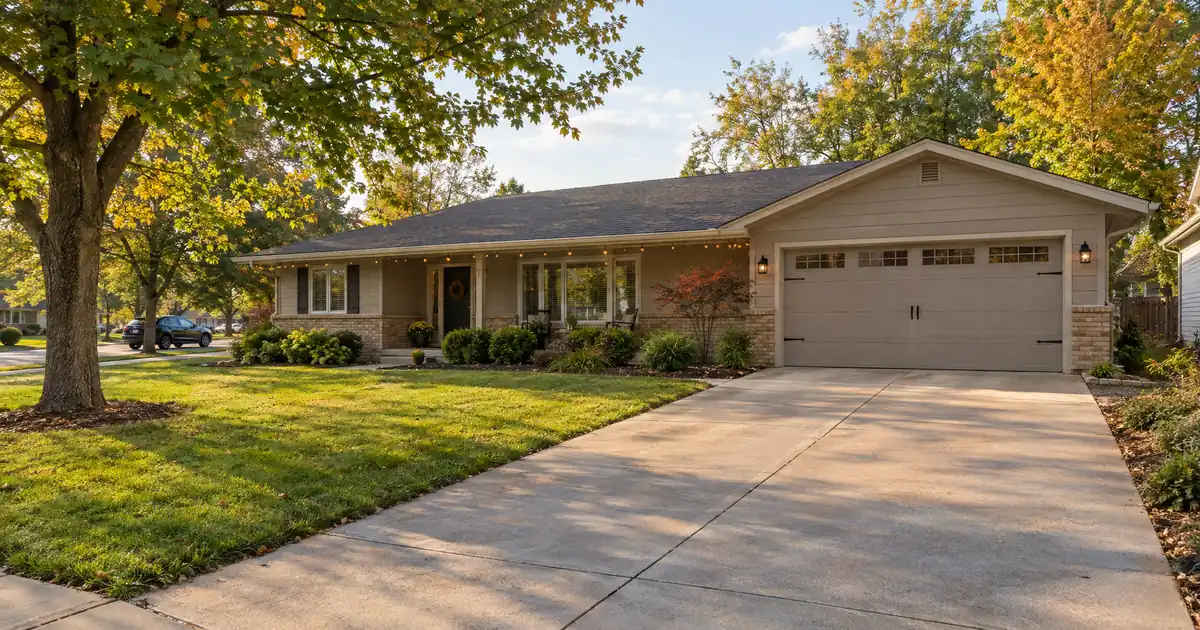
The Quick Read: The first step is deciding whether you will still live in the home, because occupancy picks the loan: a bank statement loan reads your deposits, while a DSCR loan reads the property’s rent, and either can work once the home is truly a rental. DSCR stands for debt service coverage ratio, which compares monthly rent to the monthly housing obligation.
- A bank statement loan is reviewed on documented income under the applicable program, subject to lender guidelines. Most programs read 12 months of personal or business statements.
- Owner-occupied files and non-owner-occupied rentals follow different leverage limits and different disclosure rules.
- Keeping your old mortgage in place is an option, but the occupancy terms you signed still apply.
- A first-time landlord with no lease history often starts with deposits. Once rent history exists, the property can move to a DSCR loan.
- Every file is underwritten individually. Nothing here is a commitment to lend.
Key Terms Defined
Bank statement loan: a mortgage that measures your income by averaging deposits in your bank accounts instead of reading traditional personal-income documentation line by line.
Expense factor: the share of business deposits a lender treats as overhead, so only the remainder counts as your income.
Occupancy: how you use the property: primary residence, second home, or non-owner-occupied rental.
DSCR loan: an investor loan for rental property, where the lender checks whether the property’s rent covers its own monthly obligation.
Cash-out refinance: a new loan larger than the old one, so you walk away with part of the equity.
Reserves: liquid savings a lender wants left over after closing, commonly around six months of the housing payment on these files.
Seasoning: how long you have owned the property or held the loan before a lender will treat it as established.
What your deposits qualify you for.
Alt-doc programs read 12 months of business or personal bank deposits instead of tax returns. Enter your average monthly deposits and see the income a lender would credit you.
The expense factor is set by the lender from your business type and profit-and-loss statement; it is not a number you choose. This widget quotes no rate and no payment.
Program parameters shown update from Lendmire’s centralized guideline source.
Estimate
Illustrative estimate only — not a quote, Loan Estimate, approval, or commitment to lend. Deposit average, expense factor, and housing ratio are editable assumptions; the expense factor a lender applies is set from your business type and documentation. No interest rate or monthly payment is quoted here. Purchase capacity is a simplified illustration and does not account for taxes, insurance, HOA dues, or other debts. Alt-doc income documentation is available on consumer mortgages in the states where Lendmire is licensed for consumer lending; actual terms vary by lender, borrower, and property.
Does Occupancy Decide Which Loan You Use?
Yes. Occupancy is the first fork, and it decides almost everything that follows. If you still live in the home, or you are financing it as your residence, a bank statement loan reads your deposits. If you move out and the house becomes a true rental, the property-based DSCR loan is usually the better tool.
The two loans test different things. A bank statement file asks whether you can carry the payment. A DSCR file asks whether the house can carry itself.
Across our wholesale network, we see this split play out constantly. Self-employed owners with strong deposits and a house that has never been rented lean on bank statements. Owners with a signed lease and a clear rent history lean on DSCR. Many files use both, one after the other. The complete DSCR loans guide walks through the property-based side in full.
What Does a Bank Statement Lender Actually Look At?
The lender reads your deposits, applies an expense factor, and tests the result against your debts. This is underwriting, not a shortcut. As an education resource on non-QM lending puts it, non-QM does not mean there are no rules. It means repayment is proven a different way.
Here is how the review typically runs:
1. Statements. Most programs in our network ask for 12 months, personal or business.
2. Deposit averaging. The lender totals qualifying deposits and averages them across the period. One-time transfers and loan proceeds are usually stripped out.
3. Expense factor. Business deposits include overhead, so the lender applies an expense factor. Lenders differ here. Some use a fixed ratio, and some accept a ratio prepared by your accountant. No single formula applies everywhere.
4. Debt test. The result is tested against your debts, and the new payment counts in your personal debt-to-income picture.
5. Property and reserves. The home is appraised, and reserves commonly run around six months of the housing payment.
Loan sizes on these programs generally run from roughly $125,000 to $3,500,000. Final terms follow each lender’s program sheet.
Which Path Fits Your Old Home?
The right path depends on where you live, what is already on the house, and whether rent history exists. This table summarizes the four common situations.
| Situation | What gets reviewed | Typical fit |
|---|---|---|
| Keep the old mortgage, rent the home | Existing loan terms | You have no need for cash and the lender’s occupancy terms allow it |
| Refinance while you still live there | Your deposits | Owner-occupied cash-out, subject to lender guidelines |
| Buy your next home on bank statements | Your deposits and total debts | Self-employed buyer; old home’s payment counts against you |
| Move the rental to a DSCR loan | The property’s rent | Lease and rent history exist |
On owner-occupied cash-out, leverage on a primary residence runs up to 80% LTV with a fixed expense ratio, and up to 75% when the file uses an accountant-prepared ratio. LTV means loan-to-value, the loan as a percentage of the property’s value. A second home tops out at 75% LTV on a cash-out, depending on loan size and credit. Final terms depend on lender guidelines, property type, leverage, and the borrower’s complete credit picture.
On a rental, a bank statement cash-out tops out around 75% LTV on an investment property. Leverage for an investment purchase on bank statement documentation varies by lender, so treat it as a conversation rather than a fixed number.
For a purchase or a refinance without cash out on a primary residence, select lenders go up to 90% LTV, with the top of that range reserved for stronger files. An asset-depletion alternative, which is reviewed against liquid assets, runs to about 80% LTV on a primary residence. Lendmire’s piece Asset Depletion vs Bank Statement Loan for a Home vs a Rental covers that comparison.
Can You Rent It Out Without Breaking Your Mortgage?
Often yes, but the answer starts with what you signed. When you closed, you declared how you would occupy the home. Most owner-occupied loans expect you to live there for a period before converting. A changed plan is normal. Planning the move from day one is a different thing.
| Situation | How it usually reads |
|---|---|
| Job change or growing family after closing | A changed plan |
| Moved out after the occupancy period | Usually fine, subject to loan terms |
| Knew at closing you would rent it | A misrepresentation risk |
| Renting without telling the servicer | A gray area you do not want |
The due-on-sale clause is the other piece. It lets a lender demand full repayment if the property’s use or ownership changes. Whether to enforce it is the lender’s choice. Many lenders do nothing while payments stay current, but you cannot count on that. Moving the home into an LLC does not move your debt or your liability, and it can raise the same clause, so talk to your servicer before you retitle anything. LLC borrowers on a new loan are subject to lender program eligibility.
If you want certainty, a refinance into a loan designed for the new use removes the question. That is often the cleanest way to turn the old home into a rental.
What Are the Steps to Convert, in Order?
Start with the lender conversation and finish with records. This order matches how problems actually surface.
1. Read your current loan terms. Find the occupancy clause and any notice requirement. Call your servicer if the terms are unclear.
2. Switch the insurance. A homeowner policy often does not cover tenants. Move to a landlord policy.
3. Check local rules. Rental registration, licensing, HOA limits, and condo rules vary by place, so confirm yours.
4. Gather documents. Pull statements, the lease, and your payment history (the checklist is below).
5. Set market rent. An appraiser estimates it, and a local property manager can give you a reality check.
6. Keep clean records. Record the date you converted, and track rent and expenses separately from personal spending. Tax treatment can depend on how the funds are used and how the property is held; borrowers should keep clear records and speak with a qualified tax professional before relying on any deduction.
How Do You Qualify for the Next Home While Owning the Old One?
Your old payment counts against you unless the lender can credit the rent. That is the two-property problem, and it trips up many self-employed buyers.
On a bank statement purchase, the lender adds the old home’s full obligation to your debts. Some programs allow a portion of documented rent to offset it. That usually requires a signed lease and sometimes an appraiser’s rent estimate. Programs differ on how much credit they give, so ask before you commit to a price on the next home.
Sequencing matters too. If your deposits are strong, buying the next home first can work, because your debt picture is simpler. If you want cash from the old home’s equity to fund the purchase, a cash-out refinance has to come first. That refinance carries the occupancy declaration for whichever status is true at the time.
The strongest sequence is the one where every declaration is honest on the day you make it.
Worked Example: One Owner, Two Paths
Run the numbers on a self-employed owner with a house that has built up equity. The owner moves out for a new job site and wants to keep the home. These are modeled assumptions, not market data.
Assume the current balance is about half of the home’s value. Assume the house rents for enough to cover its full monthly obligation with room to spare, clearing roughly 1.2x.
Path A: refinance while living there. The owner draws equity on a cash-out refinance while it is still a primary residence. Leverage is capped at 80% LTV on a primary-residence cash-out, or 75% with an accountant-prepared ratio. This path only works if the owner truly lives there at closing and has no plan to move out soon. These specifics are subject to lender guidelines and a full review of property, leverage, and credit.
Path B: refinance after the move. The owner waits until the house is a rental. Cash-out on bank statements tops out around 75% LTV on an investment property. Once a lease and rent history exist, a DSCR cash-out is also on the table. That file is judged on whether the rent covers the payment, at the leverage the property supports. Most DSCR programs are built around a 1.00 coverage baseline. Select lenders offer lower coverage, with LTV and terms adjusted. Terms depend on the lender’s guidelines, the property type, the leverage, and a full review of the credit profile.
Path A gives higher leverage with tighter occupancy rules. Path B gives lower leverage with fewer questions. For many owners the honest answer is Path B. This one is a toss-up only when the move-out date is still uncertain.
What Does the Cash-Flow Check Look Like?
Do this before you commit to keeping the house. A property that qualifies can still lose money each month.
Add up these lines on paper:
- Full housing obligation (principal, interest, taxes, insurance, and any HOA dues)
- A vacancy allowance, because tenants leave
- Maintenance, including the repairs an older home tends to need
- Management fees, if you will not self-manage
- Reserves for big-ticket items such as roofs and HVAC
Compare the total with realistic rent. If rent covers that list with room left, the conversion is likely worth it. If it only covers the loan itself, you are subsidizing the tenant. Clearing a lender’s coverage ratio only means the file qualifies. It does not mean the property cash-flows.
Lumpy deposits create a separate trap for self-employed owners. A single large deposit can skew your average and flatter your income, and the lender will likely strip it out.
Where Does the General Rule Break?
Several edge cases change the answer. Each deserves a conversation before you apply.
First-time landlord, no lease history. A property with no rent record cannot show cash flow yet. Deposit-based documentation can carry the file for now, and a DSCR refinance can follow once rent history exists.
Small multifamily. For a two-to-four-unit home, the appraiser reports rent differently, and the disclosure rules turn partly on unit count. A compliance advisory on investment properties notes that under the Regulation Z commentary, credit to improve or maintain a rental property is deemed business purpose when the property has more than two units that the owner does not occupy. Smaller properties are judged on a set of factors.
Short-term rental. If you plan to use the house as a short-term rental, short-term rental rules can vary by city, county, HOA, and property type, so investors should confirm local rules before relying on projected rental income.
Your own use of the home. If you expect to stay in the house for a meaningful part of the year, the lender may treat it as owner-occupied no matter what the lease says.
Which Disclosure Rules Apply to Your Loan?
The property’s occupancy decides the disclosure regime, and you should never mix the two. An owner-occupied bank statement loan is a consumer mortgage, so the standard consumer disclosures apply, including TRID, the Loan Estimate and Closing Disclosure framework.
A loan on a non-owner-occupied rental is a business-purpose loan, and that includes a short-term rental. Because these are business-purpose investor loans, they are reviewed differently from a standard owner-occupied mortgage. The CFPB’s text on exempt transactions deems credit to acquire a non-owner-occupied rental business purpose, and it sets a limit of more than 14 days of personal occupancy expected in the coming year. These loans are exempt from TRID.
Payment and rate figures live only in the calculator on this site, which gives an illustrative estimate, never a quote.
Consumer bank statement programs for owner-occupied homes are available through Lendmire in 16 states, subject to lender guidelines.
What Mistakes Sink These Files?
Most failed files fail on avoidable errors:
- Mixing personal and business deposits. The lender cannot tell which account supports which income, and the average suffers.
- Moving out before the new loan closes. If the declaration was owner-occupied, moving first makes it untrue.
- Skipping the insurance change. A homeowner policy may not respond to a tenant claim.
- Treating the two loan types as interchangeable. One reads you and the other reads the house.
- Ignoring reserves. A first-time landlord needs real cash for vacancy and repairs, and lenders look for it.
- Retitling to an LLC without a lender conversation. It can trigger the due-on-sale clause and does not shield your debt.
What Documents Does the Lender File Need?
Plan to assemble these before you apply. Single-family appraisers document market rent on an agency form, which Fannie Mae describes for appraisers as the document for estimating monthly market rent. DSCR loans are not agency products, but the same rent estimate often appears in the appraisal.
| Document | Why it matters |
|---|---|
| 12 months of statements | Establishes deposit average |
| Lease or rent schedule | Shows in-place or expected rent |
| Appraisal with rent estimate | Sets value and market rent |
| Landlord insurance policy | Confirms rental coverage |
| Mortgage statement and payment history | Shows the existing obligation |
| Reserve account statements | Proves about six months of housing payment |
When Should You Sell Instead of Rent?
Sell when the cash-flow check fails and the equity could do more elsewhere. Keep and refinance when rent covers the full list of costs and you want the equity working. Keep as-is when your current loan allows the use and you do not need cash.
Rentals work best for owners with reserves, patience, and a house that rents for enough to carry itself.
Frequently Asked Questions
Can I rent out my home without refinancing?
Often you can, but the occupancy terms on your current mortgage still apply. Enforcement is the lender’s choice, and many do nothing when payments stay current. Refinancing into a loan built for rental use removes the uncertainty.
Will a bank statement loan count the rent from my old home?
It depends on the program. Some credit a portion of documented rent against the old payment when you buy again, usually with a lease. Others count the full old payment against you. Ask before you commit to a purchase.
How much equity can I pull from a rental on bank statements?
Cash-out on an investment property tops out around 75% LTV. Owner-occupied cash-out runs higher: up to 80% LTV on a primary residence, and 75% on a second home. Leverage depends on loan size, credit, and the lender. The exact numbers vary by lender and program and follow a full review of property, leverage, and credit.
When does a DSCR loan beat a bank statement loan for a rental?
When the house has a lease and rent history, and you want the file judged on the property rather than your personal debts. Bank statement files count the new payment in your debt-to-income picture, which can limit how many properties you add.
How do I know if this is a changed plan or a misrepresentation?
Intent at closing is the test. Moving out because circumstances changed is normal. Planning at closing to rent the home is a different thing.
Next Step
Reach the team at 828-256-2183 or request a quote.
Once an old home has a lease and a rent history, the question shifts from whether you can carry it to whether the property carries itself.
About Lendmire
As a mortgage broker (NMLS# 2371349), Lendmire helps self-employed and high-net-worth borrowers in 16 states qualify on bank statements, a profit-and-loss statement, 1099s or liquid assets instead of tax returns, through wholesale lenders. Lendmire is never the lender; program terms are set by the lender and its guidelines. Scotsman Guide named Lendmire a Top Mortgage Workplace in both 2025 and 2026.
Get Started
Ready to find the right loan for you?
In about 30 seconds you can review financing options available for your home or investment property. No commitment required.
Informational only. Not a Loan Estimate, approval, or commitment to lend. Program availability and eligibility are subject to lender guidelines, credit approval, property review, and underwriting.
References
1. accreditedschools.com: Non QM Loans Explained Bank Statement DSCR and Asset Based Loans
2. Compliance Alliance – Regulation Z and Investment Properties
3. CFPB – 12 CFR 1026.3 Exempt transactions
4. Fannie Mae – Appraiser Update
This article is part of Lendmire’s bank statement loan program — full qualification details, guidelines, and scenarios live on the program page.
Related reading: DSCR vs Bank Statement Loan for a Part-Time Resort Rental · Can You Blend Bank Statement and W-2 Income on One Loan? · Portfolio DSCR vs Bank Statement Loan for a 1099 Contractor
Brandon Miller
Founder & CEO, Mortgage Loan Originator, Lendmire LLC
- Mortgage Loan Originator · NMLS# 1129696 · Verify on NMLS Consumer Access
- North Carolina Real Estate Broker · License# 343312 · Verify on NCREC
- North Carolina Insurance Producer · License# 19053198 · Property, Casualty, Life, Health · Verify on NAIC SBS
- Lendmire LLC · Firm NMLS# 2371349 · Verify firm licensure
Disclosure information. Lendmire is a state-licensed mortgage brokerage under NMLS# 2371349. Lendmire is not a depository institution, direct lender, or financial advisor — all loans referenced are placed through wholesale lender partners and are subject to each lender's underwriting standards. This article is provided for general informational purposes and is not a commitment to lend, nor does it constitute financial, legal, or tax advice. Loan programs, terms, rates, and qualification standards change without notice and depend on borrower profile, property type, and the state in which the subject property is located. Equal Housing Opportunity provider. NMLS Consumer Access: nmlsconsumeraccess.org.