
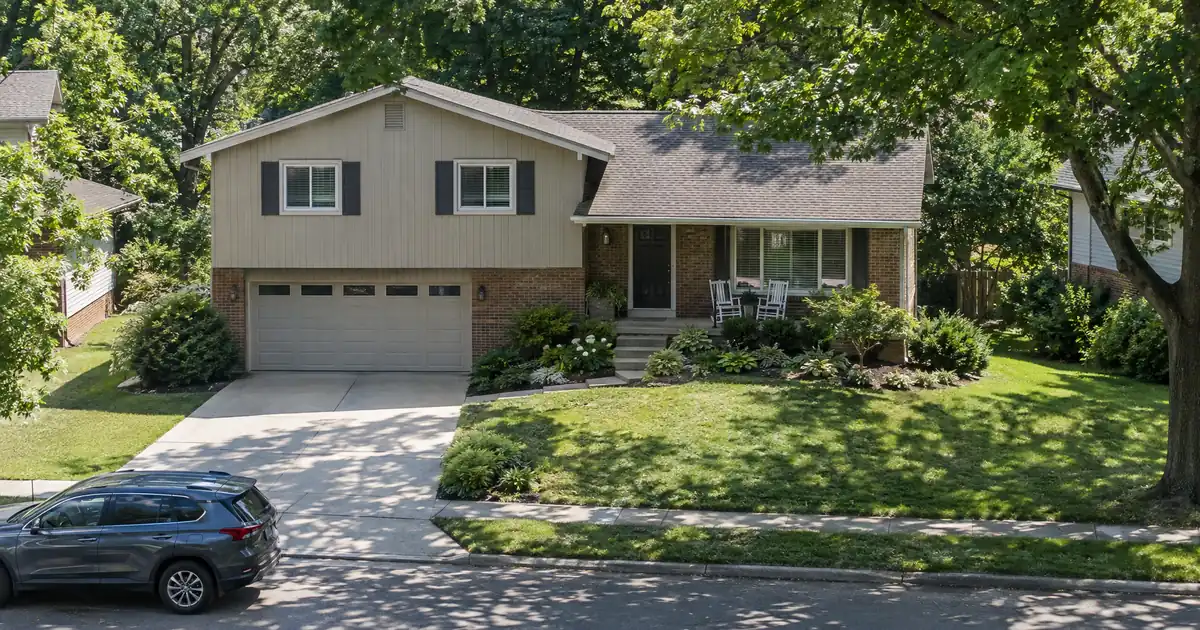
The Quick Read: Using bank statements to document income does not relax the occupancy rules on a second home. Income documentation and occupancy classification are two separate underwriting decisions, and a property only keeps its second-home label if it meets the occupancy conditions, whatever way the borrower proves income.
- Bank statements prove income. They do not change what counts as a second home.
- A true second home is typically a one-unit property you occupy for part of the year, that is suitable for year-round living, and that you control exclusively.
- Rental pools, timeshares, and management-company control of bookings generally push a file into investment territory.
- A second home on bank statements is a consumer mortgage, reviewed against your deposits and your other debts, not against the property’s rent.
- A pure rental belongs on the investor side of the shelf, where the property’s income drives lender review.
Self-employed buyers often ask whether a deposit-based loan comes with looser occupancy standards. It doesn’t. The lender still wants to know where you will sleep, who controls the property, and whether rent is part of the plan.
What your deposits qualify you for.
Alt-doc programs read 12 months of business or personal bank deposits instead of tax returns. Enter your average monthly deposits and see the income a lender would credit you.
The expense factor is set by the lender from your business type and profit-and-loss statement; it is not a number you choose. This widget quotes no rate and no payment.
Program parameters shown update from Lendmire’s centralized guideline source.
Estimate
Illustrative estimate only — not a quote, Loan Estimate, approval, or commitment to lend. Deposit average, expense factor, and housing ratio are editable assumptions; the expense factor a lender applies is set from your business type and documentation. No interest rate or monthly payment is quoted here. Purchase capacity is a simplified illustration and does not account for taxes, insurance, HOA dues, or other debts. Alt-doc income documentation is available on consumer mortgages in the states where Lendmire is licensed for consumer lending; actual terms vary by lender, borrower, and property.
What Are the Three Occupancy Categories?
Every residential file lands in one of three boxes: primary residence, second home, or investment property. The box you declare on the application drives leverage, credit tiers, and reserve requirements. It also decides which disclosure regime applies. Final terms depend on lender guidelines, property type, leverage, and the borrower’s complete credit picture.
| Category | Personal use | Rental plan | Loan type |
|---|---|---|---|
| Primary residence | Lives there as main home | Not the plan | Consumer mortgage |
| Second home | Occupies part of the year | Occasional at most | Consumer mortgage |
| Investment property | Not required | Core purpose | Business-purpose loan |
On the consumer side, the file is a standard owner-occupied mortgage with consumer disclosure rules. On the investor side, a bank-statement loan on a non-owner-occupied rental, including a short-term rental, is business-purpose and exempt from those consumer disclosure rules. Which side you land on follows from the property’s use, not from your paperwork.
Does a Bank Statement Loan Change the Occupancy Rules?
No. A bank statement program describes how income is verified. Occupancy describes how the property will be used. The two don’t trade off against each other.
Across the select lenders in Lendmire’s wholesale network, the pattern is consistent: the program sheet sets the documentation method, and the occupancy tier sets the leverage, credit, and reserve parameters. A borrower can’t swap a stricter occupancy test for a looser documentation method, or the reverse.
Bank statements are also a recognized way to verify income. The CFPB’s Ability-to-Repay compliance guide lists bank statements alongside traditional personal-income documentation and other records as acceptable verification, and a lender needs to verify only the income it actually relies on. So the loan type is legitimate. It just isn’t a loophole.
What Makes a Property a True Second Home?
A second home is a one-unit dwelling you occupy for some portion of the year, that is suitable for year-round use, and that you control exclusively. It is not a rental, timeshare, or property whose occupancy a management firm controls.
Bank-statement programs are not bound by agency rules, though many lenders borrow from agency definitions of occupancy. The Fannie Mae Selling Guide’s occupancy definitions are a useful contrast, because they spell out the traits most lenders echo:
- The borrower occupies it for part of the year.
- It is a single unit.
- It is suitable for year-round occupancy.
- The borrower has exclusive control.
- No rental pool, timeshare, or management firm controls who stays.
- Rental income may be identified, but not used to qualify.
Lenders also tend to look at location. A home in a vacation area or a reasonable distance from the primary residence reads naturally as a second home. A second property a few blocks from your primary home raises questions.
How much is “part of the year”? There is no universal day count, and any article that quotes one is guessing. Underwriters look for evidence of personal use, and the specific standard varies by lender.
Second Home vs. Investment Property
The core difference is intent. A second home is for you. An investment property is for tenants or guests.
| Factor | Second home | Investment property |
|---|---|---|
| Personal use | Required | Not required |
| Rent used to qualify | No | Yes on the DSCR side |
| Income basis | Your deposits or assets | Property rental income |
| Other personal debts | Count in DTI | Not the main test |
| Reclassification risk | High if rented heavily | Not applicable |
A self-employed investor with strong cash flow and thin reported income can use bank statements for a true second home. The same investor buying a pure rental typically uses a DSCR loan, which qualifies primarily on property-level rental income covering the payment, subject to lender guidelines. Lendmire’s complete DSCR loans guide covers that side in full.
Leverage differs too. On bank-statement documentation, a primary residence purchase or rate-term refinance can reach up to 90% LTV through select lenders. A second-home cash-out tops out at up to 75% LTV, by loan size and credit, not at the purchase ceiling. Investment-property purchase leverage on bank statements varies by lender, and investment cash-out tops out around 75% LTV. Loan sizes run roughly $125,000 to $3,500,000, with reserves commonly around six months of the housing payment. All of this is subject to lender guidelines, and every file is underwritten individually.
How Do Underwriters Treat Your Deposits?
Underwriters turn twelve months of statements into a monthly income figure. Deposits are totaled, non-income items are stripped out, an expense factor is applied for business accounts, and the result is averaged.
Here is the step-by-step:
1. Occupancy is declared first. You tell the lender whether this is a primary, second home, or investment property.
2. You choose the statement type. Personal, business, or a mix. Business statements get an expense factor applied to gross deposits.
3. The underwriter cleans the deposits. Transfers between your own accounts, loan proceeds, tax refunds, and one-time items come out. Counting transfers as income is a common mistake.
4. The expense factor is applied. This is lender-set, not borrower-chosen. One practitioner explainer describes a 50% factor as a common starting point and notes that a CPA-prepared profit-and-loss statement can support a lower one at some lenders. Exact factors vary by program.
5. Qualifying income feeds DTI. The result works like a traditional employment income figure. On a second home, the new housing payment and your other debts all count.
6. The occupancy tier sets the terms. Leverage, credit floor, and reserves follow from the box you checked.
The appraisal on a second home is typically a standard single-family form. The rent-schedule and small-income forms belong to the investment side.
Can You Rent Out a Second Home?
Occasional rental is generally tolerated only if you keep exclusive control and rent isn’t part of how you qualify. Regular, platform-driven, or managed rental turns the file into an investment property.
| Scenario | Likely classification | Why |
|---|---|---|
| Family and friends stay; you use it several weeks a year | Second home | Personal use, exclusive control |
| You rent a few weekends to cover costs, self-managed | Usually second home | Occasional, you control bookings |
| Property sits in a rental pool or management program | Investment | Control sits with a third party |
| Listed most of the year on a booking platform | Investment | Rental is the business |
| Bought mainly to rent, personal stay is a token | Investment | Intent is rental |
The deposit question trips up many self-employed buyers. Rental or platform payouts landing in your account don’t convert the file or help you qualify on a second home. If you plan to rely on that income, the right path is an investment file, where the property’s rent is the qualifying basis.
Separate gates also apply, and clearing one doesn’t clear the others. The lender’s occupancy rule is one, and your insurance policy is another.
How Do Lenders Verify Occupancy?
Mostly through what you sign. At closing, you complete an occupancy declaration and typically sign a second home rider that commits you to personal occupancy, commonly for a year unless the lender agrees otherwise.
Investors on BiggerPockets describe signing the second home rider and owner-occupancy affidavit and treat misstating use as a material misrepresentation. Those posts are anecdotal, so read them as investor experience, not legal conclusions. The practical takeaway is simple: the lender relies on your stated intent, and a false statement of intent is the risk.
Lenders can also look at address history, the distance from your primary home, and the property’s listing activity. What they review varies by program.
Self-Employed Pitfalls to Avoid
Four traps show up repeatedly for business owners:
- Buying through your business. Entity ownership can complicate second-home treatment, since the home is supposed to be your personal retreat. Ask before you title it.
- Home-office justifications. Claiming business use of a second home to support a deduction can sit awkwardly beside an occupancy declaration for personal use.
- Mixing accounts. Wages deposited into the same account as business revenue must come out of the statement analysis, or the same dollars count twice. Down payment and reserve funds also need a clear paper trail.
- Counting rental deposits. Treat rental or platform payouts as non-qualifying on a second-home file.
A mixed-income file can combine wages and business deposits, but only when the lines are clean.
A Worked Scenario
Picture a self-employed contractor who runs a business out of a dedicated account. She wants a one-unit lake cabin and plans to stay there most summers and several winter weekends.
She declares second home. Her lender takes twelve months of business statements, strips transfers and one-time deposits, applies its expense factor, and averages the result. Her new housing payment joins her existing debts in DTI. The cabin sits in a vacation area, nobody manages the bookings, and she signs the second home rider at closing.
Now change one fact. Suppose she lists the cabin on a booking platform for most of the season and plans to use the payouts to cover the payment. The file no longer looks like a second home. It belongs on the investment side, where a DSCR structure qualifies the property on its own rental coverage. If it’s right for her, she’d move there before applying, not after.
Which Loan Path Fits Your Plan?
| Your plan | Typical path |
|---|---|
| Personal-use retreat, rare rental | Second home on bank statements |
| Real mix of personal and rental use | Decide honestly; usually investment |
| Pure rental | DSCR, qualified on property income |
| Deposits understate income, assets are strong | Asset-depletion option; up to 80% LTV on a primary residence |
If you are weighing a cash-out instead of a purchase, Lendmire’s piece Tax Returns vs Bank Statement Cash-Out for a Self-Employed Second Home walks through that decision.
What If Your Plans Change After Closing?
The rider’s occupancy period matters. If you sign as a second home and then rent within that window without the lender’s consent, you risk breaching the loan terms. Converting later is a different conversation, and it’s one to have with the lender before you act, not after.
The cleaner approach is to match the box to your real plan at the start. If rental is a realistic possibility within the first year, an investment file avoids the problem entirely. This is general information, not legal advice.
Key Terms Defined
Occupancy: how the borrower will use the property: primary residence, second home, or investment.
Exclusive control: the borrower alone decides who stays, with no rental pool or management firm running bookings.
Occupancy affidavit: the signed statement at closing confirming how the borrower will use the property.
Expense factor: the percentage of business deposits a lender treats as operating costs when calculating qualifying income.
Second home rider: the loan document that commits the borrower to personal occupancy for a stated period.
Frequently Asked Questions
Can I use bank statements to buy a second home?
Yes, through select lenders, as long as the property truly qualifies as a second home. Qualification runs on documented income under the applicable program, subject to lender guidelines. Your deposits and other debts are reviewed, and the property’s rent is not the qualifying basis.
Does a bank statement loan allow more rental use?
No. The documentation method has no bearing on occupancy. Heavy or managed rental use points toward an investment file regardless of how you prove income.
Can second-home rental income help me qualify?
Not on a second home. Rent may be identified, but it generally isn’t counted. If rent is central to your plan, a DSCR loan on a non-owner-occupied property is the better fit.
What leverage is available on a second-home cash-out?
Up to 75% LTV on a second-home cash-out, by loan size and credit, subject to lender guidelines. The 90% figure applies only to a primary residence purchase or rate-term refinance.
Is a second home on bank statements treated like a rental?
No. An owner-occupied second home is a consumer mortgage with consumer disclosure rules. A non-owner-occupied rental on bank statements is business-purpose and exempt from those rules.
Consumer mortgage licensing covers 16 states, so availability depends on where the property sits. Tax treatment varies; consult a qualified professional.
About Lendmire
Lendmire — NMLS# 2371349 — is a mortgage broker that arranges bank statement, P&L-only, 1099-only and asset-based home financing in 16 states through wholesale lenders, on primary residences, second homes and investment properties. Every option is subject to the lender’s guidelines and full underwriting. Scotsman Guide named Lendmire a Top Mortgage Workplace in both 2025 and 2026.
Get Started
Ready to find the right loan for you?
In about 30 seconds you can review financing options available for your home or investment property. No commitment required.
Informational only. Not a Loan Estimate, approval, or commitment to lend. Program availability and eligibility are subject to lender guidelines, credit approval, property review, and underwriting.
References
1. CFPB Ability-to-Repay and Qualified Mortgage Compliance Guide
2. Fannie Mae Selling Guide, Occupancy Types
3. Kubera: bank statement loan explainer
4. BiggerPockets: second home vs. investment property loan
This article is part of Lendmire’s bank statement loan program — full qualification details, guidelines, and scenarios live on the program page.
Related reading: How a Short Sale Lowers LTV on a Self-Employed Bank Statement Refinance · Can You Refinance a Former Home as a Rental on a Bank Statement Loan? · How to Get a Bank Statement Loan as an S-Corp Owner After a Lost Home
Brandon Miller
Founder & CEO, Mortgage Loan Originator, Lendmire LLC
- Mortgage Loan Originator · NMLS# 1129696 · Verify on NMLS Consumer Access
- North Carolina Real Estate Broker · License# 343312 · Verify on NCREC
- North Carolina Insurance Producer · License# 19053198 · Property, Casualty, Life, Health · Verify on NAIC SBS
- Lendmire LLC · Firm NMLS# 2371349 · Verify firm licensure
Disclosures. The information presented in this article is general market commentary, not financial, legal, or tax advice. Lendmire is a mortgage brokerage (NMLS# 2371349) — not a direct lender or depository institution — and loan placement is subject to lender underwriting. Nothing in this content represents a commitment to lend. Loan terms, pricing, and program availability vary based on borrower qualifications, property characteristics, and state of subject property, and are subject to change at any time. Lendmire complies with Equal Housing Opportunity requirements. Consumer access: nmlsconsumeraccess.org.