
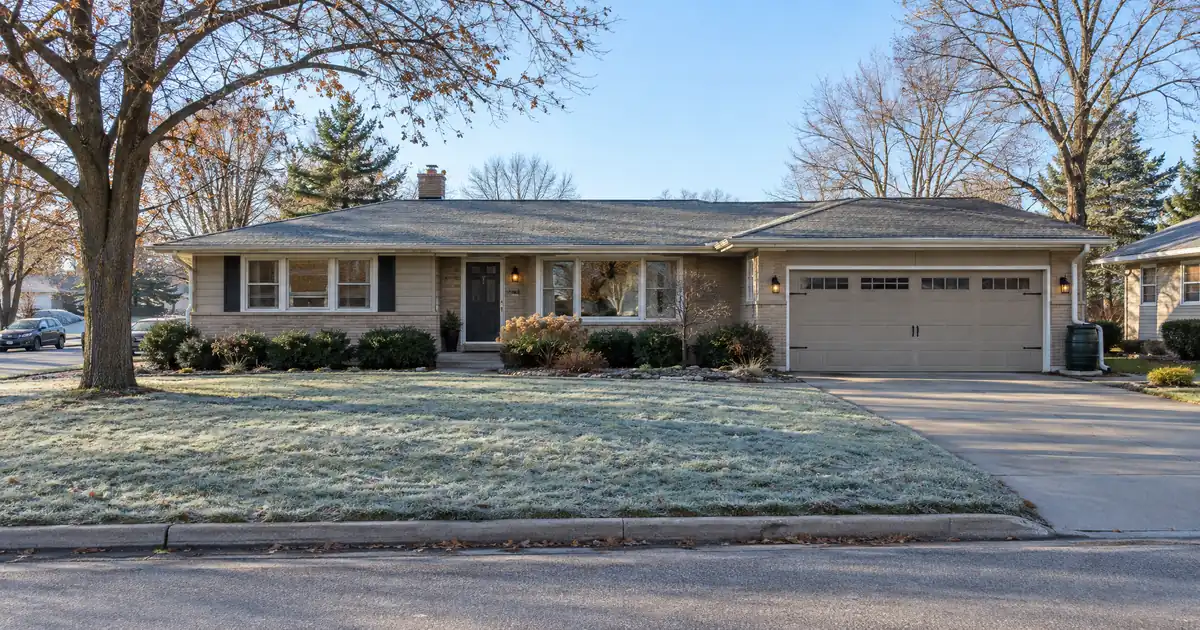
The Quick Read: It depends on whose name is on the loan and who will live in the home: an asset-based mortgage can work when your parent is the borrower and is reviewed on their own assets, but a child buying a house for a parent to occupy rarely fits the occupancy categories, and it generally does not fit a DSCR investor loan. Occupancy decides the loan category before any asset math starts. Lenders ask who will live in the property, and the answer has to match the loan type.
- Your parent as borrower, qualifying on their own seasoned assets, is the cleanest fit, subject to underwriting.
- You as borrower with a parent living in the home is a hard fit for asset-based programs and a poor fit for DSCR.
- A lease at market rent does not turn a parent’s home into a DSCR rental.
- A DSCR loan belongs on a true arm’s-length rental, not on a family home.
Why Does Occupancy Decide Everything?
Occupancy decides the loan category, and the category decides the rules. A principal residence, a second home and an investment property each carry different leverage, documentation and affidavits. Fannie Mae’s Selling Guide defines those three occupancy types, and most lenders sort files the same way.
A home your parent lives in is a housing purchase, not a business purchase. That sounds obvious, but it trips up a lot of investors. They already hold DSCR loans, so they assume every loan works the same way. It does not.
Asset-based mortgages are consumer loans. They cover principal residences and second homes on both paths. Investment property is available only on the asset depletion path. They qualify the borrower on assets instead of a paycheck. They do not qualify a borrower on someone else’s occupancy.
Key Terms Defined
Asset qualifier path: The loan is qualified on eligible assets alone. After the credit percentages are applied, those assets must equal or exceed the entire loan amount, and no employment or income is documented.
Asset depletion path: Eligible assets, after haircuts, are divided by 60 months to create a monthly qualifying income. That income then carries the housing payment and other debts through the debt-to-income test.
Seasoning: The length of time money has sat in an account before it counts. Lenders use it to confirm the funds are really yours.
Occupancy affidavit: A signed statement of how the property will be used. Investor loans use a business-purpose version that rules out personal and family occupancy.
Principal residence, second home, investment property: The three occupancy categories. Each has its own leverage limits and paperwork.
Can Your Parent Be the Borrower?
This is the route that fits the loan type. If your parent has real assets and little documented income, they may qualify as the borrower on their own balances, subject to underwriting. You can help in other ways, but the loan sits in their name.
Which path fits depends on how much cash they hold relative to the home price.
The asset qualifier path. Eligible assets must cover the whole loan. Through select programs, leverage runs up to 80% on a purchase and 75% on a refinance of a principal residence or second home. Loans go up to $4,000,000. Credit minimums start at 600, subject to underwriting.
Brokerage accounts, certificates of deposit, money market and savings count at 100%. Retirement accounts count at 90% under age 59½ and 100% at 59½ or older. Accounts combine. Each account needs two months of statements and 60 days of seasoning.
Picture an $800,000 loan with $330,000 in brokerage accounts, $300,000 in a 401(k) held under age 59½, and $200,000 in savings. The brokerage counts at 100%, which is $330,000. The 401(k) counts at 90%, which is $270,000. The savings count at 100%, which is $200,000. That totals $800,000 of usable assets, so the file is reviewed on assets alone. A parent over 59½ would see the retirement balance count in full. This is illustrative, and the lender’s own calculation governs.
The asset depletion path. Here the assets become income. Cash accounts and certificates of deposit count at 100%, securities at 80%, private stock at 75%, retirement accounts at 70% at any age, and real-estate equity at 60%.
Take $1,500,000 in securities, which counts at 80% for $1,200,000. Add $300,000 in cash at 100%. That is $1,500,000 usable, divided by 60 months, for $25,000 of monthly qualifying income. That income then has to carry the housing payment and other debts.
Leverage on a principal residence or second home on this path runs up to 80% on a purchase or rate-and-term refinance and 60% on a cash-out refinance. Loans run from $125,000 to $3,500,000. Qualified assets must reach the lesser of $1,000,000 or 1.25 times the loan balance. They never fall below $250,000 in liquid assets when assets are the only income source. Statements must be at least 120 days old at application, plus one within 45 days. Credit follows the lender’s matrix, and a first-time investor needs 700.
Both paths document the assets in full. Skipping income documents is not the same as skipping documents.
If the parent’s wealth sits in a trust, Lendmire’s piece How to Use Trust Assets to Qualify on an Asset Depletion Mortgage covers how that works.
What If You Are the Borrower and Your Parent Lives There?
This is where the plan usually breaks. You would be the borrower, but you would not be the occupant. The consumer categories were built around the borrower living in the home or using it as a second home.
Agency guidelines contain a family-occupancy exception, commonly called the Family Opportunity Mortgage. It lets an adult child finance a principal residence for a parent who cannot qualify alone. It is a guideline inside agency rules, not a stand-alone product, and lender overlays vary. Confirm the current agency guideline text before you rely on it.
An asset-based file does not automatically inherit that exception. Lenders in the wholesale network that Lendmire works with set their own occupancy rules. Some may treat a parent-occupied home differently from others, and some may not accept it at all. Disclose the plan at the start, so the file is built for the right category.
Treat three shortcuts as dead ends:
- Calling the home a second home when you will not use it.
- Calling it an investment property when a parent lives there.
- Signing an affidavit that does not match the plan.
The last one is a misrepresentation problem, not a pricing problem. It puts the loan at risk, so do not plan around hoping nobody asks.
Why Is a DSCR Loan the Wrong Tool for a Parent’s Home?
A DSCR loan prices the property’s rent against its monthly obligation. It qualifies primarily on property-level rental income covering the payment, subject to lender guidelines. That works only when a real tenant pays real rent.
DSCR loans are designed for non-owner-occupied investment properties. Because they are business-purpose investor loans, they are reviewed differently from a standard owner-occupied mortgage. A CFPB commentary treats credit for a non-owner-occupied rental as business purpose. A compliance trade explainer notes that the exemption turns on owner occupancy, loan purpose and unit count.
Standard business-purpose affidavits go further than that. They typically state that neither the borrower nor any family member will occupy the property. A parent is a family member under nearly any form.
That raises four problems for a parent’s home:
1. A lease does not cure it. A signed lease at market rent leaves the occupancy problem in place. Many programs also restrict leases to family members.
2. An LLC does not fix it. Forms commonly extend the occupancy limit to the entity’s members and owners.
3. The rent support weakens. The appraiser’s rent schedule judges market rent. A parent is not an arm’s-length tenant, so the coverage ratio loses its footing.
4. The vacant-purchase promise. For a vacant purchase, forms commit you to reasonable efforts to find a tenant. Placing a parent is not the same as seeking a tenant.
Keep the DSCR loan for what it does well. A rental bought at arm’s length, with a third-party tenant, is the right use. Lendmire’s complete DSCR loans guide walks through how those files work. Many investors finance the parent’s home separately and buy a true rental on the DSCR side. That keeps the files, the family and the portfolio clean.
Some select lenders review coverage below 1.00 on true rentals, with leverage and terms adjusted. That option applies to real tenant-occupied properties, not family housing.
Which Route Fits Your Family?
Each route solves a different problem. The right one depends on who has the assets, who has the credit, and who will live in the home.
| Route | Who qualifies | Watch-out |
|---|---|---|
| Parent borrows on assets | Parent | Parent’s own seasoned assets must carry it |
| Child borrows, owner-occupied exception | Child | Lender overlays vary |
| Child borrows on assets, parent occupies | Child | Occupancy category must match |
| DSCR loan with a parent tenant | Property rent | Family occupancy usually barred |
| DSCR loan on a separate rental | Property rent | Needs a true third-party tenant |
If the parent has the assets, they usually belong on the loan. If the child has the assets and the parent will live there, the question is the occupancy category, not the asset math. Combining both people’s assets as co-borrowers is a lender-by-lender call, so ask before you plan around it. If the real goal is a return on the child’s capital, the answer is the last row: buy a rental, and let a stranger’s rent carry the coverage ratio.
How Do You Stress-Test a Parent’s Finances?
Qualifying is not the same as being comfortable. An asset-based loan can approve a file that still leaves a retiree thin.
Before committing, run through this checklist:
- Are the assets needed for living costs, medical needs or long-term care?
- Does the parent keep a cash cushion after the purchase, beyond what the file requires?
- Can the household carry taxes, insurance and maintenance if markets drop?
- Would selling investments to fund a purchase change what the parent can do later?
- If the assets drop, does the debt-to-income test on the depletion path still hold?
Also ask a professional about estate planning, benefits eligibility and who should hold title. Those are questions to bring to an elder-law attorney or planner, not points this article can settle.
What Should You Gather First?
For an asset-based file, collect these before any application:
- Statements for each qualifying account, covering the seasoning period the path requires.
- A written explanation of the source for any large recent deposit.
- A list of every account, its owner and its type.
- Credit information for each borrower.
- The purchase contract, once there is one.
Some assets do not count. Cryptocurrency, precious metals, collectibles and pledged or borrowed funds are not published as eligible on either path. The documented route is converting them to a seasoned cash balance in a regulated account. The lender reviews the source of those funds.
Frequently Asked Questions
Can my parents’ assets help me qualify if I am the borrower?
That is a lender-specific call. Assets generally qualify the person who owns them. Using a parent’s balances for your loan normally means they become a co-borrower or the balances move into your name with a documented source. Ask early, because the file is built around who owns the accounts.
Does paying market rent make a parent’s home a legitimate DSCR rental?
No. Typical business-purpose affidavits rule out family occupancy whether or not rent changes hands. A lease may help with the appraisal’s rent schedule, but it does not change who lives there. Some programs go further and restrict leases to relatives.
Can I put the home in an LLC to buy it for a parent?
Usually not. Affidavits commonly extend the family-occupancy restriction to the members and owners of the entity. An LLC changes who holds title, not who will live in the home, subject to program terms.
Do asset-based mortgages cover investment property?
Only on the asset depletion path, at up to 65% on a purchase or rate-and-term refinance and 60% on a cash-out. The asset qualifier path covers principal residences and second homes. Business-purpose rental financing is a DSCR loan, which works from the property’s income.
What is the best first step?
Decide who will live in the home, and whose name goes on the loan. Then match that answer to the loan category. The asset math only matters once the category is right.
Next Step
If you are qualifying on assets rather than income and want to see how the numbers work, Lendmire can help you compare asset-based mortgage options based on your statements, the property, credit profile, leverage, and your goals. Lendmire is a mortgage broker that places files through select lenders in its network, with consumer lending licensed in Alabama, California, Colorado, Florida, Georgia, Indiana, Michigan, Montana, New Mexico, North Carolina, Ohio, Pennsylvania, Tennessee, Texas, Virginia and Washington. Every file is underwritten individually, and nothing here is a commitment to lend.
A home for a parent and a rental for a portfolio are two different purchases, and the investors who keep them apart usually keep both loans cleaner.
About Lendmire
Lendmire — NMLS# 2371349 — is a mortgage broker that arranges bank statement, P&L-only, 1099-only and asset-based home financing in 16 states through wholesale lenders, on primary residences, second homes and investment properties. Every option is subject to the lender’s guidelines and full underwriting. Scotsman Guide named Lendmire a Top Mortgage Workplace in both 2025 and 2026.
Get Started
Ready to find the right loan for you?
In about 30 seconds you can review financing options available for your home or investment property. No commitment required.
Informational only. Not a Loan Estimate, approval, or commitment to lend. Program availability and eligibility are subject to lender guidelines, credit approval, property review, and underwriting.
References
1. Fannie Mae occupancy bulletin
2. CFPB Regulation Z §1026.3 commentary
3. Compliance Alliance, Regulation Z and Investment Properties
This article is part of Lendmire’s asset-based mortgage program — full qualification details, guidelines, and scenarios live on the program page.
Related reading: How Big Can an Asset Qualifier Mortgage Be? · How an Asset Qualifier Jumbo Mortgage Works · How Asset Depletion Income Differs on a Primary Home vs Rental
Brandon Miller
Founder & CEO, Mortgage Loan Originator, Lendmire LLC
- Mortgage Loan Originator · NMLS# 1129696 · Verify on NMLS Consumer Access
- North Carolina Real Estate Broker · License# 343312 · Verify on NCREC
- North Carolina Insurance Producer · License# 19053198 · Property, Casualty, Life, Health · Verify on NAIC SBS
- Lendmire LLC · Firm NMLS# 2371349 · Verify firm licensure
Disclosures. The information presented in this article is general market commentary, not financial, legal, or tax advice. Lendmire is a mortgage brokerage (NMLS# 2371349) — not a direct lender or depository institution — and loan placement is subject to lender underwriting. Nothing in this content represents a commitment to lend. Loan terms, pricing, and program availability vary based on borrower qualifications, property characteristics, and state of subject property, and are subject to change at any time. Lendmire complies with Equal Housing Opportunity requirements. Consumer access: nmlsconsumeraccess.org.