
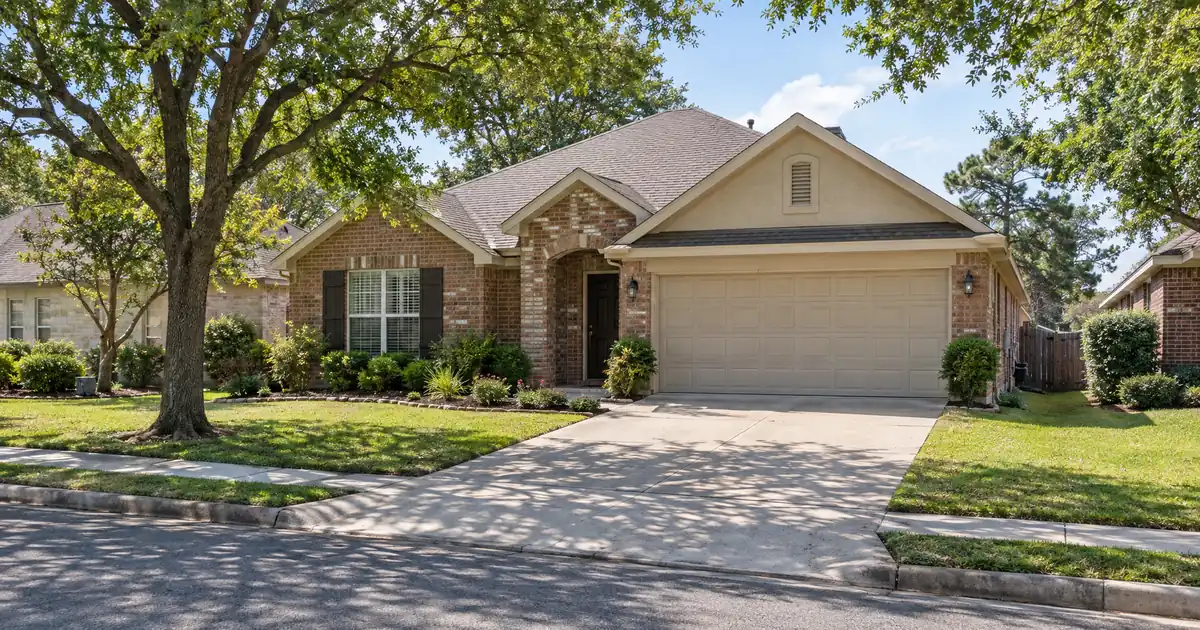
The Quick Read: Texas cash-out rules govern the property and how you use it, not how you qualify, so an asset depletion refinance on your Texas homestead still follows the state’s home-equity limits, while a rental sits outside them, and the lender’s own leverage caps then apply on top. Asset depletion only changes how your income is calculated. It does not change what Texas allows against the home.
- Texas limits attach to a homestead cash-out, whatever income method qualifies the borrower.
- On the asset depletion path, usable assets divided by 60 months become qualifying income.
- On a principal residence or second home, that path caps cash-out at 60% loan-to-value, below the 80% Texas ceiling, so the program is usually the tighter limit.
- Cash-out proceeds never count as qualifying assets.
- Texas homestead rules do not reach a rental property, but a consumer asset-based loan is a different product from a business-purpose rental loan.
Two Rulebooks, Not One
Two separate rulebooks apply to this loan. Texas law decides what kind of loan can be placed on the property. The lender’s underwriting guidelines decide whether you qualify. They rarely touch each other.
| Layer | Texas rules | Asset-based underwriting |
|---|---|---|
| What it controls | Collateral and loan structure | Borrower qualification |
| Triggered by | Homestead use of the property | Using assets instead of paycheck income |
| Leverage limit | 80% of fair market value on homestead | Program caps, tighter on cash-out |
| Changes with income method? | No | Yes, by design |
The state’s home-equity loan is the Section 50(a)(6) loan in the Texas Constitution. It is one of the few permitted exceptions to the homestead’s protection from forced sale. The Texas Real Estate Research Center at Texas A&M notes that these loans cannot be taken on a second residence or a rental property, and that they can only be secured by the homestead.
That one fact sorts most files. Your own Texas home is under the homestead rules. A non-owner-occupied rental is not.
Key Terms Defined
Homestead: the home a Texas family or single adult lives in, protected from forced sale except for debts the constitution lists.
Section 50(a)(6) loan: a Texas home-equity loan, meaning a cash-out loan secured by the homestead.
Asset qualifier path: a program route where eligible assets, after credit percentages, must equal or exceed the whole loan, and no income is documented.
Asset depletion path: a program route that turns usable assets into monthly qualifying income, which then runs through the debt-to-income test.
Haircut: the share of an asset’s balance a lender will not count.
Seasoning: how long funds have been in your accounts before the lender will rely on them.
How Underwriting Treats the File, Step by Step
A broker sees the same sequence on nearly every Texas file. Here it is in order.
1. Classify the property. Is it your homestead, a second home, or a rental? This one answer decides whether the Texas limits apply at all.
2. Classify the purpose. A cash-out on your own home is a Section 50(a)(6) transaction. A refinance with no new cash is treated differently, though a refinance of an existing home-equity loan can keep the home-equity classification unless specific conditions are met. Those conditions are no new cash beyond the payoff and costs, the 80% limit, and the required notice and waiting period.
3. Pick the program path. You qualify on one path at a time, either the asset qualifier path or the asset depletion path. Never both.
4. Apply the credit percentages or haircuts. Each account type counts at its own share of the balance.
5. Check seasoning and statements. The lender reviews your account history.
6. Test leverage against both limits. The program’s cap and the Texas ceiling both apply to a homestead, and the lower one controls.
7. Run the Texas procedural steps. On a homestead cash-out, only one such loan may be secured by the home at a time.
Steps 1, 2, 6 and 7 are Texas. Steps 3, 4 and 5 are the program. Keeping them apart avoids most confusion.
Which Path Fits: Assets Cover the Loan, or Assets Become Income
Pick the path first. The figures below are ceilings and floors through select programs, subject to underwriting, never offers.
Asset qualifier path. Your eligible assets, after credit percentages, must equal or exceed the entire loan amount. No employment or income is documented. Brokerage, CDs, money market and savings count at 100%. A 401(k) or IRA counts at 90% under age 59½ and 100% at 59½ or older. Leverage runs up to 80% on a purchase and 75% on a refinance. Whether cash-out is allowed on this path, and at what leverage, is set by the lender and is not published, so ask before assuming. Loans run up to $4,000,000. The credit floor is 600. Seasoning is 60 days, with two months of statements per account.
Asset depletion path. Usable assets, after haircuts, are divided by 60 months to produce monthly qualifying income. That income must carry the full housing payment and other debts through the debt-to-income test. Cash and CDs count at 100%, securities at 80%, private stock at 75%, retirement accounts at 70% at any age, and real-estate equity at 60%. Loans run from $125,000 to $3,500,000. Credit follows the lender’s matrix, and a first-time investor needs 700. Statements must be at least 120 days old at application, plus one within 45 days.
Minimum assets on this path are the lesser of $1,000,000 or 1.25 times the loan. They are never below $250,000 liquid when assets are your only income source. If you also have documented income, asset-derived income can supplement it up to a 45% debt-to-income ratio, and the minimum-assets rule is waived.
Neither path means no documentation. The assets are fully documented. Only the income documentation changes.
A Worked Illustration
Consider a retired owner of a Texas homestead holding $1,500,000 in securities and $300,000 in cash. This is an illustration, and the lender’s own calculation governs.
Securities count at 80%, which is $1,200,000. Cash counts at 100%, which is $300,000. Usable assets total $1,500,000. Divided by 60 months, that is $25,000 of monthly qualifying income. That figure then carries the housing payment and other debts through the debt-to-income test.
Now the Texas layer. Because this is a cash-out on a principal residence, the program caps leverage at 60% on the asset depletion path. The Texas ceiling is 80% of fair market value across all debt on the home. The Texas Department of Savings and Mortgage Lending 2025 report on mortgage lending describes the 80% fair-market-value limit, the requirement that borrower and lender agree to the value in writing, and the one-year wait before a new home-equity loan on the same homestead. Final terms depend on the lender’s guidelines, the property type, and the borrower’s complete credit picture.
Here the 60% program cap is the tighter limit, so it controls. The existing first mortgage counts toward the Texas ceiling, but the program’s lower figure binds first. The gap between the two caps is where borrowers misjudge how much cash they can reach.
One more point. Cash you take out never counts as a qualifying asset, so it cannot be recycled into the income calculation.
Where the General Rule Breaks
The clean rule is that the property decides the Texas limits and the program decides qualification. These cases bend it.
A former homestead. A home converted to a rental should be verified as no longer your homestead. Title companies often want an affidavit designating another property as your homestead. Treat that paperwork as a gate, not an afterthought.
Part-time personal use. If you occupy a property part of the year, it may not read as a clean rental. The classification depends on actual use, so state the occupancy plainly and expect questions.
A prior home-equity loan. If your current mortgage is a Section 50(a)(6) loan, a refinance can stay under the same rules. A limited refinance with no new cash can exit that classification only if specific conditions are met, and the one-year spacing rule applies to a new home-equity loan.
Agricultural homesteads. Since the 2017 amendment to Section 50, agricultural homesteads can qualify for a home-equity loan. Acreage and use questions come up early, so raise them at the start.
Entity vesting. A consumer asset-based loan is made to you personally. If a rental is held in an LLC, the structure moves toward business-purpose financing, subject to program terms.
Combining income methods. Asset-derived income can supplement documented income on the depletion path, up to a 45% debt-to-income ratio. Programs differ on what else they allow alongside it, so confirm before you stack methods.
When the Property Is a Rental
Texas homestead rules shouldn’t scare you away from a rental refinance. They do not apply to non-owner-occupied property. The limits you face there come from the program, not the constitution.
On the asset depletion path, an investment property is capped at 65% on a purchase or rate-and-term refinance and 60% on a cash-out. Remember that this is still a consumer loan with the asset-based product’s documentation. The borrower is qualifying on assets, not on the property’s rent.
DSCR loans are designed for non-owner-occupied investment properties. Because they are business-purpose investor loans, they are reviewed differently from a standard owner-occupied mortgage. If your goal is pulling equity from rentals, and the rent covers the payment, that route is often the cleaner fit. For the Texas-specific rental picture, Lendmire’s piece Texas Investor Cash-Out Refinance Rules and State Restrictions goes deeper.
The trade-off is this. Asset depletion tests the borrower and works when rent is thin but the portfolio is large. DSCR tests the property. A borrower with a large liquid portfolio and a thinly rented property may fit the first. A borrower with strong rents and modest liquid assets usually fits the second.
What the Decision Looks Like in Practice
Start with these questions, in order.
- Is this my homestead? If yes, expect the Texas procedural steps and the 80% ceiling.
- Do I need cash out, or just a lower balance? Cash-out sets the leverage cap at 60% on the depletion path. A rate-and-term refinance on a principal residence or second home allows up to 80%.
- Which assets do I hold, and in what form? Retirement accounts count at 70% on the depletion path. Cash counts at 100%. Moving funds into a seasoned cash balance in a regulated account can change your income figure.
- Can I clear the minimums? The assets-only floor is real, so check it before spending money on an appraisal.
- Is a different structure better? A Texas homeowner who only needs a modest sum may be better served by other products, such as a home-equity line. Compare before committing.
A word on assets that are not on the published list. Cryptocurrency, precious metals, collectibles, and pledged or borrowed funds are not published as eligible on either path. The documented route is to convert them to a seasoned cash balance in a regulated account, with the source reviewed by the lender.
If you are qualifying on assets rather than income and want to see how the numbers work, Lendmire can help you compare asset-based mortgage programs based on your statements, the property, credit profile, leverage, and your goals. Lendmire is a broker, and consumer mortgage lending is available in 16 states including Texas, through select lenders and subject to underwriting.
Frequently Asked Questions
Can I use asset depletion on a Texas homestead cash-out?
Yes, subject to underwriting, but the income method does not exempt the loan from Texas limits. A cash-out on your homestead is still a home-equity loan under the state constitution. The program’s 60% cash-out cap on a principal residence usually binds before the 80% Texas ceiling does.
Do I have to sell my investments to qualify?
No. Asset depletion is a way of calculating income, not a withdrawal requirement. Your assets stay invested. The lender divides the usable balance by 60 months and tests that income against your debts.
Does cash I take out count toward my qualifying assets?
No. Cash-out proceeds never count as qualifying assets on the depletion path. Qualification rests on the assets you already hold, documented with statements.
Do Texas home-equity rules apply to my rental property?
No. Texas home-equity limits cover the homestead only, and the loan cannot be secured by a rental. A rental refinance faces the program’s leverage limits instead. On the asset depletion path that is 60% on a cash-out.
Does a later refinance keep the Texas restrictions?
Often it does. A refinance of an existing home-equity loan can remain under the same rules unless conditions are met. Those conditions are no new cash beyond payoff and costs, the 80% limit, and the required notice and waiting period. Check your current loan type first.
Lendmire’s asset-based mortgage in Texas page presents the program for Texas borrowers.
About Lendmire
Lendmire (NMLS# 2371349) is a mortgage broker that arranges bank statement, P&L-only, 1099-only and asset-based home financing in 16 states through wholesale lenders, on primary residences, second homes and investment properties. Every option is subject to the lender’s guidelines and full underwriting. Scotsman Guide named Lendmire a Top Mortgage Workplace in both 2025 and 2026.
For the mechanics of pulling equity out of a rental property, see Lendmire’s guide to cash-out refinance on an investment property.
Get Started
Ready to find the right loan for you?
In about 30 seconds you can review financing options available for your home or investment property. No commitment required.
Informational only. Not a Loan Estimate, approval, or commitment to lend. Program availability and eligibility are subject to lender guidelines, credit approval, property review, and underwriting.
References
1. Texas Real Estate Research Center at Texas A&M, What to Know About Home Equity Loans in Texas
2. sml.texas.gov: Sml Report on Mortgage Lending in Texas
This article is part of Lendmire’s asset-based mortgage program — full qualification details, guidelines, and scenarios live on the program page.
Related reading: Asset Qualifier vs Asset Depletion for a Virginia Retiree · When Does Asset Depletion Beat a Conventional Mortgage for a Washington Retiree? · Can You Cash Out a Colorado Home on an Asset Depletion Refinance?
Guides: Asset-Based Mortgage in Texas
Brandon Miller
Founder & CEO, Mortgage Loan Originator, Lendmire LLC
- Mortgage Loan Originator · NMLS# 1129696 · Verify on NMLS Consumer Access
- North Carolina Real Estate Broker · License# 343312 · Verify on NCREC
- North Carolina Insurance Producer · License# 19053198 · Property, Casualty, Life, Health · Verify on NAIC SBS
- Lendmire LLC · Firm NMLS# 2371349 · Verify firm licensure
Compliance and disclosures. Lendmire (NMLS# 2371349) is a licensed mortgage broker and is not a direct lender, depository institution, financial advisor, or tax professional. Content in this article is general market analysis and educational information — not financial, legal, or tax advice for any specific situation. Lendmire does not guarantee loan approval; every transaction is subject to underwriting by the funding lender. Mortgage pricing and loan program guidelines are subject to change at any time without notice and vary by borrower characteristics, property type, and state regulations. Lendmire complies with Equal Housing Opportunity. Licensure verification: NMLS Consumer Access.