
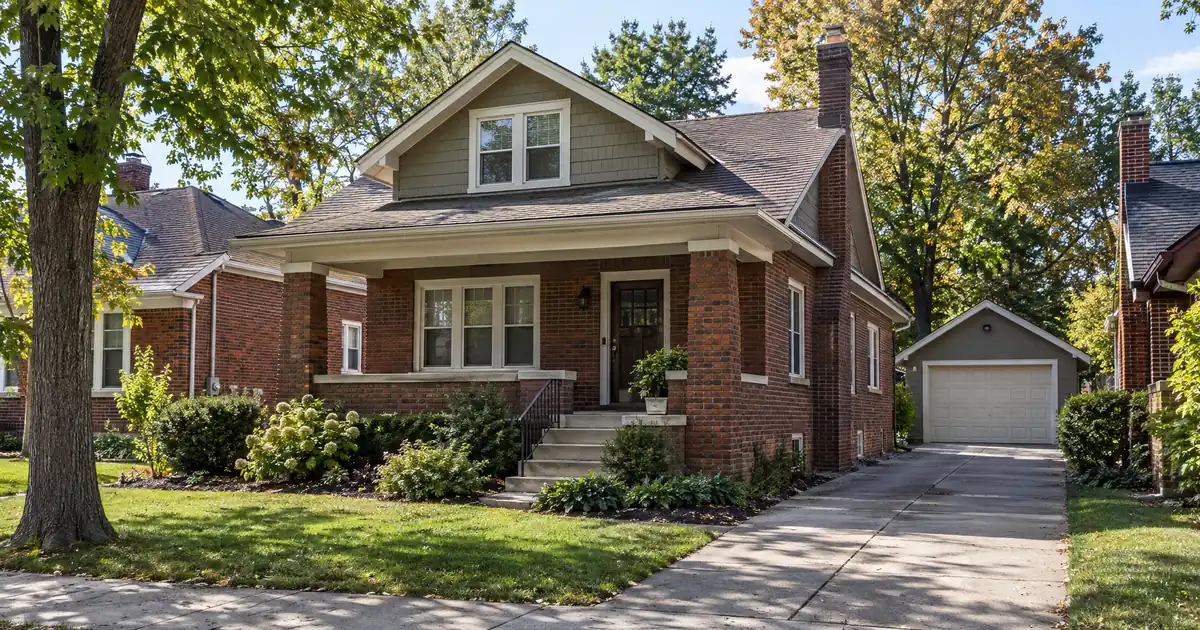
The Quick Read: It depends on who lives there and whose name is on the loan, because an asset-based mortgage is a consumer loan that must match the way the home is actually used, and a home you buy only for your parents to live in rarely fits the borrower’s own occupancy.
- The asset qualifier path and the asset depletion path both work on principal residences and second homes. Only the depletion path allows investment property.
- A home your parents occupy while paying real rent is usually an investment property, so it points to the depletion path at lower leverage.
- If your parents have the assets, the cleaner structure is often a loan in their names, using their balances.
- A lease, an LLC or a label does not change how a lender classifies the occupancy.
- Everything below is subject to underwriting through select lenders, and no figure here is an offer.
The Short Answer for Parent Purchases
Asset-based mortgages work for people with large balances and little documented income. Think retirees, business sellers, and anyone living off a portfolio. The loan is built for the borrower’s own home, a second home, or, on one path only, an investment property.
A parent-occupied home sits awkwardly in those categories. It is not your principal residence if you live elsewhere. It is not a second home if you do not use it yourself. That leaves investment property, which has its own rules and a different leverage ceiling.
Across the wholesale network, the files that go smoothly are the ones where the occupancy story is simple and true. Files that try to stretch a label tend to stall.
What an Asset-Based Mortgage Actually Does
There are two paths, and a borrower is reviewed on one at a time.
The asset qualifier path. Eligible assets, after the percentage credits below, must equal or exceed the entire loan amount. No employment or income is documented. Loans go up to $4,000,000, subject to underwriting.
The asset depletion path. Usable assets are divided by 60 months to create a monthly qualifying income. That income must carry the housing payment and other debts through the debt-to-income test. Loans run from $125,000 to $3,500,000.
Here is the depletion math in the shape lenders use. Take $1,500,000 in securities, which count at 80%, giving $1,200,000. Add $300,000 in cash at 100%. That is $1,500,000 usable, divided by 60, or $25,000 of monthly qualifying income. The lender’s own calculation governs, and this is illustration only.
On the qualifier path, say you want an $800,000 loan. You hold $330,000 in brokerage accounts (100%), $300,000 in a 401(k) while under 59½ (90%, or $270,000), and $200,000 in savings (100%). That counts $800,000 of usable assets. It is reviewed on assets alone.
“No income documentation” does not mean no documentation. Your statements are reviewed closely on both paths.
Which Occupancy Fits a Home for Your Parents?
Four setups come up again and again. Each lands in a different place.
| Setup | How a lender sees it | Path that may fit |
|---|---|---|
| Parents are the borrowers and live there | Their principal residence | Qualifier or depletion |
| You buy, parents live there rent-free | Does not fit your occupancy | Usually not this program |
| You buy, parents pay real rent in a separate household | Investment property | Depletion path only |
| Parent lives in your own home | Your principal residence | Qualifier or depletion |
The last row is not a purchase for your parents at all. It is your home with a parent in it, and that is simply a normal owner-occupied purchase.
The second row is where many families get stuck. The home would be bought and owned by you, and the parent would pay nothing. That is not a rental, and it is not your residence. Lenders will not stretch to cover it, and certifying otherwise creates real legal risk for you.
When Your Parents Are the Borrowers
If your parents hold the assets, this is often the most straightforward route. The loan goes in their names, they occupy the home, and it is their principal residence.
Their balances count at the same credits. On the qualifier path, brokerage accounts, certificates of deposit, money market and savings count at 100%. Retirement accounts count at 90% before age 59½ and 100% at 59½ or older, so most parents already past that age get full credit. Accounts combine.
Leverage on this path runs up to 80% on a purchase. The credit floor is 600 on the qualifier path. The lender’s own score and loan-amount matrix governs on the depletion path. Housing history is reviewed, and one 30-day late in the last twelve months is considered case by case.
Whose assets count follows whose name is on the loan. Assets in your name do not automatically support a loan in your parents’ names. Whether a family member can be added as a co-borrower depends on the lender and the file, so ask before you assume.
Trust-held balances raise their own questions. Lendmire’s piece How to Use Trust Assets to Qualify on an Asset Depletion Mortgage covers that case.
Buying as the Child With Parents Paying Rent
Say you buy the home, and your parents live in a separate household and pay rent under a written lease. Now the property is a non-owner-occupied rental, and the only asset-based path that allows investment property is depletion.
Leverage drops. On the depletion path, an investment property runs up to 65% on a purchase or rate-and-term refinance and 60% on a cash-out. A principal residence or second home on the same path gets up to 80% on a purchase or rate-and-term refinance and 60% on a cash-out. That gap is the cost of the investment label.
Other depletion minimums matter too. Qualified assets must be the lesser of $1,000,000 or 1.25 times the loan balance. They can never fall below $250,000 liquid when depletion is your only income source. A first-time investor on this path needs a 700 score. Your derived income also has to carry the payment through the debt-to-income test, so the parents’ rent is not what qualifies you.
Seasoning is strict. Statements must be at least 120 days old at application, plus a recent statement within 45 days. Sale-of-business, inheritance and legal-settlement funds are excused from that seasoning.
The DSCR Alternative (and Its Family-Tenant Catch)
If the home is truly a rental and you would rather not qualify through your own assets, a DSCR loan is the business-purpose option. DSCR stands for debt service coverage ratio, meaning the property qualifies primarily on property-level rental income covering the payment, subject to lender guidelines. The complete DSCR loans guide walks through the basics.
The catch is the tenant. Most DSCR programs bar the borrower from occupying the home, and many bar or add review for family tenants. A few lenders in the network will accept a related-party tenant in a separate household with a signed lease and a payment trail. Others exclude it outright. Check the related-party rule before you order an appraisal.
Rent is also capped. Many programs count the lower of the signed lease and the appraiser’s market rent. A discounted lease for your parents lowers the coverage ratio, and rent above market earns no extra credit.
A federal rule helps explain the line. The commentary to Regulation Z says a loan to buy a rental you will not occupy is deemed business purpose. It also says the rule stops applying if you expect to occupy the home more than 14 days in the coming year, according to the CFPB’s Regulation Z exemption text. That rule does not ban family tenants. The family-tenant limits are program guidelines, not federal law.
What About the Family-Opportunity Route?
It lets a child buy for a parent who cannot qualify alone, and the loan is treated as the child’s primary residence even though the child will not live there.
It also assumes you qualify on income, which is the opposite of the asset-rich, income-light profile this article is written for. If your income is documented and solid, ask a lender about it. If it is not, the structures above are the ones to compare.
Side-by-Side Options
| Option | Whose assets count | Occupancy fit |
|---|---|---|
| Qualifier path, parents borrow | The borrowers’ | Parents’ primary home |
| Depletion path, you buy as investor | Yours | Parents as paying tenants |
| DSCR loan | Property rent | Tenant rules vary by program |
| Agency family-opportunity route | Your documented income | Treated as your primary home |
| Cash purchase | Yours | No loan occupancy rules |
Risks and Trade-Offs
Occupancy is the big one. Signing a certification that does not match the facts creates legal exposure. Your parents moving out, or in, can change the classification after the fact.
Reserves are the second. A purchase eats balances, and the depletion path also needs those balances to stay large enough to meet its minimums. Moving money late is a problem too, because new deposits and transfers can break the seasoning rules.
Carrying cost is the third. Michigan’s principal residence exemption lowers the school operating levy, but it is available only to an owner who occupies the home as a principal residence, according to the Michigan Department of Treasury. A child who owns a home only the parents occupy would likely not qualify, so ask the local assessor. Tax treatment varies; consult a qualified professional.
Other assets need conversion. Cryptocurrency, precious metals, collectibles and pledged or borrowed funds are not published as eligible on either path. The documented route is converting them to a seasoned cash balance in a regulated account, with the source reviewed by the lender.
Key Terms Defined
Asset qualifier path: Your eligible assets, after percentage credits, must cover the whole loan, and no income is documented.
Asset depletion path: Usable assets divided by 60 months become qualifying monthly income for the debt-to-income test.
Seasoning: The time money has sat in your accounts, or the age of the statements, before a lender counts it.
Debt-to-income (DTI): Your monthly debts divided by your qualifying monthly income.
Principal residence: The home you live in as your main home.
Non-owner-occupied: A property the borrower does not live in, usually a rental.
Who Should Choose Something Else
If you want to buy and let your parents live there at no cost, this program is not the fit. Look at the parents-as-borrowers structure or the agency family route. If your balances are mostly crypto or business accounts you cannot convert, the asset-based path may not count them.
If the real goal is a rental portfolio, DSCR is built for it. If you need a lawyer, title and estate questions belong with one. Ownership, a parent’s care needs, and Medicaid look-back rules are outside what a mortgage broker can advise on.
Lendmire arranges asset-based mortgages through select lenders in its network. Its consumer mortgage lending is licensed in 16 states, Michigan among them.
Frequently Asked Questions
Can I buy my elderly parents a house with an asset-based mortgage?
Only if the loan matches how the home will be used. If your parents are the borrowers and live there, it is their principal residence and can work on either path. If you are the borrower and they live there rent-free, the occupancy does not fit.
Do my parents’ assets count toward my loan?
Assets count for the borrowers named on the loan. Your parents’ balances support their own application, and yours support yours. Whether combining them through a co-borrower is allowed depends on the lender and the file.
Do I have to sell investments to qualify?
No. On the qualifier path, eligible balances count toward the loan amount without being sold. On the depletion path, they are converted into a qualifying income on paper. Documents and seasoning still apply on both paths.
Can I rent the home to my parents and use the asset depletion path?
It can be considered as an investment property, which carries up to 65% leverage on a purchase on that path. Lenders review the lease, the tenant relationship, and your qualifying income. Approval is never promised and is subject to underwriting.
Does a business-purpose loan make a parent-occupied home a rental?
No. A loan label does not change who lives in the house, and occupancy facts drive the classification. A business-purpose exemption under 12 CFR 1024.5 covers genuine business-purpose credit only.
If you are qualifying on assets rather than income and want to see how the numbers work, Lendmire can help you compare asset-based mortgage options based on your statements, the property, credit profile, leverage, and your goals.
Lendmire’s asset-based mortgage in Michigan page presents the program for Michigan borrowers.
About Lendmire
Lendmire is a mortgage brokerage (NMLS# 2371349) licensed for consumer mortgage lending in 16 states, arranging bank statement and other alternative-documentation mortgages — P&L-only, 1099-only and asset-based paths — through a wholesale lending network. Eligibility is determined by the lender on each file. Scotsman Guide named Lendmire a Top Mortgage Workplace in both 2025 and 2026.
Get Started
Ready to find the right loan for you?
In about 30 seconds you can review financing options available for your home or investment property. No commitment required.
Informational only. Not a Loan Estimate, approval, or commitment to lend. Program availability and eligibility are subject to lender guidelines, credit approval, property review, and underwriting.
References
1. CFPB – Regulation Z §1026.3 Exempt transactions
2. Michigan Department of Treasury – Principal Residence Exemption background
3. Cornell LII – 12 CFR 1024.5
This article is part of Lendmire’s asset-based mortgage program — full qualification details, guidelines, and scenarios live on the program page.
Related reading: How a Margin Balance Is Treated on an Asset Depletion Mortgage · Asset Depletion Mortgage vs HELOC on a Paid-Off Home · What Counts as an Asset Statement for a Mortgage?
Guides: Asset-Based Mortgage in Michigan
Brandon Miller
Founder & CEO, Mortgage Loan Originator, Lendmire LLC
- Mortgage Loan Originator · NMLS# 1129696 · Verify on NMLS Consumer Access
- North Carolina Real Estate Broker · License# 343312 · Verify on NCREC
- North Carolina Insurance Producer · License# 19053198 · Property, Casualty, Life, Health · Verify on NAIC SBS
- Lendmire LLC · Firm NMLS# 2371349 · Verify firm licensure
Disclosure information. Lendmire is a state-licensed mortgage brokerage under NMLS# 2371349. Lendmire is not a depository institution, direct lender, or financial advisor — all loans referenced are placed through wholesale lender partners and are subject to each lender's underwriting standards. This article is provided for general informational purposes and is not a commitment to lend, nor does it constitute financial, legal, or tax advice. Loan programs, terms, rates, and qualification standards change without notice and depend on borrower profile, property type, and the state in which the subject property is located. Equal Housing Opportunity provider. NMLS Consumer Access: nmlsconsumeraccess.org.