
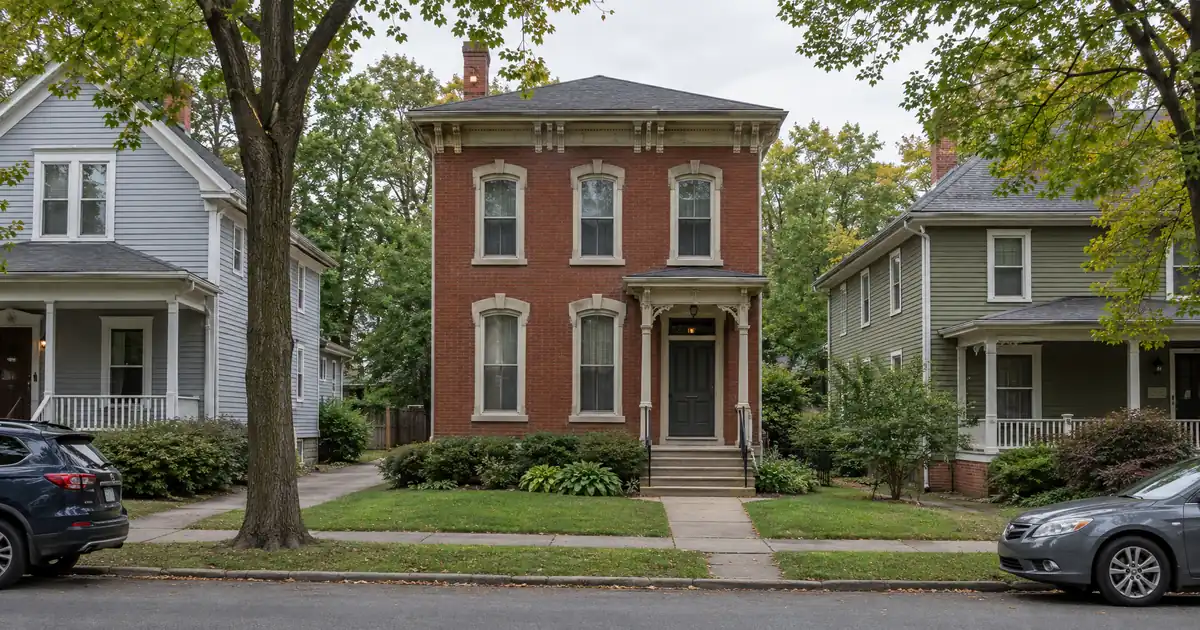
The Quick Read: Yes, an Indiana snowbird with large savings and little paycheck income can often buy a winter home through an asset-based mortgage, either by letting assets cover the whole loan or by converting them into qualifying income, subject to underwriting and lender guidelines.
- Assets cover the loan: On the asset qualifier path, eligible assets must equal or exceed the entire loan amount, and no income is documented.
- Assets become income: On the asset depletion path, usable assets divided by 60 months become monthly income that must carry the payment.
- Leverage is real: A second home reaches up to 80% on a purchase on either path, subject to underwriting.
- Statements still matter: You document the assets, though not traditional personal-income documentation, pay stubs or employment verification.
- Occupancy decides the program: A home you will winter in is a second home, not a rental.
Those are the headlines. The rest of this piece covers the mechanics, the traps, and how much of your nest egg a winter home should consume.
What Does “On Savings Alone” Actually Mean?
It means one of three things, and each works differently. You can pay all cash. You can use savings as the down payment on a loan that your income qualifies. Or you can use savings as the qualifier itself, so the loan rests on your balance sheet rather than a paycheck.
The third route is the one Hoosier retirees usually mean. Picture a retired manufacturing executive in Fort Wayne who sold a business, holds a large brokerage account, and shows almost no earned income. A conventional loan sees that file as weak. An asset-based file sees it as strong.
| Path | What the lender checks | What you document | Main risk |
|---|---|---|---|
| All cash | Proof the funds are yours | Statements, source of funds | Draining liquidity |
| Income-based second-home loan | Pay, pensions, debt-to-income | Income and assets | Thin income fails the test |
| Asset qualifier | Assets vs. the whole loan | Two months of statements per account | Large balances tied to the loan |
| Asset depletion | Assets converted to income | Older and recent statements | Haircuts shrink usable assets |
Lendmire is a mortgage broker. It arranges these loans through select lenders in its wholesale network, and those lenders underwrite and approve. Consumer mortgage lending is licensed in 16 states, Indiana among them. The figures below do not change by state.
Can You Just Pay All Cash?
You can, and it is the simplest route on paper. No lender is involved, so nobody underwrites you. The seller wants proof that the money exists, usually a recent statement or a letter from the institution holding it.
Simple is not the same as smart. Paying cash means one decision removes a big slice of your liquidity. Brokerage balances can fall just when you need to sell them. Tax treatment varies; consult a qualified professional.
A mortgage lets you keep the savings invested and liquid. For a retiree, that flexibility is often worth more than skipping a loan. The cost is a monthly payment you must carry for years. The fix is to size the loan so the payment feels boring.
How Does the Asset Qualifier Path Work?
The asset qualifier path covers the entire loan with eligible assets and documents no employment or income. If your usable assets equal or exceed the loan amount, the file is reviewed on assets alone, subject to underwriting. Think of it as proving you could repay the loan from what you already hold.
Leverage and size. Across Lendmire’s wholesale network, this path typically allows up to 80% loan-to-value on a purchase and 75% on a refinance, for a principal residence or second home. Loans run up to $4,000,000. Whether cash-out proceeds are allowed on this path is set by the lender, so don’t plan around it.
What counts. The lender credits a share of each balance:
| Asset type (qualifier path) | Share that counts |
|---|---|
| Brokerage accounts | 100% |
| Certificates of deposit | 100% |
| Money market | 100% |
| Savings | 100% |
| 401(k) and IRA, under age 59½ | 90% |
| 401(k) and IRA, 59½ or older | 100% |
Accounts combine. Here is the shape of a typical file. Say you want an $800,000 loan. You hold $330,000 in brokerage accounts (100% counts, so $330,000), $300,000 in a 401(k) while under 59½ (90% counts, so $270,000), and $200,000 in savings (100%, so $200,000). Usable assets total $800,000. That covers the loan, so the file is reviewed on assets alone. The lender’s own calculation governs, and this is illustration only.
Credit and reserves. The published floor is a 600 credit score, subject to underwriting. Reserves are generally not required at or below 75% loan-to-value. Above that, the lender sets them.
Seasoning. Seasoning is the time money must sit in your accounts before the lender trusts it. Here it means 60 days, with two months of statements for each qualifying account. A big deposit last week will draw questions.
How Does the Asset Depletion Path Differ?
Asset depletion turns your assets into monthly income. The lender takes usable assets after haircuts, divides by 60 months, and treats the result as qualifying income. That income must then carry the full housing payment and your other debts through the debt-to-income test. A borrower is qualified on one path at a time, so the two tables never blend.
What counts on this path:
| Asset type (depletion path) | Share that counts |
|---|---|
| Cash accounts | 100% |
| Certificates of deposit | 100% |
| Securities | 80% |
| Private stock | Not eligible |
| Retirement accounts, any age | 70% |
| Real-estate equity | 60% |
Not eligible: custodial accounts, deferred compensation, escrow accounts, foreign funds, cash on hand, privately held stock, stock options, non-vested restricted stock units, and funds from non-regulated financial companies. Cryptocurrency, precious metals and collectibles are not published as eligible on either path. The documented route is converting them to a seasoned cash balance in a regulated account, with the lender reviewing the source.
The math. Say you hold $1,500,000 in securities and $300,000 in cash. Securities count at 80%, so $1,200,000. Cash counts at 100%, so $300,000. Usable assets are $1,500,000. Divide by 60 months and you get $25,000 of monthly qualifying income. That income then carries the housing payment and other debts through the debt-to-income test. Illustrative only. The lender’s calculation governs.
Leverage and size. On a second home or principal residence, this path typically reaches up to 80% on a purchase or rate-and-term refinance and 60% on a cash-out refinance. Loans run from $125,000 to $3,500,000. Cash-out proceeds never count as qualifying assets.
Minimums. Qualified assets must be at least the lesser of $1,000,000 or 1.25 times the loan balance. When assets are your only income source, you must hold no less than $250,000 in liquid funds. Asset-derived income can also supplement documented income, up to a 45% debt-to-income ratio. In that case the minimum-assets rule is waived.
Credit and seasoning. The depletion path follows the lender’s score and loan-amount matrix. One 30-day late payment on housing in the last twelve months is considered case by case. A housing event such as a foreclosure needs four years of seasoning. Statements must be at least 120 days old at application, plus the most recent statement within 45 days. Funds from the sale of a business, an inheritance or a legal settlement are excused from that seasoning.
Which Path Fits an Indiana Snowbird?
Match the path to your balance sheet. If your assets comfortably exceed the loan, the qualifier path is cleaner. You document statements and nothing about income. Retirement money counts at 90% under 59½ and in full after, which helps a retiree.
If your assets are large but you want a smaller loan relative to them, depletion can make sense. It creates income on paper, then tests the payment against it. Retirement accounts count at only 70% there. Real-estate equity counts at 60%, which matters if your Indiana home is paid down and you want it in the picture.
Here is the honest tradeoff. The qualifier path asks more of your balances relative to the loan. The depletion path asks more of your paperwork and haircuts. Many borrowers run both versions and see which one passes, though each file is underwritten on one path.
Second Home or Rental: Why Occupancy Decides Everything
If you will live in the winter home for part of the year, it is a second home. That puts the asset-based mortgage in play. It does not put a loan built for rentals in play.
Rental loans are designed for non-owner-occupied investment properties. Because they are business-purpose investor loans, they are reviewed differently from a standard owner-occupied mortgage. The federal CFPB regulation on exempt transactions draws the line this way. If you expect to occupy the property for more than 14 days in the coming year, it cannot be treated as non-owner-occupied. A snowbird who stays all winter is far past that.
Signing a non-owner-occupied certification on a home you intend to winter in is a misrepresentation. It can create default risk later. Don’t do it.
Then there is the middle case. Suppose you want to rent the place when you are away. That can still be a second home in many programs. But rental income generally cannot be used to qualify you, and individual programs set their own limits on rental use. Pick the label that matches how you will actually use the house.
On the asset depletion path only, investment property is available. Leverage there is lower: up to 65% on a purchase or rate-and-term refinance and 60% on a cash-out. Choose it only if the home is truly a rental.
How Much of Your Savings Should a Winter Home Use?
Less than the lender will let you. Approval limits are ceilings. Your comfort level is the real limit.
Run a simple test. After the down payment, closing costs and moving in, what is left liquid? Could you cover a year of medical costs, a roof repair on either house, and a market drop without selling stocks at a loss? If the answer is no, the loan is too big or the down payment is too large.
Nolo notes that second homes and investment properties generally need better credit and a larger down payment than a primary residence, and borrowers may have to show reserves covering up to six months of payments. That is a market-wide pattern, not a promise about any one program. The network figures above are what apply here, and only through select programs, subject to underwriting.
Carrying costs go beyond the payment. Budget for insurance, association dues, property taxes, utilities, and upkeep on a home you leave empty for months. Those costs vary by county and building. Keep them in view when you size the loan.
Indiana Considerations Without the Guesswork
You will keep an Indiana home, and that matters in two ways. First, your Indiana equity can sit inside the file. On the depletion path, real-estate equity counts at 60%. Second, owning two properties changes your debt-to-income picture if you are using documented income to supplement.
Questions about residency, domicile and how two property-tax bills interact are real. They are tax and legal questions, not loan questions. Ask a qualified Indiana professional before you buy.
Across Lendmire’s wholesale network, the pattern on snowbird files is consistent. Borrowers arrive thinking their lack of paychecks is the obstacle. The real friction is usually statements: an account opened last month, a transfer between accounts that muddies the source, or a large gift with no paper trail. Cleaning that up before applying matters more than any structuring trick. Keep the money where it is and leave a clear history.
What Documents Will You Need?
Expect to document assets, not income. A typical savings-based file includes:
- Statements for every qualifying account (two months on the qualifier path; the 120-day and 45-day pattern on the depletion path).
- An explanation and paper trail for any large recent deposit.
- A purchase contract and identification.
- Proof of any retirement account balances and your age for the 90% versus 100% treatment.
- Conversion records if you are moving crypto or other unlisted assets into a regulated cash account.
No traditional personal-income documentation, pay stubs or employment verification are required on the qualifier path. This is still a fully underwritten consumer mortgage. Programs change, and every file is underwritten individually.
Buy, Rent, or Mix?
Buy with a loan if you will use the home for years and want to keep your investments working. Pay all cash if your liquidity is deep and you value a simpler life. Rent if you are still testing a destination or your savings are modest.
Savings alone is not the right move in a few cases. Your assets fall below the program minimums. Most of your wealth sits in categories that don’t count, such as crypto or a business you cannot sell. Or a market downturn would force you to sell at a loss to cover the payment. In those cases a smaller home, a larger down payment, or a few winters of renting can protect you.
Key Terms Defined
Asset qualifier path: An asset-based mortgage path where eligible assets must equal or exceed the whole loan, with no income documented.
Asset depletion path: A path that divides usable assets by 60 months to create monthly qualifying income for the debt-to-income test.
Seasoning: The time funds must sit in your accounts before the lender counts them.
Haircut: The share of an asset’s value a lender discounts because it can lose value or is hard to sell.
Debt-to-income ratio: Your monthly debts divided by your monthly income, used to judge whether you can carry the payment.
Second home: A home you occupy part of the year, financed differently from a rental.
Frequently Asked Questions
Can I buy a winter home using only my savings?
Yes, in two senses. You can pay all cash, or you can qualify a mortgage on assets rather than income. Asset-based programs through select lenders use your balances, either by covering the full loan or by converting them to income, subject to underwriting. You still document the accounts with statements.
Do my retirement accounts count as savings?
They do, at a reduced share. On the asset qualifier path, 401(k) and IRA balances count at 90% under age 59½ and 100% at 59½ or older. On the depletion path they count at 70% at any age. Check with a tax professional before withdrawing from them.
Can I rent the home when I am not there?
Maybe, but it changes the analysis. A winter home you occupy is a second home, and rental income generally cannot be used to qualify you. Each program sets its own limits on rental use. If the property will really be a rental you do not stay in, the depletion path also offers investment-property financing at lower leverage.
How much can I borrow against a second home on savings?
Typically up to 80% loan-to-value on a purchase on either path, subject to underwriting. On a refinance of a second home, the qualifier path reaches 75%. The depletion path reaches 80% on a rate-and-term refinance and 60% on a cash-out. Loans run to $4,000,000 on the qualifier path and $125,000 to $3,500,000 on depletion.
What if most of my wealth is in crypto or a business?
Those assets are not published as eligible on either path. The documented route is converting them into a seasoned cash balance in a regulated account. The lender then reviews where the money came from. Plan for that conversion before you apply, not after.
If you are qualifying on assets rather than income and want to see how the numbers work, Lendmire can help you compare asset-based mortgage programs based on your statements, the property, credit profile, leverage, and your goals. Reach the team at 828-256-2183.
Lendmire’s asset-based mortgage in Indiana page presents the program for Indiana borrowers.
About Lendmire
Lendmire — NMLS# 2371349 — is a mortgage broker that arranges bank statement, P&L-only, 1099-only and asset-based home financing in 16 states through wholesale lenders, on primary residences, second homes and investment properties. Every option is subject to the lender’s guidelines and full underwriting. Scotsman Guide named Lendmire a Top Mortgage Workplace in both 2025 and 2026.
Get Started
Ready to find the right loan for you?
In about 30 seconds you can review financing options available for your home or investment property. No commitment required.
Informational only. Not a Loan Estimate, approval, or commitment to lend. Program availability and eligibility are subject to lender guidelines, credit approval, property review, and underwriting.
References
1. CFPB Reg Z 1026.3 (official text and commentary)
2. Nolo: Investment Property vs. Second Home
This article is part of Lendmire’s asset-based mortgage program — full qualification details, guidelines, and scenarios live on the program page.
Related reading: Can a Tennessee Snowbird Buy a Winter Home on Savings Alone? · How Montana Business Owners Buy a Home on Savings Instead of Tax Returns · Can You Buy a Second Home in Colorado on Assets Instead of Income?
Guides: Asset-Based Mortgage in Indiana
Brandon Miller
Founder & CEO, Mortgage Loan Originator, Lendmire LLC
- Mortgage Loan Originator · NMLS# 1129696 · Verify on NMLS Consumer Access
- North Carolina Real Estate Broker · License# 343312 · Verify on NCREC
- North Carolina Insurance Producer · License# 19053198 · Property, Casualty, Life, Health · Verify on NAIC SBS
- Lendmire LLC · Firm NMLS# 2371349 · Verify firm licensure
Required disclosures. Lendmire (NMLS# 2371349) operates as a licensed mortgage broker, not a direct lender or depository. The discussion in this article is general in nature and should not be relied upon as financial, legal, or tax advice — every investment scenario is unique and should be reviewed by a qualified professional. Any loan inquiry is subject to lender underwriting, and this article is not a commitment to lend or a guarantee of approval. Mortgage rates, loan terms, and program guidelines vary by borrower, property, and state, and may change without notice. Equal Housing Opportunity. Verify licensure at NMLS Consumer Access.