
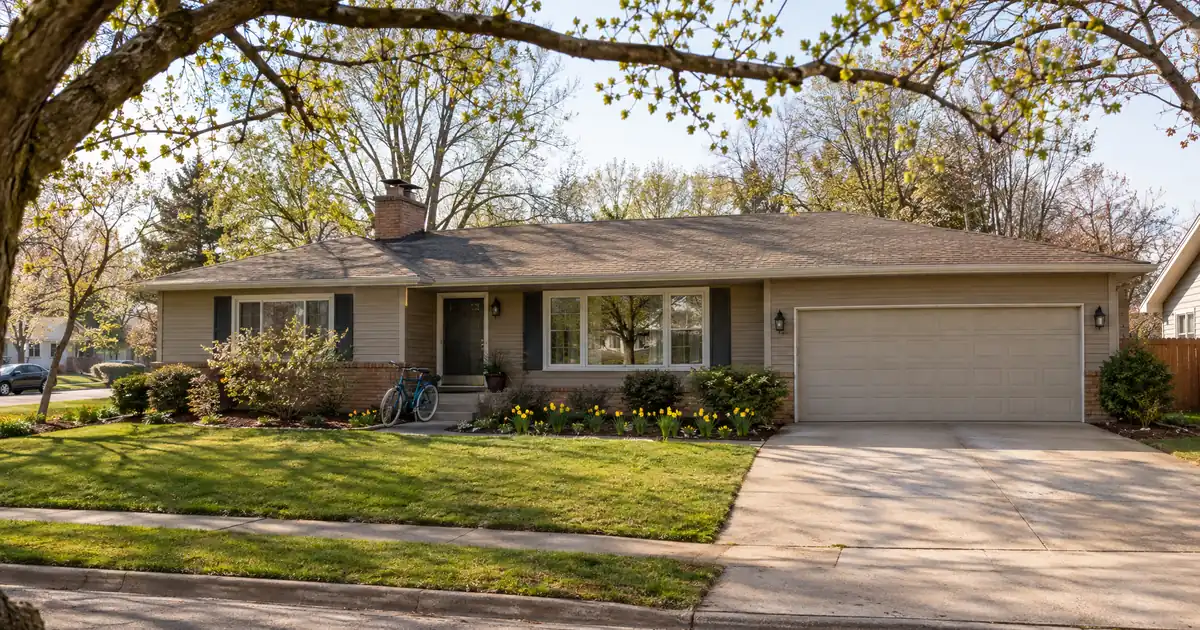
The Quick Read: Yes, self-employed borrowers can get a mortgage when income is proven through bank deposits or property rent instead of tax-return net income, though the right path depends on whether the property is a home you will live in or a rental you will hold. Across Lendmire’s wholesale network, the main routes are bank statement loans for owner-occupied homes and DSCR loans for rentals.
- Bank statement loans typically use 12 months of business or personal deposits, with lender-specific expense factors.
- On a primary residence, select lenders go up to 90% LTV on a purchase or rate-term refinance.
- Owner-occupied cash-out tops out at 80% LTV on a primary residence and 75% on a second home.
- Rentals can run through DSCR, which tests the property’s rent against its own payment.
- Reserves commonly run around 6 months of the housing payment, subject to lender guidelines.
Self-employment rarely means your income is low. It usually means your taxable income is low, and those are different numbers. This article explains how lenders bridge that gap, which path fits which borrower, and where the decision flips.
What your deposits qualify you for.
Alt-doc programs read 12 months of business or personal bank deposits instead of tax returns. Enter your average monthly deposits and see the income a lender would credit you.
The expense factor is set by the lender from your business type and profit-and-loss statement; it is not a number you choose. This widget quotes no rate and no payment.
Program parameters shown update from Lendmire’s centralized guideline source.
Estimate
Illustrative estimate only — not a quote, Loan Estimate, approval, or commitment to lend. Deposit average, expense factor, and housing ratio are editable assumptions; the expense factor a lender applies is set from your business type and documentation. No interest rate or monthly payment is quoted here. Purchase capacity is a simplified illustration and does not account for taxes, insurance, HOA dues, or other debts. Alt-doc income documentation is available on consumer mortgages in the states where Lendmire is licensed for consumer lending; actual terms vary by lender, borrower, and property.
Who Counts as Non-Traditional Income?
Anyone whose paycheck does not arrive as a W-2 can fall into this group. That includes business owners, freelancers, 1099 contractors, commission earners, gig workers, seasonal workers and partial owners who receive K-1 income.
Each profile runs into a different kind of friction:
| Borrower type | Typical paperwork | Common friction |
|---|---|---|
| Business owner | Business bank statements | Expense factor applied |
| 1099 contractor | Personal or business deposits | Irregular monthly amounts |
| K-1 partner | Statements plus ownership proof | Only your share counts |
| Seasonal earner | 12 months of deposits | Lumpy cash flow |
| Rental investor | Lease and property data | Personal income not the test |
The common thread: the lender needs a reliable way to see money coming in. The method changes. The requirement to prove it does not.
Why Tax Returns Understate What You Earn
Traditional personal-income documentation is built to minimize taxable income, so it often undersells the borrower. HousingWire notes that legal deductions such as depreciation, payroll, contractors, equipment, vehicles and a home office lower income on paper. A conventional lender reads that lower number and underwrites the loan around it.
Consider a scenario with deliberately round, hypothetical figures. A consultant deposits about 40% more into the business account over a year than the tax return shows as net profit, because equipment write-offs and a depreciation schedule absorbed the difference. Through a tax-return lens, the borrower looks thin. Through a deposit lens, with an expense factor applied, the borrower looks stronger. Same person. Same business. Different measuring stick.
The gap is not a loophole. It is a documentation mismatch. A bank statement program accepts that deposits tell a more complete cash-flow story, then applies an expense factor so the lender does not treat every dollar of deposits as profit.
“No Tax Returns” Does Not Mean “No Verification”
A bank statement loan on an owner-occupied home is still fully underwritten. The deposits are the verification.
This is where the regulatory frame matters. The Federal Register ATR final rule requires a reasonable, good-faith determination of ability to repay based on verified and documented information for covered consumer mortgages. Stated-income lending is not an option on those loans. The CFPB’s assessment of the rule also found that lenders struggled with Appendix Q, the income documentation standard that applied to self-employed borrowers outside agency programs. That difficulty is part of why alternative documentation lanes grew.
Non-QM simply means the loan sits outside the qualified mortgage definition. It does not mean the lender skipped the homework. A qualified borrower here is reviewed on documented income under the applicable program, subject to lender guidelines.
How Bank Statement Underwriting Works
The lender builds qualifying income from deposits, not from the bottom line of a return. Most programs Lendmire places files with follow the same steps:
1. Lookback. Twelve months of statements from a business account, a personal account, or both.
2. Screening. Transfers between your own accounts, refunds and one-off windfalls are separated from true business revenue.
3. Expense factor. On business accounts, the lender applies a percentage to account for operating costs. It varies by lender, business type and structure. Personal statements are generally read closer to raw deposits. No universal formula exists, and no federal rule sets the percentage.
4. Ownership share. Only your percentage of the business counts.
5. Optional support. An accountant-prepared expense ratio or letter can support a better factor. On an owner-occupied cash-out, the fixed expense ratio carries up to 80% LTV on a primary residence, and an accountant-prepared ratio brings that to 75%. Terms depend on the lender’s guidelines, the property type, the leverage, and a full review of the credit profile.
6. Full file review. Credit, assets, reserves, property and loan purpose still get reviewed. Non-QM is scenario-based lending, and the outcome depends on the combination.
Across a wholesale network, the spread between lenders is real. A few will treat a personal account more generously. The strictest overlays want cleaner separation of business and personal money. This is why the same borrower can look different from one program sheet to the next.
Which Path Fits Which Property?
Occupancy decides the path. The property’s use matters more than the label on the loan.
| Factor | Bank statement loan | DSCR loan |
|---|---|---|
| Typical property | Primary, second home or rental | Non-owner-occupied rental |
| Reviewed on | Documented deposits | Property rent vs. its payment |
| Personal income test | Yes, via deposits | Not the primary test |
| Leverage | Up to 90% LTV on primary purchase | Varies by program |
| Disclosure regime | Owner-occupied: TRID applies | Business-purpose, TRID-exempt |
For a home you will live in, bank statement underwriting is the lane. For a rental, a DSCR loan is reviewed primarily on property-level rental income covering the payment, subject to lender guidelines. A bank statement loan on a non-owner-occupied rental is also possible and is business-purpose, so TRID does not apply to it. Lendmire’s complete DSCR loans guide covers the rental side in detail.
Loan amounts on the alt-doc side generally run from $125,000 to $3,500,000, with reserves commonly around six months of the housing payment.
Why the Rental Lane Skips Personal Income
DSCR loans are designed for non-owner-occupied investment properties. Because they are business-purpose investor loans, they are reviewed differently from a standard owner-occupied mortgage. The CFPB’s Regulation Z interpretation confirms that business-purpose credit falls outside the regulation’s coverage.
The catch: the investment label is not automatic. A cash-out refinance on a rental where the borrower spends the proceeds on personal expenses can look consumer-purpose, and that changes the rules. The purpose of the loan controls, not the property type.
Leverage and Cash-Out: Know the Ceiling
The numbers differ by transaction, so it helps to keep each one separate when planning.
- Primary residence, purchase or rate-term: up to 90% LTV through select lenders; the strongest files earn the top of the range.
- Primary residence, cash-out: up to 80% LTV with a fixed expense ratio, or 75% with an accountant-prepared ratio.
- Second home, cash-out: up to 75% LTV, depending on loan size and credit.
- Investment property, cash-out: tops out around 75% LTV.
- Investment property, purchase: varies by lender on bank statement documentation.
- Asset depletion alternative: qualifying from liquid assets runs to about 80% LTV on a primary residence.
All of this is subject to lender guidelines, credit and property review. The cash-out ceiling is never the purchase ceiling.
Which Documentation Path Fits Your Situation?
This is where the decision flips depending on the borrower profile.
Heavy write-offs, steady deposits. Bank statements usually fit best. The deposit history shows what traditional personal-income documentation hides.
Strong savings, thin income. Asset depletion may work better than deposits. Lendmire’s piece Can a Self-Employed Owner Qualify for a Mortgage on Strong Savings and Low Taxable Income? goes deeper.
New business. A short history is the hardest case. Lenders want to see continuity, and prior experience in the same field helps. Expect more scrutiny and possibly lower leverage.
Declining or irregular income. Underwriters look at the trend, not just the average. Seasonal income gets spread across the year.
Multiple businesses or mixed W-2 and 1099 income. Each stream is documented on its own terms and combined. Commingled accounts can trigger an expense factor on a personal account, so clean separation helps.
Buying a rental. Skip the income debate. DSCR separates the property from the borrower. The honest tradeoff: that flexibility usually costs more than a fully documented loan, so a borrower who can qualify conventionally on a single rental should compare both. Once financed rentals pile up, conventional options tend to run out and DSCR becomes the practical path.
Preparing Before You Apply
Start months ahead. A short checklist helps:
- Funnel business revenue into one business account and pay yourself from it on a regular schedule.
- Avoid large unexplained deposits; lenders will ask where they came from.
- Keep personal and business spending apart.
- Gather 12 months of statements, a current profit-and-loss, and ownership documents if you hold a partial share.
- Ask your accountant whether a prepared expense ratio is worth the effort for your file.
- Check credit and build reserves; both affect leverage.
What If You Are Declined?
A decline is usually a fit problem, not a verdict. Common causes: commingled accounts, income that fell sharply in recent months, too many transfers counted out as ineligible, or a short self-employment history. Fixes include cleaner deposit patterns, a CPA letter, lower leverage, or switching documentation type. Because each lender weighs these differently, a file that stalls with one program can look different under another.
Myths vs. Reality
Myth: no-doc means no verification. Reality: income is documented through deposits, or the property’s rent on rentals.
Myth: non-QM means predatory. Reality: it only means outside the QM definition. Ability-to-repay still applies to consumer loans.
Myth: the federal rule shut self-employed borrowers out. Reality: the CFPB’s assessment found no impact for agency-eligible self-employed borrowers and a decline in approval of about two percentage points for those who were not.
Key Terms Defined
Non-QM: a mortgage that sits outside the qualified mortgage definition, usually with alternative documentation.
Expense factor: the percentage a lender subtracts from business deposits to estimate operating costs.
Add-back: a non-cash deduction, such as depreciation, that a lender may count back into income.
DSCR: the property’s rent divided by its monthly debt obligation, used to qualify rental loans.
Asset depletion: qualifying income derived from liquid assets rather than deposits.
Frequently Asked Questions
Can I get a mortgage without relying on traditional personal-income documentation?
Yes, through programs that qualify on bank statements instead of returns. The loan is still fully underwritten, with credit, reserves and property reviewed. Qualification runs on documented income under the applicable program, subject to lender guidelines.
How many months of statements do I need?
Most programs in Lendmire’s network use 12 months, from business accounts, personal accounts, or both. Some market surveys describe lookbacks of 12 to 24 months. Which one applies depends on the program.
Do I need to use a bank statement loan to buy a rental?
Usually not. Rentals can qualify through DSCR, which tests the property’s rent against its payment. Bank statement documentation fits better when you will live in the property.
What is the maximum leverage on cash-out?
On a primary residence, up to 80% LTV with a fixed expense ratio, or 75% with an accountant-prepared ratio. On a second home, up to 75%. Investment property cash-out tops out around 75%. Terms depend on the lender’s guidelines, the property type, and a full review of the credit profile.
Does a business-purpose rental loan always avoid consumer rules?
No. The purpose of the loan controls, not the property label. A rental refinance used for personal spending can be treated as consumer-purpose.
If you are self-employed and want to see how the numbers work, Lendmire can help you compare bank statement loan options based on your deposits, the property, credit profile, leverage, and your goals. Reach the team at 828-256-2183 or request a quote. Tax treatment varies; consult a qualified professional.
The investors who do best here treat documentation as a project that starts months before the application, not a scramble after the offer is accepted.
For current guidelines and terms, see Lendmire’s self-employed mortgage programs page.
About Lendmire
Lendmire (NMLS# 2371349) is a mortgage broker licensed for consumer lending in 16 states. Bank statement, P&L-only, 1099-only and asset-based mortgages for self-employed and high-net-worth borrowers are arranged through wholesale lenders on primary residences, second homes and investment properties; every file is underwritten by the lender under its program guidelines. Scotsman Guide named Lendmire a Top Mortgage Workplace in both 2025 and 2026.
Get Started
Ready to find the right loan for you?
In about 30 seconds you can review financing options available for your home or investment property. No commitment required.
Informational only. Not a Loan Estimate, approval, or commitment to lend. Program availability and eligibility are subject to lender guidelines, credit approval, property review, and underwriting.
References
1. HousingWire: non-QM loans guide
2. Federal Register: ATR final rule
3. CFPB’s assessment of the rule
This article is part of Lendmire’s bank statement loan program — full qualification details, guidelines, and scenarios live on the program page.
Related reading: Can You Get a Self-Employed Mortgage When Tax Returns Show Low Income? · Can You Get a Self-Employed Mortgage With a Short Income History? · Can You Prove Income for a Self-Employed Mortgage Without Tax Returns?
Brandon Miller
Founder & CEO, Mortgage Loan Originator, Lendmire LLC
- Mortgage Loan Originator · NMLS# 1129696 · Verify on NMLS Consumer Access
- North Carolina Real Estate Broker · License# 343312 · Verify on NCREC
- North Carolina Insurance Producer · License# 19053198 · Property, Casualty, Life, Health · Verify on NAIC SBS
- Lendmire LLC · Firm NMLS# 2371349 · Verify firm licensure
Legal disclosures. Lendmire (NMLS# 2371349) is a state-licensed mortgage brokerage that arranges financing through wholesale lender relationships. Lendmire is not a direct lender, depository institution, or registered financial advisor. The discussion above is general informational content about real estate financing — it is not financial, legal, or tax advice, and readers should consult licensed professionals for guidance on their individual circumstances. Loan inquiries are subject to lender underwriting; this article does not represent a commitment to lend. Loan terms, rates, and qualification standards vary by borrower, property, and state, and are subject to change at any time. Equal Housing Opportunity. NMLS Consumer Access: nmlsconsumeraccess.org.