
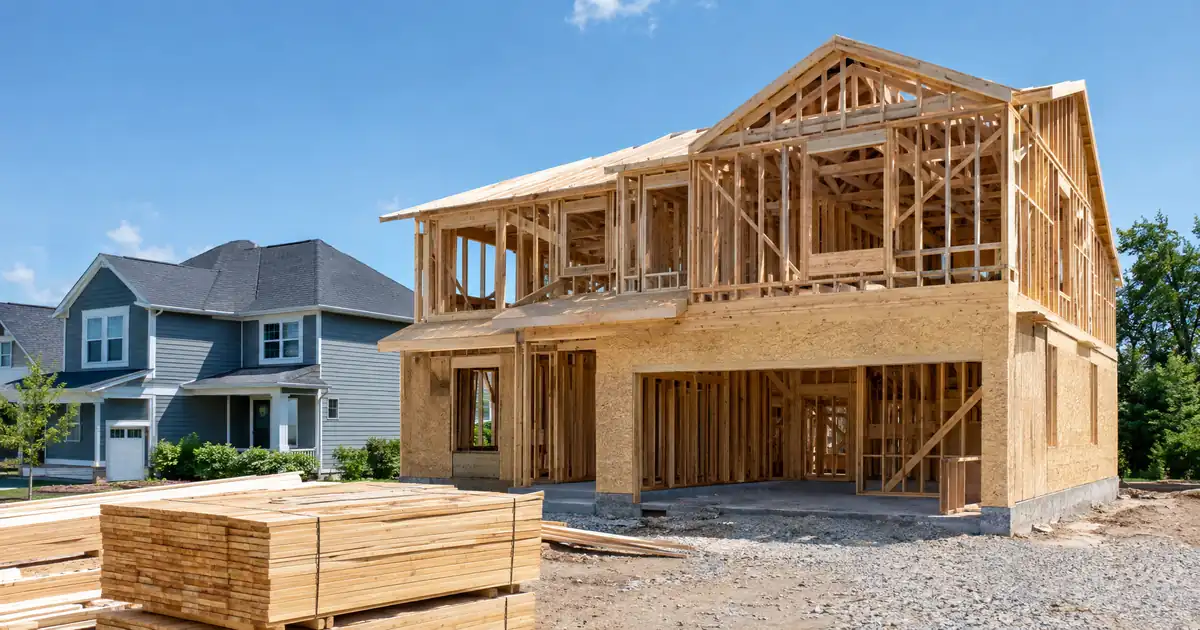
The Quick Read: As of September 28, 2026, borrowing costs are climbing, and no buyer gets to negotiate with the bond market. What you can still shape is the cost of running the house. Builders are discounting and incentives are widespread, so this fall rewards buying a home that’s cheap to operate, not just one that’s cheap to finance.
That’s the column in three sentences. The rest is the evidence, plus what I’d do with it if I were writing an offer this month.
What Changed in September?
Mortgage rates went back above 7% in Freddie Mac’s survey for the week of September 24. The Fed raised its target on September 16 for the first time since 2023. Builders are also discounting harder while buyers hold back. Each of those moves pushes up the cost of money, and none of them is a buyer’s call.
Start with the survey most people quote. Freddie Mac’s weekly survey put the 30-year fixed at 7.03% for the week of September 24, 2026, up from 6.95% the week before. That’s 8 basis points in one week. A basis point is one-hundredth of a percentage point, so 100 of them make a full point. Freddie Mac’s survey also shows the 30-year was 6.30% a year earlier, which puts it 73 basis points higher over twelve months. Freddie Mac’s 15-year average rose 16 basis points to 6.42%, from 6.26%.
NPR reported on September 24 that this was the first reading above 7% in 20 months. Fox Business reported the same day that the prior week’s move, up to 6.95%, was a 19-basis-point jump, the largest one-week rise since April 2025. Two big steps up, back to back.
One caveat on scope. Freddie Mac’s survey tracks conventional, conforming, fully amortizing purchase loans. It doesn’t cover non-QM loans, so it’s a benchmark, not a price tag for every borrower.
The Mortgage Bankers Association tells a similar story from a different angle. The MBA’s weekly applications survey, released September 23 for the week ending September 18, showed its 30-year conforming contract rate rising to 7.12% from 6.97%. Purchase applications fell 1% on a seasonally adjusted basis, and the unadjusted purchase index sat 11% below a year earlier. The refinance index fell 3% and ran 62% below last year. Buyers are pulling back, and owners with existing loans are mostly staying put.
Notice that the MBA’s survey reading and Freddie Mac’s weekly figure aren’t the same number. They come from different surveys that cover different days. That gap is worth keeping in mind later, when we get to the timing of your financing.
Then there’s the Fed. The Federal Reserve’s implementation note dated September 16, 2026, set the federal funds target range at 3.75% to 4.00%, a 25-basis-point increase. CNBC reported a 12-0 vote and noted that updated projections point to the possibility of another increase this year. The Fed had held the range at 3.50% to 3.75% since December 2025.
Here’s a common misreading. The Fed sets a short-term rate, and mortgage rates follow the 10-year Treasury yield more closely, as NPR pointed out on September 24. Fox Business reported that day that the 10-year yield was near a 19-year high. So the hike is context, not the whole cause.
On the sales side, the numbers show a market that’s slowing. NAR’s existing-home sales data for August, reported by HousingWire on September 10, showed sales falling 2.0% to a 3.98 million annual rate. Inventory stood at 1.62 million homes, or 4.9 months of supply. The median existing-home price was $429,100, up 1.6% from a year earlier.
New construction looks different. The Census Bureau and HUD’s new residential sales report, released September 24, showed August new-home sales at a 684,000 annual rate. That was up 6.4% from July, but Census says the change isn’t statistically significant. The median new-home price fell 5.8% from a year earlier to $393,700, and supply ran 8.5 months.
Builders feel it. The NAHB/Wells Fargo Housing Market Index fell 3 points to 32 in September, a 12-month low. Sixty-six percent of builders used incentives, up from 63% in August. Thirty-eight percent cut prices, up from 35%, and the average cut was 6%. HousingWire reported that the buyer-traffic gauge sat at 23 and that builders are leaning on rate buydowns and closing-cost help.
The Payment Isn’t Yours to Set
The mortgage payment on a new purchase is mostly set by forces no buyer controls: the 10-year Treasury, the Fed, and the market averages that follow them. Price and down payment still matter. But the cost of money is what it is on the day you lock. The monthly cost you can still shape is what the house costs to run.
Think about the full monthly cost of owning a home. There’s principal and interest. There are property taxes, homeowners insurance, and any association dues. Lenders look hard at that bundle, subject to their guidelines.
Then there’s a second bundle nobody underwrites: electricity, gas, water, and the furnace that dies in January. None of it lands on the loan file. All of it comes out of the same checking account.
Here’s the catch. That second bundle is the only part of the monthly cost where the house itself makes a big difference. If a rate moves from 6.30% to 7.03%, the principal-and-interest line on the same loan goes up. Nothing about the house changed. The bill for heating and cooling it, though, depends almost entirely on the house.
So the lever has moved. Last spring, a buyer might have focused on shaving the rate. This fall, with the survey average up 73 basis points on the year, the rate is largely out of anyone’s hands. The running cost isn’t.
Why Does Energy Cost Carry More Weight Now?
Both of the big recurring costs of owning are leaning the wrong way. Borrowing costs are up on the year. Meanwhile, federal energy forecasters have been flagging electricity prices that rise faster than inflation. When the financing line gets heavier, the lines you can shrink deserve more attention than they did a year ago.
The energy data I’d lean on is directional, not precise. The U.S. Energy Information Administration’s Short-Term Energy Outlook, published in 2025, said electricity price increases would outpace inflation through 2026. The American Gas Association’s July 29, 2026 summary of EIA’s 2026 Annual Energy Outlook says electricity is projected to stay costlier than natural gas over the long term. Treat both as a trend line, not a forecast for your bill.
I’m also not going to hand you a payback period for any upgrade. Nobody should, without an energy audit on the actual house. What I will say is that efficiency works as a system, and the order matters.
- The shell comes first. Insulation, air sealing, and windows decide how much heating and cooling the house needs at all.
- Equipment comes second. The age and type of the heating, cooling, and water-heating systems decide how much energy each unit of comfort costs.
- Everything else comes last. Appliances, lighting, and smart controls help, but they can’t fix a leaky attic.
Fuel type matters too. If electricity keeps getting more expensive relative to gas, as the EIA outlook suggests, the mix of systems in a house shapes how its running cost moves over time. That doesn’t make one fuel “right.” It means you should know what you’re buying.
New Construction or Resale This Fall?
New construction is where a buyer has the most room to negotiate right now. Census data show new-home prices falling on the year while resale prices inch up, and builders are carrying more supply. Newer homes are also generally built to more recent energy codes. That can put some efficiency into the base price instead of onto your to-do list.
Here’s the side-by-side, pulled from the same August reports from Census and NAR.
| Measure (August 2026) | New homes | Existing homes (NAR) |
|---|---|---|
| Median price | $393,700 | $429,100 |
| Year-over-year price change | Down 5.8% | Up 1.6% |
| Months of supply | 8.5 | 4.9 |
Read that table carefully. These are national medians, and they compare different mixes of houses. They aren’t typical of any one market, and they don’t mean new homes are cheaper everywhere. Still, the direction is clear: sellers of new homes are under more pressure than sellers of existing ones.
Resale isn’t a bad bet, just a different one. An older house can be a real opportunity if the price reflects its drafty windows and aging furnace. The risk is buying the inefficiency without the discount. That’s why the inspection and the utility history matter more this fall than they did when money was cheaper.
Buydown or Better Build?
When a builder offers incentives, ask whether some of that money can go into the house instead of into the rate. A rate buydown lowers the cost of money, sometimes only for the first few years. An efficiency upgrade lowers the cost of running the home for as long as you own it. Both have value. They just pay off on different clocks.
A quick definition. A buydown is money paid upfront, often by a builder or seller, to reduce the borrower’s interest rate. A temporary buydown lowers the rate for the early years and then steps back up. A permanent buydown lowers it for the life of the loan.
This one’s a genuine toss-up for a lot of buyers. If you expect to refinance when rates fall, a permanent buydown loses its value the day you refinance. Better insulation or a newer heating system stays with the house. If you expect to keep the loan for a long time, though, the permanent buydown looks stronger. And with the Fed signaling a possible further increase, a future refinance is a hope, not a plan. The refinance index running 62% below last year tells you how many owners are waiting on that hope right now.
My lean: get both options priced in writing, side by side. Ask the builder what the upgrade package costs at their price, not retail. Ask what the buydown actually does to the rate, and for how long. Then decide which one you’d rather have in year seven. The lender still reviews the whole deal, including how incentives are structured, subject to its own guidelines.
My Take
Eighteen years in lending has taught me one thing about rate cycles: the rate is the number buyers watch hardest and control least. Everyone wants to time it. Very few do.
So my read is simple. Stop shopping for a more affordable house to finance. Shop for a more affordable house to own.
NPR made a fair point on September 24: the 7% line has no literal meaning beyond the psychological one. A buyer who was comfortable at 6.95% shouldn’t panic at 7.03%. A buyer waiting for the survey average to fall back below 6% might wait a long time. The Fed just hiked and left the door open to another one.
What buyers can do is stack the parts they control: the price, the incentives, and the running cost of the house. Those three are more negotiable this fall than they’ve been in a while, especially on new construction, where more than a third of builders cut prices in September.
I’d also think about the next buyer. If electricity keeps outpacing inflation, as EIA projected, I’d expect future buyers to ask harder questions about what a house costs to run. An efficient home should be easier to sell in that world. That’s my opinion, not a data point, and I’d weigh it accordingly.
Now the risk side, honestly. Efficiency isn’t a reason to stretch your budget. The financing line still dominates the monthly cost for most buyers. Paying a big premium for green features you won’t live with long enough to benefit from is its own mistake. And spending your cash cushion on upgrades right before closing can create problems with the loan file. Efficiency is a tiebreaker and a negotiating chip. It isn’t a substitute for buying within your means.
What I’d Do Now
Price the whole monthly cost of the house, not just the loan, and push on the parts you can move. Get the utility history. Put energy items on the inspection. On new builds, make builders price upgrades against buydowns. And understand your rate lock before you need it, because in a rising market, timing mistakes cost real money.
Here’s the list I’d work through this fall:
1. Ask for the bills. Request twelve months of utility statements on any resale home. A full year shows both the summer and winter peaks.
2. Inspect for energy, not just defects. Ask the inspector about the age of the heating and cooling systems, the water heater, attic insulation, windows, and ductwork. Those items drive the running cost.
3. Get the builder’s incentive menu in writing. Price efficiency upgrades against a rate buydown and closing-cost help. Compare them on the same page.
4. Learn how locks work. A rate lock holds a quoted rate for a set period while the loan is processed. Floating means you take whatever the market does until you lock. With the survey average up two sizable weeks in a row and the Fed signaling more, my rule is plain: if you like the terms, lock them.
5. Compare quotes from the same day. A quote from Monday and a quote from Thursday aren’t comparable in a market moving this much. The MBA and Freddie Mac surveys differed in the same season for exactly that reason.
6. Protect your cash cushion. Hold off on big upgrade spending until after closing. Lenders review your assets, and large moves mid-process can complicate the file.
If you’re self-employed, expect the documentation side to matter as much as the rate. Here’s why lenders ask for bank statements on a home loan, and what they’re looking for when they do.
The program matters too. Different borrowers fit different structures, from traditional documentation to options built for less conventional income, all subject to lender guidelines and lender overlays. You can review the current loan options, where the guidelines themselves live.
If you’re weighing a purchase this fall, Lendmire can walk you through how the current programs fit your file. Call 828-256-2183 to start the conversation.
For the end-to-end picture of how these loans work — qualification, structures, and the full process — see Lendmire’s complete DSCR loans guide.
Frequently Asked Questions
Have mortgage rates climbed back above a key milestone right now?
Yes, by the most-quoted benchmark. Freddie Mac’s survey put the 30-year fixed at 7.03% for the week of September 24, 2026, the first reading above 7% in 20 months. Keep in mind that survey covers conforming purchase loans only. Individual borrowers see different terms based on their loan type, credit, and the day they lock.
Does the Fed’s September hike mean mortgage rates will keep rising?
Not directly. The Fed raised its short-term target on September 16, but mortgage rates track the 10-year Treasury yield more closely. CNBC reported that the Fed’s projections point to a possible further increase this year. That adds pressure, but nobody can promise which way the 10-year moves next.
Do my utility bills count when a lender qualifies me?
Generally, no. Lenders focus on the payment, property taxes, insurance, association dues, and your other debts, subject to their guidelines. Electricity and gas usually don’t appear on the file. That’s exactly why you have to price them yourself before you commit.
Is a new home automatically more energy efficient than a resale?
Not automatically. Newer homes are generally built to more recent energy codes, which helps. But features vary widely by builder and by package. Ask for the specs on insulation, windows, and systems, and compare them the way you’d compare price.
Should I take a builder’s rate buydown or ask for efficiency upgrades instead?
It depends on how long you’ll keep the loan. A permanent buydown pays off if you hold the mortgage for years, while an upgrade pays off for as long as you own the house. If you think you might refinance down the road, the upgrade tends to hold its value better. Get both priced in writing before you choose.
About Lendmire
Lendmire (NMLS# 2371349) is a non-QM mortgage brokerage arranging DSCR investor loans in 41 markets — 40 states plus Washington, D.C. — and consumer mortgage programs, including bank statement, HELOC and down payment assistance options, in 16 states through wholesale lenders. Lendmire is the broker, never the lender; every file is underwritten by the lender under its own guidelines. Scotsman Guide named Lendmire a Top Mortgage Workplace in both 2025 and 2026.
Get Started
Ready to find the right loan for you?
In about 30 seconds you can review financing options available for your home or investment property. No commitment required.
Informational only. Not a Loan Estimate, approval, or commitment to lend. Program availability and eligibility are subject to lender guidelines, credit approval, property review, and underwriting.
References
1. Freddie Mac Primary Mortgage Market Survey
2. MBA Weekly Applications Survey, September 23, 2026
3. Federal Reserve implementation note, September 16, 2026
5. NAHB/Wells Fargo Housing Market Index
This article is part of Lendmire’s Mortgage News series — every loan program’s qualification details, guidelines, and scenarios live on the loan options page.
Related reading: Save Energy In Your New Home: What Rising Rates Change This September · Eco-friendly Home Features Worth Negotiating As Builders Push September Incentives · Down Payment On A House, September 2026: Rising Rates, Builder Incentives
Brandon Miller
Founder & CEO, Mortgage Loan Originator, Lendmire LLC
- Mortgage Loan Originator · NMLS# 1129696 · Verify on NMLS Consumer Access
- North Carolina Real Estate Broker · License# 343312 · Verify on NCREC
- North Carolina Insurance Producer · License# 19053198 · Property, Casualty, Life, Health · Verify on NAIC SBS
- Lendmire LLC · Firm NMLS# 2371349 · Verify firm licensure
Compliance and disclosures. Lendmire (NMLS# 2371349) is a licensed mortgage broker and is not a direct lender, depository institution, financial advisor, or tax professional. Content in this article is general market analysis and educational information — not financial, legal, or tax advice for any specific situation. Lendmire does not guarantee loan approval; every transaction is subject to underwriting by the funding lender. Mortgage pricing and loan program guidelines are subject to change at any time without notice and vary by borrower characteristics, property type, and state regulations. Lendmire complies with Equal Housing Opportunity. Licensure verification: NMLS Consumer Access.