
The Quick Read: Yes, but only on a two- to four-unit home you plan to live in, and only after you pass a few tests. Part of the rent can count toward your income. You usually need landlord capability and six months of your own cash reserves first.
How Does VA Count Rent From the Other Units?
VA lets a lender credit part of the rent from the other units toward your qualifying income. It does not count all of it. The lender applies a reduction to allow for vacancy and upkeep. Your own unit never earns rent, because you live in it.
VA payment estimate
Starting assumptions reflect an example price with no down payment and a first-use funding fee. Replace them with your own figures.
Editable benchmark: 7.32% as of October 22, 2026 · Freddie Mac 30-year average via FRED®. A conventional market reference, not a VA loan quote.
Illustrative starting assumptions: a $350,000 price, no down payment with full entitlement, a first-use funding fee financed into the loan, a thirty-year term at the current Freddie Mac benchmark, and property taxes and insurance estimated at typical national rates. Every field is editable.
Illustrative estimate only — not a Loan Estimate, approval, quote, or commitment to lend. The rate field carries the weekly Freddie Mac thirty-year conventional benchmark, a market reference and not a VA loan quote; your rate is set by the lender at lock. The funding fee follows VA’s published table for the use and down payment entered; the residual-income figure is VA’s guideline for the region and family size, and the rough residual shown subtracts only the housing payment and the debts entered, while VA also deducts taxes, maintenance and utilities. Taxes, insurance and dues are editable estimates; closing costs are not included. Licensed in sixteen states for consumer mortgages. Lendmire is not affiliated with or acting on behalf of the Department of Veterans Affairs.
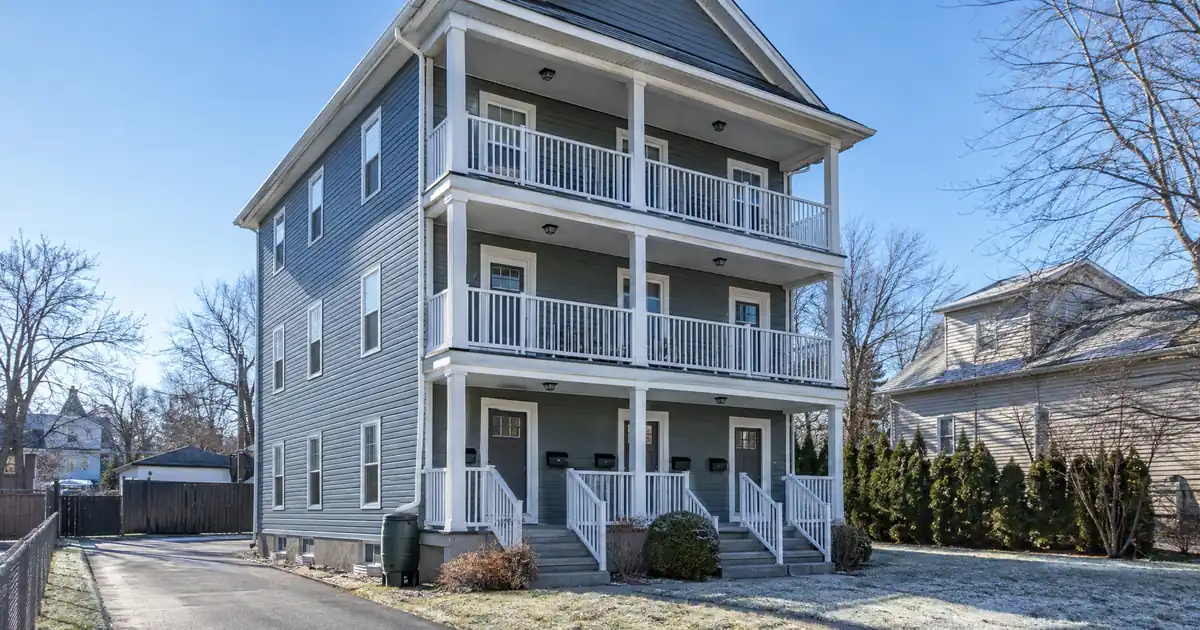
Think of a duplex. You live in one side, and a tenant rents the other. A lender may count a portion of that tenant’s rent when it checks whether you can carry the payment. That can make a multi-unit home qualify when the same budget would not stretch to a single-family house at the same price.
Across the wholesale programs Lendmire places VA files with, the base terms stay the same. VA loan programs offer 100% financing with no down payment, as long as the price is not above the appraised value. They carry no mortgage insurance. There is no VA loan limit with full entitlement. Those wholesale programs start at a 580 decision score, and they are subject to lender guidelines and full file review. Rent credit sits on top of that base. It does not replace any of it.
Notice what rent credit is. It is a qualifying tool. It is not a promise that the building will pay for itself, and it does not make the property an investment loan. The loan is still for the home you live in.
What Has to Be True Before the Rent Counts?
Three conditions come first: you live in one unit, you can show you can manage rental property, and you hold cash reserves of your own. If any of the three is missing, the lender can set the rent aside and the file is reviewed against your income alone.
Condition one: you live there. VA will not back the purchase of a building you plan to rent out entirely. You certify that you intend to occupy one of the units. Read that certification closely before you sign it. It is a federal statement, not a formality.
Condition two: landlord capability. The rule for multi-unit homes in 38 CFR 36.4340 says prospective rent is not considered unless you can show a reasonable likelihood of success as a landlord. Experience helps. Without any, rent credit is unlikely to be used. Some lenders will accept a professional property manager as the answer, so ask yours in writing.
Condition three: six months of reserves. The same rule requires verified cash reserves that could carry the full monthly payment for at least six months without any rent. That payment means principal, interest, taxes and insurance. The test assumes the tenants pay you nothing.
This is a real cash need at application. It is not a closing cost, but the money has to be there. An older edition of the VA Lenders Handbook, Chapter 4, lays out which funds count. Equity in the property does not count. Cash from a VA refinance does not count. Gift funds cannot be used. Your lender will confirm what applies today.
Yes, “no down payment” and “six months of reserves” can sit in the same file. They are different pots of money.
Where Does the Rent Figure Come From?
The lender starts with the leases on the other units. If a unit has no lease, the appraiser’s fair-rent opinion fills the gap. On small multi-unit homes, that opinion comes from a rent schedule that is part of the appraisal.
Lenders also have to understand the local rental market. The current VA Lenders Handbook, Chapter 4 says a lender may use rent only when the borrower has a reasonable likelihood of continued success, given the strength of the local market. The lender must document its reasoning on the VA loan analysis form.
Two practical points follow:
- A lease is not always required. Federal notes say that where the rental market is very strong, a missing lease should not automatically bar the rent credit. Lender practice varies on this.
- A low appraisal rent means less credit. If the appraiser’s figure comes in under what the seller claims, the lender uses the lower number.
How Does Rent Change Your Qualifying Math?
Rent credit improves your debt-to-income ratio, which is your monthly debts divided by your gross monthly income. But the ratio is not the controlling test on a VA loan. Residual income is.
Here is how the tests work together.
1. Debt-to-income ratio. The lender adds your monthly housing payment and other long-term debts, then divides by gross income. Counted rent helps this number.
2. Residual income. The lender checks how much monthly cash you have left after housing, debts and basic living costs. VA publishes the amount it expects, based on family size and region.
3. The 41% guideline. VA treats 41% as a guideline, not a cap. A ratio above it can still work when residual income sits well above the table. A ratio at or under it can still fail if residual income falls short.
Picture the same borrower two ways. First, the lender qualifies the borrower on income alone, for a duplex. The ratio runs high and the residual income looks thin. Then the lender adds the counted portion of the other unit’s rent. The ratio drops and the leftover monthly cash rises. That shift is what rent credit does. It does not change the loan terms.
Even when you clear both tests, approval is not ensured. The lender weighs the whole file, including credit, assets, job history and the property itself.
Which Situation Are You In?
The rules shift with the kind of rent you are counting. Many online answers blur these cases together, and that is how borrowers end up confused.
| Your situation | Where the rent figure comes from | What it does |
|---|---|---|
| Buying a 2-4 unit home to live in | Leases or appraiser’s rent opinion | Partial credit toward income |
| Buying a multi-unit with vacant units | Appraiser’s rent opinion | Partial credit, lender may ask more |
| Buying a new home, renting your old one | Your lease on the old home | Offsets the old payment only |
| Already own other rentals | Two years of history on traditional personal-income documentation | Counted as income with reserves |
| Buying a home and renting a room | Separate boarder rules | Lender-specific treatment |
Three notes on that table.
The home you are leaving behind. The rent can cancel out the old payment, but it cannot be added to your income. Reserves on the old home are not required. Renting a place before you buy does not turn that rent into income by itself.
Rentals you already own. The rule text in Cornell’s copy of 38 CFR 36.4340 calls for three months of reserves on each such rental. Tax treatment can depend on your situation; borrowers should speak with a qualified tax professional before relying on any deduction or credit.
Boarder income. This is its own category. Ask your lender how it documents a roommate or boarder.
If you already own a multi-unit and are weighing a refinance instead, Lendmire’s piece Does Rental Income From Other Units Help a VA Cash-Out? covers that different case.
Rule or Overlay? Sorting Out the Conflicting Advice
Online answers often disagree on reserves and landlord experience. Part of the reason is that they mix two things: what VA requires and what an individual lender adds. A lender is allowed to be stricter than VA. That stricter layer is called an overlay.
| Item | VA rule | Lender overlay possible |
|---|---|---|
| Occupy one unit | Yes | Rarely stricter |
| Landlord capability shown | Yes, for rent credit | How it is proven varies |
| Six months of reserves | Yes, when subject rent is used | Amount or source may be stricter |
| Part of rent only | Yes | Size of the reduction varies |
| Extra property tests on 3-4 units | Varies by lender | Some lenders add them |
| 580 decision score | VA sets no minimum | Wholesale programs start there |
One point needs care. Some sources claim reserves apply only when rent is not used. The rule text says the opposite: reserves are required when rent from the multi-unit subject property is used. If a lender tells you something different, ask for the reasoning in writing. It may be an overlay, or it may be a mistake.
Why Does Rent Sometimes Help Less Than You Expect?
Rent credit is easy to overestimate. Here are the common reasons the boost comes out smaller than hoped.
- Only part of the rent counts. The reduction is built in on purpose.
- The appraiser’s rent is lower than the seller’s. The lender uses the appraiser’s number.
- A unit sits vacant. With no lease and a soft market, the lender may count little or none of that rent.
- You miss a threshold test. No landlord capability or short reserves means the rent is set aside.
- Your other debts are heavy. Counted rent cannot fix a car loan and credit card balances that crowd out residual income.
- The lender’s overlay is tighter than VA’s. The same file can look different at a different lender.
The stronger plan treats counted rent as a cushion for qualifying, not as the budget. Real tenants leave. Real roofs leak. Plan for a vacant month and a repair bill, because your payment does not shrink when a unit goes empty.
One honest tradeoff: a multi-unit can stretch your buying power, but it also makes you a landlord. Some buyers love that, and some find out they don’t.
Can You Qualify Without the Rent?
Yes. Plenty of borrowers qualify on income alone and treat the rent as extra cash flow after closing. That route skips the landlord-capability test and the rent-based reserve requirement. You still pass the usual VA tests, and your lender may still ask for reserves on a larger building, so ask. Exact terms depend on the lender’s guidelines, property type, leverage, and a full review of the borrower’s file.
FHA also allows rent credit on two- to four-unit owner-occupied homes, with its own rules. If you are comparing programs, Lendmire’s piece Does Rent From Other Units Help You Qualify for an FHA Cash-Out? shows how that program handles rent.
What Changes After Closing?
Your occupancy promise does not end at closing. Ask your lender how the rules treat a military move, a deployment or a change of orders. Those questions are better asked before you sign than after.
Your loan terms do not change when a tenant leaves. The payment stays the same whether the other units are full or empty. That is why a reserve cushion matters beyond the six-month test.
If you plan to hand management to a professional, price that into your own budget. The qualifying math may not reflect it.
Questions to Ask Your Lender
Put these in writing before you pay for an appraisal:
1. Do you count rent from the other units on my purchase, and what portion?
2. Do you accept a property manager in place of my own landlord experience?
3. How many months of reserves do you require, and which funds count?
4. Which documents do you need for the rent: leases, the appraisal rent schedule, or both?
5. Do you apply any rules stricter than VA’s on a three- or four-unit home?
6. What happens to my file if the appraiser’s rent comes in low?
Next Steps
If you are buying a home and want to see whether a VA loan fits your file, Lendmire can help you compare the options and what each one asks of the file. Bring your certificate of eligibility if you have it, your income documents, and a clear picture of your cash reserves.
Key Terms Defined
Certificate of eligibility (COE): The VA document that confirms you qualify for the program based on your service.
Residual income: The monthly cash left after your housing payment, debts and living costs. On a VA loan, it is the controlling test.
PITI: Principal, interest, taxes and insurance, the four parts of a monthly mortgage payment.
Reserves: Your own cash set aside after closing, enough to carry the mortgage payment for a stated number of months.
Overlay: A lender rule that is stricter than the VA program rule.
Offset: Rent used to cancel out a payment instead of being added to your income.
Entitlement: The amount of guaranty VA stands behind. Full entitlement means no VA loan limit applies. With remaining entitlement, a down payment may be required, so speak with a loan officer.
Frequently Asked Questions
Can I use rent from the property I am buying to qualify for a VA loan?
Yes, on a two- to four-unit home you will live in, if you show landlord capability and verified reserves. Only part of the rent counts. Your lender decides how much, based on leases or the appraiser’s rent opinion.
Do I need landlord experience?
Experience is the cleanest way to show capability. Federal notes say that without any, rent credit is unlikely to be used. Some lenders accept a professional property manager, so ask yours before you apply.
Can I buy a fourplex with VA and rent every unit?
No. You must live in one unit. VA will not back a purchase of a building you plan to rent out entirely, and you certify your occupancy intent when you apply.
Does rent from my old house count as income when I buy a new one?
Generally it offsets the old payment instead. It cannot be added to your effective income, and reserves on the old home are not required. A lender may need a lease and may weigh how easy the old home is to rent.
If I meet the 41% ratio, am I approved?
No. VA treats 41% as a guideline, and residual income is the controlling test. A higher ratio can still work with strong residual income. A lower one can still fail if leftover cash is thin. Every parameter here is subject to lender guidelines and full file review, and nothing is a commitment to lend.
For your own numbers, request a scenario review with Lendmire.
About Lendmire
Lendmire is a mortgage brokerage (NMLS# 2371349) licensed for consumer mortgage lending in 16 states, arranging FHA, VA, conventional and jumbo purchase and refinance loans through a wholesale lending network. Eligibility is determined by the lender on each file. Scotsman Guide named Lendmire a Top Mortgage Workplace in both 2025 and 2026.
Get Started
Ready to find the right loan for you?
In about 30 seconds you can review financing options available for your home or investment property. No commitment required.
Informational only. Not a Loan Estimate, approval, or commitment to lend. Program availability and eligibility are subject to lender guidelines, credit approval, property review, and underwriting.
References
2. VA Pamphlet 26-7, Chapter 4 (older edition)
3. VA Pamphlet 26-7, Chapter 4, Credit Underwriting
4. Cornell LII, 38 CFR 36.4340
This article is part of Lendmire’s VA loan program — full qualification details, guidelines, and scenarios live on the program page.
Related reading: Refinancing a Conventional Loan Into a VA Loan · How to Refinance Into a VA Cash-Out From Another Loan Program · Can an Existing VA Loan Get a VA Cash-Out on an Unapproved Condo?
Brandon Miller
Founder & CEO, Mortgage Loan Originator, Lendmire LLC
- Mortgage Loan Originator · NMLS# 1129696 · Verify on NMLS Consumer Access
- North Carolina Real Estate Broker · License# 343312 · Verify on NCREC
- North Carolina Insurance Producer · License# 19053198 · Property, Casualty, Life, Health · Verify on NAIC SBS
- Lendmire LLC · Firm NMLS# 2371349 · Verify firm licensure
Important disclosures. Lendmire (NMLS# 2371349) is a licensed mortgage brokerage. Lendmire is not a direct lender, depository institution, or financial advisor. All loan inquiries are subject to lender underwriting; this article does not constitute a commitment to lend. Rates, terms, and program guidelines are subject to change without notice and vary by borrower profile, property type, and state. Information in this article is general in nature and is not financial, legal, or tax advice. Equal Housing Opportunity. NMLS Consumer Access: nmlsconsumeraccess.org.