
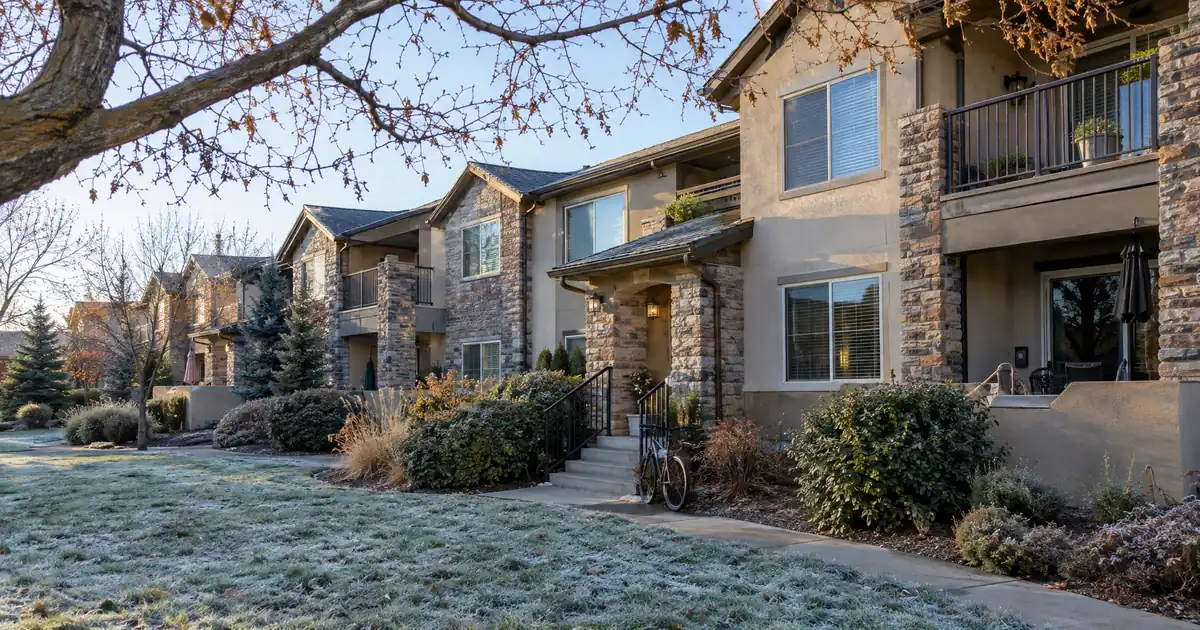
The Quick Read: Sometimes, but only through a separate FHA process called Single-Unit Approval (SUA), which used to be called “spot approval.” It is not automatic. The building has to pass a set of project-level tests, the lender has to run the review, and the association has to hand over documents. If the building clears those, your own file still has to qualify like any other FHA purchase.
What Does “FHA-Approved” Actually Mean for a Condo?
“FHA-approved” is a status of the building, not of you or the unit. HUD, the federal agency that runs FHA, keeps a list of condo projects it has approved. A project on that list can have its units financed with FHA loans.
FHA payment estimate
Starting assumptions reflect an example price and the FHA minimum investment. Replace them with your own figures.
Editable benchmark: 7.32% as of October 22, 2026 · Freddie Mac 30-year average via FRED®. A conventional market reference, not an FHA loan quote.
Illustrative starting assumptions: a $350,000 price, the FHA minimum investment as the down payment, a thirty-year term at the current Freddie Mac benchmark, and property taxes and insurance estimated at typical national rates. Every field is editable.
Illustrative estimate only — not a Loan Estimate, approval, quote, or commitment to lend. The rate field carries the weekly Freddie Mac thirty-year conventional benchmark, a market reference and not an FHA loan quote; your rate is set by the lender at lock. FHA mortgage insurance follows HUD’s published schedule for the term, leverage and loan size entered; taxes, insurance and dues are editable estimates; closing costs are not included; county loan limits are not checked here. Licensed in sixteen states for consumer mortgages. Lendmire is not affiliated with or acting on behalf of FHA, HUD, or the federal government.
HUD says FHA insures condo loans on units in approved projects. It also insures them on units in projects that are not approved but meet Single-Unit Approval requirements. That second door is the whole answer to your question.
A few terms get blurred online, so here is the short map:
- Approved project: the building went through HUD’s project review and sits on the approved list.
- Single-Unit Approval: a one-unit review of a building that is not approved.
- Spot approval: the old name for the same idea.
- Warrantable: a conventional-loan term. It is a different test from FHA approval, so do not mix them up.
How Do You Check Whether a Building Is Approved?
Start with HUD’s own condo search tool. You can search by location, project name or status. Your agent can run this before you write an offer, and it is one of the least costly screening steps in the whole process.
What you see tells you what to do next:
| Status shown | What it usually means | Next step |
|---|---|---|
| Approved | Building is on the list | Standard FHA condo path |
| Expired, Rejected or Withdrawn | Building went through review before | SUA route, using its Condo ID |
| Not listed | Never reviewed | SUA route, if the building qualifies |
| Fewer than five units | Too small for SUA | Look at other options |
Some unapproved buildings carry an FHA Condo ID because they were reviewed in the past. For those, the lender enters that ID when it requests the FHA case number. A case number is just the file’s tracking number. Per HUD’s May 2026 FHA INFO notice, it is not an approval of the unit or the project.
One more point on terms: “not approved” is not the same as “not eligible.” Many unapproved buildings are perfectly eligible for the SUA route. Some are truly out of reach. Sorting out which one you face is your first job.
What Does a Building Need to Qualify for Single-Unit Approval?
Per HUD, the unit must sit in a project that is not FHA-approved, is complete and ready for occupancy, has at least five dwelling units, and is not a manufactured home. The same page says the project must also meet a subset of the full approval tests. Those include FHA insurance concentration, owner-occupancy percentage and the project’s financial condition.
Let’s take those one at a time.
Concentration. This is how many units in the building already carry FHA loans. HUD caps it. Under HUD’s Mortgagee Letter 2019-13, SUAs are limited to 10 percent of total units. HUD’s 2019 announcement adds that projects with fewer than 10 units may have no more than two FHA-insured units. The cap is first-come, first-served. If the building already sits at its limit, you can be turned down with excellent credit. Not fair, but that is how it works.
Owner-occupancy. FHA wants a healthy share of units lived in by their owners rather than rented out. NAR’s summary of the rule lists a 50 percent owner-occupancy requirement and a 35 percent cap on commercial space for SUA. That is a trade-association summary, not the Handbook text, so your lender will confirm the exact current test.
Financial health. HUD looks at reserves, operating funds, dues, special assessments and how many owners are behind on dues. A building with thin reserves or a pile of delinquent owners is a red flag.
Insurance. The HUD form has a separate section of additional insurance requirements for SUA, so the building’s coverage gets checked too.
Two disqualifiers are simple. New or unfinished projects do not qualify because the building must be complete. Buildings under five units do not qualify either.
How Does Single-Unit Approval Work, Step by Step?
You do not apply for this yourself. The lender does the work, and the association supplies the information. Here is the sequence:
1. Check status. You or your agent look up the building on HUD’s tool.
2. Request an SUA case number. The lender picks the SUA option when it requests the FHA case number. The case is then held while HUD reviews it. FHA-to-FHA streamline refinances and HUD-owned properties are the exceptions.
3. Complete Form HUD-9991. This is the condo questionnaire. Per HUD’s instructions, the lender fills it in using information from the last 90 days. The sources are the association or its management company, public records and independent third parties.
4. Gather supporting documents. HUD’s required documentation list includes a current balance sheet, a prior-year income and expense statement and a year-to-date statement. Leasehold documents and commercial-space site plans apply in some cases. HUD calls this the minimum list, and more items may be requested.
5. The lender confirms compliance. HUD’s May 2024 Handbook update stressed that the lender is responsible for verifying compliance with all SUA guidance.
6. Your own underwriting runs alongside. The project can pass and your file can still fail, or the other way around.
HUD also published a process change in 2026. Condo projects already in its system with an “Expired” or “Rejected” status now receive SUA case numbers automatically. Requests that cannot be automated still go to manual FHA review. Handbook details can change, so a lender confirms the current rules on your file.
Who Does What?
| Person | Role |
|---|---|
| You | Pick the unit, qualify personally, ask for documents |
| Your agent | Screens the building, helps push the association for paperwork |
| The lender | Requests the case number, completes the 9991, reviews everything |
| The association or manager | Supplies financials, insurance and owner data |
That last row is where deals live or die. If the association or its management company is slow or will not cooperate, the process stalls. Nobody on your side can complete the questionnaire without them.
Where Do SUA Requests Run Into Trouble?
Most failures trace back to a short list:
- The building is at its FHA concentration cap. Nothing you can fix.
- Owner-occupancy is too low. Too many investors own units.
- Reserves or finances look weak. High delinquencies, special assessments or thin operating funds.
- Insurance does not meet the requirements.
- The project is incomplete or too small.
- The association will not provide documents.
Some of these can improve over time, such as reserves or delinquency rates. Others, like the concentration cap or unit count, are fixed facts. Plan for a “no” before you fall in love with a unit. A good agent asks about owner-occupancy and special assessments before the offer, not after.
What Happens to the Contract Timeline?
Your purchase contract needs room for this review. The SUA case is held while HUD looks at the questionnaire, and the association has to deliver documents. Ask your agent to build a financing contingency and a realistic deadline into the contract, and to flag the condo review at the start. That is general guidance, not legal advice, so ask your attorney or agent how your state’s contract forms handle it.
Timing depends on the building, the association and HUD’s review queue, so no one can promise a specific schedule.
What If the Building Does Not Qualify?
If the unit is denied or ineligible, you have a few honest paths. Each trades something away.
| Option | What you gain | What you give up |
|---|---|---|
| Conventional loan | No FHA project approval needed, though its own condo review applies | Often a larger investment and stronger credit expected |
| VA loan, if eligible | Strong terms for qualifying veterans | Eligibility limits, and the building has its own review |
| A different building | Already on the FHA approved list | Fewer choices, maybe a different neighborhood |
| A different property type | Houses and fee-simple townhomes skip condo approval | Often a different price point |
Townhomes deserve a note. If you own the land under a townhome outright (fee simple), it is usually not a condo and the project approval question does not apply. If the townhome sits inside a condo association legal structure, it may. Ask what the deed says.
What Does Your Own File Need to Look Like?
Passing the building review does not replace your own underwriting. Across the wholesale programs Lendmire places FHA loans with, a purchase allows up to 96.5% financing with a 3.5% minimum investment at a decision score of 580 or higher. Seller or interested-party contributions can run up to 6% of the price. The home must be your principal residence, and a non-occupant co-borrower is allowed.
Ratios compare your housing cost and total debts to income. The base pair is 31/43. Documented compensating factors can stretch that to 40/50 at the top tier, and the automated finding governs most files. Here is the condo-specific wrinkle: association dues are part of your monthly housing cost, so they feed into those ratios. A building with high dues or a special assessment can squeeze you even when the project passes.
On mortgage insurance, FHA charges an upfront premium of 1.75% of the base loan, which can be financed, plus an annual premium that depends on term, loan amount and LTV. On a thirty-year loan above ninety percent LTV, the annual premium lasts the whole term. At or below ninety percent it ends after eleven years. If getting out of that premium is on your mind, Lendmire’s piece Should You Use an FHA Loan if You Plan to Exit Mortgage Insurance? walks through the tradeoff. County loan limits apply and change every year.
If you want to compare programs and see how FHA loan programs stack up for a condo purchase, a broker can lay the options side by side. All of this is subject to lender guidelines and full file review, and none of it is a commitment to lend.
A Scenario: From “Not Listed” to an Answer
Picture a buyer with a 580-plus score and a small down payment who falls for a unit in a 40-unit building. The building does not appear on HUD’s list. Her agent confirms there are more than five units, the building is finished, and asks the manager for the owner-occupancy figure and the budget.
The lender requests an SUA case number and starts the questionnaire. The management company sends the balance sheet and income statements. The numbers show a healthy reserve and mostly owner-occupied units. Concentration sits well under the cap. The review clears, her own underwriting follows, and she closes on the FHA loan.
Now flip it. Same buyer, but the building is mostly rentals and already has a handful of FHA loans. The project fails on owner-occupancy or concentration. She pivots to a different building or a conventional loan. The credit was never the problem; the building was.
The scenario is illustrative only. Real files turn on the building’s current numbers and the lender’s review.
What About Resale and Later Refinancing?
Buying in an unapproved building has a downstream effect. Approved status can expire, and project approvals have to be recertified. According to a law-firm summary of the 2019 rule from Pidgeon & Pidgeon, recertification moved from two years to three. An expired project can still go the SUA route, but each future buyer faces the same approval-or-SUA question you did.
A building that stays on the approved list is generally easier to sell to FHA buyers, though it is best treated as a practical consideration rather than a measurable advantage. If you ever refinance, the same project review can come back. FHA-to-FHA streamline refinances are exempt from the SUA case hold, though that is a narrow exception, not a general refinance pass.
Key Terms Defined
Single-Unit Approval (SUA): FHA’s process for approving one unit in a condo building that is not on the approved list.
HUD-9991: the condo questionnaire the lender completes using association, public and third-party information.
FHA concentration: the share of units in a building that carry FHA-insured loans.
Owner-occupancy percentage: the share of units lived in by their owners rather than rented.
FHA case number: the tracking number for an FHA loan file, which is not an approval.
Fee simple: owning the home and the land under it outright, which is how most houses and many townhomes are owned.
Frequently Asked Questions
Can I apply for Single-Unit Approval myself?
No. The lender requests the case number, completes the HUD-9991 and confirms compliance. Your part is qualifying personally and nudging the association to cooperate. The information comes from the association or its management company, so their cooperation matters as much as yours.
Is spot approval the same as single-unit approval?
Yes, they refer to the same idea. HUD’s rule that took effect on Oct. 15, 2019 brought the path back under the name Single-Unit Approval after the old spot-loan route had effectively ended. Older articles may still use the earlier name.
Does a case number mean my condo is approved?
No. An SUA case number is not an approval of the unit or project. It only starts the review. Approval comes after the lender completes and confirms the project tests.
Can the building get approved later?
Often, yes. Some buildings are rejected or expire and later qualify when reserves, owner-occupancy or paperwork improve. Others stay stuck on fixed facts like size. Ask the association whether it plans to pursue full project approval.
Does my credit still matter if the building passes?
Yes. The project review and your personal underwriting are separate. You still need to meet the program’s credit, ratio and investment requirements, subject to lender guidelines.
If you are buying a home and want to see whether an FHA loan fits your file, Lendmire can help you compare the options and what each one asks of the file.
For your own numbers, request a scenario review with Lendmire.
About Lendmire
Lendmire, NMLS# 2371349, is a mortgage brokerage with consumer lending licenses in 16 states. FHA, VA, conventional and jumbo purchase and refinance loans are arranged through wholesale lending partners, and each application is reviewed individually by the lender. Scotsman Guide named Lendmire a Top Mortgage Workplace in both 2025 and 2026.
Get Started
Ready to find the right loan for you?
In about 30 seconds you can review financing options available for your home or investment property. No commitment required.
Informational only. Not a Loan Estimate, approval, or commitment to lend. Program availability and eligibility are subject to lender guidelines, credit approval, property review, and underwriting.
References
2. HUD – FHA Condominium Search Tool
3. HUD – FHA Connection Case Number Assignment Help
4. HUD – Mortgagee Letter 2019-13
5. HUD Archives – 2019 Condominium Rule Press Release
6. NAR – FHA Condominium Rule Assessment
7. HUD – Form HUD-9991 Instructions
8. HUD: FHA Sua Condo Required Docs
9. Pidgeon & Pidgeon – FHA New Condo Rule
This article is part of Lendmire’s FHA loan program — full qualification details, guidelines, and scenarios live on the program page.
Related reading: Conventional Loan vs FHA Loan on a Condo: Insurance Cost and End Date · How to Handle a Low FHA Loan Appraisal on a Condo · How Much a Conventional Loan Saves Over FHA Insurance on a Condo
Brandon Miller
Founder & CEO, Mortgage Loan Originator, Lendmire LLC
- Mortgage Loan Originator · NMLS# 1129696 · Verify on NMLS Consumer Access
- North Carolina Real Estate Broker · License# 343312 · Verify on NCREC
- North Carolina Insurance Producer · License# 19053198 · Property, Casualty, Life, Health · Verify on NAIC SBS
- Lendmire LLC · Firm NMLS# 2371349 · Verify firm licensure
Required disclosures. Lendmire (NMLS# 2371349) operates as a licensed mortgage broker, not a direct lender or depository. The discussion in this article is general in nature and should not be relied upon as financial, legal, or tax advice — every investment scenario is unique and should be reviewed by a qualified professional. Any loan inquiry is subject to lender underwriting, and this article is not a commitment to lend or a guarantee of approval. Mortgage rates, loan terms, and program guidelines vary by borrower, property, and state, and may change without notice. Equal Housing Opportunity. Verify licensure at NMLS Consumer Access.