
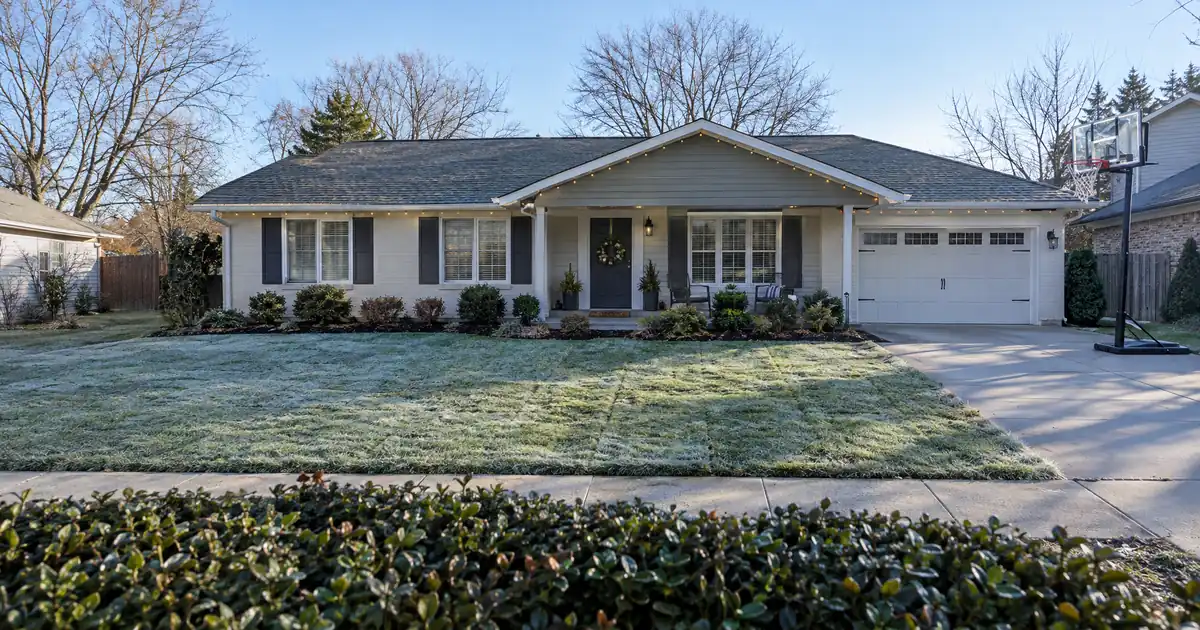
The Quick Read: It depends on how you plan to exit. On a recent FHA loan, equity alone will not end the insurance. A refinance into a new loan, a sale, or an 11-year drop-off (only when you put down more than 10%) are the real exits. FHA works best when you need its lower entry point and expect your credit or income to improve.
What Does FHA Mortgage Insurance Actually Cost You?
FHA charges two premiums. The upfront premium is 1.75% of the base loan amount, and it is usually financed into the loan. The annual premium is a percentage of your balance, billed monthly inside your payment. Across the wholesale programs Lendmire places FHA files with, the annual premium runs between 0.15% and 0.75%, depending on term, loan amount, and LTV.
FHA payment estimate
Starting assumptions reflect an example price and the FHA minimum investment. Replace them with your own figures.
Editable benchmark: 7.32% as of October 22, 2026 · Freddie Mac 30-year average via FRED®. A conventional market reference, not an FHA loan quote.
Illustrative starting assumptions: a $350,000 price, the FHA minimum investment as the down payment, a thirty-year term at the current Freddie Mac benchmark, and property taxes and insurance estimated at typical national rates. Every field is editable.
Illustrative estimate only — not a Loan Estimate, approval, quote, or commitment to lend. The rate field carries the weekly Freddie Mac thirty-year conventional benchmark, a market reference and not an FHA loan quote; your rate is set by the lender at lock. FHA mortgage insurance follows HUD’s published schedule for the term, leverage and loan size entered; taxes, insurance and dues are editable estimates; closing costs are not included; county loan limits are not checked here. Licensed in sixteen states for consumer mortgages. Lendmire is not affiliated with or acting on behalf of FHA, HUD, or the federal government.
LTV is loan-to-value, the loan balance divided by the home’s value. It drives almost everything here.
HUD’s premium appendix lays out the 1.75% upfront premium and the duration rules. HUD later cut the annual premium by 30 basis points for most borrowers on loans endorsed after March 20, 2023, and noted that a lower premium can help more people qualify. The upfront premium did not change.
One terminology fix: people say “FHA PMI,” but PMI (private mortgage insurance) belongs to conventional loans. FHA’s version is called MIP, short for mortgage insurance premium. They sound alike and work differently.
Why Won’t Equity End FHA Insurance?
On an FHA loan with a recent case number, your original LTV sets the length of the annual premium, not your current equity. At a 3.5% down payment, you start above 90% LTV, and the annual premium lasts the full loan term. Put down more than 10% and it ends after eleven years. Final terms depend on lender guidelines, property type, leverage, and the borrower’s complete credit picture.
Here is the contrast with conventional loans. The federal law that lets conventional borrowers cancel PMI excludes insurance issued under FHA’s statute. The CFPB explains that a conventional borrower can ask the servicer to cancel PMI when the balance is scheduled to hit 80% of the original value. The servicer must end it automatically at 78%. FHA has no such switch.
So the common belief, “I’ll cancel at 20% equity,” is wrong for FHA. Extra principal payments do not change the clock on a recent FHA loan either. They build equity, which helps a later refinance, but they do not shorten the insurance period.
How Do You Actually Exit FHA Mortgage Insurance?
There are three real exits and one false one.
| Exit path | Ends the insurance? | What decides it |
|---|---|---|
| Refinance into conventional | Yes, FHA premium ends | Credit, income, appraised value |
| Wait it out (original LTV 90% or less) | Yes, after eleven years | Your original down payment |
| Sell the home | Yes | Market value and timing |
| FHA-to-FHA streamline | No | Not an exit |
Refinance into conventional. The FHA loan gets paid off, so the FHA premium ends. You then have to qualify for a brand-new conventional loan on income, credit, and equity. A new appraisal usually decides the outcome. Home value drives your new LTV, and LTV drives whether the new loan carries PMI. If it does, you get the cancellation rights described above, measured from the new loan.
Wait it out. This works only if you started at 90% LTV or less. After eleven years the annual premium drops off on its own. These specifics are subject to lender guidelines and a full review of property, leverage, and credit.
Sell. Once the loan is paid off, the premium stops. That is an exit, though not usually the one people mean.
The false exit: an FHA streamline. Streamlines are useful, but they are not an exit. The FHA Streamline refinances an existing FHA loan with no appraisal and a limited credit review. It needs a net tangible benefit, meaning the new loan has to leave you measurably better off. HUD’s streamline page is clear that the loan being refinanced must already be FHA-insured and current. The insurance continues. Cash out is capped at $500, and closing costs cannot be rolled into the new streamline amount.
A related myth: you will not get your upfront premium back by refinancing to conventional. HUD’s FHA fact sheet ties the refund credit to FHA-to-FHA refinances. For loans endorsed on or after December 8, 2004, no refund is due after the third year of insurance.
What Has to Be True for the Refinance Exit to Work?
You need four things to line up at the same time: credit, income, equity, and a favorable market for the new loan. None of them is guaranteed on the day you sign your FHA paperwork.
Think of the exit as a future qualifying event, not a certainty. That framing is the whole point of this article. A lender will look at your credit profile, your debt-to-income ratio (your monthly debts compared with your monthly income), your documented income, and the appraised value. Subject to lender guidelines and full file review, each one has to clear on the day you apply for the new loan.
Equity is the piece many buyers underestimate. With 3.5% down, you start with very little cushion. Closing costs and the financed upfront premium make the starting balance a bit larger than your price minus your down payment. Your equity then has to come from payments and from appreciation, and appreciation is not on a schedule. Plenty of owners find that the home value they hoped for arrives later than their plan said. Terms depend on the lender’s guidelines, the property type, the leverage, and a full review of the credit profile.
A practical habit helps: keep your paperwork, track your balance against a realistic value, and check your credit before you need it. Treat the exit as something you prepare for at purchase.
What Can Derail the Exit Plan?
Four things most often push the exit back.
- Values stall or slip. A flat appraisal can leave you above the LTV a new conventional loan needs. Then the new loan carries PMI, or you simply wait.
- Credit or income changes. A job change, a new debt, or a late payment can undo the improvement your plan relied on.
- The new loan costs more than the old one. A refinance replaces your existing loan terms with whatever is available when you apply. If the new terms are less favorable than your current loan, saving on mortgage insurance may not make up the difference.
- Timing runs long. Plans made for three years sometimes take six.
The decision is a break-even comparison. Add up the mortgage insurance you would avoid, then subtract the refinance’s closing costs and any change in your loan terms. If the avoided insurance wins by a clear margin over the time you will actually hold the home, the exit pays. If not, it does not. Ask for a side-by-side comparison before you decide, and read the Loan Estimate on any offer you get.
This is also why holding period matters. Staying only a few years makes a refinance harder to justify. Staying a decade or more gives the math room to work.
Who Should Choose FHA With an Exit Plan?
FHA fits you if you need what it offers at the front end. Across the wholesale programs Lendmire works with, that means maximum financing of 96.5% with a 3.5% minimum investment, starting from a 580 decision score. Ratios start at 31/43 (housing to total debt, as percentages of income) and can reach 40/50 with documented compensating factors, though the automated finding governs most files. FHA is for owner-occupied primary residences, one to four units. Seller or interested-party contributions are allowed up to 6% of the price, and a non-occupant co-borrower is allowed. County loan limits apply. Everything here is subject to lender guidelines and not a commitment to lend.
FHA is a good fit if:
- Your credit score or savings keep conventional out of reach today.
- You expect your credit, income, or equity to improve within a few years.
- You plan to stay long enough for a refinance to pay off.
- You can carry the payment, including the premium, comfortably in the meantime.
FHA is a weaker fit if:
- You already qualify for conventional with decent credit. The CFPB notes that PMI is generally cheaper than FHA for borrowers with good credit, and it can be cancelled.
- You expect to sell within a short window.
- Your plan only works if a refinance goes perfectly.
That last point is the toss-up for many buyers. Someone at the edge of qualifying for conventional has a real choice: take FHA now and plan the exit, or wait and save more. Neither is wrong. Waiting costs time, and FHA costs insurance. Which cost is lower depends on your timeline.
What Does the 90% Line Change?
It changes the length of the premium, not only its size. A 3.5% down payment starts above 90% LTV, so the annual premium lasts the term. Putting down more than 10% moves the loan into the eleven-year bucket. The exact numbers vary by lender and program and follow a full review of property, leverage, and credit.
If you sit near that line, compare two paths. One is bringing extra cash to closing to cross it. The other is paying the longer premium and counting on a refinance later. Crossing the line gives you a defined end date that does not depend on future credit or home values. Not everyone has the cash, and that is a fair reason to choose the refinance plan. Just know which one you are betting on.
Older FHA loans, those with case numbers before June 2013, follow different cancellation rules. If that is your loan, ask your servicer which rules apply to it.
What Should You Do Before You Sign?
Treat the exit as a project that starts at closing.
1. Confirm your insurance terms. Ask your loan officer whether your original LTV puts you in the eleven-year or full-term bucket.
2. Pick a realistic exit window. Write down the year you would want to refinance and what would need to be true by then.
3. Protect your credit. Keep balances low and payments on time. Your future refinance depends on it.
4. Track your equity. Check your balance against a reasonable estimate of value once or twice a year.
5. Keep a fallback. Decide now what you will do if the refinance does not pencil out. A streamline into a better FHA structure is one option. Staying put and carrying the premium is another.
If the exit stalls, you are not stuck in a crisis. You are carrying a known cost for longer than hoped. Revisit the numbers when your credit, income, or value changes, and run the break-even again.
If you are weighing the starting loan, Lendmire’s overview of FHA loan programs covers the entry requirements in more detail.
Key Terms Defined
MIP (mortgage insurance premium): FHA’s insurance, made of an upfront premium and an annual premium billed monthly.
UFMIP: The upfront premium, 1.75% of the base loan amount, usually financed into the loan.
PMI (private mortgage insurance): Insurance on conventional loans with small down payments, which can be cancelled as equity builds.
LTV (loan-to-value): Your loan balance divided by the home’s value, shown as a percentage.
Net tangible benefit: HUD’s test that an FHA streamline must leave the borrower measurably better off.
Streamline refinance: An FHA-to-FHA refinance with reduced documentation that keeps FHA insurance in place.
Frequently Asked Questions
Can I cancel FHA mortgage insurance once I reach 20% equity?
Not on a recent FHA loan. The 80% and 78% cancellation rules apply to conventional PMI, and the federal law behind them excludes FHA insurance. Your original LTV sets the length. Above 90% at the start, the annual premium lasts the loan term unless you refinance, sell, or pay off the loan.
Does the 11-year drop-off apply to everyone?
No. It applies only when your original LTV was 90% or less. A buyer who put down 3.5% starts above 90%, so the premium generally runs the full term. Confirm your bucket with your loan officer before you rely on it.
Does an FHA streamline get rid of the premium?
No. A streamline refinances one FHA loan into another, so FHA insurance stays in force. It can improve your loan structure and requires a net tangible benefit, but it is not an exit from mortgage insurance.
Will I get my upfront premium back if I refinance to conventional?
Generally not. HUD ties the refund credit to FHA-to-FHA refinances, and no refund is due after the third year of insurance on loans endorsed after December 2004. Plan for the upfront premium as a sunk cost.
Is conventional PMI always cheaper than FHA insurance?
No. PMI pricing depends on your down payment and credit score. It tends to be cheaper for borrowers with good credit, but a borrower with a lower score or a small down payment may find FHA the better entry point. Compare both on a Loan Estimate before choosing.
Your Next Step
If you are buying a home and want to see whether an FHA loan fits your file, Lendmire can help you compare the options and what each one asks of the file. For how a HELOC might fit later, see Lendmire’s piece Can a HELOC Work if You Plan to Leave FHA Later?.
For your own numbers, request a scenario review with Lendmire.
About Lendmire
Lendmire (NMLS# 2371349) is a mortgage broker licensed for consumer lending in 16 states. Lendmire arranges FHA, VA, conventional and jumbo purchase and refinance loans through wholesale lenders; every file is underwritten by the lender under the applicable program guidelines. Scotsman Guide named Lendmire a Top Mortgage Workplace in both 2025 and 2026.
Get Started
Ready to find the right loan for you?
In about 30 seconds you can review financing options available for your home or investment property. No commitment required.
Informational only. Not a Loan Estimate, approval, or commitment to lend. Program availability and eligibility are subject to lender guidelines, credit approval, property review, and underwriting.
References
1. HUD Mortgagee Letter appendix, Mortgage Insurance Premiums
2. HUD press release on the annual MIP reduction
3. CFPB: When can I remove PMI?
4. HUD FHA Streamline Refinance
5. HUD FHA Homeowners Fact Sheet
6. CFPB: What is mortgage insurance and how does it work?
This article is part of Lendmire’s FHA loan program — full qualification details, guidelines, and scenarios live on the program page.
Related reading: VA Loan vs FHA Loan on a Fourplex With No Money Down · FHA Loan Income Requirements for a Retiree on Fixed Income · FHA Mortgage Insurance Duration Rules for a 2-4 Unit House Hacker
Brandon Miller
Founder & CEO, Mortgage Loan Originator, Lendmire LLC
- Mortgage Loan Originator · NMLS# 1129696 · Verify on NMLS Consumer Access
- North Carolina Real Estate Broker · License# 343312 · Verify on NCREC
- North Carolina Insurance Producer · License# 19053198 · Property, Casualty, Life, Health · Verify on NAIC SBS
- Lendmire LLC · Firm NMLS# 2371349 · Verify firm licensure
Disclosures. The information presented in this article is general market commentary, not financial, legal, or tax advice. Lendmire is a mortgage brokerage (NMLS# 2371349) — not a direct lender or depository institution — and loan placement is subject to lender underwriting. Nothing in this content represents a commitment to lend. Loan terms, pricing, and program availability vary based on borrower qualifications, property characteristics, and state of subject property, and are subject to change at any time. Lendmire complies with Equal Housing Opportunity requirements. Consumer access: nmlsconsumeraccess.org.