
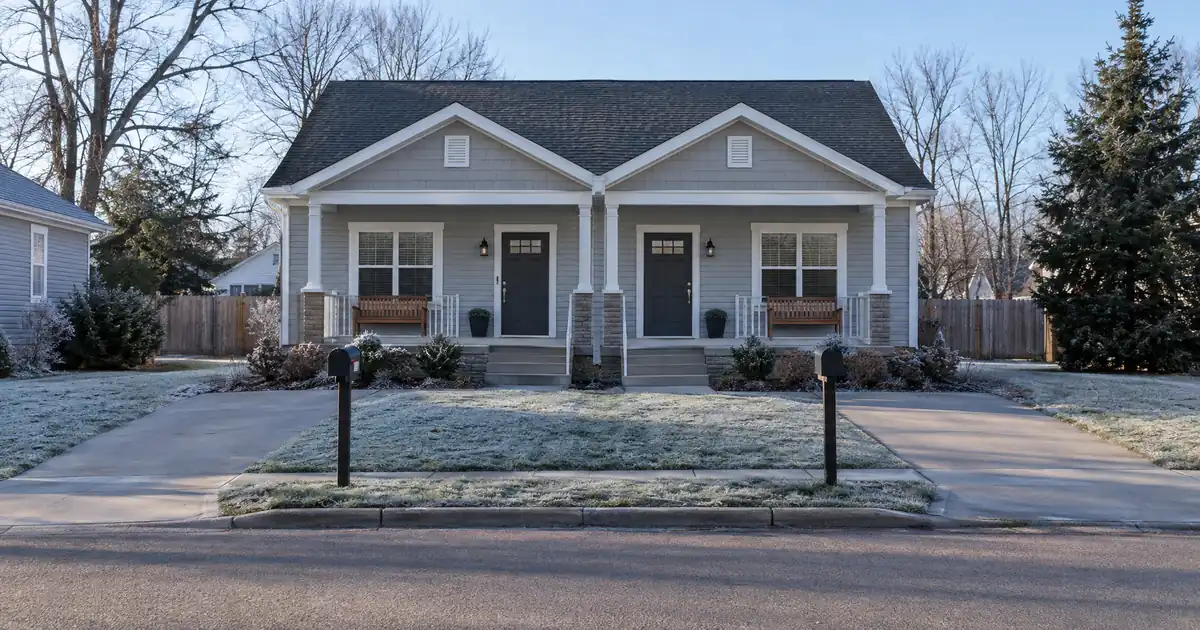
The Quick Read: The length of your annual mortgage insurance is set at closing by your starting loan-to-value ratio, not by how many units you buy. A duplex, triplex or fourplex follows the same schedule as a single-family home. Put down the 3.5% minimum and the annual premium runs for the full loan term. Put down 10% or more and it ends after eleven years. Each figure is subject to lender guidelines and a complete review of property type, leverage, and credit.
Key Takeaways
- Two premiums exist: an upfront premium of 1.75% of the base loan (usually financed) and an annual premium billed monthly.
- On a thirty-year loan above 90% loan-to-value, the annual premium lasts for the term. At or below 90%, it ends after eleven years.
- Later equity does not shorten the clock on a newer loan. Appreciation and extra principal payments do not change it.
- Unit count matters for sizing and underwriting. It does not matter for duration.
- Moving out later does not reset the schedule. The premium follows the loan.
What Are the Two FHA Mortgage Insurance Premiums?
FHA mortgage insurance has two parts. The upfront premium is 1.75% of the base loan amount. Most borrowers finance it, so it raises the balance but not the cash due at closing.
FHA payment estimate
Starting assumptions reflect an example price and the FHA minimum investment. Replace them with your own figures.
Editable benchmark: 7.32% as of October 22, 2026 · Freddie Mac 30-year average via FRED®. A conventional market reference, not an FHA loan quote.
Illustrative starting assumptions: a $350,000 price, the FHA minimum investment as the down payment, a thirty-year term at the current Freddie Mac benchmark, and property taxes and insurance estimated at typical national rates. Every field is editable.
Illustrative estimate only — not a Loan Estimate, approval, quote, or commitment to lend. The rate field carries the weekly Freddie Mac thirty-year conventional benchmark, a market reference and not an FHA loan quote; your rate is set by the lender at lock. FHA mortgage insurance follows HUD’s published schedule for the term, leverage and loan size entered; taxes, insurance and dues are editable estimates; closing costs are not included; county loan limits are not checked here. Licensed in sixteen states for consumer mortgages. Lendmire is not affiliated with or acting on behalf of FHA, HUD, or the federal government.
The annual premium is the one that matters for duration. Across the wholesale programs Lendmire places FHA loans with, it runs between 0.15% and 0.75% of the balance. The exact figure depends on loan term, loan amount and loan-to-value. It is billed in monthly installments, so it sits inside your housing payment.
Loan-to-value (LTV) is your loan amount divided by the lesser of the price or appraised value. The financed upfront premium is left out of that math when duration is set. A 96.5% loan stays a 96.5% loan for this purpose, even after the premium is added to the balance.
This is mortgage insurance for the lender’s protection. It is not private mortgage insurance in the conventional sense, and it follows different removal rules. Conventional borrowers can often ask to drop their insurance once equity builds. Newer FHA loans mostly cannot.
How Does Your Down Payment Set the Duration?
Your starting LTV picks the bucket, and the bucket sets the length. The current HUD Mortgagee Letter 2023-05 lays out the schedule. For terms over fifteen years, the duration is eleven years at 90% LTV or below. Above 90%, it is the mortgage term. Leverage, reserves, and pricing vary by lender and program; the final terms follow the full file review.
Here is how the pieces connect for a house hacker, step by step:
1. You pick a down payment. The FHA minimum investment is 3.5%, which gives a maximum financing level of 96.5%. That requires a decision score of 580 or higher on the wholesale programs Lendmire works with.
2. Your LTV lands above or below 90%. At 3.5% down you sit at 96.5%. At 10% down you sit at exactly 90%.
3. The lender locks the schedule. The duration is fixed by the original LTV and term when the loan is endorsed. It is not recalculated later.
4. The premium bills monthly. It rides along in your payment until the schedule says it ends. Terms vary by lender guidelines, property type, leverage, credit profile, and full file review.
| Down payment | Starting LTV | Annual premium duration (30-year term) |
|---|---|---|
| 3.5% (minimum) | 96.5% | Full loan term |
| 5% | 95% | Full loan term |
| 10% or more | 90% or less | Eleven years |
The jump from 5% to 10% down is the line that matters. Anything under 10% down stays above 90% LTV. Anything at 10% or more drops into the eleven-year bucket. Exact terms depend on the lender’s guidelines, property type, leverage, and a full review of the borrower’s file.
Why Does the Unit Count Change the Rest of the Loan?
The unit count does not change how long you pay. It does change what you have to qualify for. FHA finances one to four units, but only as your principal residence. That occupancy rule is the house-hack premise.
Two- and three-unit properties get the same 96.5% maximum financing as a one-unit home, subject to county loan limits and lender guidelines. Those limits change every year, so check the current figure for your county before you shop.
The mortgage insurance also feeds directly into the monthly payment lenders test. Here is how that plays out:
- Ratios. The base pair is 31/43 (housing payment over income, then total debts over income). With documented compensating factors, ratios can reach 40/50 at the top tier. The automated finding governs most files.
- Rental income. Lenders consider rent from the other units, but how they count it depends on the file and program.
- Self-sufficiency on 3-4 units. HUD’s archived rental income reference describes a net rental income test for three- and four-unit homes. The appraiser estimates fair market rent from all units, including yours. Vacancy and maintenance factors come off, and what remains must cover the projected payment. A two-unit home does not face this test.
The insurance premium is part of that payment, so a longer or higher premium raises what the rents have to cover. A bigger down payment helps twice. It shortens the insurance and lowers the payment the test measures.
Because the loan amount is larger on a multi-unit purchase, the same premium percentage is a bigger absolute charge. Ask your loan officer to show the monthly insurance line on the Loan Estimate for each down payment you are considering.
Why Doesn’t Later Equity Shorten the Premium?
On a newer loan, the schedule is tied to the original loan, not to what you owe today. HUD made this change in Mortgagee Letter 2013-04 (a copy is hosted on FHFA’s site). It rescinded the old automatic-cancellation approach for case numbers assigned after the change. FHA now collects annual premium for the maximum period the statute allows.
So appreciation does not convert a term-length loan into an eleven-year loan. Neither do extra principal payments or a new appraisal. A fourplex that gains value in a hot year still carries the schedule it was born with.
This is where many house hackers get tripped up. They compare FHA to conventional insurance, which can often be dropped when the balance falls to a set share of the home’s value. For a newer FHA loan, that comparison breaks down.
The exit is a payoff. A refinance into a non-FHA loan or a sale ends FHA mortgage insurance because the FHA loan is gone. That is a plan, not an entitlement. It depends on qualifying for the new loan and on whether the new loan makes economic sense.
Where Does the General Rule Break?
A few edge cases deserve a close look.
Older loans. Loans closed in the early 2000s with case numbers assigned before HUD’s duration change followed a different path. HUD’s FHA Answers page explains it. Annual premium can cancel once the balance reaches a set share of the original price or value. Longer-term loans also need a minimum payment period. HUD does not use a new appraisal to reach that target.
FHA Streamline refinance. A Streamline refinances an existing FHA loan with no appraisal, a limited credit review and a net tangible benefit. The premium continues. The pricing LTV comes from the prior FHA mortgage, so it does not hand you a fresh start on the old loan’s schedule.
FHA rate-and-term refinance. With an appraisal, this loan reaches 97.75% on a principal residence you have occupied for the previous twelve months. At that leverage, the loan sits above 90%. The new loan’s own LTV and term drive its schedule, so expect a term-length premium.
FHA cash-out refinance. It reaches 80% LTV on a home you have owned and occupied for twelve months before the case number. Under the schedule above, a loan at or below 90% falls into the eleven-year bucket. That is a mechanical reading of the rule, not a reason to refinance. Every figure here varies by lender and program — guidelines, property type, leverage, and credit profile all apply.
Program exceptions. Hawaiian Home Lands loans do not require annual premium. Indian Lands loans do not require the upfront premium. Both come from the same HUD letter and apply to narrow situations.
Non-occupant co-borrower. A co-borrower who does not live in the home is allowed. Some lenders cap leverage on three- and four-unit loans with that structure, so ask early.
The 2023 rate cut. HUD lowered the annual premium rate for new loans in early 2023. It changed the rate, not the duration. It also did not reach back and lower the premium on loans already endorsed.
What Does the Decision Look Like in Practice?
Picture a buyer eyeing a duplex. They have two realistic paths, and the numbers below are percentages of price, not dollars.
Path one: 3.5% down. The starting LTV is 96.5%, so the annual premium runs for the term. The cash to close is low, which is the main appeal. The payment is higher, and the insurance stays through every year they hold the loan. Final terms depend on lender guidelines, property type, leverage, and the borrower’s complete credit picture.
Path two: 10% down. The starting LTV is 90%, so the premium ends after eleven years. The cash to close is much larger. The payment is lower for as long as the insurance runs, and it drops further once the premium ends. These specifics are subject to lender guidelines and a full review of property, leverage, and credit.
Neither path is wrong. The right pick depends on your horizon and your cash.
- You plan to sell or move on in a few years. The duration matters less. The low down payment keeps your cash free for repairs and reserves.
- You plan to hold for a decade or more. The lifetime cost matters. The extra 6.5% down might pay for itself.
- You might refinance later. That is a plan to test, not a promise. It depends on equity, credit and what the new loan asks of the file. Terms depend on the lender’s guidelines, the property type, the leverage, and a full review of the credit profile.
A third option is a middle path. Put down more than 3.5% and see what changes. Anything under 10% leaves the duration alone. Extra cash short of the threshold may help the payment test but not the duration.
The closest call is for buyers sitting near the threshold. If you can reach 10% without draining your reserves, the eleven-year schedule is a clear structural gain. If reaching it leaves you thin, the minimum down payment and a plan to revisit the loan later may be the safer structure.
To compare both scenarios side by side, look at how FHA loan programs treat down payment, premium and ratios for your file. Program figures are subject to lender guidelines and full file review. Nothing here is a commitment to lend.
Rental Income and the Insurance Question
Rent from the other units can help you qualify. It does not exempt you from mortgage insurance. The premium applies to every unit count, and the self-sufficiency test on three- and four-unit homes applies on top of it.
How Do You Check That the Premium Ends On Time?
Do not assume the servicer will get it right. A short checklist helps:
- At closing, confirm your starting LTV and the duration listed for your loan.
- Note the month the eleven-year mark falls.
- Review a mortgage statement near that month and look for the insurance line to drop off.
- If it does not, ask the servicer in writing why. Keep your closing documents handy.
For older loans eligible to cancel, the servicer handles the request through HUD’s FHA Connection system. Keep the original sales price or appraisal on hand, since HUD uses those figures.
Key Terms Defined
Annual mortgage insurance premium: A yearly charge, billed monthly, based on your loan balance, term, amount and starting LTV.
Upfront mortgage insurance premium: A one-time charge of 1.75% of the base loan, usually financed into the balance.
Loan-to-value (LTV): Your loan amount divided by the lesser of the price or appraised value, before the financed upfront premium is added.
Case number: The FHA identifier assigned to your loan. Its date decides which duration rules apply.
Self-sufficiency test: The extra rent-versus-payment check on three- and four-unit FHA purchases.
Streamline refinance: An FHA-to-FHA refinance with no appraisal, a limited credit review and a net tangible benefit.
Frequently Asked Questions
Does FHA mortgage insurance ever go away?
Yes, in two ways. First, the premium can end on its own schedule: at 90% LTV or below on a thirty-year loan, the annual premium ends after eleven years, while above 90% it lasts for the term. Second, paying off the loan, by refinancing into a non-FHA loan or selling, also ends it. The exact numbers vary by lender and program and follow a full review of property, leverage, and credit.
Can I remove it at 20% equity?
Not on a newer FHA loan. The schedule follows your original LTV, so appreciation and extra payments do not change it.
Does a duplex change how long I pay?
No. Duration follows the same schedule for one to four units. What changes with unit count is the sizing and underwriting. Three- and four-unit homes also face the self-sufficiency test, where the insurance is part of the payment the rents must cover.
Does the premium stay if I move out and rent the whole building?
Yes, the schedule was set at origination and moving out does not reset it. Occupancy rules govern the purchase itself, so talk with your loan officer before changing how you use the property.
Does refinancing to another FHA loan remove it?
No. A Streamline keeps the premium going and takes its pricing LTV from the prior FHA loan. A rate-and-term or cash-out refinance creates a new loan whose own LTV and term drive its schedule. Only a payoff into a non-FHA loan ends FHA insurance.
If you are buying a home and want to see whether an FHA loan fits your file, Lendmire can help you compare the options and what each one asks of the file.
For your own numbers, request a scenario review with Lendmire.
About Lendmire
Lendmire, NMLS# 2371349, is a mortgage brokerage with consumer lending licenses in 16 states. FHA, VA, conventional and jumbo purchase and refinance loans are arranged through wholesale lending partners, and each application is reviewed individually by the lender. Scotsman Guide named Lendmire a Top Mortgage Workplace in both 2025 and 2026.
Get Started
Ready to find the right loan for you?
In about 30 seconds you can review financing options available for your home or investment property. No commitment required.
Informational only. Not a Loan Estimate, approval, or commitment to lend. Program availability and eligibility are subject to lender guidelines, credit approval, property review, and underwriting.
References
1. HUD Mortgagee Letter 2023-05
2. HUD Reference Guide: Rental Income (archive)
3. HUD Mortgagee Letter 2013-04 (copy hosted by FHFA)
4. HUD FHA Answers: MIP for loans closed on or after Jan 1, 2001, case number before June 3, 2013
This article is part of Lendmire’s FHA loan program — full qualification details, guidelines, and scenarios live on the program page.
Related reading: FHA Cash-Out Non-Borrowing Spouse Rules for a Retiree · Is an FHA Cash-Out Worth It Once the Insurance Is Counted? · Can an FHA Cash-Out Fund a Renovation on a 2-4 Unit Primary Home?
Brandon Miller
Founder & CEO, Mortgage Loan Originator, Lendmire LLC
- Mortgage Loan Originator · NMLS# 1129696 · Verify on NMLS Consumer Access
- North Carolina Real Estate Broker · License# 343312 · Verify on NCREC
- North Carolina Insurance Producer · License# 19053198 · Property, Casualty, Life, Health · Verify on NAIC SBS
- Lendmire LLC · Firm NMLS# 2371349 · Verify firm licensure
Compliance and disclosures. Lendmire (NMLS# 2371349) is a licensed mortgage broker and is not a direct lender, depository institution, financial advisor, or tax professional. Content in this article is general market analysis and educational information — not financial, legal, or tax advice for any specific situation. Lendmire does not guarantee loan approval; every transaction is subject to underwriting by the funding lender. Mortgage pricing and loan program guidelines are subject to change at any time without notice and vary by borrower characteristics, property type, and state regulations. Lendmire complies with Equal Housing Opportunity. Licensure verification: NMLS Consumer Access.