
The Quick Read: Yes, in many cases, as long as you have enough remaining entitlement (or a down payment to cover the gap) and you will live in one of the units as your home. The law looks at occupancy of the property, not whether the whole building is owner-used. Living in one unit and renting the others fits the program. Rent from the other units can help you qualify, but only under tests that are stricter than most buyers expect.
What Does “Second VA Loan” Actually Mean?
A second VA loan means using your home loan benefit again while you may still hold a first VA loan. The benefit is not one-and-done. VA News says entitlement tied to an existing VA loan does not automatically disqualify you. As a rule of thumb, lenders want your remaining entitlement to guaranty at least 25% of the new loan if you want to buy with nothing down. If it falls short, a down payment may fill the gap. Paying off a prior VA loan in full may allow VA to restore your entitlement.
VA payment estimate
Starting assumptions reflect an example price with no down payment and a first-use funding fee. Replace them with your own figures.
Editable benchmark: 7.32% as of October 22, 2026 · Freddie Mac 30-year average via FRED®. A conventional market reference, not a VA loan quote.
Illustrative starting assumptions: a $350,000 price, no down payment with full entitlement, a first-use funding fee financed into the loan, a thirty-year term at the current Freddie Mac benchmark, and property taxes and insurance estimated at typical national rates. Every field is editable.
Illustrative estimate only — not a Loan Estimate, approval, quote, or commitment to lend. The rate field carries the weekly Freddie Mac thirty-year conventional benchmark, a market reference and not a VA loan quote; your rate is set by the lender at lock. The funding fee follows VA’s published table for the use and down payment entered; the residual-income figure is VA’s guideline for the region and family size, and the rough residual shown subtracts only the housing payment and the debts entered, while VA also deducts taxes, maintenance and utilities. Taxes, insurance and dues are editable estimates; closing costs are not included. Licensed in sixteen states for consumer mortgages. Lendmire is not affiliated with or acting on behalf of the Department of Veterans Affairs.
Three situations come up again and again across the wholesale programs Lendmire places VA files with:
- Full entitlement. You have never used the benefit, or it has been fully restored. There is no VA loan limit, and these programs serve amounts to $4,000,000.
- Remaining entitlement. A first VA loan is still open. A down payment may be required on the new purchase. Speak with a loan officer about what that looks like for your file, because it depends on the county and the price.
- Restored entitlement. You sold the first home and paid off that loan. Your entitlement can come back, subject to VA’s rules.
If you are weighing the program at all, Lendmire’s VA loan programs page lays out the basics. This article focuses on the 2-4 unit question.
Scenario Table: Can You Do It?
| Your situation | Can you house hack? | What to confirm | Main risk |
|---|---|---|---|
| First-time VA user | Usually yes | Certificate of eligibility (COE) | Reserves and landlord test if rent is used |
| First VA loan still open | Maybe | Remaining entitlement vs. loan size | Down payment may be required |
| First loan paid off, entitlement restored | Usually yes | Restoration shown on COE | Timing of the sale and payoff |
| Active duty, cannot move in right away | Possibly | Spouse or dependent occupancy | Documenting intent |
| Planning to live elsewhere | No | None | Pure investment is not eligible |
Why Do 2-4 Units Fit the Program?
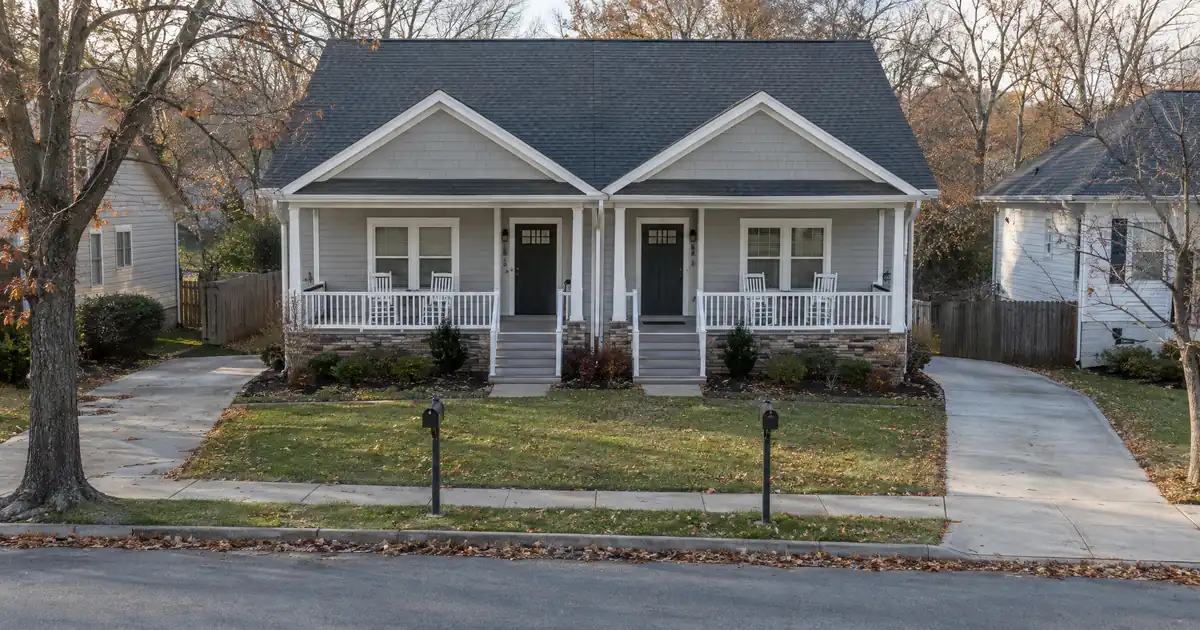
A 2-4 unit fits because the occupancy rule applies to the property as your home, not to every door. You live in one unit. The others produce rent. That is the whole house-hack structure, and it is consistent with how VA describes the benefit. (This is a reading of the occupancy text, so a lender should confirm it on your specific file.)
What does not fit: buying a building purely to rent out. If you do not intend to live there, the VA benefit is the wrong tool, full stop. Five or more units is also outside this lane.
What Do the Occupancy Rules Require?
You must certify that you intend to live in the property as your home. VA Pamphlet 26-7, Chapter 3 says the veteran must either already live there or plan to move in within a reasonable time. In practice, that is typically within 60 days of closing. A longer window can work only if you certify a specific date tied to a particular event, such as military retirement.
Two details trip people up.
Active duty. If you are on active duty and cannot occupy the home yourself in a reasonable time, a spouse or dependent child’s occupancy can satisfy the requirement.
The “12 months” idea. You will hear that VA requires a year of living there. VA’s text focuses on intent and a reasonable time to move in. A one-year stay is a common lender rule of thumb, not a number from VA’s text. Ask your lender what it expects in writing.
Here’s the catch. Intent at closing is a legal statement, not a formality. Signing it while planning to live elsewhere is misrepresentation. If life changes after you move in (new orders, a family move), that is a different situation from never intending to occupy. Treat the certification with that weight.
How Does Rental Income Help You Qualify?
Rent from the other units can count toward qualifying, but VA attaches conditions. Per VA’s Lenders Handbook, Chapter 4, and the regulation behind it, the lender looks for these pieces when rent from the other units is used:
- Landlord capability. Prospective rent on a building with more than one unit generally counts only if you show a reasonable likelihood of success as a landlord. That is usually shown through documented landlord experience or a property manager.
- Reserves. You need verified cash reserves, your own funds, to carry the full housing payment without any rent for a set number of months. Those months differ by source, so ask your lender for the current requirement on your file rather than relying on a number from the web.
- A discount on the rent. Only a portion of the lease or rental agreement is counted, not the full amount, unless more is documented.
If you qualify without the other units’ rent, the reserve and landlord tests tied to rent generally do not come into play. That is a real fork in the road. A strong-income veteran may skip the rent-based tests entirely. A veteran who needs the rent to make the numbers work faces all of them.
The appraisal matters here too. A 2-4 unit is appraised on the small residential income property report, which includes an income approach. That report gives the market rent opinion the lender uses. Condition and minimum property requirements still apply to the whole building.
What About the First Home You Are Keeping?
Plenty of veterans want to keep the first VA home as a rental while buying the 2-4 unit. The Chapter 4 handbook treats that home’s payment separately. Rent can offset that home’s payment, but rent above the payment cannot be counted as income. Reserves are required for each property whose rent is used, and those funds must be your own, in the account before closing. Equity, gift funds, and cash-out proceeds do not count as reserves.
If you do not use the first home’s rent, the full payment counts as a debt instead. That raises the bar on your income and residual income. The handbook version available is older, so confirm current figures with a loan officer before you plan around them.
A related question for veterans building a portfolio: Lendmire’s piece Can a Veteran Do a VA Cash-Out on a 2-4 Unit Primary Home? covers what happens down the road once you own the building.
How Does Entitlement Math Work (Without the Dollar Figures)?
Remaining entitlement is a county-based calculation. It is 25% of the one-unit county conforming limit, reduced by entitlement still charged to a home you are keeping. A veteran with remaining entitlement can then estimate the zero-down ceiling by multiplying that result by four.
Run it conceptually. Say you hold a first VA loan that uses a slice of your entitlement. Your remaining entitlement is smaller than a first-time user’s. If the new 2-4 unit costs more than four times that remainder, a down payment may be needed. The entitlement plus your down payment generally needs to equal 25% of the loan.
Compare that to full entitlement, where the guaranty is 25% of the loan with no VA cap. That is why a first-time user buying a fourplex faces no entitlement ceiling, while a second-time user with an open loan might. The more expensive the building, the more this bites. Fourplexes in high-cost areas hit it first.
One point is worth flagging. Some secondary sources say a VA circular requires the single-family county limit even on a multi-unit purchase, so confirm how the conforming-limit question applies to your purchase with your loan officer before you write an offer.
What Does the Program Cost and Require?
The envelope is straightforward across the wholesale programs Lendmire works with. On a purchase, VA financing allows 100% financing, with no down payment as long as the price is not above the appraised value, and no mortgage insurance of any kind. VA itself sets no minimum credit score, but the wholesale programs begin at a 580 decision score. Eligibility is decided by your COE, and service requirements are VA’s rules. Everything is subject to lender guidelines and full file review.
The funding fee is reviewable and is waived for veterans receiving compensation for a service-connected disability and other exempt groups. For a purchase, subsequent use matters here because a second loan is a second use:
| Use | Down payment | Funding fee |
|---|---|---|
| First use | Less than 5% | 2.15% |
| First use | 5% to under 10% | 1.5% |
| First use | 10% or more | 1.25% |
| Subsequent use | Less than 5% | 3.3% |
| Subsequent use | 5% to under 10% | 1.5% |
| Subsequent use | 10% or more | 1.25% |
That table is the tradeoff in a nutshell. A second use with nothing down carries the higher tier. Putting 5% or more down brings the fee back into the lower tiers, which is often exactly the down payment the entitlement math already asks for. For a veteran with remaining entitlement, those two things can work together.
Underwriting turns on residual income, which is the money left over each month after major obligations. It is the controlling test. The 41% debt-to-income figure is a guideline, not a cap, but a ratio above it needs residual income well above the table.
Can You Really Live Rent-Free?
Maybe, maybe not. “Live for free” is the marketing line on house hacking, and it deserves a stress test. Qualifying income and real cash flow are different things. Because only part of the rent counts toward qualifying, the budget still has to work on paper if a unit sits empty for a while. Add maintenance, vacancy, and any utilities you pay for the building, and the picture gets less rosy.
The honest advice: model the building with a conservative rent assumption and at least one empty unit. If it still works, you have a real house hack. If it only works when every unit is full all year, you have a thin margin, and a thin margin on a zero-down loan is a risk worth sizing carefully.
Reserves are the main out-of-pocket surprise. A “zero-down” purchase can still require cash for closing costs, reserves, and possibly a down payment if entitlement falls short.
When Is a VA Loan the Wrong Tool?
VA works well when you will live in the building and want maximum leverage without mortgage insurance. It is the wrong fit in a few cases:
- You do not plan to live there. Pure investment purchases are not eligible.
- Your remaining entitlement is thin and you cannot bring the down payment that would cover the gap.
- You cannot show landlord capability or hold the required reserves, and you need the rent to qualify.
- Your file does not clear the residual income test.
If your plan is a multi-unit with a different income profile, such as a self-employed borrower, other paths may fit better. Lendmire’s article How to Qualify for a House-Hack Loan for a 1099 Contractor on a 2-4 Unit covers that route, and it is worth a read before you assume VA is your only option.
What Mistakes Cost Veterans the Most?
- Treating occupancy intent as a formality. The certification is a legal statement.
- Counting all the rent. Only a portion counts, and only after the landlord and reserve tests.
- Skipping the COE check. Entitlement used and remaining is on the certificate. Know it before you write an offer.
- Assuming zero down means zero cash. Reserves and closing costs still apply.
- Relying on internet reserve numbers. Reserve requirements can differ between a duplex and a three- or four-unit building. Ask your lender about the rule on your specific building.
Pre-Offer Checklist
Before you write an offer on a 2-4 unit, get these answers in hand:
1. What does my COE show for total and used entitlement?
2. Is my first VA loan still open, and will I keep that home?
3. What down payment, if any, does my remaining entitlement imply for this price?
4. Will I need the other units’ rent to qualify, and if so, what reserves and landlord documentation does the lender want?
5. Do I have the documentation for occupancy, and a realistic plan to move in?
6. Does my residual income hold up with a conservative rent assumption?
Key Terms Defined
Entitlement: The amount VA guarantees to a lender on your behalf, which lets you buy with little or no down payment.
Certificate of Eligibility (COE): The VA document that shows your total and used entitlement.
Residual income: The money left each month after major obligations, which VA treats as the controlling test.
Reserves: Your own verified savings that could carry the full housing payment if rent stopped.
Funding fee: A one-time VA fee that can be financed and is waived for exempt veterans.
Frequently Asked Questions
Can I use a VA loan on a duplex, triplex, or fourplex?
Yes, if you will live in one of the units as your home. The occupancy requirement applies to the property, so renting the other units is consistent with the program. A building bought purely as an investment is not eligible.
Do I have to sell my first home before using my VA benefit again?
No. If your remaining entitlement covers the new loan, or a down payment fills the gap, you can keep the first home. Paying off the first VA loan may allow VA to restore entitlement, which can help if the numbers are tight.
How soon do I have to move in?
Typically within 60 days of closing. A longer period can qualify only if you certify a specific date tied to a particular event. VA’s handbook generally does not treat occupancy more than 12 months out as reasonable.
Does all the rent count toward qualifying?
No. Only part of the lease or rental agreement counts, and generally only after you show landlord capability and verify reserves from your own funds. If you qualify without the rent, those rent-related tests generally do not apply.
Does a second VA loan carry a higher funding fee?
Yes, it can. Subsequent use with less than 5% down carries 3.3%, compared with 2.15% for first use. Putting 5% or more down moves both into the lower tiers, and the fee is waived for exempt veterans. All of this is subject to lender guidelines and your full file review.
If you are buying a home and want to see whether a VA loan fits your file, Lendmire can help you compare the options and what each one asks of the file. Reach the team at 828-256-2183.
For your own numbers, request a scenario review with Lendmire.
About Lendmire
Lendmire — NMLS# 2371349 — is a mortgage broker that arranges FHA, VA, conventional and jumbo home purchase and refinance financing in 16 states through wholesale lenders. Every option is subject to the lender’s guidelines and full underwriting. Scotsman Guide named Lendmire a Top Mortgage Workplace in both 2025 and 2026.
Get Started
Ready to find the right loan for you?
In about 30 seconds you can review financing options available for your home or investment property. No commitment required.
Informational only. Not a Loan Estimate, approval, or commitment to lend. Program availability and eligibility are subject to lender guidelines, credit approval, property review, and underwriting.
References
1. VA News: Veterans can use their VA-guaranteed home loan benefit more than once
2. VA Pamphlet 26-7, Chapter 3: The VA Loan and Guaranty
3. VA Lenders Handbook, Chapter 4: Credit Underwriting (VA)
This article is part of Lendmire’s VA loan program — full qualification details, guidelines, and scenarios live on the program page.
Related reading: VA Cash-Out vs Conventional Cash-Out: Which Gives a Veteran More? · Can a Veteran Use a VA Cash-Out to Start or Expand a Business? · Can a Veteran Buy a High-Cost Home on a VA Loan With No Down Payment?
Brandon Miller
Founder & CEO, Mortgage Loan Originator, Lendmire LLC
- Mortgage Loan Originator · NMLS# 1129696 · Verify on NMLS Consumer Access
- North Carolina Real Estate Broker · License# 343312 · Verify on NCREC
- North Carolina Insurance Producer · License# 19053198 · Property, Casualty, Life, Health · Verify on NAIC SBS
- Lendmire LLC · Firm NMLS# 2371349 · Verify firm licensure
Disclosures. The information presented in this article is general market commentary, not financial, legal, or tax advice. Lendmire is a mortgage brokerage (NMLS# 2371349) — not a direct lender or depository institution — and loan placement is subject to lender underwriting. Nothing in this content represents a commitment to lend. Loan terms, pricing, and program availability vary based on borrower qualifications, property characteristics, and state of subject property, and are subject to change at any time. Lendmire complies with Equal Housing Opportunity requirements. Consumer access: nmlsconsumeraccess.org.