
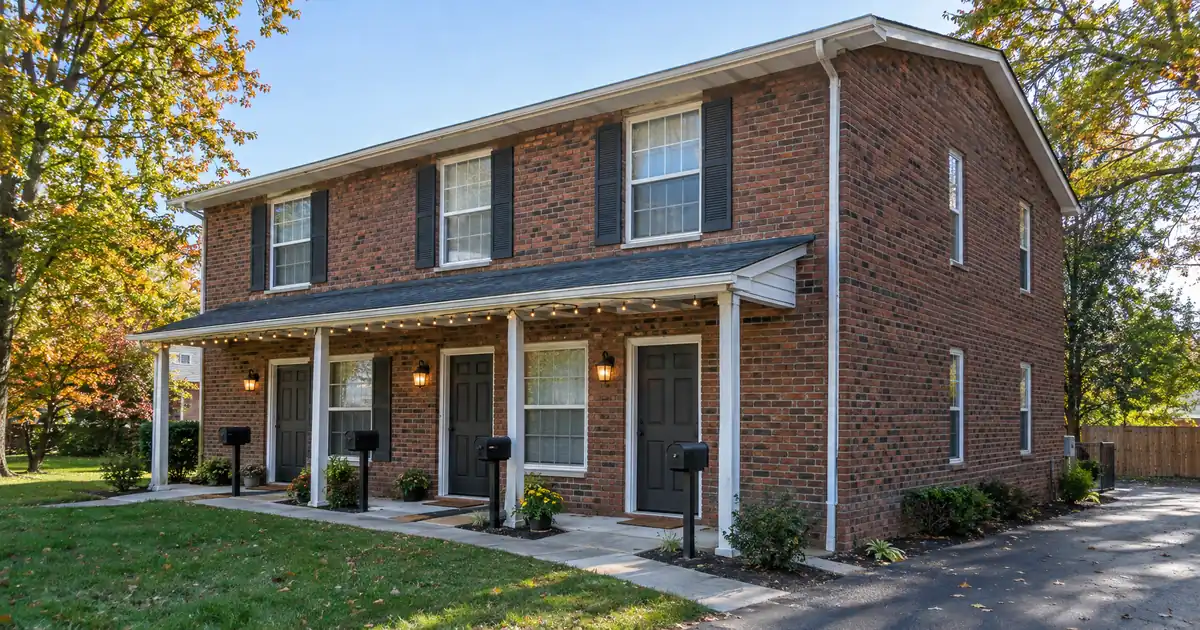
The Quick Read: A first-time buyer purchasing a two- to four-unit home they will live in can generally put down as little as 5% on a conventional loan. The 3% down option (97% LTV) belongs to one-unit homes only, so a duplex, triplex, or fourplex does not reach it. Being a first-time buyer does not lower the 2–4 unit cap. It mostly changes how rental income can be counted, and that is where many buyers get surprised. Everything here is subject to lender guidelines and full file review.
What Is the Minimum Down Payment on a 2–4 Unit?
The minimum is 5% on a principal residence, which means 95% loan-to-value (LTV). Both agencies permit that on a two- to four-unit purchase, per the Fannie Mae Eligibility Matrix, provided the file gets an automated underwriting approval.
Conventional payment estimate
The starting figures are an example price at the first-time buyer’s minimum down payment. Replace them with yours.
Editable benchmark: 7.32% as of October 22, 2026 · Freddie Mac 30-year average via FRED®. A conventional market reference, not a conventional loan quote.
Estimate seeded at the low end of Fannie Mae’s published range (0.58%–1.86% a year); the insurer prices the actual premium on the score and the leverage. Applies only above 80% loan-to-value.
Illustrative starting assumptions: a $350,000 price, the first-time buyer’s minimum down payment, a thirty-year term at the current Freddie Mac benchmark, mortgage insurance at the low end of Fannie Mae’s published range, and property taxes and insurance estimated at typical national rates. Every field is editable.
Illustrative estimate only — not a Loan Estimate, approval, quote, or commitment to lend. The rate field carries the weekly Freddie Mac thirty-year conventional benchmark, a market reference and not a conventional loan quote; your rate is set by the lender at lock. The mortgage insurance figure is an editable estimate seeded from Fannie Mae’s published typical range, not a premium quote; the insurer prices the actual premium, and the cancellation month assumes scheduled payments with no extra principal and no change in value. Taxes, insurance and dues are editable estimates; closing costs are not included. Conforming loan limits apply by county. Licensed in sixteen states for consumer mortgages.
Down payment is simple arithmetic: price (or appraised value, if lower) times one minus the LTV. On a purchase, the lender uses the lower of the two numbers. If a seller accepts an offer above what the appraiser supports, the extra comes out of your pocket, not the lender’s.
A bigger price tag also means 5% is more cash than 5% on a single-family home. Reserves, a larger appraisal, and closing costs sit on top of that.
Across the wholesale programs Lendmire places files with, the shape is consistent:
| Scenario | Max LTV | Min. Down |
|---|---|---|
| One unit, first-time buyer, fixed rate | 97% | 3% |
| One unit, other buyers | 95% | 5% |
| Two to four units, principal residence | 95% | 5% |
| Second home | 90% | 10% |
| Investment, one unit | 85% | 15% |
| Investment, two to four units | 75% | 25% |
These are program ceilings, not promises. Credit, the automated finding, and the property all move the actual number.
Why Do I See Conflicting Numbers Online?
Old advice is still everywhere. For years, agency caps on multi-unit purchases were far lower than on single-family homes, and many articles still repeat that tiered structure. Both agencies have since raised the owner-occupied 2–4 unit cap to 95%, per the Fannie Mae matrix above and Freddie Mac’s guide.
Two catches explain most of the leftover confusion. First, the 95% cap depends on an automated approval. Manually underwritten files fall back to lower limits. Second, loans above the conforming baseline, often called super-conforming or high-balance, may carry tighter caps. A multi-unit price can push a loan past the baseline faster than most buyers expect. The FHFA conforming loan limit data shows limits by county and unit count. Higher limits apply to two, three, and four units.
If a number you read sounds too steep, check its age first.
How Is the Loan Underwritten, Step by Step?
Underwriting follows a sequence, and each step feeds the next.
1. Occupancy. You must live in one of the units as your principal residence. Occupancy is a representation you make to the lender. Investment treatment of the same building drops the cap to 75%.
2. Automated underwriting. The file runs through Desktop Underwriter or Loan Product Advisor. The 95% cap on a 2–4 unit needs an approve or accept finding. In the wholesale programs we place with, the decision score starts at 620, and the total ratio ceiling is 50% when the automated finding supports it. Manually underwritten files use 36% or 45% with reserve and score factors from the eligibility matrix.
3. Down payment sources. Savings and gifts from acceptable donors are standard. Seller or builder money cannot fund the down payment or reserves. The Fannie Mae FAQ states that interested-party contributions cannot go toward the down payment, reserves, or minimum borrower contribution.
4. Appraisal. A 2–4 unit uses a small residential income property report, which includes a market rent schedule. Appraisal waivers are generally not available on these properties, so budget for the full appraisal.
5. Rental income review. This is the step first-time buyers underestimate. See below.
6. Reserves. The automated finding sets how many months of payments must remain in your accounts after closing. Expect more than a single-family purchase would ask. The exact count comes from the finding, not a flat rule.
7. Mortgage insurance. Applies above 80% LTV. More on that below.
Can a First-Time Buyer Count the Rent From the Other Units?
Sometimes, but not the way most people assume. Rent from the other units can count toward qualifying under agency rules, usually as a reduced percentage of the appraiser’s market rent or the lease amount, whichever is lower. The appraisal’s rent schedule and any leases being transferred back it up.
Here’s the catch. A first-time buyer typically has no landlord history. Lender training materials, including an MGIC rental income handout, summarize the agencies’ treatment of borrowers with no current housing expense and no property-management track record. The two agencies handle it differently. One may not let that borrower add subject-property rent to income at all. The other may limit the rental income to the property’s own housing payment.
In practice, a first-timer should assume the rent might not help the debt-to-income ratio, then be pleasantly surprised if it does. That affects how much house the file supports. The rent still helps your real monthly budget, of course. Vacancy, repairs, and landlord expenses are real costs on the other side of that ledger.
This is a case where the exact wording lives in the Fannie Mae Selling Guide and Freddie Mac Guide, so a loan officer should walk through your specific income picture before you write an offer.
What Do Reserves Look Like on a Multi-Unit?
Reserves are the assets you still hold after closing, measured in months of the housing payment. The Freddie Mac Guide defines them that way. Automated findings set the requirement, and manual underwriting uses fixed minimums.
The practical takeaway: a two- to four-unit purchase usually asks for more reserves than a one-unit home. Gift funds can generally help with the down payment on a principal residence from an acceptable donor, but reserve treatment varies with the finding. Ask early, because reserves often decide whether a 5% down buyer is actually ready.
How Does Mortgage Insurance Work Above 80% LTV?
Final terms depend on the lender’s guidelines, the property type, and the borrower’s complete credit picture.
Mortgage insurance is required on a conventional loan above 80% LTV. A 5% down purchase will carry it. Published typical annual premiums across the market run from 0.58% to 1.86% of the balance, a range that moves with your down payment and credit score, never a quote. The CFPB explains that cost varies with those two factors and that most borrowers pay it monthly.
Unlike FHA mortgage insurance, conventional coverage can go away. Under the Homeowners Protection Act you may request cancellation when the balance is scheduled to reach 80% of the original value, with a good payment history, no subordinate liens, and no decline in value. The servicer must terminate it automatically at 78%, as the CFPB’s cancellation guidance describes.
One honest caution. The statute’s cancellation language is written around single-family principal residences. Whether a multi-unit loan follows the same path can depend on the servicer and investor rules, so ask before assuming.
Where Does the General Rule Break?
The 95% rule is the headline. These edge cases are where files go sideways.
- Manual underwriting. Without an automated approval, the 2–4 unit cap falls to lower tiers.
- Large loan amounts. High-balance loans can sit under tighter caps, and above the conforming limit the jumbo lanes take over.
- HomeReady and Home Possible. These programs carry an income limit of 80% of area median income. The Freddie Mac Home Possible fact sheet shows 95% max LTV on two- to four-unit fixed-rate loans, with 3% of personal funds needed above 80% LTV. Some versions add landlord education on multi-unit purchases and restrict non-occupant co-borrowers. Boarder income and similar flexibilities generally don’t extend to 2–4 units, so confirm the details.
- Accessory dwelling unit income. Fannie Mae’s rule allowing ADU rent applies to a one-unit principal residence, not a 2–4 unit building.
- Cash-out refinance. Later on, pulling equity from a 2–4 unit principal residence is capped at 75%, lower than the 80% allowed on a one-unit home.
- Credit events. Agency waiting periods apply: four years from a chapter 7 discharge, seven from a foreclosure, and four from a short sale or deed-in-lieu, shorter with documented extenuating circumstances.
- Occupancy shortfalls. Buying with the plan to rent every unit is an investment purchase. It is not a loophole. Misstating occupancy is a serious problem.
What About FHA as the Alternative?
FHA is not conventional, but first-time buyers weigh it against a 2–4 unit conventional loan. FHA mortgage insurance generally cannot be cancelled by paying down principal, according to the Minnesota Attorney General. Conventional mortgage insurance can end. That difference matters over a long hold.
The tradeoff runs both ways. A borrower with a lower score may find FHA friendlier, since the conventional wholesale floor starts at 620. A borrower with stronger credit often finds conventional cheaper over time because the insurance falls away. Compare both on a Loan Estimate before choosing.
Key Terms Defined
Loan-to-value (LTV): The loan amount divided by the lower of the purchase price or appraised value.
Principal residence: The home you live in as your main address, which is what makes a 2–4 unit an owner-occupied purchase.
Reserves: Money left in your accounts after closing, counted in months of the housing payment.
Interested-party contribution: Money from a seller, builder, or other party with a stake in the sale, which cannot fund your down payment.
Automated underwriting finding: The approve or accept result from the agencies’ software, which gates the 95% cap on a 2–4 unit.
Which Situation Are You In?
- Living in one unit, solid score, automated approval: 5% down is the usual ceiling to plan around, with mortgage insurance until the balance reaches the cancellation point.
- Income within the HomeReady or Home Possible limit: Compare those programs, but check unit-count and landlord-education conditions.
- No landlord history: Plan the budget as if the rent will not count toward qualifying.
- Loan amount near the conforming limit: Ask how high-balance caps apply before you write an offer.
- Planning to rent out every unit: That is an investment purchase with a different rule set. Each figure is subject to lender guidelines and a complete review of property type, leverage, and credit.
Rental income from a multi-unit also has tax consequences. Tax treatment can depend on your situation; borrowers should speak with a qualified tax professional before relying on any deduction or credit.
Self-employed buyers face an added layer on income documentation. Lendmire’s piece How Down Payment and Reserve Rules Work for a Self-Employed 2-4 Unit Buyer covers that. If your loan may land above the conforming baseline, the explainer How Jumbo Loan Down Payment Rules Work for a 2-4 Unit Property picks up where this one stops.
Frequently Asked Questions
Can a first-time buyer use a conventional loan on a triplex or fourplex?
Yes, if you live in one of the units. The cap is 95% LTV on a two- to four-unit principal residence, which means 5% down, as long as the automated finding supports it. The 3% option is one-unit only. Lender guidelines and the full file decide the outcome. Leverage, reserves, and pricing vary by lender and program; the final terms follow the full file review.
Do I have to live in the property?
Yes. Occupancy as a principal residence is what unlocks the 95% cap. Treated as an investment, a two- to four-unit purchase drops to 75% LTV. Occupancy is a representation you make to the lender, so it should match your actual plan. Terms vary by lender guidelines, property type, leverage, credit profile, and full file review.
Can gift money cover the whole down payment?
Often, on a principal residence, if the donor is acceptable under the program. Program details vary, and some programs set a minimum amount from your own funds above 80% LTV. Seller or builder funds are different: they cannot cover the down payment or reserves.
Is rental income counted before I own the building?
Possibly, in part. Lenders generally rely on the appraiser’s market rent and any leases being transferred. First-time buyers without landlord history often face limits, and the two agencies treat it differently. Plan your budget as though it might not count.
Is mortgage insurance required at 5% down?
Yes, above 80% LTV. It can be cancelled on request at 80% of original value or ends automatically at 78% under the Homeowners Protection Act, subject to servicer and investor rules on multi-unit properties.
If you are buying a home and want to see whether a conventional loan fits your file, Lendmire can help you compare the options and what each one asks of the file. Lendmire’s conventional loan programs are arranged through wholesale lenders in 16 states, and every figure here remains subject to lender guidelines and not a commitment to lend.
For your own numbers, request a scenario review with Lendmire.
About Lendmire
Lendmire (NMLS# 2371349) is a mortgage brokerage serving homeowners and home buyers in 16 states. FHA, VA, conventional and jumbo purchase and refinance loans are arranged through wholesale lending channels; Lendmire brokers the financing and the lender underwrites each application. Scotsman Guide named Lendmire a Top Mortgage Workplace in both 2025 and 2026.
Get Started
Ready to find the right loan for you?
In about 30 seconds you can review financing options available for your home or investment property. No commitment required.
Informational only. Not a Loan Estimate, approval, or commitment to lend. Program availability and eligibility are subject to lender guidelines, credit approval, property review, and underwriting.
References
1. Fannie Mae Eligibility Matrix
2. FHFA conforming loan limit data
5. Freddie Mac Seller/Servicer Guide, reserves
7. CFPB: removing private mortgage insurance
8. Freddie Mac Home Possible fact sheet
This article is part of Lendmire’s conventional loan program — full qualification details, guidelines, and scenarios live on the program page.
Related reading: Conventional Cash-Out Refinance for Homeowners Replacing a Loan to Get Cash · Can a Repeat Buyer Get a Conventional Loan With Little Down? · Can You Get Cash Out on a Refinance With a Conventional Loan?
Brandon Miller
Founder & CEO, Mortgage Loan Originator, Lendmire LLC
- Mortgage Loan Originator · NMLS# 1129696 · Verify on NMLS Consumer Access
- North Carolina Real Estate Broker · License# 343312 · Verify on NCREC
- North Carolina Insurance Producer · License# 19053198 · Property, Casualty, Life, Health · Verify on NAIC SBS
- Lendmire LLC · Firm NMLS# 2371349 · Verify firm licensure
Disclosure information. Lendmire is a state-licensed mortgage brokerage under NMLS# 2371349. Lendmire is not a depository institution, direct lender, or financial advisor — all loans referenced are placed through wholesale lender partners and are subject to each lender's underwriting standards. This article is provided for general informational purposes and is not a commitment to lend, nor does it constitute financial, legal, or tax advice. Loan programs, terms, rates, and qualification standards change without notice and depend on borrower profile, property type, and the state in which the subject property is located. Equal Housing Opportunity provider. NMLS Consumer Access: nmlsconsumeraccess.org.