
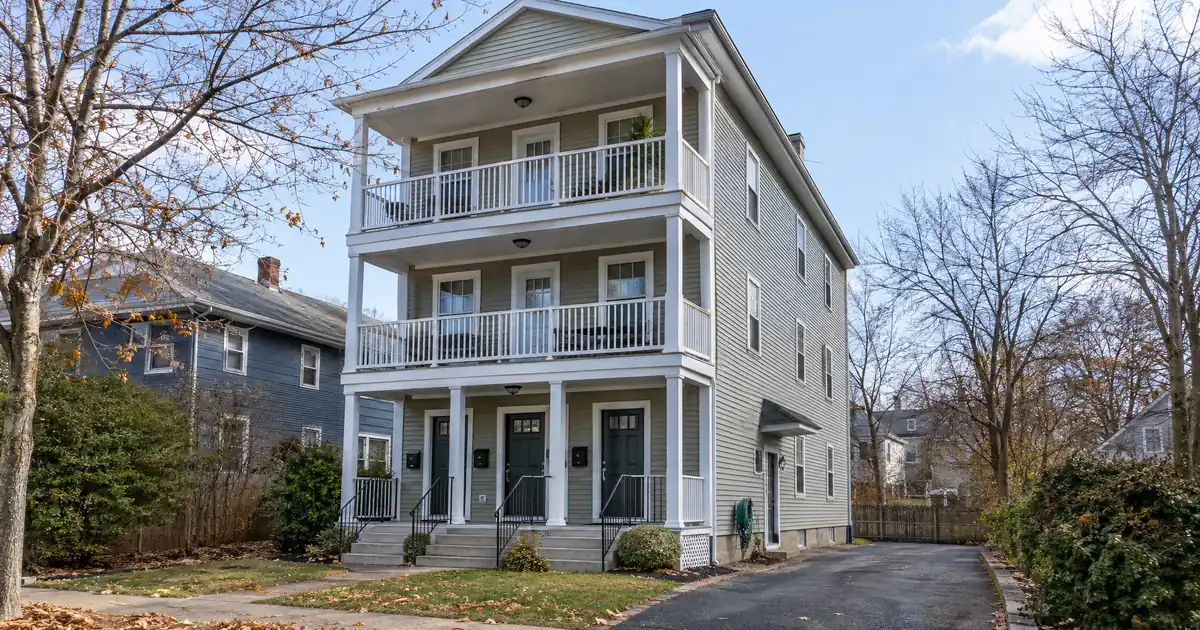
The Quick Read: It depends on two layers of rules, and the unit count alone does not decide it. On an FHA loan, the minimum investment can come from approved sources other than your savings, so the loan itself does not demand your own cash. The assistance program may still ask for a contribution. The bigger catch is that many assistance options only cover one- and two-unit homes, so a three- or four-unit purchase narrows the field fast.
Why Does the Answer Have Two Layers?
Your first mortgage sets one set of rules. The assistance program sets another. You have to satisfy both.
The first layer is the first mortgage, usually FHA, USDA or HUD-184. FHA asks for a minimum required investment of at least 3.5% of the adjusted value, per HUD’s FHA answers page. That number does not change because the home has two, three or four units.
The second layer is the assistance itself. Programs differ on property type, income, credit and whether they want you to put in something of your own. Two buyers with the same FHA loan can get opposite answers.
Think of it like a building with two locks. FHA opens one. The assistance option opens the other. Having a key to one tells you nothing about the second.
Across the wholesale programs Lendmire places files with, the network’s options are built around that FHA minimum. They do not require you to bring savings as a condition of the assistance. Public programs elsewhere are a different story, and the next sections explain how to tell the difference.
Does FHA Make You Bring Your Own Down Payment?
No. FHA requires a minimum investment, not personal savings specifically. Under HUD policy, that minimum can come from acceptable sources, including approved gift donors and governmental assistance. Those sources have to be documented, and the paperwork has to show where the money came from.
Here is what matters on a 2-4 unit purchase:
- The minimum is 3.5% of the lesser of price or appraised value on the FHA side, tied to your credit tier.
- FHA’s maximum first-lien leverage is 96.5%, and the 1.75% upfront mortgage insurance premium can be financed into the loan.
- Your closing costs are separate. HUD’s “total required investment” counts the down payment plus the transaction costs you pay, so help with the down payment may not cover everything at the table.
One more point on terms. A “gift” and “assistance” are not the same thing. A gift needs a signed letter from the donor saying nothing has to be repaid. Assistance can be a grant, a forgivable loan or a repayable second loan. Each has different paperwork and different consequences afterward.
What Are the Four Shapes of Assistance?
Assistance comes as a grant, a forgivable second lien, a repayable second lien, or a refinance-cost second lien. Each one treats your own money, and your unit count, differently.
Here is how the network’s options line up, through wholesale lenders and subject to program guidelines and full underwriting:
| Feature | Grant | Forgivable second | Repayable second |
|---|---|---|---|
| Amount | 2% or 3.5% of price | 3.5% of lesser of price or value | 3.5% or 5% of lesser of price or value |
| Repayment | Nothing to repay | Forgiven after 36 or 60 on-time payments | Monthly payment, balloon in year 10 |
| Credit floor | 620 | 640 | 660 |
| Units | 1-4 | 1-2 | 1-2 |
| First lien | FHA | FHA, USDA, HUD-184 | FHA, USDA, HUD-184 |
A fourth option, the refinance-cost second, helps with closing costs on an FHA refinance. It is not a purchase tool, so it will not help you buy.
Look at the unit column. Only the grant reaches three- and four-unit homes. The forgivable and repayable seconds stop at two units. That is the single most useful fact for a buyer eyeing a triplex or fourplex.
Many public programs also limit eligible properties, even when the first mortgage allows one to four units. Some state programs, for example, restrict help to single-family homes, condos or manufactured homes. Check any program’s property rules before you write an offer.
Do You Need Savings With the Grant?
Not under the network’s grant option. It covers 2% or 3.5% of the purchase price toward your FHA minimum investment. There is nothing to repay, no lien, no payment and no interest, and the funds are released at closing.
The grant has its own gates, though:
- A credit floor of 620 (the lowest representative score among all borrowers on the loan).
- Household income at or below 140% of area median income, unless you fall into a qualifying category.
- A HUD-approved homebuyer education course. You pay up front, and the cost is credited back at closing.
- An FHA first lien only, with no high-balance loans.
The qualifying categories matter. You skip the income test if you are a first responder, educator, medical worker, civil servant or military member. First-time buyers and buyers in an underserved census tract skip it too.
Notice what that list does not say. It does not say the program is limited to first-time buyers, and none of the options requires first-time status. First-time status is just one of several ways to skip the income test.
Also note that the grant is not offered in Washington, and it cannot be combined with another assistance program. Whether the grant covers all of your required investment depends on the percentage and your price. A 2% grant leaves a gap against a 3.5% minimum. Plan for that gap and for closing costs.
What About the Forgivable and Repayable Seconds?
Neither one requires your own savings as a condition, but they work very differently once you close. Both are loans secured against the home, and both limit you to one or two units.
The forgivable second is 3.5% of the lesser of price or appraised value. It carries no interest and no monthly payment. It is fully forgiven after 36 or 60 on-time first-lien payments, and you cannot be 90 days or more delinquent along the way. Credit starts at 640. There is no income limit beyond USDA’s own on a USDA first lien.
The repayable second is a real loan. It runs 3.5% or 5% of the lesser of price or value. At 5%, it also reaches closing costs and prepaid items: the 3.5% minimum investment plus 1.5% toward closing costs. That is the option that most directly answers “do I need my own money?” because at 5% it can reduce your cash to close.
The trade is a second monthly payment, 30-year amortization and a balloon due in year 10. It gets its own loan disclosure, including a balloon disclosure. Credit starts at 660, and manual underwriting is not allowed. Plan for that balloon on day one. If you expect to sell or refinance within the decade, it may fit. If not, it needs a plan.
So the budget effect depends on the shape. A grant or forgivable second adds no monthly payment. A repayable second does.
What Counts as Your Own Money?
It depends on the layer. FHA cares about acceptable, documented sources. A program may care about your personal funds. Those are not the same test.
| Source | FHA minimum investment | Assistance program |
|---|---|---|
| Your savings | Counts | Counts |
| Approved gift from a family donor | Counts, with a signed letter | Program-specific |
| Governmental assistance | Counts, with documentation | Not stackable with other assistance |
| Seller or agent money | Does not count | Does not count |
| Employer or union gift | Can count, must meet source rules | Program-specific |
The seller line trips people up. A gift cannot come from anyone with an interest in the sale, including the seller, the agent or the builder. HUD’s concern, laid out in its prohibited-sources rulemaking, is that prices get inflated. So a seller credit is not a substitute for your down payment.
A gift letter needs the donor’s name, address, phone and relationship, plus the dollar amount and a statement that no repayment is required. HUD’s gift guidance also confirms that an employer or labor union can be a gift source, but gifts toward the minimum investment must still meet the source requirements.
Here is the practical wrinkle. Because nothing stacks with another assistance program, you generally cannot pair a network option with a second assistance program to stretch it. A family gift is a different category, and your lender will tell you how it fits on your file.
When Do Public Programs Require Your Own Funds?
Often, yes. Many state and city programs want to see a buyer contribution. That is where the “you need your own money” advice comes from, and it is true for those programs.
Two examples show the pattern. Oklahoma Housing Finance Agency describes its program as one for buyers who have their own down payment or closing costs. Some New York City programs likewise list the buyer’s own savings as a requirement, and some allow one- to four-family homes. Many public programs also cap what they give and add a recapture period.
That is why the blanket answers online conflict. One camp says most assistance excludes 2-4 units. Another says many programs allow them. Both are right about some programs. The unit rule, the contribution rule and the income rule all live inside each program’s own guidelines.
So never assume a program works because FHA allows your property. Read the program’s page, then ask the lender.
How Do USDA and HUD-184 Change the Picture?
USDA is a single-family program in practice, and HUD-184 is the one that explicitly allows one to four units.
The USDA guaranteed loan is meant for buyers who struggle with a conventional down payment, and its handbook (HB-1-3555) describes eligible property as a dwelling residential in use, character and appearance. In practice, treat it as a single-family home program, and confirm with your lender before counting on it for a multi-unit home. There is no down payment on the guaranteed loan itself, so assistance on USDA usually goes toward closing costs. Check the USDA handbook index for the current rules.
HUD-184 is for enrolled tribal members. HUD’s Section 184 borrower page lists a 2.25% down payment and says loans can be used for one- to four-unit primary residences. It also tells buyers to check with their tribe or state housing finance agency for assistance. A tribe, housing authority or tribally designated housing entity may provide help, with some limits tied to the source of funds.
On the network side, the forgivable and repayable seconds pair with USDA and HUD-184 first liens, but only on one- and two-unit homes. The grant pairs with FHA only.
Does Living in a Unit Change Anything?
It is required, and it is the main rule. Assistance is for an owner-occupied primary residence. Not a second home. Not a vacation home. Not a rental or investment property.
On a 2-4 unit home, you live in one unit and rent the others. That is how many buyers qualify with help from their tenants’ rent. The home still has to be your primary residence, though. Renting out the whole property, misstating occupancy or moving out early can disqualify the file or trigger repayment of a loan.
Occupancy rules differ by program, so ask how long you must stay. Public programs can add multi-year occupancy periods. Whether rental income counts toward qualifying, how many months of reserves a three- or four-unit loan needs and how FHA tests rent on larger buildings are all lender-level details. Your lender should confirm them against current FHA policy before you commit.
What Does This Look Like for a Real Buyer?
Run three buyers, all in percentages. None of these are quotes. They show how the layers interact.
Picture a renter buying a duplex to live in one side. With a 640 credit score, the forgivable second looks promising: 3.5% of the lesser of price or value, no payment, forgiven after 36 or 60 on-time payments. The buyer still pays closing costs and should check how much cash that takes. Terms depend on the lender’s guidelines, the property type, the leverage, and a full review of the credit profile.
Say you are a nurse eyeing a fourplex. The two-unit cap on the seconds rules them out. The grant is the one path that reaches four units, and a medical worker skips the 140% income test. A 3.5% grant would cover the FHA minimum, though closing costs remain.
Consider a repeat buyer with thin savings and a 670 score buying a two-unit home. The repayable second at 5% reaches the minimum investment plus 1.5% toward closing costs. The buyer takes on a second payment and a year-10 balloon in exchange for less cash up front.
In each case, a lender’s automated underwriting finding and a full file review still decide the outcome. Funding can also run out, so confirm availability before you rely on it in a contract.
How Do You Confirm Your Own Requirement?
1. What is the first mortgage, and what is its minimum investment for my unit count?
2. Does the assistance option allow my unit count?
3. Does it require any personal contribution?
4. What are the credit floor, income test and counseling requirement?
5. Is the assistance a grant, a forgivable loan or a repayable loan, and what happens if I sell or move?
6. What closing costs does it leave me to pay?
7. Is funding available right now?
If an answer comes back vague, that is your signal to dig. Lendmire’s down payment assistance programs page lists the options it arranges.
Key Terms Defined
Minimum required investment (MRI): the least amount FHA expects you to put into the purchase, at least 3.5% of the adjusted value.
Total required investment: the down payment plus the closing costs you pay yourself.
Second lien: a separate loan secured against the home behind your main mortgage.
Forgivable loan: a second lien that is erased if you meet its conditions, such as a set number of on-time payments.
Balloon payment: a large lump sum due at the end of a loan term, in this case in year 10 on the repayable second.
Gift letter: a signed note from a donor stating the money is a gift with no repayment.
Where Does a VA Buyer Fit?
If you are a veteran thinking about a different path, Lendmire’s piece Can a Veteran Do a VA Cash-Out on a 2-4 Unit Primary Home? covers that route. It applies to buyers who already own the home, not to a new purchase with assistance.
Frequently Asked Questions
Can I buy a fourplex with down payment assistance?
Rarely, and only through a program built for it. Among the network’s options, the grant is the only one that reaches three- and four-unit homes. Many public programs also exclude larger buildings, so read each program’s property rules.
Do I have to be a first-time buyer?
No. None of the network’s options require it. Repeat and move-up buyers qualify. The first-time definition, no ownership interest in a residence for three years, is only one of several categories that waive the grant’s income test.
Can my family gift me money on top of assistance?
Sometimes. A gift needs a signed letter stating no repayment is required, and the funds must be documented. Because nothing stacks with another assistance program, ask your lender how a gift fits with the specific option on your file.
Can the seller’s credit cover my down payment?
No. HUD does not allow seller or other interested-party money to count as your minimum investment. Money from the seller, agent or builder cannot serve as a gift either. A seller credit may help with some costs, but it does not replace your required investment.
Does a repayable second change my monthly budget?
Yes. It adds a second payment, runs on a 30-year amortization and carries a balloon in year 10. Always compare the full cost of each shape before choosing.
If you are buying a primary home and want to see whether a down payment assistance option fits your file, Lendmire can help you compare the grant, forgivable and repayable structures alongside an FHA, USDA or HUD-184 first mortgage, through wholesale lenders and subject to program guidelines and full underwriting.
About Lendmire
Lendmire — NMLS# 2371349 — is a mortgage broker that arranges FHA, USDA and HUD-184 home purchase financing with grant-style, forgivable and repayable down payment assistance options in 16 states through wholesale lenders. Every option is subject to the lender’s guidelines and full underwriting. Scotsman Guide named Lendmire a Top Mortgage Workplace in both 2025 and 2026.
Get Started
Ready to find the right loan for you?
In about 30 seconds you can review financing options available for your home or investment property. No commitment required.
Informational only. Not a Loan Estimate, approval, or commitment to lend. Program availability and eligibility are subject to lender guidelines, credit approval, property review, and underwriting.
References
1. USDA
2. HUD FHA Answers: minimum down payment requirement
3. Oklahoma Housing Finance Agency
This article is part of Lendmire’s First Time Home Buyer series — every loan program’s qualification details, guidelines, and scenarios live on the loan options page.
Related reading: Does Down Payment Assistance Have to Be Paid Back? · Spring 2025 Housing Market: What Buyers Need to Know · Can A Repeat Buyer Get Down Payment Assistance On A Primary Home?
Brandon Miller
Founder & CEO, Mortgage Loan Originator, Lendmire LLC
- Mortgage Loan Originator · NMLS# 1129696 · Verify on NMLS Consumer Access
- North Carolina Real Estate Broker · License# 343312 · Verify on NCREC
- North Carolina Insurance Producer · License# 19053198 · Property, Casualty, Life, Health · Verify on NAIC SBS
- Lendmire LLC · Firm NMLS# 2371349 · Verify firm licensure
Compliance and disclosures. Lendmire (NMLS# 2371349) is a licensed mortgage broker and is not a direct lender, depository institution, financial advisor, or tax professional. Content in this article is general market analysis and educational information — not financial, legal, or tax advice for any specific situation. Lendmire does not guarantee loan approval; every transaction is subject to underwriting by the funding lender. Mortgage pricing and loan program guidelines are subject to change at any time without notice and vary by borrower characteristics, property type, and state regulations. Lendmire complies with Equal Housing Opportunity. Licensure verification: NMLS Consumer Access.