
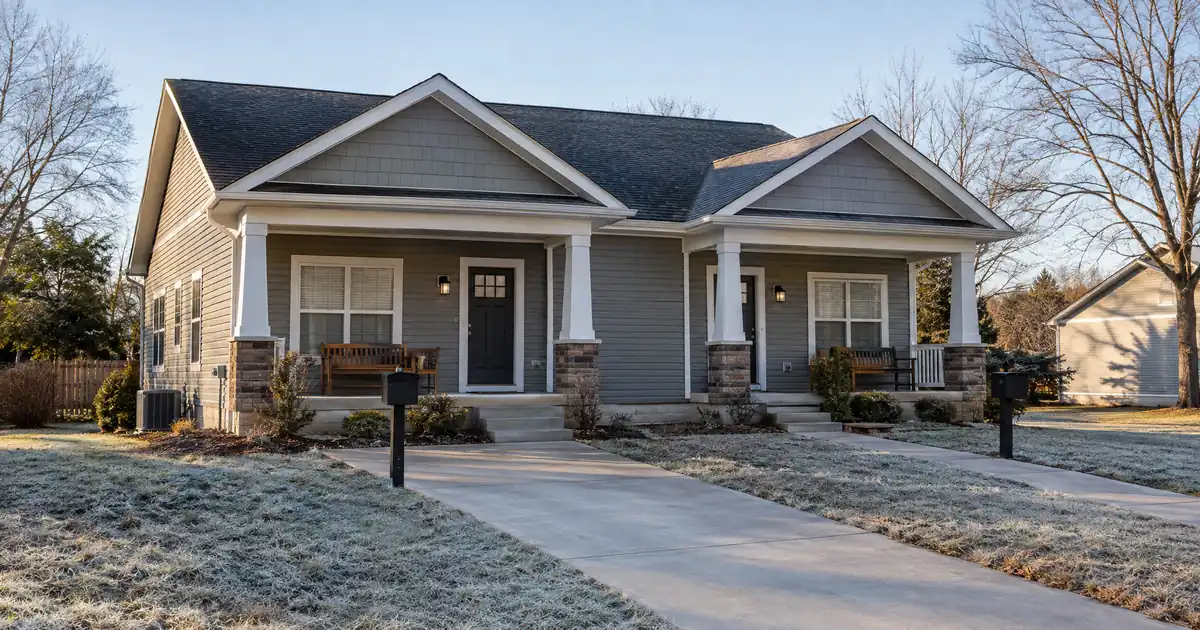
The Quick Read: You meet the rule by moving into one unit as your main home soon after signing and intending to stay at least a year. The other units can be rented to tenants. The one-year part is a statement of intent, not a lock on your life. What trips people up is year two, because a loan for the next home depends on why you are leaving and how far you are going.
Key Takeaways
- At least one borrower must move into the property as a principal residence within 60 days of signing, and intend to stay a year.
- Sixty days is the move-in deadline. It is not how long you must stay.
- On a 2-4 unit, you live in one unit and rent the rest. Renting every unit is not allowed.
- Rent from the other units counts as income, but only part of it counts.
- Keeping the building as a rental and buying another FHA home next year works only under four narrow HUD exceptions.
What You Are Promising at Signing
You are certifying that this building will be your principal residence. That means the place you live most of the year. You can have only one at a time.
FHA payment estimate
Starting assumptions reflect an example price and the FHA minimum investment. Replace them with your own figures.
Editable benchmark: 7.32% as of October 22, 2026 · Freddie Mac 30-year average via FRED®. A conventional market reference, not an FHA loan quote.
Illustrative starting assumptions: a $350,000 price, the FHA minimum investment as the down payment, a thirty-year term at the current Freddie Mac benchmark, and property taxes and insurance estimated at typical national rates. Every field is editable.
Illustrative estimate only — not a Loan Estimate, approval, quote, or commitment to lend. The rate field carries the weekly Freddie Mac thirty-year conventional benchmark, a market reference and not an FHA loan quote; your rate is set by the lender at lock. FHA mortgage insurance follows HUD’s published schedule for the term, leverage and loan size entered; taxes, insurance and dues are editable estimates; closing costs are not included; county loan limits are not checked here. Licensed in sixteen states for consumer mortgages. Lendmire is not affiliated with or acting on behalf of FHA, HUD, or the federal government.
Across the wholesale programs Lendmire places FHA files with, this promise is what unlocks the leverage. On a purchase, maximum financing is 96.5% with a 3.5% minimum investment, starting from a 580 decision score. Those terms are subject to lender guidelines and full file review. They exist because you will live in the building. An owner who sleeps down the hall from the tenants is a different credit risk than a landlord in another city.
That is also why the FHA loan programs cover one to four units but only owner-occupied homes. A duplex, triplex or fourplex qualifies. A pure rental does not.
Two details matter here:
- Only one borrower has to move in. A non-occupant co-borrower is allowed on the program. The lender may limit leverage in that setup.
- The promise is about intent at application. Life changes after closing are a different matter, which comes up later.
A Timeline From Signing to Month Thirteen
Occupancy is a process, not a moment. Here is how a clean file looks in practice.
| Phase | What you do | What to keep on file |
|---|---|---|
| Before closing | Pick your unit; tell sellers about existing tenants | Lease copies, unit choice noted |
| Signing to move-in | Move in; set up utilities; change address | Utility bills, ID, mail |
| First year | Live there; rent the other units | Leases, rent deposits |
| Month 10 to 13 | Decide: stay, rent out, or sell | Notes on your plan |
Treat the move-in window like a deadline you want to beat. A short delay for a repair is not a violation if you still move in within the window. A plan to move in “eventually” is a problem.
Move your driver’s license and voter registration to the new address. Redirect your mail. Put the utilities in your name. None of this is exotic. It is what a person who lives somewhere does, and a lender or servicer looking at the file will expect to see it.
Which Unit Should You Live In?
Pick the unit you would actually want to live in for a year, not the one that rents best. Many buyers choose to live in the weakest unit so the strongest ones can be rented out. That can be smart, but be honest about whether you can live there comfortably.
Three practical points:
- An occupied unit at closing. If a tenant is already in the unit you want, the seller needs to deliver it vacant by your move-in date, or you pick another unit. Do not assume a tenant will leave.
- A vacant unit. Vacant units are fine. They count as rentable space during underwriting, so the appraisal still assigns them a market rent.
- Your future rental plans. The unit you live in becomes a rental in year two if you move out. A unit with its own entrance and decent layout is easier to rent later.
Where the Rule Comes From
HUD’s FHA resource center says at least one borrower must occupy the property as a principal residence within 60 days of signing the security instrument and intend to continue for at least one year. That page points to HUD’s single-family policy handbook, which is the rulebook lenders follow.
Read it carefully. Two separate clocks appear. One is the 60-day window to move in. The other is the one-year intent. Many buyers blur them into “I have to live there 60 days,” and that is wrong.
How Rent From the Other Units Counts
Rent from the other units helps you qualify, but it is discounted. Under HUD Mortgagee Letter 2023-17, when you have little or no rental history on the property, the lender uses 75 percent of the lesser of the appraiser’s market rent or the actual lease rent. The haircut covers vacancy and upkeep.
Two things follow from that:
- Rent is added to your income. It does not reduce the housing payment on paper.
- You still meet the normal ratios. The base pair is 31/43 (housing payment to income, then total debts to income). Documented compensating factors can stretch it as high as 40/50 at the top tier, and the automated underwriting finding governs most files.
Money you collect in rent does help you carry the building in real life. The qualifying math is just more cautious than your bank balance.
Extra Hurdle on Three and Four Units
Three- and four-unit buildings face another test, usually called self-sufficiency. In plain terms, the lender takes the appraiser’s market rent for all units, including yours, subtracts a cushion for vacancy and upkeep, and checks that the result covers the full housing payment. Duplexes skip this test.
The exact formula sits in HUD’s policy handbook, and lenders apply it on their own forms. Ask your loan officer to run it early. A fourplex can pass your personal ratios and still miss on self-sufficiency, and that is a bad surprise to learn late.
County loan limits apply and rise with unit count. HUD publishes a county lookup tool so you can see the limit for your area.
Gray Areas and the Safe Move
Real life is messier than the rule. Here is how common situations tend to play out.
| Situation | Safe move | Risk |
|---|---|---|
| Repairs delay move-in | Keep the move-in inside the window; document the delay | Missing the window |
| Travel or short absences | Keep your address, bills and mail at the property | Looking like a non-resident |
| Co-borrower moves out | Tell your lender or servicer; check the effect on the loan | Surprise at refinance |
| Job transfer in month six | Document the reason and date | Treated as intent not to occupy |
| Active-duty orders | Provide orders to the lender; special military provisions exist | Missing paperwork |
Military borrowers have a separate provision under HUD policy. Orders showing a duty station far from the property are part of it. Talk to your loan officer before you apply, not after you are deployed.
What You Can and Cannot Rent
| What | Allowed? |
|---|---|
| Other units in a 2-4 unit | Yes |
| A room inside the unit you live in | Generally yes, as you stay in residence |
| Every unit, while you live elsewhere | No |
| A building bought only as a rental | No |
An FHA loan cannot buy an investment property or vacation home. It buys your home, which may happen to have tenants.
Planning for Year Two Before You Buy
Year two is where most borrowers get caught. Plan for it before you sign.
You have four paths at the one-year mark:
1. Stay. You keep living there and renting the rest.
2. Move out and rent the whole building. Fine if your reason is genuine, but see the limits below.
3. Sell. The loan is paid off, and the one-FHA-at-a-time question goes away.
4. Refinance. An existing FHA loan can use the FHA Streamline, which skips the appraisal, involves a limited credit review and requires a net tangible benefit. The mortgage insurance premium continues. The FHA rate-and-term refinance with an appraisal reaches 97.75% on a principal residence you have occupied for the previous twelve months. The FHA cash-out reaches 80% on a home you have owned and occupied for 12 months before the case number.
The One-FHA-Loan Trap
HUD’s FAQ on more than one FHA loan says a borrower with an existing FHA mortgage on a principal residence can get another FHA mortgage on a new principal residence only in listed circumstances. There are four:
- Relocation. You move for an employment-related reason to an area more than 100 miles from the current home.
- Increase in family size. You document more legal dependents, the home no longer fits, and your equity in the current home meets HUD’s limit.
- Leaving a jointly owned home. A co-borrower stays and keeps living there.
- Non-occupying co-borrower. Someone who was only a co-borrower on the old loan buys their own principal residence.
Moving across town to a bigger place does not fit any of these. Neither does a job change in the same metro area.
Rent as Income on the Next Loan
A 2023 HUD mortgagee letter says rent from a property you are vacating can count as income on the new loan only when you are relocating more than 100 miles away. Outside that, you qualify on your own income and the old FHA payment still counts against you.
A Year-Two Picture
Say a buyer purchases a fourplex at 96.5% financing with 3.5% down and lives in one unit. After a year, a baby arrives and they want a house across town. The move is local, so the relocation exception is out. Family size might apply, but only with documented dependents and enough equity in the building. The buyer would need to pay down the balance to HUD’s limit, or else move out and keep the building as a rental only if the lender’s guidelines allow it. Planning for that on day one avoids a scramble in month eleven. Exact terms depend on the lender’s guidelines, property type, leverage, and a full review of the borrower’s file.
If you leave the building as a rental, tell your insurer so the policy fits a landlord’s situation. Keep good records of rent and repairs.
Down payment assistance programs often carry their own occupancy terms. A relocation exception on the FHA side does not waive them.
Mistakes That Put the Loan at Risk
- Never intending to move in. Signing an owner-occupancy certification without that intent is misrepresentation.
- Counting rent as free money. Rent counts at a discount and only on the other units.
- Assuming a 3-4 unit passes automatically. Run self-sufficiency before you make an offer.
- Ignoring year two. If the next move is local, an FHA home loan may not be an option.
- Skipping the paper trail. Utilities, ID and mail at the property are cheap proof.
Lenders take misrepresentation seriously for a reason. A Federal Reserve research paper hosted by the FDIC found that borrowers who misrepresented occupancy defaulted at nearly twice the rate of otherwise similar owner-occupants and declared investors.
A genuine change of circumstances after you moved in is different. If you intended to live there and an unexpected event forced you out, that is not the same as never planning to occupy. If it happens, talk to your servicer early.
Key Terms Defined
Principal residence: The home where you live most of the calendar year. You can have only one.
Owner-occupant: A borrower who lives in the property as their main home.
Self-sufficiency test: An extra check on three- and four-unit buildings that asks whether the building’s rent can cover its own payment.
Non-occupant co-borrower: A person on the loan who does not live in the home. They add income or credit support.
Compensating factors: Documented strengths, like savings or steady income, that let a lender approve higher ratios.
Your Next Step
If you are buying a home and want to see whether an FHA loan fits your file, Lendmire can help you compare the options and what each one asks of the file. Ask about your year-two plan at the start, not at the end.
Frequently Asked Questions
How long do I have to live in a 2-4 unit I buy with FHA?
You have to move in within 60 days of signing and intend to stay at least a year. The 60 days is the move-in window. The year is your stated intent. If life changes in a way you did not plan, that is treated differently than never moving in.
Can I rent out every unit and live somewhere else?
No. An FHA loan finances your principal residence. You live in one unit and rent the others. Buying only to rent every unit is a misrepresentation.
Can I move out early?
Sometimes, if the reason is genuine and unforeseen. Moving out is not the same as breaking the rule at application, but a servicer or lender may ask questions. Document the reason and talk to your servicer before you act. A planned early move will not fit the intent you certified.
Does the self-sufficiency test apply to a duplex?
No. It is an added test for three- and four-unit buildings. A duplex goes through the normal income and debt ratios, with rent counted at the discounted figure.
Can I buy another FHA home after year one?
Only if you meet one of HUD’s four exceptions: relocation more than 100 miles for work, increased family size, leaving a jointly owned home, or being a non-occupying co-borrower on the old loan. Paying off or selling the old loan also resets the question.
For your own numbers, request a scenario review with Lendmire.
About Lendmire
Lendmire, NMLS# 2371349, is a mortgage brokerage with consumer lending licenses in 16 states. FHA, VA, conventional and jumbo purchase and refinance loans are arranged through wholesale lending partners, and each application is reviewed individually by the lender. Scotsman Guide named Lendmire a Top Mortgage Workplace in both 2025 and 2026.
Get Started
Ready to find the right loan for you?
In about 30 seconds you can review financing options available for your home or investment property. No commitment required.
Informational only. Not a Loan Estimate, approval, or commitment to lend. Program availability and eligibility are subject to lender guidelines, credit approval, property review, and underwriting.
References
1. HUD FHA Resource Center: How does FHA define owner occupant?
2. HUD Mortgagee Letter 2023-17
4. HUD FHA Resource Center: Can a person have more than one FHA loan?
5. FDIC-hosted research paper on occupancy misrepresentation
This article is part of Lendmire’s FHA loan program — full qualification details, guidelines, and scenarios live on the program page.
Related reading: FHA Occupancy Rules for a Second FHA Loan as a Repeat Buyer · Can You Do Two FHA Streamline Refinances in One Year? · Should You Use an FHA Loan If You Plan to Exit Mortgage Insurance?
Brandon Miller
Founder & CEO, Mortgage Loan Originator, Lendmire LLC
- Mortgage Loan Originator · NMLS# 1129696 · Verify on NMLS Consumer Access
- North Carolina Real Estate Broker · License# 343312 · Verify on NCREC
- North Carolina Insurance Producer · License# 19053198 · Property, Casualty, Life, Health · Verify on NAIC SBS
- Lendmire LLC · Firm NMLS# 2371349 · Verify firm licensure
Disclosure information. Lendmire is a state-licensed mortgage brokerage under NMLS# 2371349. Lendmire is not a depository institution, direct lender, or financial advisor — all loans referenced are placed through wholesale lender partners and are subject to each lender's underwriting standards. This article is provided for general informational purposes and is not a commitment to lend, nor does it constitute financial, legal, or tax advice. Loan programs, terms, rates, and qualification standards change without notice and depend on borrower profile, property type, and the state in which the subject property is located. Equal Housing Opportunity provider. NMLS Consumer Access: nmlsconsumeraccess.org.