
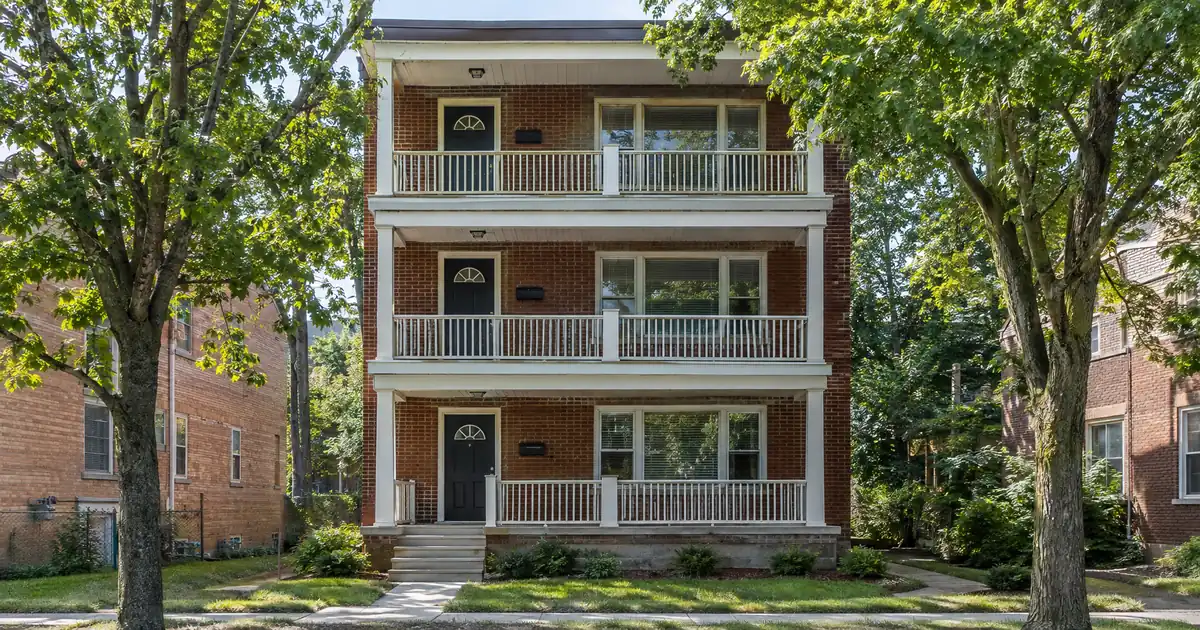
The Quick Read: An FHA loan counts only a reduced share of the rent from the units you won’t live in, and the appraiser, not the seller or you, sets that rent figure. You don’t need landlord experience to use it. On a two-unit home the counted rent can help your debt-to-income picture. On a three- or four-unit home the property itself must also pass a separate self-sufficiency test.
Key Terms Defined
Effective income: The monthly income a lender allows when it decides whether you can afford the loan.
Fair market rent: The rent the appraiser says each unit would command, shown on a small residential income appraisal form.
Net rental income: Rent left after the lender subtracts a vacancy and maintenance allowance.
Self-sufficiency test: A check on three- and four-unit homes that the property’s net rent can cover the full housing payment on its own.
Housing payment: Principal, interest, taxes, insurance and mortgage insurance, often called PITI plus the premium.
FHA payment estimate
Starting assumptions reflect an example price and the FHA minimum investment. Replace them with your own figures.
Editable benchmark: 7.32% as of October 22, 2026 · Freddie Mac 30-year average via FRED®. A conventional market reference, not an FHA loan quote.
Illustrative starting assumptions: a $350,000 price, the FHA minimum investment as the down payment, a thirty-year term at the current Freddie Mac benchmark, and property taxes and insurance estimated at typical national rates. Every field is editable.
Illustrative estimate only — not a Loan Estimate, approval, quote, or commitment to lend. The rate field carries the weekly Freddie Mac thirty-year conventional benchmark, a market reference and not an FHA loan quote; your rate is set by the lender at lock. FHA mortgage insurance follows HUD’s published schedule for the term, leverage and loan size entered; taxes, insurance and dues are editable estimates; closing costs are not included; county loan limits are not checked here. Licensed in sixteen states for consumer mortgages. Lendmire is not affiliated with or acting on behalf of FHA, HUD, or the federal government.
What Does “Counting Rent” Actually Mean?
Counting rent means the lender treats part of the projected rent from your future tenants as income when it qualifies you. It never counts all of it. A lender subtracts an allowance for vacancy and upkeep, because units sit empty and roofs leak.
Here’s the catch for first-timers: this is not your past rent as a tenant, and it is not the seller’s rent roll. It is a projection of what the units in your new home will earn, set by an appraiser and then discounted.
The structure is what makes it work. You live in one unit as your principal residence. The other units help carry the loan. Across the wholesale programs Lendmire places FHA files with, this “house hack” shape is a common reason first-time buyers look at two- to four-unit homes at all.
Which Properties Can Use Rent?
HUD Mortgagee Letter 2023-17 allows rent from the subject property when it is a one-unit home with an accessory dwelling unit (ADU), a two- to four-unit home, or an acceptable investment property. For a first-time buyer using FHA, the practical lanes are the first two, because the loan is for a home you occupy.
| Property | Rent from other units | Extra test |
|---|---|---|
| One unit, no ADU | None to count | None |
| One unit plus one ADU | Eligible | None |
| Two units | Eligible | None |
| Three or four units | Eligible | Self-sufficiency |
| Commercial space | Excluded | n/a |
A single ADU on a one-unit home doesn’t change the unit count. Two dwellings plus an ADU, though, is treated as a three-unit property, and three plus an ADU as four. That classification trap changes which test applies, so ask about it before you fall in love with a converted basement.
Commercial space is out. If the building has a storefront below, that rent can’t be used, though HUD’s handbook has separate treatment for mixed-use one- to four-unit properties.
The Owner-Occupancy Base Rule
FHA’s single-family program insures a principal residence. HUD’s Section 203(b) page says one- to four-unit structures are eligible, with about 96.5% financing and both an upfront and an annual mortgage insurance premium.
Our own program knowledge fills in the details. On the wholesale programs Lendmire works with, the maximum is 96.5% financing with a 3.5% minimum investment at a decision score of 580 or higher. The upfront premium is 1.75% of the base loan and is typically financed. The annual premium runs between 0.15% and 0.75% of the balance depending on term, amount and LTV. On a thirty-year loan above 90% LTV, it lasts for the loan term. At or below 90%, it ends after eleven years. All of this is subject to lender guidelines and full file review.
If you want the full program picture, Lendmire’s FHA loan programs page covers it. For this article, the key point is that the home must be your residence. If your real goal is a rental you won’t live in, FHA isn’t the tool, because occupancy decides the leverage.
How the Loan Is Underwritten, Step by Step
1. You pick the property. A two- to four-unit home, or a one-unit with an ADU.
2. The lender orders an appraisal. With no rental history on the property, the rent evidence is a small residential income appraisal showing fair market rent, plus leases if they exist. That rent report doesn’t have to come from an FHA roster appraiser. The value appraisal is a separate matter.
3. Rent is counted at a reduced share. Only rent from the units you won’t occupy is added to your qualifying income, and only after the vacancy and maintenance deduction. You never get credit for the full rent.
4. Your own file is still reviewed. Credit, other debts and income all count. Counted rent supplements your profile. It doesn’t replace it.
5. Three- and four-unit homes get the extra test. More on that below.
6. You move in and stay. HUD’s occupancy expectation is that the borrower makes the home a principal residence and keeps it that way for a meaningful period.
Ratios matter throughout. On the programs Lendmire places, the base pair is 31/43 (housing to total debt) with no compensating factors. Documented compensating factors can stretch to 40/50 at the top tier, and the automated finding governs most files.
Lenders document and verify rent rather than taking your word for it. The CFPB’s ability-to-repay guide explains that consumer mortgages on one- to four-unit homes require a good-faith determination that you can repay the loan.
Who Sets the Rent Number?
The appraiser does. Not you, not the listing agent, not the seller.
That matters more than most first-timers expect. A seller’s flyer might promise generous rents. The lender ignores it. If the appraiser’s fair market rent comes in lower than the flyer, the lower figure controls, and so does everything built on it.
The same goes for the deduction. A common shorthand is the “75% rule,” meaning the lender counts roughly three-quarters of rent. In HUD’s wording for the three- and four-unit test, the lender subtracts the greater of the appraiser’s vacancy and maintenance estimate or 25% of fair market rent. So 25% is a floor on the deduction. If the appraiser’s estimate is higher, it wins. Treat “75%” as shorthand, not a promise.
Why Only Part of the Rent Counts
Lenders count only part of the rent because tenants move, miss payments and break things. The deduction prices that in before you ever own the place.
It also means counted rent and collected rent are different numbers. A buyer who budgets as if every dollar of tenant rent lands in their account is setting up a bad first year. Vacancy, repairs and turnover all come out of what you actually receive. Use the lender’s counted figure to qualify. Use a more cautious figure to run your household budget.
Duplex vs. Triplex and Fourplex
Two units. The path is straightforward. Rent from the other unit, after the deduction, can help your qualifying ratios. No separate property-level test applies.
Three or four units. HUD’s knowledge-base guidance requires the lender to calculate net self-sufficiency rental income and collect form HUD-92561 from you. The calculation uses the appraiser’s fair market rent on all units, including the one you’ll live in. Then it subtracts the vacancy and maintenance deduction described above. In plain terms, the rent left after the deduction must cover the full housing payment.
Three- and four-unit homes also require three months of verified reserves after closing, a cash need on top of your down payment.
Notice the quirk. The occupied unit’s rent counts in the self-sufficiency test, yet you never collect it, and for your own qualifying income only the units you rent out are counted. Those are two separate calculations, and it helps to keep them apart.
Where the General Rule Breaks
- The appraiser’s rent comes in low. The lower number controls. Your options are a different property, a larger cash contribution, or a different loan structure. Ask before you sign what happens if the rent report misses.
- A three- or four-unit home fails the test. Same options. A property can fail even when your personal income is strong, because the test looks at the building.
- Boarders. HUD Mortgagee Letter 2025-04 gives flexibilities for documenting income from boarders, meaning people renting space inside your own unit. It applies to case numbers assigned on or after March 14, 2025. HUD does not treat an ADU renter as a boarder.
- Commercial space. Excluded from rental income.
- Rent history. HUD’s first-time buyer rules, in Mortgagee Letter 2022-17, define a first-time buyer as someone with no ownership interest in another property in the prior three years. They also let the scorecard use your own positive rent payments as a tenant. That’s about your history, not income from the new home.
Conventional loans handle this differently. Freddie Mac’s guide, for example, limits rental income on investment properties when no borrower has a year of management experience. That rule is for investment properties, so don’t read it as the owner-occupied multi-unit standard. FHA’s feature for a first-timer is that landlord experience isn’t the gate.
What the Decision Looks Like in Practice
Picture a first-time buyer eyeing a duplex. Their own income is moderate, so the housing ratio is tight at the 31/43 base pair. The appraiser’s rent report shows fair market rent on the second unit. After the deduction, a portion counts as income, which can move the ratios toward a file the automated finding accepts. Without that counted rent, the same buyer might not clear.
Now picture the same buyer with a fourplex. Personal income matters, but so does the building. If net rent after the deduction can’t cover the full payment, the property fails regardless of the buyer’s paycheck. And the three months of reserves come out of savings that might otherwise have gone to the down payment.
Run your own stress case before you commit: lower rent than hoped, a vacancy stretch, a repair. If the household budget survives that, the structure is sound. If it only works on perfect assumptions, look at a smaller property.
Mistakes to avoid:
- Trusting the seller’s rent figures
- Assuming counted rent equals cash in hand
- Forgetting the reserve requirement on three- and four-unit homes
- Ignoring that mortgage insurance is part of the payment being covered
- Treating FHA as a way to buy a pure rental. Leverage, reserves, and pricing vary by lender and program; the final terms follow the full file review.
Tax treatment can depend on your situation; borrowers should speak with a qualified tax professional before relying on any deduction or credit.
Questions worth asking a loan officer: Which appraisal form will show rent? What deduction will my file use? Does my target property trigger the three- and four-unit test? What are the reserve requirements? What’s the backup if rent comes in low? Terms vary by lender guidelines, property type, leverage, credit profile, and full file review.
Frequently Asked Questions
Do I need landlord experience to use unit rent on an FHA loan?
No. When you have no rental history on the property, the lender documents proposed rent with an appraisal showing fair market rent, plus leases if available. Your lack of landlord history doesn’t bar you, though the appraiser’s number and the lender’s deduction still apply.
Does the rent from the unit I live in count?
Not as income you’d collect. For your qualifying income, only the units you rent out count. In the three- and four-unit self-sufficiency test, though, the appraiser’s rent on all units, including yours, goes into the calculation. They are two different calculations.
Does an ADU change the rules?
One ADU on a one-unit home keeps it a one-unit property, and its rent can be eligible. Add an ADU to a two-unit home and it’s treated as three units, which brings in the self-sufficiency test and reserves. HUD also separates ADU renters from boarders.
Can I use FHA to buy a rental I won’t live in?
No. The program insures a principal residence, one to four units. Occupancy decides the leverage, so a non-occupied rental belongs in a different loan category.
What if the appraiser’s rent is lower than I expected?
The appraiser’s figure controls, so less rent counts toward your file. On a duplex that may tighten your ratios. On a three- or four-unit home it could cause the property to fail the test. Discuss options with your lender before you’re under contract if you can.
If you are buying a home and want to see whether an FHA loan fits your file, Lendmire can help you compare the options and what each one asks of the file. Program figures are subject to lender guidelines and full file review, and nothing here is a commitment to lend.
For your own numbers, request a scenario review with Lendmire.
About Lendmire
Lendmire, NMLS# 2371349, is a mortgage brokerage with consumer lending licenses in 16 states. FHA, VA, conventional and jumbo purchase and refinance loans are arranged through wholesale lending partners, and each application is reviewed individually by the lender. Scotsman Guide named Lendmire a Top Mortgage Workplace in both 2025 and 2026.
Get Started
Ready to find the right loan for you?
In about 30 seconds you can review financing options available for your home or investment property. No commitment required.
Informational only. Not a Loan Estimate, approval, or commitment to lend. Program availability and eligibility are subject to lender guidelines, credit approval, property review, and underwriting.
References
1. HUD Mortgagee Letter 2023-17
2. HUD Section 203(b) program page
3. CFPB ATR/QM Small Entity Compliance Guide
4. HUD Mortgagee Letter 2025-04
5. HUD Mortgagee Letter 2022-17
6. Freddie Mac Seller/Servicer Guide 5306.1
This article is part of Lendmire’s FHA loan program — full qualification details, guidelines, and scenarios live on the program page.
Related reading: Can a First-Time Buyer Get an FHA Loan With Minimum Down? · 15-Year vs. 30-Year FHA Loan for a First-Time Buyer: Annual MIP · FHA Loan vs Conventional for a First-Time Buyer on Income-Driven Plan
Brandon Miller
Founder & CEO, Mortgage Loan Originator, Lendmire LLC
- Mortgage Loan Originator · NMLS# 1129696 · Verify on NMLS Consumer Access
- North Carolina Real Estate Broker · License# 343312 · Verify on NCREC
- North Carolina Insurance Producer · License# 19053198 · Property, Casualty, Life, Health · Verify on NAIC SBS
- Lendmire LLC · Firm NMLS# 2371349 · Verify firm licensure
Important disclosures. Lendmire (NMLS# 2371349) is a licensed mortgage brokerage. Lendmire is not a direct lender, depository institution, or financial advisor. All loan inquiries are subject to lender underwriting; this article does not constitute a commitment to lend. Rates, terms, and program guidelines are subject to change without notice and vary by borrower profile, property type, and state. Information in this article is general in nature and is not financial, legal, or tax advice. Equal Housing Opportunity. NMLS Consumer Access: nmlsconsumeraccess.org.