
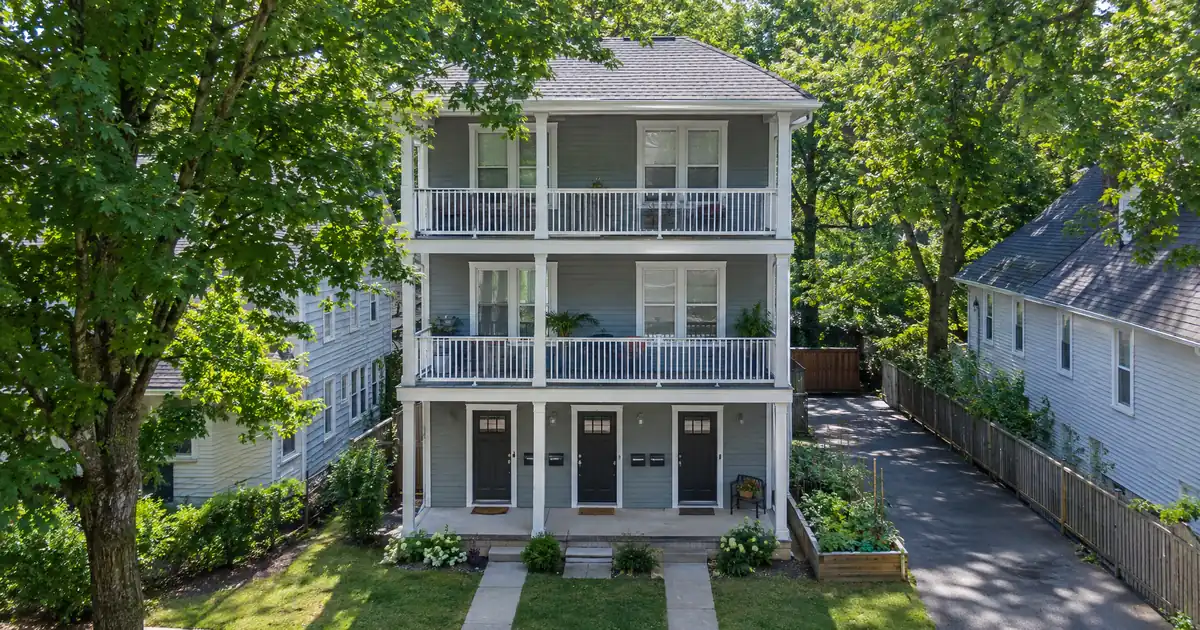
The Quick Read: An FHA loan can finance a duplex, triplex or fourplex as long as you live in one of the units. You can put down as little as 3.5% with a qualifying credit score. Rent from the other units helps you qualify, but only part of it counts. Triplexes and fourplexes also face a rent test and a reserve requirement that duplexes mostly avoid. Exact terms depend on the lender’s guidelines, property type, leverage, and a full review of the borrower’s file.
Key Takeaways
- FHA does not lend. It insures loans that approved lenders make, and you must live in the property as your home.
- The wholesale programs Lendmire places FHA files with allow up to 96.5% financing from a 580 decision score.
- Two-unit purchases are judged mostly on your income and ratios. Three- and four-unit purchases must also pass a rent-versus-payment test.
- Projected rent is discounted for qualifying, and you cannot subtract it from your payment.
- County loan limits apply and change every year, so check yours before you shop.
What Does “FHA Multifamily” Actually Mean?
It means a standard FHA purchase loan used on a two-, three- or four-unit building. There is no separate product. The same FHA loan programs that finance a single-family house also cover a small building, with extra tests layered on as the unit count rises.
FHA payment estimate
Starting assumptions reflect an example price and the FHA minimum investment. Replace them with your own figures.
Editable benchmark: 7.32% as of October 22, 2026 · Freddie Mac 30-year average via FRED®. A conventional market reference, not an FHA loan quote.
Illustrative starting assumptions: a $350,000 price, the FHA minimum investment as the down payment, a thirty-year term at the current Freddie Mac benchmark, and property taxes and insurance estimated at typical national rates. Every field is editable.
Illustrative estimate only — not a Loan Estimate, approval, quote, or commitment to lend. The rate field carries the weekly Freddie Mac thirty-year conventional benchmark, a market reference and not an FHA loan quote; your rate is set by the lender at lock. FHA mortgage insurance follows HUD’s published schedule for the term, leverage and loan size entered; taxes, insurance and dues are editable estimates; closing costs are not included; county loan limits are not checked here. Licensed in sixteen states for consumer mortgages. Lendmire is not affiliated with or acting on behalf of FHA, HUD, or the federal government.
Think of it as a house-hack in plain clothes. You buy a small building, live in one unit and rent out the others. The other tenants help carry the cost of owning.
FHA’s reach stops at four units. Five or more units fall into commercial and multifamily financing, which works differently and is outside this article.
Here is the catch most first-timers miss. The occupancy rule is not a formality. The loan is built for a home you live in, so the property must be your principal residence.
Do You Have to Be a First-Time Buyer?
No. FHA does not require first-time status. Repeat buyers use the same program. “First-time buyer” is a label lenders and assistance programs use, and it does not change the FHA underwriting for a small building.
The requirement that does matter is occupancy. At least one borrower must move in within a short window after closing and plan to stay for at least a year. That comes from the handbook that governs the program, HUD Handbook 4000.1. Your loan officer will give you the exact terms for your file.
A non-occupant co-borrower, such as a parent, is allowed on the programs Lendmire works with. On a multi-unit property, though, the leverage available can drop when someone on the loan will not live there. Ask before you count on a co-signer.
The Core Numbers at a Glance
Each figure below is a program guideline, not a promise. All of them are subject to lender guidelines and full file review.
| Item | What the wholesale programs look for |
|---|---|
| Maximum financing | 96.5% LTV on a purchase |
| Minimum investment | 3.5% of the lesser of price or value |
| Decision score | 580 or higher |
| Ratios | 31/43 base; up to 40/50 with documented factors |
| Seller contributions | Up to 6% of the price |
| Occupancy | You live in one unit as your home |
| Units | One to four |
LTV is loan-to-value, the loan as a percentage of the price or appraised value. A 96.5% maximum means you bring at least 3.5%. The “decision score” is the credit score the lender uses to decide eligibility. When more than one borrower is on the loan, it is based on the lowest score among them.
Ratios compare your debts to your income. The first number is your housing payment as a share of income. The second is all monthly debts together. Across the programs Lendmire places, most files run through an automated finding, and that finding governs more often than the base pair does.
There is also mortgage insurance, which is part of every FHA loan. The upfront premium is 1.75% of the base loan, and it is usually financed. The annual premium falls between 0.15% and 0.75% of the balance, depending on term, loan amount and LTV. On a thirty-year loan above 90% LTV it lasts for the loan’s term. At or below 90% it ends after eleven years. Most small-building purchases at this leverage land in the first group.
How Does Rental Income Help You Qualify?
Rent from the units you do not live in can count as qualifying income, but only a portion of it. HUD’s Mortgagee Letter 2023-17 allows rental income from the subject property on a two- to four-unit purchase. Commercial-space income cannot be included.
Here is how it works in practice:
1. The appraiser reports the market rent for each unit on the small residential income appraisal form (Form 1025). 2. The lender counts a discounted share of the rent from the units you will not occupy. 3. If you have a signed lease, the lender uses the lesser of the lease rent or the market rent. 4. That discounted figure is added to your qualifying income. It does not touch the unit you live in.
One point trips people up. The rent cannot be subtracted from your mortgage payment to make the payment look smaller. HUD’s archived rental income guide says projected rent counts for the rental units only and cannot serve as a direct offset. The rent is income, not a payment credit.
Picture a duplex where your income alone sits near the ratio limits. The rent from the second unit, discounted, can nudge your ratios under the line. Rent that looks generous on a listing can still leave you short if the appraiser’s market rent comes in lower.
The Self-Sufficiency Test (Triplexes and Fourplexes Only)
Three- and four-unit properties must pay for themselves on rent alone. This is the self-sufficiency test, and a duplex does not face it. It is the main reason first-timers end up with duplexes.
The test works like this. The appraiser’s market rent from all units, including the one you will live in, is added up. A vacancy and maintenance deduction comes off. What is left must at least equal the full monthly payment on the loan, including principal, interest, taxes, insurance and mortgage insurance.
Run it with percentages instead of dollars. Say the leftover rent comes to 110% of the payment. The property passes. Say it comes to 92%. The property fails, no matter how strong your salary is. At that point the test, not your paycheck, decides the deal.
The deduction matters. Rent that looks like a comfortable cushion on paper shrinks after vacancy and maintenance come out. The archived guide describes net rental income exactly this way, which is why a building that merely breaks even at full rent will not pass.
A high price or a thin rent roll can sink a fourplex that looks fine on a listing. The practical move is to ask your loan officer for a rough self-sufficiency check before you write an offer, not after the appraisal.
Reserves and Loan Limits
Three- and four-unit purchases carry a reserve requirement. Reserves are cash you still hold after closing, counted in months of the full payment. The amount is set in the rental income policy letter linked above. HUD’s archived guide historically barred using gift money for those reserves, so confirm the current handbook language with your lender. Rental income used to qualify on a two-unit property can also trigger a reserve requirement. Every figure here varies by lender and program — guidelines, property type, leverage, and credit profile all apply.
Loan limits work differently. They depend on the county and on the number of units, and they rise with each added unit. HUD resets them every year, and Mortgagee Letter 2025-23 shows how the floor and ceiling are built from the national conforming limit. Counties sit anywhere between those bounds. Because they change annually, check your county’s current limit with your loan officer rather than relying on a number you read somewhere.
The limit caps what FHA will insure. It does not cap what a property can sell for. If the price sits above the limit, you cover the difference in cash.
Duplex vs. Triplex vs. Fourplex
Each added unit adds rent and adds hurdles. The best pick depends on how much cash you hold and how much landlord work you want.
| Factor | Duplex | Triplex | Fourplex |
|---|---|---|---|
| Rent test | No | Yes | Yes |
| Reserves | Case by case | Required | Required |
| Rent from others | One unit | Two units | Three units |
| Landlord workload | Lightest | Moderate | Heaviest |
| Best fit | Tightest cash | Stronger reserves | Strong cash, strong rents |
For most first-timers the duplex is the practical starting point. It carries the lowest hurdles and the least management. The fourplex pays off when the numbers pass the rent test with room to spare. That does happen, just less often than the listings suggest.
The Step-by-Step Purchase Process
1. Get pre-approved. The lender pulls credit and reviews income and assets, then checks your decision score against the 580 floor.
2. Pick a unit count. Use the rent test and reserve rules above to decide between a duplex and a larger building.
3. Make an offer. The county limit and unit count already set the ceiling on what FHA will insure.
4. Sign your occupancy commitment. You are agreeing to live in one unit as your home.
5. Order the appraisal. The appraiser reports value and market rent on Form 1025. The CFPB’s home loan toolkit says you are entitled to a copy before closing.
6. Inspect the building. FHA sets minimum condition standards, and separate utilities and unit-level safety items can come up.
7. Review your disclosures. Read the Loan Estimate and, later, the Closing Disclosure line by line. The same toolkit encourages comparing Loan Estimates from several lenders.
8. Close and move in.
Shopping matters here. Two lenders can respond differently to the same duplex because lenders may add their own rules beyond FHA’s minimums. A broker such as Lendmire compares options across wholesale lenders, but you should compare the full terms on every Loan Estimate you receive.
Where the Rules Bend or Break
The general rules above hold for most files. These cases do not follow them cleanly.
An accessory dwelling unit (ADU). On a single-family home, an ADU keeps the property a one-unit property. A 2023 HUD mortgagee letter allows ADU rent to count with reserves, with extra limits when there is no rental history. On a two- to four-unit building, the same ADU counts as an additional unit and can push you into the next set of tests.
Commercial space. A storefront below the apartments cannot add to your qualifying income. Ask your loan officer early.
Unpermitted or unclear units. A basement apartment that was never permitted can change the legal unit count. The count affects limits, appraisal and eligibility. Confirm what the building legally is before you fall for it.
A non-occupant co-borrower on a larger building. As noted earlier, leverage can drop on multi-unit properties. If only the non-occupant has a credit score, the file may have to be manually underwritten.
Tenants already in place. Ask for the leases and understand what rights the tenants keep after closing. Their rents also feed the appraisal.
Lender overlays. One lender may set a higher credit floor or larger reserves than another. That is why two quotes on the same property can differ.
What Happens After You Close?
You live in one unit and collect rent from the others. Treat that rent as variable. Vacancy happens, and a unit that sits empty for a few months still leaves the full payment due.
The occupancy commitment lasts for a stated period. After that, some owners move out and keep the building as a rental. The loan terms and any later purchase rules depend on your lender and your file, so talk it through before you plan on it.
If plans change early, be honest with your lender. The loan assumes you live there, and the program is not designed for a quiet switch to renting out every unit.
FHA or Conventional for a Small Building?
FHA’s draw is the low minimum investment and flexibility on credit. Conventional loans can cost less in mortgage insurance for borrowers with higher scores and bigger down payments, but they often ask for more cash up front on a multi-unit property.
If you want to run both side by side, Lendmire’s guide How to Buy a 2–4 Unit as a First-Time Buyer on a Conventional Loan covers the other path. For a direct comparison, see Lendmire’s FHA loan vs conventional loan for a 2-4 unit.
This one is a genuine toss-up for many buyers. A strong score and a larger down payment can tilt toward conventional. A thinner cash position and a duplex often tilt toward FHA.
Key Terms Defined
FHA loan: A mortgage insured by the Federal Housing Administration and made by an approved lender.
LTV (loan-to-value): The loan amount as a percentage of the home’s price or appraised value.
Decision score: The credit score a lender uses to decide eligibility, based on the lowest score among borrowers.
Self-sufficiency test: A rent test for three- and four-unit properties. Net rent must cover the full monthly payment.
Reserves: Cash you still have after closing, counted in months of the full payment.
Mortgage insurance premium: The FHA charge, paid upfront and annually, that protects the lender if the loan defaults.
Overlay: A lender rule stricter than the program’s minimum.
Frequently Asked Questions
Can I buy a duplex with an FHA loan?
Yes, if you live in one unit as your home. A duplex is the simplest small-building purchase because it skips the self-sufficiency test. Your income, ratios and score carry most of the decision, with discounted rent from the second unit helping you qualify.
Can I buy a fourplex with FHA?
Yes, but it faces more tests. The building must pass the rent test on all four units after a vacancy and maintenance deduction, and you need verified reserves after closing. Strong rents and strong cash make it workable. Thin ones do not.
Can I use gift money for the down payment?
Gift funds are commonly allowed toward the minimum investment on FHA purchases, subject to lender guidelines. Reserves on three- and four-unit properties have historically been treated differently, so confirm with your lender which funds count for which purpose.
What if I want to buy a building with five or more units?
That falls outside the FHA one- to four-unit program. Larger buildings are financed through commercial or multifamily products with different rules, and owner-occupancy does not play the same role.
Does my co-signer have to live in the building?
No, a non-occupant co-borrower is allowed on the programs Lendmire places. On two- to four-unit properties the available leverage can fall, and the file may need manual underwriting if the co-signer holds the only credit score. Ask your loan officer how it would work for your file.
Ready to Look at a Duplex or Fourplex?
If you are buying a home and want to see whether an FHA loan fits your file, Lendmire can help you compare the options and what each one asks of the file. Program figures are subject to lender guidelines and full file review, and nothing here is a commitment to lend.
For your own numbers, request a scenario review with Lendmire.
About Lendmire
Lendmire, NMLS# 2371349, is a mortgage brokerage with consumer lending licenses in 16 states. FHA, VA, conventional and jumbo purchase and refinance loans are arranged through wholesale lending partners, and each application is reviewed individually by the lender. Scotsman Guide named Lendmire a Top Mortgage Workplace in both 2025 and 2026.
Get Started
Ready to find the right loan for you?
In about 30 seconds you can review financing options available for your home or investment property. No commitment required.
Informational only. Not a Loan Estimate, approval, or commitment to lend. Program availability and eligibility are subject to lender guidelines, credit approval, property review, and underwriting.
References
1. HUD Mortgagee Letter 2023-17
2. HUD archived reference guide: Rental Income
3. HUD Mortgagee Letter 2025-23
4. CFPB Your Home Loan Toolkit
This article is part of Lendmire’s FHA loan program — full qualification details, guidelines, and scenarios live on the program page.
Related reading: VA Loan vs FHA Loan for a First-Time Buyer With Little Down · Conventional Loan vs FHA Co-Borrower Rules for a First-Time Buyer · How to Handle FHA Loan Occupancy on a 2-4 Unit After Year One
Brandon Miller
Founder & CEO, Mortgage Loan Originator, Lendmire LLC
- Mortgage Loan Originator · NMLS# 1129696 · Verify on NMLS Consumer Access
- North Carolina Real Estate Broker · License# 343312 · Verify on NCREC
- North Carolina Insurance Producer · License# 19053198 · Property, Casualty, Life, Health · Verify on NAIC SBS
- Lendmire LLC · Firm NMLS# 2371349 · Verify firm licensure
Disclosures. The information presented in this article is general market commentary, not financial, legal, or tax advice. Lendmire is a mortgage brokerage (NMLS# 2371349) — not a direct lender or depository institution — and loan placement is subject to lender underwriting. Nothing in this content represents a commitment to lend. Loan terms, pricing, and program availability vary based on borrower qualifications, property characteristics, and state of subject property, and are subject to change at any time. Lendmire complies with Equal Housing Opportunity requirements. Consumer access: nmlsconsumeraccess.org.