
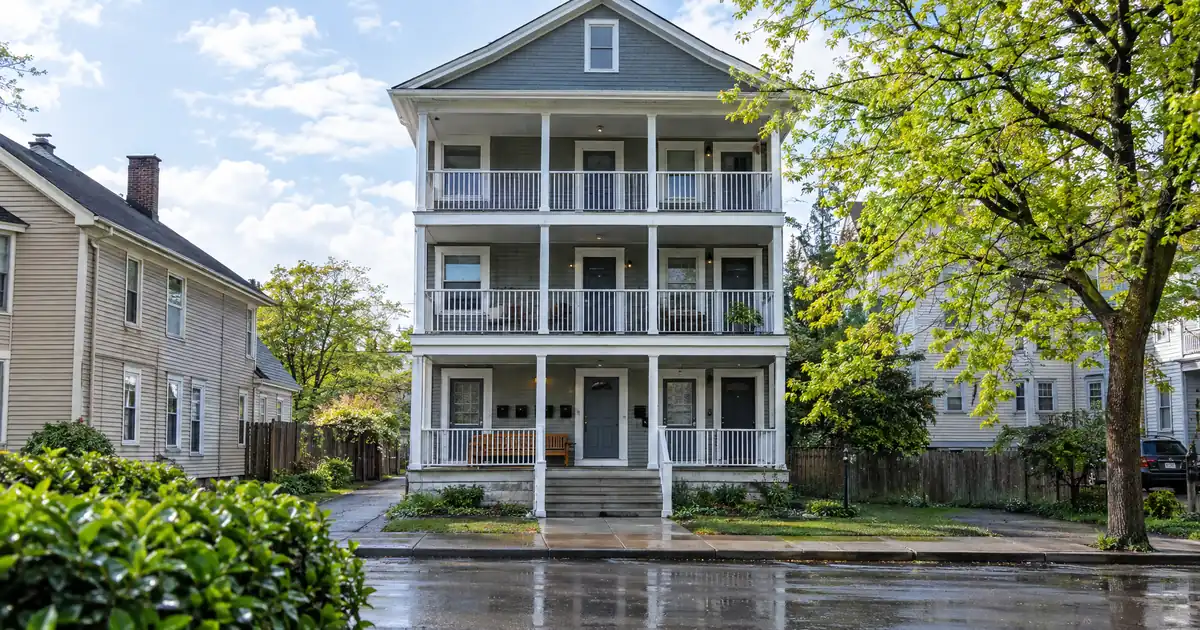
The Quick Read: You can do it, as long as you live in one of the units. Occupancy makes the property a principal residence, and that allows leverage up to 95% LTV, which means 5% down at the minimum. The 97% first-time-buyer option stops at one unit. The rent from the other units can help you qualify, but only after documentation and a haircut, and these buildings carry a reserve requirement that a one-unit home does not. The exact numbers vary by lender and program and follow a full review of property, leverage, and credit.
Most first-time buyers picture a duplex as a house that pays for itself. The loan underwriter sees something more cautious. Your lender counts the rent from the other units only in part, only with paper behind it, and only if you meet a few tests. This guide walks through how the loan is built, step by step, and where the general rules break.
Conventional payment estimate
The starting figures are an example price at the first-time buyer’s minimum down payment. Replace them with yours.
Editable benchmark: 7.32% as of October 22, 2026 · Freddie Mac 30-year average via FRED®. A conventional market reference, not a conventional loan quote.
Estimate seeded at the low end of Fannie Mae’s published range (0.58%–1.86% a year); the insurer prices the actual premium on the score and the leverage. Applies only above 80% loan-to-value.
Illustrative starting assumptions: a $350,000 price, the first-time buyer’s minimum down payment, a thirty-year term at the current Freddie Mac benchmark, mortgage insurance at the low end of Fannie Mae’s published range, and property taxes and insurance estimated at typical national rates. Every field is editable.
Illustrative estimate only — not a Loan Estimate, approval, quote, or commitment to lend. The rate field carries the weekly Freddie Mac thirty-year conventional benchmark, a market reference and not a conventional loan quote; your rate is set by the lender at lock. The mortgage insurance figure is an editable estimate seeded from Fannie Mae’s published typical range, not a premium quote; the insurer prices the actual premium, and the cancellation month assumes scheduled payments with no extra principal and no change in value. Taxes, insurance and dues are editable estimates; closing costs are not included. Conforming loan limits apply by county. Licensed in sixteen states for consumer mortgages.
What Is a 2–4 Unit on a Conventional Loan?
A 2–4 unit is a residential building with two, three, or four separate living units, such as a duplex, triplex, or fourplex. On a conventional loan, it counts as a principal residence only if you live in one of the units. Fannie Mae’s Selling Guide treats it that way, and that one fact drives everything else.
Five or more units is a different world.
Occupancy is also the dividing line on leverage. If nobody lives in the building, it is an investment property, and the leverage caps drop sharply for two- to four-unit buildings. Live in one unit, and the owner-occupied limits apply. That is the whole reason house hacking works as a first purchase.
How Much Can You Borrow Against the Property?
Plan on up to 95% LTV on a two- to four-unit principal residence purchase, which means a 5% down payment at the minimum. Fannie Mae’s Eligibility Matrix lists that cap for fixed and adjustable loans alike. LTV, or loan-to-value, is your loan amount divided by the property’s value or price, whichever is lower. Final terms depend on the lender’s guidelines, the property type, and the borrower’s complete credit picture.
Here is the catch that trips up first-timers. The 97% option (3% down) for first-time buyers applies to a one-unit principal residence. A duplex does not qualify for it. If you read that a first-time buyer can put 3% down on a conventional loan, the statement is true for a single-family home and false for a triplex. Each figure is subject to lender guidelines and a complete review of property type, leverage, and credit.
Fannie Mae’s Bulletin 2025-12 raised the maximum LTV on two- to four-unit primary residences to 95% for eligible loans, up from lower caps on two-unit and three- to four-unit buildings. Older lender matrices still show the old numbers, so ask your loan officer which version applies to your file.
| Occupancy | Units | Typical maximum LTV (purchase) |
|---|---|---|
| Principal residence, first-time buyer, fixed rate | 1 | 97% |
| Principal residence, other | 1 | 95% |
| Principal residence | 2–4 | 95% |
| Second home | 1 | 90% |
| Investment property | 2–4 | 75% |
Every figure is subject to lender guidelines and full file review. Programs like HomeReady and Home Possible also carry an income limit of 80% of area median income, and the 2–4 unit purchase on HomeReady is capped at 95% as well.
Who Counts as a First-Time Buyer?
You are a first-time buyer if you have had no ownership interest in residential property, alone or jointly, during the three years before you buy. Fannie Mae’s Glossary uses a three-part test: you are purchasing the property, you will live in it as your principal residence, and you meet that three-year look-back.
Two things surprise people. First, “first-time” does not mean “never.” Someone who sold a home four years ago can qualify. Second, the test looks at everyone on the loan. If you apply with a spouse or partner who owned a home last year, the file may not qualify as first-time. Displaced homemakers and single parents have a carve-out in the agency rules, so ask if that fits you.
Does being a first-time buyer help on a 2–4 unit? Less than you might expect. The leverage bonus stops at one unit, so the label mostly matters for programs with first-time-buyer features, such as certain pricing waivers and the education requirement below.
Education is part of HomeReady. When every occupying borrower on a HomeReady purchase is a first-time buyer, at least one must complete homeownership education from a qualified provider. Fannie Mae’s HomeView course satisfies it, and so does HUD-approved counseling. HomeReady allows two- to four-unit principal residences, but not condos or co-ops.
How the Loan Is Underwritten, Step by Step
Underwriting a 2–4 unit follows the same path as any conventional purchase, with extra steps for the rental units. Here is the sequence.
1. Credit and automated review. Most files run through the lender’s automated underwriting system. Across the wholesale conventional programs we place with, scores start at 620, and the automated finding governs most files. The total debt ratio ceiling is 50%. A total debt ratio, or DTI, is your monthly debts divided by your monthly income.
2. Income and assets. You document your own income as you would for any home. You also show where the down payment, closing costs, and reserves are coming from.
3. Rental income decision. The lender decides whether, and how much of, the other units’ rent counts. More on this below, because it is the step that matters most.
4. Appraisal with a rent schedule. The appraiser values the building and estimates market rent for each unit.
5. Mortgage insurance and pricing. Above 80% LTV, mortgage insurance applies. Pricing adjustments vary with credit score, LTV, occupancy, and number of units.
6. Final review. The lender confirms occupancy intent, reviews the full file, and issues a Closing Disclosure.
Mortgage insurance deserves a plain explanation. It protects the lender, not you, when your down payment is under 20%. You can request cancellation when your balance reaches 80% of the original value, if your payment history is good, you have no second liens, and the value has not dropped. The servicer must end it automatically at 78%, under the Homeowners Protection Act. Published typical annual premiums run from 0.58% to 1.86% of the balance. That is a range for context, not a quote.
Can the Other Units’ Rent Help You Qualify?
Yes, but only some of it and only with documentation. The rent from the unit you occupy never counts. Rent from the other units can offset the housing payment in your debt ratio, subject to the rules below.
Here is how the lender thinks about it. If you currently own a home or have a housing expense, and you have at least a one-year history of receiving rental income or documented property-management experience, Fannie Mae’s rules put no cap on the rental income used. Without that history, the rental income counted for a principal residence generally cannot exceed the property’s full monthly housing cost.
First-time buyers almost never have landlord history. That puts most of you in the limited group. Many lenders also apply a vacancy factor to market rent when there is no rental history. The figure one lender summary cites is 75% of the lesser of market rent or lease rent, but treat that as something to confirm with your loan officer instead of a fixed rule.
The housing-expense test is the first-timer gotcha. A renter generally has a current housing expense, so you can usually meet it. A buyer living rent-free with family often cannot, and that can block the use of subject-property rent entirely. This is an inference from the rule, so confirm with your loan officer before you plan around it.
What does the lender need to see?
- The appraiser’s market-rent analysis on Form 1025, the Small Residential Income Property Appraisal Report.
- Leases for tenant-occupied units, where they exist.
- A rental income worksheet (Fannie Mae’s Form 1037 serves this purpose).
- Gross monthly rent reported to Fannie Mae on every two- to four-unit principal residence, even when no rent is used to qualify.
On the debt side, your own residence is counted at its full monthly housing cost. The rental units’ expenses get netted inside the rental calculation. The result is that the rent helps, but never as much as the sticker rent suggests. (Your future tenants will not know or care about the underwriter’s haircut, which is why budgeting conservatively matters.)
Reserves: The Requirement That Surprises Buyers
A one-unit home has no minimum reserve requirement under Fannie Mae’s automated underwriting. A two- to four-unit principal residence does: Fannie Mae’s reserve rules call for six months. Reserves are liquid funds left after closing, measured in months of the property’s full monthly housing cost, including principal, interest, taxes, and insurance. Leverage, reserves, and pricing vary by lender and program; the final terms follow the full file review.
Do the thinking this way. Your cash need is the down payment, plus closing costs, plus six months of reserves on a bigger building. The automated finding can add more reserves if the risk assessment calls for it.
Gift funds can help with the down payment under many programs, but some programs limit gifts until you meet a minimum personal contribution on a two- to four-unit purchase. Check that rule before a relative wires money.
Where the General Rules Break
The headline rules cover most files. These edge cases are where good plans fail.
Manual underwriting. If the automated system does not approve the loan, a manual review applies tighter limits. Manual loans use 36% or 45% ratio limits with the reserve and score factors of the Eligibility Matrix, and the leverage caps on 2–4 units can be lower. In practice, automated approval matters a great deal on these buildings.
A parent cannot just co-sign to rescue a thin file.
Landlord education. Some programs, including Home Possible on two- to four-unit purchases, may require a landlord education certificate.
Appraisal waivers. Generally, two- to four-unit properties are not eligible for appraisal waivers, so expect a full appraisal. Some lenders also ask for an operating income statement. That is lender-specific, but typical.
Mixed-use buildings. A building with a storefront on the ground floor is not a standard residential 2–4 unit. Ask before you fall in love with one.
Cash-out and investment. If you later refinance for cash, the cap on a two- to four-unit principal residence is 75% LTV on a conventional loan. Investment-property purchases of two to four units also run at 75%. Nobody living in the building changes everything. Terms vary by lender guidelines, property type, leverage, credit profile, and full file review.
Credit events. Agency waiting periods apply after a bankruptcy, foreclosure, or short sale: four years from a chapter 7 discharge, seven from a foreclosure, and four from a short sale or deed-in-lieu. Documented extenuating circumstances can shorten them.
FHA alternative. FHA has its own limits and rental rules for two- to four-unit buildings. If the conventional numbers do not fit, Lendmire’s piece FHA Loan vs Conventional Loan for a 2-4 Unit First-Time Buyer lays out the tradeoffs.
What About the Loan Size Limit?
Conforming loan limits are set by the Federal Housing Finance Agency. The FHFA’s loan limit FAQ confirms that limits for two-, three-, and four-unit homes are indexed separately and sit above the one-unit baseline. County values vary and are published on FHFA’s conforming loan limit page, so check your county there. High-cost areas carry higher limits, and a loan above the limit moves to jumbo programs.
One more point on the matrix: it includes a footnote for high-balance two- to four-unit loans. Do not assume the 95% cap carries over to a high-balance loan. Have your loan officer read the footnote against your amount.
What Does the Decision Look Like in Practice?
Say you are a renter with steady traditional employment income and have found a duplex where you would live in one unit. Walk through the decision in this order.
1. Count your cash. Down payment at 5% or more, closing costs, and six months of reserves. If the total is out of reach, a one-unit home at 3% down may be the better first step.
2. Check the household. Everyone on the loan must pass the three-year first-time test for first-time features to apply. Confirm whether you have a current housing expense.
3. Run the qualification both ways. Ask the lender to show your debt ratio with no rent counted and with the documented rent counted. If you only pass with rent, the file hangs on the appraisal’s rent schedule.
4. Budget below the rent used for lender review. The lender’s number and your real number will differ. Plan for vacancy and repairs, and for a landlord insurance policy, since insurance on multi-unit homes can be priced differently.
5. Compare programs. Weigh conventional against FHA. Lendmire’s article Conventional Loan Down Payment Rules for a First-Time Buyer on a 2–4 Unit covers the cash side in more depth.
6. Plan for life after closing. Occupancy intent is certified at application and must be genuine at closing. If your plans may change, talk it through with your loan officer first.
When is a single-family home the better first purchase? Often when cash is tight, when you do not want tenants, or when the file only works with rent counted at full strength. It is a genuine toss-up for many buyers. The duplex offers income and a path into landlording, while the single-family offers 3% down and no reserve requirement. Neither is wrong.
Key Terms Defined
Principal residence: The home you live in as your main address. On a 2–4 unit, you must occupy one unit.
LTV (loan-to-value): Your loan amount divided by the property’s value or price, whichever is lower.
Reserves: Liquid savings left after closing, measured in months of your housing payment.
DTI (debt-to-income ratio): Your monthly debts divided by your monthly gross income.
Mortgage insurance: Coverage that protects the lender when your down payment is under 20%. It cancels at 80% on request and ends automatically at 78%.
Form 1025: The appraisal report used for two- to four-unit properties, including a rent schedule.
Frequently Asked Questions
Can I put 3% down on a duplex as a first-time buyer?
No. The 97% first-time-buyer option applies to one-unit principal residences. A two- to four-unit purchase tops out at 95% LTV, so 5% down is the minimum, subject to lender guidelines and full file review.
Can I count the rent from the unit I live in?
No. Rent from the unit you occupy generally cannot be used to qualify. Documented rent from the other units may count, usually with a vacancy factor and, for a first-time buyer without rental history, a limit tied to the property’s housing cost.
Do I need reserves for a 2–4 unit?
Yes. Fannie Mae’s automated underwriting requires six months of reserves on a two- to four-unit principal residence, while a one-unit home has no minimum. Additional reserves can apply based on the risk assessment of the file.
Can I move out and rent the whole building later?
Occupancy must be genuine at closing, and you certify your intent at application. Whether and when you can convert the property to a rental depends on your loan documents and lender guidelines, so raise the question with your loan officer before applying.
Is HomeReady only for first-time buyers?
No. Repeat buyers can use it too. The education requirement applies only when all occupying borrowers are first-time buyers. HomeReady also carries an income limit of 80% of area median income.
If you are buying a home and want to see whether a conventional loan fits your file, Lendmire can help you compare the options and what each one asks of the file. Programs are subject to lender guidelines, and nothing here is a commitment to lend.
For your own numbers, request a scenario review with Lendmire.
About Lendmire
Lendmire is a mortgage brokerage (NMLS# 2371349) licensed for consumer mortgage lending in 16 states, arranging FHA, VA, conventional and jumbo purchase and refinance loans through a wholesale lending network. Eligibility is determined by the lender on each file. Scotsman Guide named Lendmire a Top Mortgage Workplace in both 2025 and 2026.
Get Started
Ready to find the right loan for you?
In about 30 seconds you can review financing options available for your home or investment property. No commitment required.
Informational only. Not a Loan Estimate, approval, or commitment to lend. Program availability and eligibility are subject to lender guidelines, credit approval, property review, and underwriting.
References
1. Fannie Mae Selling Guide B3-3.1-08, Rental Income
2. Fannie Mae Eligibility Matrix
3. Fannie Mae Selling Guide Glossary, First-Time Homebuyer
4. Fannie Mae Selling Guide B3-4.1-01, Minimum Reserve Requirements
5. FHFA Conforming Loan Limit FAQs
This article is part of Lendmire’s conventional loan program — full qualification details, guidelines, and scenarios live on the program page.
Related reading: Homeready Requirements for a First-Time Buyer on a Conventional Loan · PMI Appraisal vs Refinance for a First-Time Buyer on a Conventional Loan · Conventional Loan Job History Requirements for a First-Time Buyer
Brandon Miller
Founder & CEO, Mortgage Loan Originator, Lendmire LLC
- Mortgage Loan Originator · NMLS# 1129696 · Verify on NMLS Consumer Access
- North Carolina Real Estate Broker · License# 343312 · Verify on NCREC
- North Carolina Insurance Producer · License# 19053198 · Property, Casualty, Life, Health · Verify on NAIC SBS
- Lendmire LLC · Firm NMLS# 2371349 · Verify firm licensure
Disclosure information. Lendmire is a state-licensed mortgage brokerage under NMLS# 2371349. Lendmire is not a depository institution, direct lender, or financial advisor — all loans referenced are placed through wholesale lender partners and are subject to each lender's underwriting standards. This article is provided for general informational purposes and is not a commitment to lend, nor does it constitute financial, legal, or tax advice. Loan programs, terms, rates, and qualification standards change without notice and depend on borrower profile, property type, and the state in which the subject property is located. Equal Housing Opportunity provider. NMLS Consumer Access: nmlsconsumeraccess.org.