
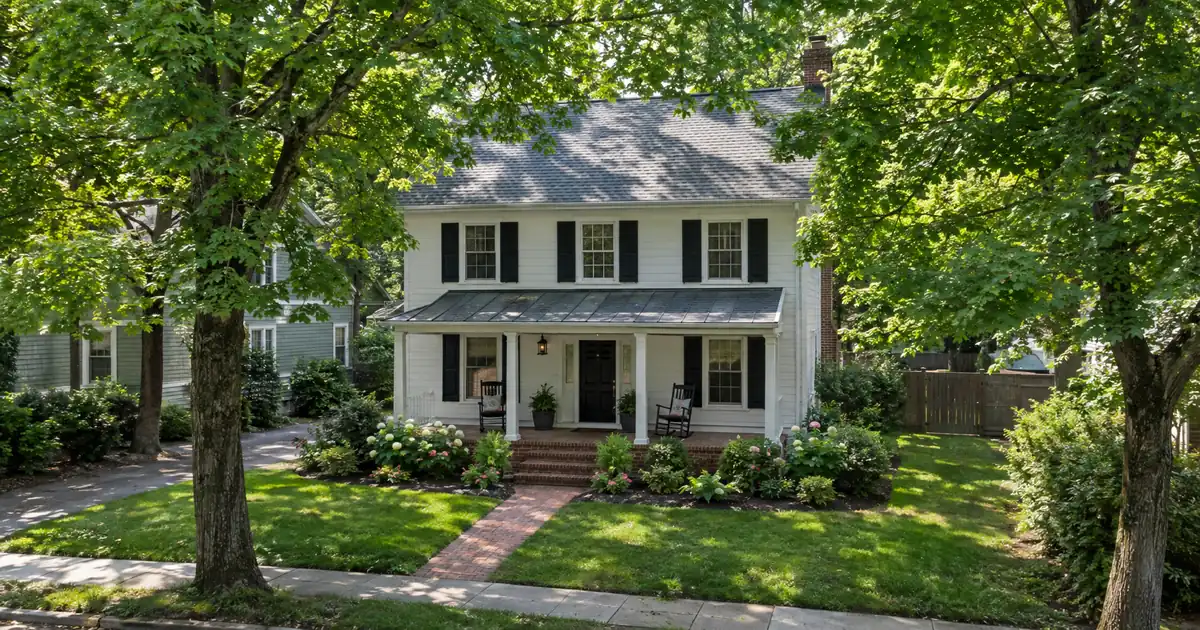
The Quick Read: The minimum down payment on a conventional loan depends on how you will use the home, not on a single 20% rule. A principal residence can go as low as 3% down, a second home needs about 10%, and a one-unit rental purchase needs about 15%. The home’s unit count, the loan purpose and the lender’s review of your file can push each number higher. Terms depend on the lender’s guidelines, the property type, the leverage, and a full review of the credit profile.
Key Takeaways
- Down payment is the mirror image of the maximum loan-to-value (LTV) ratio. A 95% LTV cap means a 5% minimum down payment.
- Twenty percent is the line where mortgage insurance stops. It is not a minimum.
- The 3% path is for a principal residence only, with a fixed rate, when at least one borrower is a first-time buyer.
- Second homes and rentals have lower LTV caps, so they take more cash up front.
- The agencies decide the occupancy label, and the lender verifies it. The borrower does not pick it. The exact numbers vary by lender and program and follow a full review of property, leverage, and credit.
What Does “Occupancy Type” Mean?
Occupancy type is how the property will be used after closing. Fannie Mae’s Selling Guide on occupancy types sets three categories. Freddie Mac uses matching definitions.
- Principal residence: the home where you live as your main address.
- Second home: a home you occupy for part of the year, such as a vacation property.
- Investment property: a home you own but do not live in, usually because it is rented out.
Conventional payment estimate
The starting figures are an example price at the first-time buyer’s minimum down payment. Replace them with yours.
Editable benchmark: 7.32% as of October 22, 2026 · Freddie Mac 30-year average via FRED®. A conventional market reference, not a conventional loan quote.
Estimate seeded at the low end of Fannie Mae’s published range (0.58%–1.86% a year); the insurer prices the actual premium on the score and the leverage. Applies only above 80% loan-to-value.
Illustrative starting assumptions: a $350,000 price, the first-time buyer’s minimum down payment, a thirty-year term at the current Freddie Mac benchmark, mortgage insurance at the low end of Fannie Mae’s published range, and property taxes and insurance estimated at typical national rates. Every field is editable.
Illustrative estimate only — not a Loan Estimate, approval, quote, or commitment to lend. The rate field carries the weekly Freddie Mac thirty-year conventional benchmark, a market reference and not a conventional loan quote; your rate is set by the lender at lock. The mortgage insurance figure is an editable estimate seeded from Fannie Mae’s published typical range, not a premium quote; the insurer prices the actual premium, and the cancellation month assumes scheduled payments with no extra principal and no change in value. Taxes, insurance and dues are editable estimates; closing costs are not included. Conforming loan limits apply by county. Licensed in sixteen states for consumer mortgages.
Risk rises as you move down that list. A borrower is least likely to default on the home they live in. Because of that, lower-risk occupancy gets higher LTV caps and gentler pricing. That gap also explains why lenders check occupancy rather than taking the application at its word.
The Master Table: Minimum Down Payment by Occupancy
The table below shows purchase minimums as the LTV caps in the conventional programs imply them. Across the wholesale programs Lendmire places files with, these are the working ceilings. They are minimums, and actual requirements depend on lender guidelines and full file review.
| Occupancy and units | Max LTV | Minimum down |
|---|---|---|
| Principal residence, 1 unit, first-time buyer, fixed rate | 97% | 3% |
| Principal residence, 1 unit, other buyers | 95% | 5% |
| Principal residence, 2–4 units | 95% | 5% |
| Second home | 90% | 10% |
| Investment property, 1 unit | 85% | 15% |
| Investment property, 2–4 units | 75% | 25% |
The agencies’ own limits live in the Fannie Mae Eligibility Matrix, which is revised often. A matrix row can change between the time you read it and the time you apply, so your loan officer should confirm the current version.
Here is the part most shorthand gets wrong. The popular “20% / 10% / 15%” rule of thumb is not an agency rule. A principal residence can go far below 20%. The 80% line only marks where mortgage insurance begins.
Principal Residence: Where the Low Numbers Live
A principal residence carries the lowest conventional down payment. Two paths exist.
The 3% path allows up to 97% LTV on a one-unit home with a fixed rate. At least one borrower must be a first-time buyer, meaning no ownership interest in any residence in the previous three years. The standard path allows up to 95% LTV, or 5% down. Final terms depend on the lender’s guidelines, the property type, and the borrower’s complete credit picture.
Income-limited programs such as HomeReady and Home Possible follow their own rules. Their income limit is 80% of area median income. They sit inside the principal-residence lane only. They do not make a second home or a rental eligible for 3% down. Each figure is subject to lender guidelines and a complete review of property type, leverage, and credit.
Two- to four-unit homes you will live in also reach 95% LTV. You can live in one unit and rent the others. The lender still treats it as a principal residence. Leverage, reserves, and pricing vary by lender and program; the final terms follow the full file review.
There is a trade-off in the multi-unit case. On a one-unit home above 80% LTV, no minimum comes from your own funds. Above 80% on a two- to four-unit principal residence, 5% must come from your own money. Gifts can add to that after the 5% is met. Terms vary by lender guidelines, property type, leverage, credit profile, and full file review.
What Mortgage Insurance Does to the Picture
Any conventional loan above 80% LTV carries mortgage insurance. Fannie Mae’s Selling Guide reproduces that requirement from its charter. You pay it monthly in most cases.
Published typical annual premiums run from 0.58% to 1.86% of the balance. That is a range, not a quote. Your credit score, LTV and loan structure move you within it.
The insurance does not last forever on a standard conventional loan. Under the Homeowners Protection Act, you may request cancellation once the balance reaches 80% of the original value. You need a good payment history, no subordinate liens and no decline in value. The servicer must end it automatically at 78%. Lender-paid mortgage insurance works differently and generally cannot be cancelled. Ask which type your loan uses.
So a smaller down payment costs you in two ways: a larger loan balance, and a premium until you build equity.
Second Home: One Unit, Real Personal Use
A second home carries a 90% LTV ceiling, so plan on 10% down. The loan is also written with tighter file standards than a principal residence. The payment counts fully in your debt-to-income ratio. Exact terms depend on the lender’s guidelines, property type, leverage, and a full review of the borrower’s file.
The definition matters because the lender can reclassify you. Freddie Mac’s Seller/Servicer Guide on second homes lists the core conditions:
- The property is one unit.
- You occupy it for part of the year.
- It is available mainly for your personal use, more than half the year.
- It is suitable for year-round occupancy.
- It is not part of a rental pool or a management-control agreement.
Freddie Mac also says its determination of second-home status is conclusive. A two-unit property used as a “second home” is treated as an investment property. That change alone moves your minimum down from 10% to 25%.
Rental income is another limit. If you rent the home out part of the time, the loan can still be a second home. But the rental income cannot be counted to help you qualify. Lenders may also add their own distance expectations from your main home. Those are lender overlays, not agency rules, so ask early.
Investment Property: The Highest Cash Requirement
Occupancy decides leverage, and a home you will not live in sits at the top of the cash scale. A one-unit purchase tops out at 85% LTV, or 15% down. A two- to four-unit purchase tops out at 75% LTV, or 25% down. Every figure here varies by lender and program — guidelines, property type, leverage, and credit profile all apply.
Two file rules differ here. Gifts are not allowed on an investment property, so the cash must be your own. Seller and builder help with closing costs is also capped lower than on an owner-occupied home. If you plan to rent the home out, this is the category you are in. This article covers the consumer, owner-occupied lane, so it stops there.
One Price, Four Occupancy Scenarios
Take a single purchase price and change only the occupancy. Dollar figures are left out on purpose, because your price and costs will differ. The percentages tell the story.
1. Principal residence, first-time buyer: 3% down. You carry mortgage insurance until you build equity.
2. Principal residence, repeat buyer: 5% down. Mortgage insurance is still part of the payment.
3. Second home: 10% down. Mortgage insurance applies because you are above 80% LTV.
4. Investment property: 15% down on one unit. Mortgage insurance still applies, and gifts are off the table. Final terms depend on lender guidelines, property type, leverage, and the borrower’s complete credit picture.
Moving from the first line to the last takes your required down payment up fivefold. Closing costs ride on top at every step. Occupancy changes the down payment sharply and the closing costs barely at all.
Run the occupancy-specific number before you tour properties, not after you make an offer.
Where the General Rule Breaks
These are the named edge cases that most often change a borrower’s number.
- The two-unit “second home.” A second home must be one unit. Two units flips the loan to the investment category.
- A vacation home you will rent. Short-term renting is allowed only if no rental pool, no mandatory-rental agreement, no manager controlling occupancy and no revenue sharing exist. A property built around those features does not qualify as a second home.
- A home you plan to convert later. If you buy as a principal residence with no intent to move in, that is a misrepresentation. Lenders verify occupancy, and agencies treat misstatement as a quality-control focus. If your plans genuinely change after you move in, talk to your servicer rather than guessing.
- Manufactured housing. Fannie Mae publishes a separate product matrix with different LTV caps, including multi-width requirements for second homes. Standard table figures do not carry over.
- Condos. Project eligibility rules can lower the available LTV on a condo purchase. The agencies’ project-review pages govern this, and lender overlays can be stricter.
- Number of financed properties. Second homes and rentals face a cap on how many financed properties you hold. The exact limit varies by lender and file, so confirm it up front.
- Low-down-payment help. State housing finance agency programs can combine a first mortgage with assistance on a one-unit primary residence. Eligibility is program-specific.
Where the Money Can Come From
The source of your cash matters as much as the amount. Fannie Mae’s rules on personal gifts set the framework.
- At 80% LTV or less, a gift can fund the entire down payment on a one- to four-unit principal residence or a second home.
- Above 80% on a one-unit principal residence, no own-funds minimum applies.
- Above 80% on a two- to four-unit principal residence or a second home, 5% must come from your own funds.
- Gifts are not allowed on an investment property. These specifics are subject to lender guidelines and a full review of property, leverage, and credit.
Gift documentation names the amount, the transfer date and the donor’s details. It also states that no repayment is expected.
One thing money cannot come from: seller or builder credits. They can reduce closing costs within limits that scale with LTV. They cannot fund the down payment, reserves or the own-funds minimum.
The appraisal matters too. LTV equals the loan amount divided by the lesser of the price or the appraised value. If the home appraises low, you bring more cash to keep the same LTV. Build a cushion beyond the minimum.
Beyond the Down Payment: Credit, Ratios and Reserves
The down payment is one part of the file. Across the wholesale conventional programs Lendmire works with, the starting credit floor is a 620 decision score. For most files, the automated underwriting finding governs, with a total debt-to-income ratio ceiling of 50%. Manually underwritten loans use 36% or 45% ceilings, depending on reserves and score. All of this is subject to lender guidelines and full file review.
Second homes and rentals often draw heavier reserve and score expectations than a principal residence. Waiting periods after credit events are agency rules. They run four years from a chapter 7 discharge, seven from a foreclosure and four from a short sale or deed-in-lieu. Documented extenuating circumstances can shorten them.
If you are weighing a refinance later, occupancy limits that too. A conventional cash-out refinance caps at 80% LTV on a one-unit principal residence. It caps at 75% on two- to four-unit principal residences, second homes and investment property.
For larger loan amounts above the conforming limit, the jumbo lane takes over with its own occupancy and reserve rules. Lendmire’s piece How Much Down Payment Does a Jumbo Loan Require by Occupancy and Reserves? covers that side by side.
How the Underwriting Runs, Step by Step
1. Declare occupancy. You state how you will use the property. The lender classifies it under the agency definitions.
2. Run automated underwriting. The file gets an agency finding. Second homes generally need an Approve/Eligible or Accept result.
3. Order the appraisal. The value sets your LTV.
4. Verify your funds. The lender documents the down payment, its source and any gift.
5. Apply mortgage insurance. If LTV is above 80%, insurance is added.
6. Review the full file. Occupancy, unit count, transaction type, credit, ratios and cash all get a final look.
This order shows why occupancy comes first. It changes every later step.
Key Terms Defined
LTV (loan-to-value): The loan amount divided by the lesser of the purchase price or appraised value.
Principal residence: The home you occupy as your main address.
Second home: A one-unit home you occupy part of the year for personal use.
Investment property: A home you own but do not live in.
Mortgage insurance: A premium charged on loans above 80% LTV that protects the lender, and ends under set rules.
Own-funds minimum: The part of your cash that must come from your own accounts instead of a gift.
Choosing Your Category: A Short Checklist
- Will you live in it as your main home? Principal residence.
- Will you live in it part of the year, with no manager controlling bookings? Second home, one unit only.
- Will you rent it out or not live in it? Investment property.
- Are you buying two to four units and living in one? Principal residence, with a 5% own-funds minimum above 80% LTV.
- Does a gift fund any of it? Check whether the category allows gifts.
If you cannot place your plan cleanly, treat that as a signal to ask before you apply. The label decides your leverage, and the lender verifies it.
If you are buying a home and want to see whether a conventional loan fits your file, Lendmire can help you compare the options and what each one asks of the file. Read more about conventional loan programs or reach out at 828-256-2183.
Frequently Asked Questions
Do I need 20% down for a conventional loan?
No, not on a home you live in. A principal residence can go up to 97% LTV for a first-time buyer with a fixed rate, and up to 95% for other buyers. Twenty percent is where mortgage insurance is no longer required. Subject to lender guidelines and full file review.
Can I get 3% down on a second home or a rental?
No. The 3% path is for a principal residence only. A second home tops out at 90% LTV, so about 10% down. A one-unit rental purchase tops out at 85% LTV, or about 15% down, and a two- to four-unit rental purchase at 75% LTV, or about 25% down.
Can a gift cover my whole down payment?
Sometimes. At 80% LTV or less, a gift can fund the full amount on a principal residence or second home. Above 80% on a two- to four-unit principal residence or a second home, 5% must come from your own funds. Gifts are not allowed on an investment property.
Can a seller credit help with my down payment?
No. Seller and builder contributions can help with closing costs within caps that rise as LTV falls.
When does mortgage insurance end?
You can request cancellation when the balance reaches 80% of the original value, with a good payment history, no junior liens and no drop in value. The servicer must end it automatically at 78% if you are current. Lender-paid mortgage insurance is different and generally cannot be cancelled.
For your own numbers, request a scenario review with Lendmire.
About Lendmire
Lendmire, NMLS# 2371349, is a mortgage brokerage with consumer lending licenses in 16 states. FHA, VA, conventional and jumbo purchase and refinance loans are arranged through wholesale lending partners, and each application is reviewed individually by the lender. Scotsman Guide named Lendmire a Top Mortgage Workplace in both 2025 and 2026.
Get Started
Ready to find the right loan for you?
In about 30 seconds you can review financing options available for your home or investment property. No commitment required.
Informational only. Not a Loan Estimate, approval, or commitment to lend. Program availability and eligibility are subject to lender guidelines, credit approval, property review, and underwriting.
References
1. Fannie Mae Selling Guide: Occupancy Types (B2-1.1-01)
2. Fannie Mae Eligibility Matrix
3. Fannie Mae Selling Guide (mortgage insurance above 80% LTV)
4. Freddie Mac Guide Section 4201.12: Second Home Mortgages
5. Fannie Mae Selling Guide: Personal Gifts (B3-4.3-04)
This article is part of Lendmire’s conventional loan program — full qualification details, guidelines, and scenarios live on the program page.
Related reading: Is a Gift-Funded Down Payment Allowed on a Conventional Loan? · Is Minimum Down a Mistake on a Condo With a Conventional Loan? · Minimum vs Larger Down Payment on a Conventional Loan
Brandon Miller
Founder & CEO, Mortgage Loan Originator, Lendmire LLC
- Mortgage Loan Originator · NMLS# 1129696 · Verify on NMLS Consumer Access
- North Carolina Real Estate Broker · License# 343312 · Verify on NCREC
- North Carolina Insurance Producer · License# 19053198 · Property, Casualty, Life, Health · Verify on NAIC SBS
- Lendmire LLC · Firm NMLS# 2371349 · Verify firm licensure
Legal disclosures. Lendmire (NMLS# 2371349) is a state-licensed mortgage brokerage that arranges financing through wholesale lender relationships. Lendmire is not a direct lender, depository institution, or registered financial advisor. The discussion above is general informational content about real estate financing — it is not financial, legal, or tax advice, and readers should consult licensed professionals for guidance on their individual circumstances. Loan inquiries are subject to lender underwriting; this article does not represent a commitment to lend. Loan terms, rates, and qualification standards vary by borrower, property, and state, and are subject to change at any time. Equal Housing Opportunity. NMLS Consumer Access: nmlsconsumeraccess.org.