
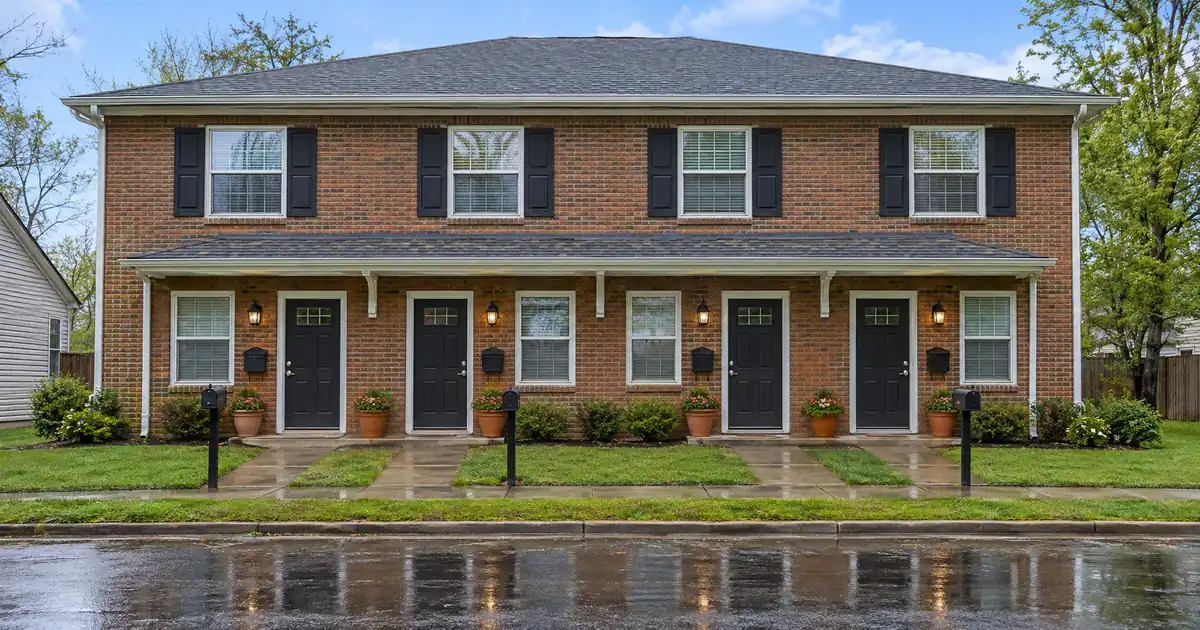
The Quick Read: FHA occupancy is an intent test at closing, with a one-year horizon. At least one borrower must move into one unit as a principal residence and plan to stay for a year. After that year, most borrowers can move out and rent the whole building, but HUD generally insures only one principal residence per borrower, so a second FHA loan needs a named exception. Program terms are subject to lender guidelines and full file review.
What does FHA occupancy actually require on a 2-4 unit?
One borrower lives in one unit. The other units can be rented from day one. That is the whole rule, and most of the confusion comes from stretching it in either direction.
FHA payment estimate
Starting assumptions reflect an example price and the FHA minimum investment. Replace them with your own figures.
Editable benchmark: 7.32% as of October 22, 2026 · Freddie Mac 30-year average via FRED®. A conventional market reference, not an FHA loan quote.
Illustrative starting assumptions: a $350,000 price, the FHA minimum investment as the down payment, a thirty-year term at the current Freddie Mac benchmark, and property taxes and insurance estimated at typical national rates. Every field is editable.
Illustrative estimate only — not a Loan Estimate, approval, quote, or commitment to lend. The rate field carries the weekly Freddie Mac thirty-year conventional benchmark, a market reference and not an FHA loan quote; your rate is set by the lender at lock. FHA mortgage insurance follows HUD’s published schedule for the term, leverage and loan size entered; taxes, insurance and dues are editable estimates; closing costs are not included; county loan limits are not checked here. Licensed in sixteen states for consumer mortgages. Lendmire is not affiliated with or acting on behalf of FHA, HUD, or the federal government.
HUD’s own answer is that at least one borrower must occupy the property as a principal residence within 60 days of signing the security instrument and intend to stay for at least one year. The detail sits in HUD Handbook 4000.1, the policy document lenders work from. HUD updates it often, so check the current version before relying on any section number.
Two points about what the rule is not:
- It is not a recorded covenant that runs for a set number of years.
- It is not a promise to stay forever. It is a certification of intent when you sign.
A principal residence is the home where you keep your permanent place of abode and spend most of the year. You can have only one at a time. That last phrase matters later, when the next purchase comes up.
Lendmire’s FHA loan programs run through wholesale lenders, and across those programs the owner-occupancy certification is the first document in the file.
Key Terms Defined
Principal residence: The home where a borrower lives most of the year. A borrower can have only one at a time.
Owner-occupant borrower: The borrower who certifies they will live in the property. On a loan with more than one borrower, at least one must meet this test.
Occupancy certification: The signed statement at closing that you will move in and intend to stay for at least a year.
Self-sufficiency test: An extra check on three- and four-unit purchases. The appraiser’s market rent, after a vacancy reduction, must cover the mortgage payment.
Net tangible benefit: The test a streamline refinance must pass, meaning the new loan has to help the borrower in a measurable way.
Streamline refinance: A refinance of an existing FHA loan with limited credit review and no appraisal.
What does the first year look like?
The first year is a documentation exercise. Move in, live there, and keep a paper trail that matches. Nothing is magic about day 366; the paper trail simply shows the certification was honest.
| Phase | What you must do | What you may do | What to keep |
|---|---|---|---|
| Closing | Sign the occupancy certification | Lease the other units | Signed certification, leases |
| Move-in window | Occupy a unit as your principal residence | Rent the other units | ID with the new address, utility bills |
| Months 2-12 | Live there as your main home | Keep tenants in the other units | Mail, bank statements, tax address |
| After year one | Nothing further under the occupancy rule | Stay, rent your unit, sell, or refinance | Updated leases, landlord insurance |
Lenders can verify occupancy, so treat the idea that nobody ever looks as a myth.
What can you rent, and when?
Rent the other units whenever you like. Your own unit stays yours for the year.
| Unit | Year one | After year one |
|---|---|---|
| Your unit | You live in it | Free to rent, if you move out |
| Other units | Rentable from day one | Rentable |
| Any unit as a short-term or vacation rental | A concern | Still a concern |
A plan built around nightly rentals on the whole building is a red flag. Long-term leases are the clean path.
How is rental income counted when you qualify?
Rental income counts, but not at what you collect. Underwriters use fractions of rent, and the appraiser’s opinion of market rent sets the number, not your lease.
On a two-unit purchase, lenders typically credit only part of the projected rent. Check the exact percentage against the current handbook rather than relying on a summary. On three- and four-unit purchases, the self-sufficiency test applies. In general terms: the appraiser estimates market rent for all units, including yours, a vacancy reduction is applied, and the mortgage payment cannot exceed the net rent. If it does, the loan amount has to come down, which means more cash to close.
That is why the appraisal decides the outcome on three- and four-unit deals. The appraiser’s rent and vacancy figures are the swing variable. A thin rent schedule can shrink the loan on a building that otherwise looked fine.
Within the programs Lendmire places, the envelope is a maximum of 96.5% financing with a 3.5% minimum investment from a 580 decision score, subject to lender guidelines. The upfront mortgage insurance premium is 1.75% of the base loan, and the annual premium runs between 0.15% and 0.75% depending on term, amount and LTV. On a thirty-year loan above 90% LTV, the annual premium lasts for the term. At or below 90%, it ends after eleven years. Mortgage insurance continues when you convert to a rental. Moving out does not remove it.
What are your options after year one?
You have four. Each changes something different.
| Option | What changes | Watch for |
|---|---|---|
| Stay | Nothing | Nothing new to certify |
| Move out and rent | Your unit becomes a rental | Insurance, lease, one-residence limit |
| Sell | Loan is paid off | Equity and selling costs |
| Refinance | New loan replaces the old | Occupancy rules differ by type |
Stay. The simplest path. You keep rent from the other units and keep building equity.
Move out and rent. Generally permitted once the one-year intent period has been met. HUD frames the rule as intent at closing, and it does not set a penalty or mandatory return after year one. But lenders and HUD can look at facts showing the intent was never real. Moving out in month three because you always planned to is the problem case, not moving out in month fourteen.
Sell. Occupancy has no bearing on a sale. The loan is paid off at closing.
Refinance. This is where occupancy bites, and it deserves its own section.
How does moving out affect a refinance?
Occupancy history controls which refinance doors stay open. Moving out closes some and leaves one wide.
- Cash-out refinance. Within the programs Lendmire works with, the FHA cash-out reaches 80% LTV on a home owned and occupied for 12 months before the case number. Move out in year two and you lose that route.
- Rate-and-term with an appraisal. This reaches 97.75% on a principal residence occupied for the previous twelve months. Same story: it is built for the owner who still lives there.
- Streamline. This is the main route after you move out. HUD’s streamline page says the existing mortgage must already be FHA insured, must be current, and must give the borrower a net tangible benefit. It also says properties the borrower does not occupy as a principal residence may be refinanced only without an appraisal. An FDIC summary of FHA streamline refinancing lists one- to four-unit primary residences and non-owner-occupied properties with existing FHA loans as eligible. That summary is dated, so confirm current rules with the lender. Some lenders limit non-owner-occupied streamlines to fixed-rate loans.
No appraisal on a streamline also means no rent re-test. For a three- or four-unit owner who has moved out, that avoids the self-sufficiency question entirely. The premium continues on a streamline.
Plan the refinance before you plan the move. If a cash-out is in your future, do it while you still live there.
How do you convert your unit properly?
Conversion is mostly housekeeping. Here is the order that keeps the file clean.
1. Confirm you have passed the one-year mark and that your records show you lived there: ID, mail, utilities, bank statements.
2. Tell your servicer and your insurer. A homeowner policy does not fit a landlord situation. Switch to landlord coverage before the new tenant arrives.
3. Write a lease for your former unit that matches how you lease the others. Use the same screening standard.
4. Decide on management. If you are moving far away, a property manager is often part of the plan.
5. Decide on refinancing first. If you want a cash-out or rate-and-term refinance, do it before moving out, for the reasons above.
6. Keep a file. Leases, rent ledger and insurance declarations make the next lender’s review much easier.
What if life forces a move before year one?
An early move is not automatically a violation, but the facts matter and so does talking to the lender first. HUD recognizes a short list of situations that can justify a second FHA loan or an early move, as described in trade sources:
- A job relocation.
- An increase in family size.
- Vacating a jointly owned home.
- A non-occupying co-borrower situation.
Some sources attach specific distance and equity conditions to these, so check the current HUD handbook with your lender.
Job transfer in month eight. A transfer inside year one does not void the loan. Document the employer letter, tell the lender, and ask whether a second FHA loan is possible at the new location.
Co-borrower dynamics. One occupant is enough. If one borrower moves out and the other stays, the occupancy test is still met. If the occupant leaves and the non-occupant stays, you have a problem.
Military orders. Active-duty borrowers who cannot physically live in the home may still be treated as owner-occupants when a family member lives there or they intend to occupy it after service. The lender will ask for orders. Older sources cite a distance test; confirm the current one.
203(k) rehab loans. These have their own occupancy timing. Ask the lender.
Can you buy another FHA home afterward?
Usually only through an exception. HUD generally insures one principal residence per borrower. A trade source quotes the handbook this way: FHA will not insure more than one property as a principal residence for any borrower, except as noted. So the house-hack-and-repeat plan is not automatic.
A future lender will also look at your converted unit. Expect to show the lease and some rent history. Those requirements vary by loan type and lender. A conventional loan for the next purchase follows a different set of rules than FHA does.
What do people get wrong about FHA occupancy?
| Myth | Reality |
|---|---|
| “I can rent my unit the day after closing.” | You certified you would live there. |
| “After twelve months I’m free.” | The one-principal-residence limit still applies. |
| “I can buy another FHA home anytime.” | Only under HUD’s exceptions. |
| “Rent counts by my lease.” | The appraiser’s market rent is used. |
| “Self-sufficiency applies to duplexes.” | It applies to three- and four-unit purchases. |
| “FHA never checks.” | Lenders can verify occupancy, and facts showing the intent was not real can be reviewed. |
| “Once I move out I can’t refinance.” | A streamline stays available, under its own rules. |
| “Renting the other units breaks the rules.” | Not if you occupy one. |
When should you call your lender?
Call before, not after, any of these:
- You expect to move out before the year ends.
- You want to refinance and may move within a year.
- A co-borrower is leaving the home.
- You plan to rent any unit short term.
- You are relocating and want another FHA loan.
- A three- or four-unit appraisal comes back with low rent.
Lendmire’s related piece, FHA occupancy requirements for a house hacker on a 2-4 unit, covers adjacent decisions.
If you already hold an FHA loan on a 2-4 unit and are weighing a move-out, a refinance or a next purchase, Lendmire can help you compare the options and what each one asks of the file.
Frequently Asked Questions
Do I have to live in the unit for exactly twelve months?
HUD’s rule is that you intend to stay at least a year, and you move in within 60 days of signing. The test is intent at closing, not a countdown on a recorded lien. Keep records showing you actually lived there.
Can I rent my own unit after year one?
Generally yes, once the one-year intent period has been met. Switch to landlord insurance, write a lease, and plan any refinance first. A cash-out refinance needs 12 months of prior owner occupancy.
Does mortgage insurance stop when I move out?
No. The upfront and annual premiums are part of the loan.
Can I refinance after I’ve moved out?
Often, through a streamline. The existing loan must be FHA insured, current, and give a net tangible benefit. Non-owner-occupied properties are refinanced without an appraisal.
What counts as proof I lived there?
Lenders and HUD look at ordinary records: ID address, utility bills, mail, bank statements and tax filings. None of these alone proves it. Together they show the certification was honest.
For your own numbers, request a scenario review with Lendmire.
About Lendmire
Lendmire — NMLS# 2371349 — is a mortgage broker that arranges FHA, VA, conventional and jumbo home purchase and refinance financing in 16 states through wholesale lenders. Every option is subject to the lender’s guidelines and full underwriting. Scotsman Guide named Lendmire a Top Mortgage Workplace in both 2025 and 2026.
Get Started
Ready to find the right loan for you?
In about 30 seconds you can review financing options available for your home or investment property. No commitment required.
Informational only. Not a Loan Estimate, approval, or commitment to lend. Program availability and eligibility are subject to lender guidelines, credit approval, property review, and underwriting.
References
1. HUD FHA Answers: How does FHA define owner occupant
2. HUD Housing Handbooks (Handbook 4000.1)
3. HUD Single Family Streamline Refinance
4. FDIC summary of FHA streamline refinance
This article is part of Lendmire’s FHA loan program — full qualification details, guidelines, and scenarios live on the program page.
Related reading: How Much a Conventional Loan Saves Over FHA Insurance on a 2-4 Unit · How to Get an FHA Loan Approved on New Construction · How to Handle FHA Loan Appraisal Problems on New Construction
Brandon Miller
Founder & CEO, Mortgage Loan Originator, Lendmire LLC
- Mortgage Loan Originator · NMLS# 1129696 · Verify on NMLS Consumer Access
- North Carolina Real Estate Broker · License# 343312 · Verify on NCREC
- North Carolina Insurance Producer · License# 19053198 · Property, Casualty, Life, Health · Verify on NAIC SBS
- Lendmire LLC · Firm NMLS# 2371349 · Verify firm licensure
Disclosures. The information presented in this article is general market commentary, not financial, legal, or tax advice. Lendmire is a mortgage brokerage (NMLS# 2371349) — not a direct lender or depository institution — and loan placement is subject to lender underwriting. Nothing in this content represents a commitment to lend. Loan terms, pricing, and program availability vary based on borrower qualifications, property characteristics, and state of subject property, and are subject to change at any time. Lendmire complies with Equal Housing Opportunity requirements. Consumer access: nmlsconsumeraccess.org.