
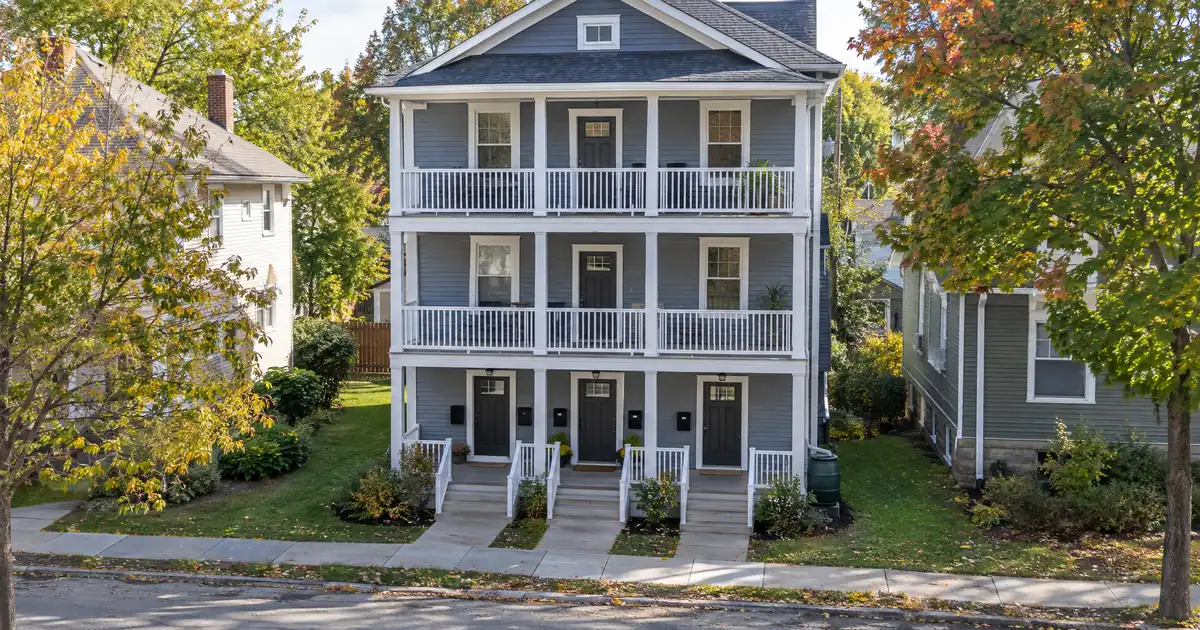
The Quick Read: Reserves are the cash you still hold after you pay the down payment and closing costs. On a three- or four-unit property, FHA asks you to hold three months of the full housing payment in verified, eligible assets after closing. Smaller properties carry a lighter requirement, and the exact amount depends on unit count and how the file is underwritten. Rent from the other units does not replace reserves. They are two separate tests, and you need to pass both.
Key Takeaways
- Reserves are measured after closing. They are what is left, not what you put down.
- Unit count drives the requirement: more units, more months held back.
- Not every dollar in your accounts counts. Cash-out proceeds, borrowed money and (on some paths) gifts are left out.
- Projected rent helps you qualify on income. It does not shrink the reserve requirement.
- Individual lenders can ask for more than FHA’s minimum, so confirm which number applies to your file. Final terms depend on lender guidelines, property type, leverage, and the borrower’s complete credit picture.
What “Reserves” Means on an FHA File
Reserves are the money you have left once the deal is paid for. Picture your verified bank balances on the day before closing. Subtract the down payment and every closing cost. What remains is your reserve figure.
FHA payment estimate
Starting assumptions reflect an example price and the FHA minimum investment. Replace them with your own figures.
Editable benchmark: 7.32% as of October 22, 2026 · Freddie Mac 30-year average via FRED®. A conventional market reference, not an FHA loan quote.
Illustrative starting assumptions: a $350,000 price, the FHA minimum investment as the down payment, a thirty-year term at the current Freddie Mac benchmark, and property taxes and insurance estimated at typical national rates. Every field is editable.
Illustrative estimate only — not a Loan Estimate, approval, quote, or commitment to lend. The rate field carries the weekly Freddie Mac thirty-year conventional benchmark, a market reference and not an FHA loan quote; your rate is set by the lender at lock. FHA mortgage insurance follows HUD’s published schedule for the term, leverage and loan size entered; taxes, insurance and dues are editable estimates; closing costs are not included; county loan limits are not checked here. Licensed in sixteen states for consumer mortgages. Lendmire is not affiliated with or acting on behalf of FHA, HUD, or the federal government.
That is why reserves are not the same thing as cash to close. Cash to close gets spent. Reserves stay in your account as a cushion for the lender.
Why do they matter more on a bigger building? A duplex, triplex or fourplex has more moving parts than a single-family home. More units mean more vacancy risk and more things that can break. The lender wants proof that you can keep making the payment if a unit sits empty for a while.
Here is the structure that surrounds the question. FHA lets you buy a one- to four-unit home with a 3.5% minimum investment and maximum financing of 96.5%, starting from a 580 decision score. You must live in one of the units as your principal residence. That occupancy rule is what makes a multi-unit purchase an owner-occupant loan.
The wholesale lenders behind Lendmire’s FHA loan programs run these files through the same federal framework. All of this is subject to lender guidelines and a full review of your file. Nothing here is a commitment to lend.
How the File Gets Read, Step by Step
“Reading reserves” means the underwriter pulls a few numbers off your file and compares them. The order matters.
1. The file is routed. Most files go through FHA’s automated scorecard. Others are underwritten by hand, called manual underwriting. The two paths have parallel reserve sections, and small details differ between them.
2. Your liquid assets are totaled. The lender verifies and documents what you have: bank statements and similar records. Every asset submitted to the automated system must be verified.
3. Closing funds are subtracted. That means the down payment and your closing costs. Seller contributions can cover part of the costs, up to 6% of the price, but they reduce what you need to bring, not what you must keep.
4. Exclusions are applied. Some money you can see in an account does not count. More on that below.
5. What remains is compared to a multiple of the housing payment. The multiple is set by unit count. The payment is the new loan’s principal, interest, taxes and insurance, plus the monthly mortgage insurance that comes with FHA.
6. Rent is documented on a separate track. The appraiser reports market rent for the units, and that feeds the income side of the file.
The result is a simple pass or fail on assets. A strong credit score will not fix a thin balance after closing.
How Many Months? It Depends on Unit Count
Here is the lookup version. The months below are agency minimums from HUD’s rule changes, not a promise about your file.
| Property | Reserve requirement after closing |
|---|---|
| 3-4 units | Three months of the full housing payment |
| 1 unit plus an accessory unit, rent used to qualify | Two months |
| 1-2 units, manual underwriting | A smaller requirement set by HUD’s manual section |
| 2 units, automated path | Confirm with your loan officer |
The three-month figure for three- and four-unit properties comes from HUD Mortgagee Letter 2023-17, which amended the FHA Handbook. The same letter sets two months for a single-unit home with an accessory dwelling when its rent is counted as income.
A word of caution on duplexes. You will see claims online that two-unit loans need no reserves. The primary source does not back that up cleanly. HUD’s manual section carries its own heading for one- to two-unit properties, and automated findings can add conditions. Treat “zero” as a claim to verify, not a plan.
What Goes Into One Month
A “month” of reserves is one month of the full housing payment. That is the number the lender multiplies.
- Principal and interest on the new loan.
- Property taxes.
- Homeowners insurance.
- FHA mortgage insurance. The upfront premium is 1.75% of the base loan and is typically financed. The annual premium runs between 0.15% and 0.75% of the balance, depending on term, loan amount and loan-to-value (LTV, the loan as a percentage of the home’s value). It is paid in monthly installments, so it sits inside the payment.
Association dues and flood insurance may also be part of the payment on your property. Ask your loan officer whether they count on your file.
The formula is short: eligible assets after closing, divided by the monthly housing payment, gives you months. You need that result to meet or beat the multiple for your unit count.
Why does the dollar amount move from quote to quote? Taxes, insurance and mortgage insurance change with the property and the loan. A higher payment raises the reserve target, even though the number of months stays the same.
A Worked Scenario: A Fourplex Purchase
No dollar figures here, just percentages and multiples. Say you are buying a fourplex and planning to live in one unit. You qualify on the 3.5% minimum investment.
Your cash needs stack up in layers:
- Layer one: the 3.5% down payment.
- Layer two: closing costs, which seller contributions can offset in part.
- Layer three: three months of the full housing payment, still sitting in your account afterward. These specifics are subject to lender guidelines and a full review of property, leverage, and credit.
The mistake buyers make is counting only layers one and two. They check their balance against the down payment, feel fine, and then learn at underwriting that the third layer exists. A buyer who barely clears the first two can fail on assets.
Now compare a duplex. The down payment stays at 3.5%, and the closing costs look similar. The third layer is lighter, and on the automated path your loan officer should tell you what the findings show. The jump from a duplex to a triplex is where the reserve requirement steps up. Terms depend on the lender’s guidelines, the property type, the leverage, and a full review of the credit profile.
Here is a practical read from the files Lendmire sees. Buyers often shop price first and reserves last. Moving the order around saves frustration. Start with your verified liquid balance, subtract the down payment and costs, and see what is left before you pick a unit count.
What Counts as a Reserve Asset, and What Doesn’t
The definition in the HUD Handbook glossary is plain: reserves are verified, documented liquid assets minus the total funds required at closing. The glossary also describes cash reserves as non-retirement liquid assets that can be withdrawn or sold at financial institutions.
| Money source | How it is treated |
|---|---|
| Checking and savings, documented | Counts |
| Cash-out proceeds from a refinance | Does not count |
| Incidental cash received at settlement | Does not count |
| Borrowed funds | Does not count |
| Gift funds | Depends on the underwriting path |
| Equity in another property | Does not count on the manual path |
| Retirement and stock accounts | Ask your loan officer how they are valued |
Gift funds deserve a flag. HUD’s manual underwriting rules exclude them from reserves. Older Handbook language suggests the automated path may treat them differently. Policy has moved over time, so the honest answer is that it depends on your path. Confirm with your loan officer before you count on a gift.
Documentation is the other half. Every asset must be verified, and large, unexplained deposits slow a file down. Keep statements clean and be ready to explain anything that is not a paycheck.
Reserves, Rent and the Self-Sufficiency Test
These are three different tests, and borrowers blur them constantly.
Reserves ask how much cash you hold after closing.
Rental income asks how much of the other units’ rent the lender can count toward your qualifying income. The appraiser reports market rent using a small residential income appraisal form, and leases can support it when they are available, per the same HUD letter.
The self-sufficiency test applies to three- and four-unit properties. In HUD’s drafting documents, the full payment divided by net rental income may not exceed 100%. Put simply, the building’s own rent has to carry its own payment. HUD’s property-type drafting table is where that standard shows up. It is a drafting document, so treat it as a pointer and have the lender confirm the current Handbook wording.
A property can pass one test and fail another. Strong rent does not make up for thin savings. Ample savings do not make a weak-income building pass self-sufficiency. You need all three to line up.
Ratios still apply on top of this. The base pair on an FHA file is 31/43 (housing payment and total debts as a percentage of income) with no compensating factors. Documented compensating factors can stretch that to 40/50 at the top tier, and the automated finding governs most files. Reserves can be one of those compensating factors, which is another reason to hold more than the minimum.
Where the General Rule Bends
Reserves look like a simple multiple until your situation has a wrinkle. These are the common ones.
An accessory unit on a one-unit home. The two-month requirement applies when rent from the accessory unit is used to qualify. If you leave that rent out, the trigger does not apply.
A cash-out refinance on a three- or four-unit. The cash you take out cannot be counted as your own reserves. You need reserves from other assets. A cash-out on a home you own and occupy reaches 80% LTV after twelve months of ownership and occupancy. The exact numbers vary by lender and program and follow a full review of property, leverage, and credit.
High ratios and manual files. When your debt ratios run high, the underwriter looks harder at your cushion. A stronger reserve balance helps a manual file, and the requirement can rise when compensating factors are thin.
Lender overlays. An overlay is a rule a lender adds on top of the agency minimum. Some lenders set a higher reserve floor than FHA does. The way to tell the difference is to ask one direct question: “Is this FHA’s minimum or your own requirement?” If a lender asks for more, another lender may not.
Rule updates. HUD issues changes as numbered Mortgagee Letters, which are later folded into the Handbook. HUD’s housing handbooks page shows which version is live. Because updates arrive regularly, have your loan officer confirm the current reserve wording on your file rather than relying on an older article, this one included.
If the numbers on a three- or four-unit feel tight, it is worth comparing structures. Lendmire’s piece FHA vs Conventional Loan on a 2-4 Unit Property lays out how the cash requirements differ.
If You’re Short on Reserves
A shortfall is common and often fixable. Here are the legitimate moves.
- Choose fewer units. Dropping from a fourplex to a duplex can change the requirement.
- Ask about seller contributions. Up to 6% of the price can go toward closing costs, which frees your own cash to stay in the account.
- Use time. Seasoning your savings in a documented account is cleaner than a last-minute transfer.
- Check gifts with your loan officer first. Whether a gift counts toward reserves depends on the path, as noted above.
- Compare lenders. If one has an overlay, another may not.
What to skip: borrowing money to inflate your balance. Borrowed funds from any source are excluded from reserves, so the move does not help, and it adds debt to the file.
Also skip moving money around without a paper trail. Underwriters follow every deposit. Transfers they cannot trace create questions, not reserves.
Key Terms Defined
Reserves: verified, documented liquid assets left after you pay the money due at closing.
PITI: principal, interest, taxes and insurance, the core monthly housing payment lenders use to size reserves. On FHA, think of it as the full payment including mortgage insurance.
Minimum required investment: the borrower contribution FHA requires, at least 3.5% of the adjusted value on a standard purchase.
Manual underwriting: a loan review done by a person against FHA’s guidelines, rather than by the automated scorecard.
Self-sufficiency test: the three- and four-unit rule that the building’s net rent must cover its own full payment.
Lender overlay: an extra requirement a lender adds on top of what FHA demands.
Compensating factor: a documented strength, such as extra savings, that supports a file with higher ratios.
Frequently Asked Questions
Does a duplex need reserves on an FHA loan?
Possibly, and the amount is smaller than on a three- or four-unit. HUD’s manual underwriting section sets a lighter requirement for one- to two-unit files, and the automated path can add conditions of its own. Do not plan around “zero.” Ask your loan officer what your findings show.
Can gift funds count as reserves?
It depends on the underwriting path. Under manual underwriting, gift funds are excluded from reserves. The automated path has been treated differently in past Handbook language, so confirm the current rule with your loan officer before you rely on a gift.
Are reserves the same as cash to close?
No. Cash to close is the down payment plus closing costs, and it gets spent at the table. Reserves are what is left in your verified accounts afterward. You need both, and one does not substitute for the other.
Can rental income reduce the reserves I need?
No. The reserve requirement is set by unit count and underwriting path, separate from the rental income calculation. Rent helps you qualify on income and helps a three- or four-unit meet the self-sufficiency test. It does not lower the months you must hold. Final terms depend on the lender’s guidelines, the property type, and the borrower’s complete credit picture.
Do reserves include mortgage insurance?
The monthly housing payment used to size reserves includes FHA mortgage insurance, since it is part of what you pay each month. Whether association dues or flood insurance are in the number depends on your property, so have the lender itemize the payment.
Planning Your Cash Before You Shop
Start with the account balance, not the listing. Work out your liquid cash, take away the down payment and expected closing costs, and see how many months of the full payment remain. Then match that to the unit count you are considering.
If you are buying a home and want to see whether an FHA loan fits your file, Lendmire can help you compare the options and what each one asks of the file. Brokers like Lendmire arrange these loans through wholesale lenders, and every program detail remains subject to lender guidelines and full file review.
The gap between a duplex and a fourplex is not just two more doors. It is a stack of three months of payments that has to be sitting in your account the day after you get the keys.
For your own numbers, request a scenario review with Lendmire.
About Lendmire
Lendmire (NMLS# 2371349) is a mortgage broker licensed for consumer lending in 16 states. Lendmire arranges FHA, VA, conventional and jumbo purchase and refinance loans through wholesale lenders; every file is underwritten by the lender under the applicable program guidelines. Scotsman Guide named Lendmire a Top Mortgage Workplace in both 2025 and 2026.
Get Started
Ready to find the right loan for you?
In about 30 seconds you can review financing options available for your home or investment property. No commitment required.
Informational only. Not a Loan Estimate, approval, or commitment to lend. Program availability and eligibility are subject to lender guidelines, credit approval, property review, and underwriting.
References
1. HUD Mortgagee Letter 2023-17
2. HUD Handbook 4000.1 Glossary
3. HUD Handbook 4000.1 property-type drafting table
4. HUD Housing Handbooks (Handbook 4000.1)
This article is part of Lendmire’s FHA loan program — full qualification details, guidelines, and scenarios live on the program page.
Related reading: FHA Loan Guidelines on a 2-4 Unit Home You Live In · Can You Use an FHA Loan for New Construction? · Conventional Loan vs FHA When Credit Is Strong
Brandon Miller
Founder & CEO, Mortgage Loan Originator, Lendmire LLC
- Mortgage Loan Originator · NMLS# 1129696 · Verify on NMLS Consumer Access
- North Carolina Real Estate Broker · License# 343312 · Verify on NCREC
- North Carolina Insurance Producer · License# 19053198 · Property, Casualty, Life, Health · Verify on NAIC SBS
- Lendmire LLC · Firm NMLS# 2371349 · Verify firm licensure
Required disclosures. Lendmire (NMLS# 2371349) operates as a licensed mortgage broker, not a direct lender or depository. The discussion in this article is general in nature and should not be relied upon as financial, legal, or tax advice — every investment scenario is unique and should be reviewed by a qualified professional. Any loan inquiry is subject to lender underwriting, and this article is not a commitment to lend or a guarantee of approval. Mortgage rates, loan terms, and program guidelines vary by borrower, property, and state, and may change without notice. Equal Housing Opportunity. Verify licensure at NMLS Consumer Access.