
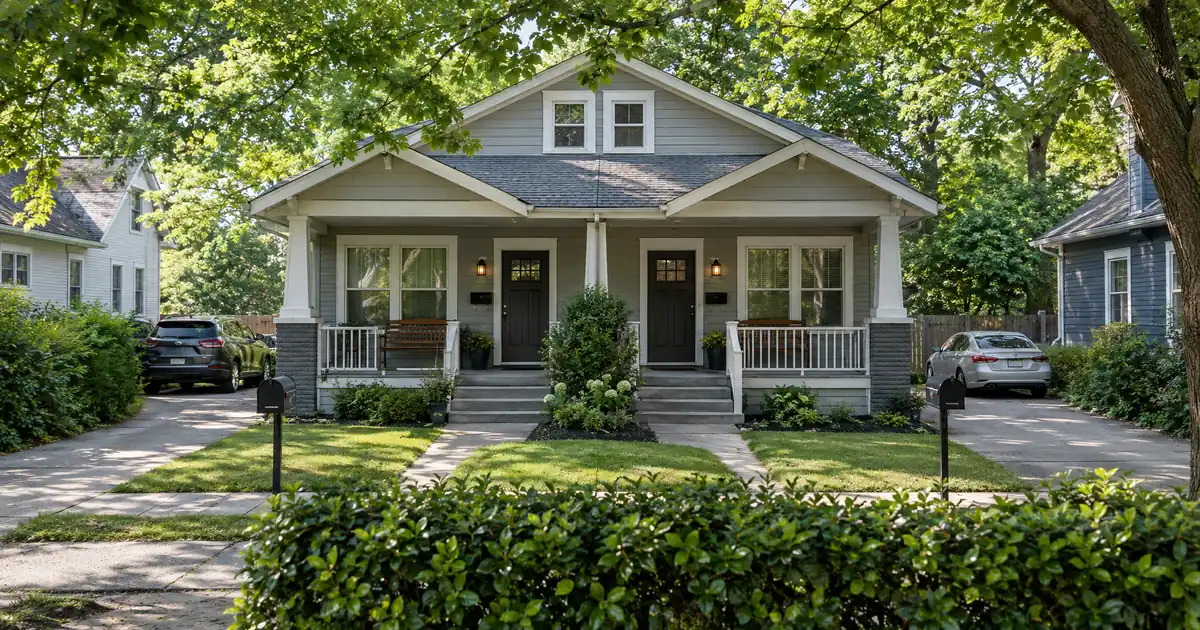
The Quick Read: FHA will finance a building with two, three, or four units if you live in one of them as your main home. You can put as little as 3.5% down with a decision score of 580 or higher. A duplex is underwritten much like a single-family home. A triplex or fourplex adds a second hurdle: the building’s rent has to carry the payment. Every figure here is subject to lender guidelines and a full file review, and none of it is a commitment to lend.
The Short List
- You must buy the whole building and live in one unit as a principal residence.
- Maximum financing is 96.5% of value or price, with a 3.5% minimum investment at a 580 decision score or higher.
- Rent from the other units can help you qualify, but the lender counts a discounted share of the appraiser’s estimate, not what you hope to charge.
- Triplexes and fourplexes face a property-based rent test. Duplexes do not.
- County loan limits apply. They are higher for more units, and you should check your county before you shop.
- Mortgage insurance is part of every FHA loan, and it sits inside the payment the rent test measures.
What Does FHA Actually Allow on a 2-4 Unit Home?
FHA allows one to four units, owner-occupied, financed with a low down payment and flexible credit standards. It is the most common route for people who want to live in one unit and rent the others. The catch: you live there, and the building has to fit the program.
FHA payment estimate
Starting assumptions reflect an example price and the FHA minimum investment. Replace them with your own figures.
Editable benchmark: 7.32% as of October 22, 2026 · Freddie Mac 30-year average via FRED®. A conventional market reference, not an FHA loan quote.
Illustrative starting assumptions: a $350,000 price, the FHA minimum investment as the down payment, a thirty-year term at the current Freddie Mac benchmark, and property taxes and insurance estimated at typical national rates. Every field is editable.
Illustrative estimate only — not a Loan Estimate, approval, quote, or commitment to lend. The rate field carries the weekly Freddie Mac thirty-year conventional benchmark, a market reference and not an FHA loan quote; your rate is set by the lender at lock. FHA mortgage insurance follows HUD’s published schedule for the term, leverage and loan size entered; taxes, insurance and dues are editable estimates; closing costs are not included; county loan limits are not checked here. Licensed in sixteen states for consumer mortgages. Lendmire is not affiliated with or acting on behalf of FHA, HUD, or the federal government.
Here is how it works. FHA is not a loan from the government. Private lenders make the loan, and the federal program insures them against loss. The cost of that insurance is passed to you as mortgage insurance. Lendmire is a mortgage broker, so it arranges these loans through wholesale lenders rather than lending itself. You can see how the options fit together on its page for FHA loan programs.
Across the wholesale programs Lendmire places FHA files with, the starting point for a purchase is 96.5% maximum financing. That means a 3.5% minimum investment, measured against the lesser of the price or the appraised value. The decision score needs to be 580 or higher. FHA’s own rules have a tier for scores of 500 to 579 with a bigger required investment. The wholesale programs behind Lendmire do not reach below 580, so that tier is a program fact, not an option on these files.
Other purchase basics:
- Seller or interested-party contributions can go up to 6% of the price.
- The base debt ratios are 31/43, meaning housing cost over income and total debt over income, with no extra support.
- Documented compensating factors can stretch those ratios to 40/50 at the top tier.
- Most files get their answer from an automated underwriting finding, and that finding governs more often than the base pair.
The federal consumer agency that explains FHA says the building can have no more than four units, and you must buy the entire building. A condo-style purchase of one unit inside a fourplex is a different animal. We are talking about owning the whole structure.
How Is a 2-4 Unit FHA Loan Underwritten, Step by Step?
The lender checks you, then checks the building, then checks whether the building’s income supports the loan. Each step has a pass-or-fail edge, and the order matters because the property step is where triplexes and fourplexes get stuck.
Step 1: Occupancy. At least one borrower must live in one unit as a principal residence. HUD’s Handbook 4000.1 glossary defines an Owner-Occupant Borrower as someone who lives in the property as a principal residence. Lenders look for a move-in shortly after closing and a real intent to stay. The exact timing and minimum stay come from the handbook and from each lender’s overlay, so ask your loan officer for the current wording. This is a sworn statement, not a suggestion. Buying under the owner-occupied program and then renting the whole building is occupancy fraud.
Step 2: Credit and ratios. The lender runs your file through an automated review, or reviews it by hand when it needs to. With a 580 decision score or higher and 3.5% down, you are in the main lane. Your housing payment and total debts are measured against income using the 31/43 base pair, or higher ratios with documented strengths such as savings or a long job history. Terms depend on the lender’s guidelines, the property type, the leverage, and a full review of the credit profile.
Step 3: Appraisal. The appraiser reports value and also estimates market rent for the building. For two- to four-unit homes with no rent history on the subject property, HUD’s rental income guidance has the lender document the proposed rent with an appraisal on the small residential income property form. Prospective leases can support it when they exist. The appraiser’s number, not your pro forma, is the one that counts.
Step 4: Rent as income. On a duplex, a discounted share of the projected rent from the unit you do not occupy can help your ratios. The discount covers vacancy and upkeep. You do not get credit for the unit you live in.
Step 5: Rent test (three and four units only). More on this below, because it deserves its own section.
Step 6: Reserves. Lenders often want cash left in the bank after closing on larger buildings. The amount depends on the unit count and the lender’s overlay. Plan for it. It’s part of the cash you need, alongside the down payment.
Step 7: Mortgage insurance. Every FHA loan carries it. Mechanically, there is an upfront premium of 1.75% of the base loan amount, usually financed into the loan. There is also an annual premium between 0.15% and 0.75% of the balance, depending on term, loan amount, and LTV. On a thirty-year loan above 90% LTV, the annual premium lasts for the full term. At or below 90% LTV, it ends after eleven years.
Why Does a Triplex or Fourplex Get an Extra Test?
Three- and four-unit buildings must pass a self-sufficiency test. The lender takes the appraiser’s market rent for every unit, including yours, discounts it for vacancy and upkeep, and checks that the result covers the full housing payment. The payment divided by that net rent cannot exceed 100%. Duplexes are exempt.
Think of it as the building proving it can stand on its own legs. Your paycheck does not rescue a failing result. The test belongs to the property.
Run the logic with index numbers, not dollars. These are illustrative assumptions, not market data.
| Scenario | Net rent | Full housing payment | Payment ÷ net rent | Result |
|---|---|---|---|---|
| Fourplex A | 100 | 92 | 92% | Passes |
| Fourplex B | 100 | 108 | 108% | Fails |
| Duplex | Not tested | Not tested | n/a | Normal ratios |
Fourplex A clears the bar with room to spare. Fourplex B has the same rent and a heavier payment. Notice what moves the answer: the price, the down payment, mortgage insurance, taxes, and insurance all sit on the payment side. The appraiser’s rent figure sits on the other side.
If a building fails, you have real options:
- Put more down or negotiate the price, which shrinks the payment.
- Pick a duplex instead, which skips the test.
- Ask whether another unit can legitimately support a higher rent, if the appraiser agrees with the market evidence.
- Look at a conventional loan, which has its own rules and no FHA-style self-sufficiency test. It comes with different down payment and insurance terms, so compare the full terms side by side.
One more point from the desk. On three- and four-unit deals, the weak spot is often the appraiser’s rent estimate, not the buyer. Sellers who advertise “rents are $X” are quoting what they charge today. The appraiser may land lower, and the test uses the lower number. Run your own check before you write an offer, not after the appraisal comes back.
What Structures and Variations Exist?
The basic structure is a purchase with 3.5% down. The variations are who is on the loan, what kind of building it is, and whether you are buying or refinancing. The exact numbers vary by lender and program and follow a full review of property, leverage, and credit.
Co-borrowers. A non-occupant co-borrower, such as a parent adding income, is allowed on an FHA purchase. On two- to four-unit buildings the rules tighten. The favorable leverage that family-member co-borrowers can sometimes get on a single-family home does not carry over to multi-unit buildings, per HUD’s handbook rules. Ask the loan officer how the lender treats a co-signer on your building before you count on one.
Mixed-use buildings. A building with a storefront and apartments can be eligible when the residential space is the majority and the commercial use does not threaten occupants’ health or safety. Lenders vary on how strictly they apply that, so check early.
A house with an accessory unit. A single-family home with a basement or garage apartment is a one-unit property, not a two-unit. If rent is used to qualify, HUD’s rental income guidance sets a small reserve requirement. A real duplex or triplex follows the multi-unit path. Final terms depend on the lender’s guidelines, the property type, and the borrower’s complete credit picture.
Refinancing the home you live in. FHA has three refinance paths:
- The Streamline refinances an existing FHA loan with no appraisal and a limited credit review. It requires a net tangible benefit, and the mortgage insurance premium continues.
- The rate-and-term refinance with an appraisal reaches 97.75% on a principal residence you have occupied for the previous twelve months.
- The cash-out refinance reaches 80% LTV on a home you owned and occupied for twelve months before the case number. Each figure is subject to lender guidelines and a complete review of property type, leverage, and credit.
Rent from units you do not occupy can matter on a refinance too. Lendmire’s piece FHA vs Conventional Cash-Out When You Live in a 2-4 Unit Primary Home walks through that choice. If your question is the rent test on a cash-out, see the piece FHA Cash-Out Self-Sufficiency Requirements on a 2-4 Unit Primary Home.
Loan limits. County loan limits apply, and they change every year. They are higher for each added unit. HUD’s loan limit announcement explains the structure: a floor for lower-cost areas, a ceiling for high-cost areas, and separate figures for one, two, three, and four units. The floor applies where the area’s median home price, scaled up, falls below it. Everything else is a high-cost area. The consumer bureau points buyers to HUD’s county lookup for the current number. Use it, because a limit that fits a duplex in one county may not fit in the next.
Where the Rules Break: Edge Cases Worth Knowing
The general rule is simple: live there, pass the test, buy the whole building. These situations are where it bends or snaps.
Moving out later. FHA expects you to live in the home as your residence when you close. Life changes, and people do move. That is different from buying with the plan to rent the whole building. The first is a change of circumstances. The second is misrepresentation. If you expect to move within a short window, tell your loan officer now.
Nightly rentals. FHA is built for residential living and documented rent. Renting units by the night sits awkwardly with both the occupancy rules and the way rent gets supported on the appraisal. If short stays are part of your plan, raise it before you apply, because lenders read it differently.
Tenants already in place. The appraiser needs lease information on occupied units, and the lender wants it documented. A building with tenants on informal or expired arrangements is harder to support than one with clean paperwork.
Condition problems. The appraiser reports on condition and safety. A multi-unit building with a failing roof, missing smoke detectors, or unsafe wiring can get repair conditions attached. Some conditions have to be fixed before the loan can go forward. Negotiate repairs with the seller early.
A second FHA loan. FHA generally limits borrowers to one FHA loan at a time, with exceptions for things like a job relocation. The details sit in the handbook and the lender’s overlay, so ask rather than assume.
Lender overlays. The program sets a floor. A lender can add its own stricter rules on credit, reserves, or building type. That is why two lenders can give different answers on the same fourplex. A broker’s job here is to find the lender whose overlays fit your file.
FHA, Conventional, or Something Else?
FHA tends to win when your down payment is small and your credit is mid-range. Conventional can win when you have more cash down, stronger credit, or a building that fails the self-sufficiency test. This one is a genuine toss-up for many buyers, and the right answer depends on the file.
| Factor | FHA | Conventional |
|---|---|---|
| Minimum investment | 3.5% at 580+ | Varies by program |
| Mortgage insurance | Upfront plus annual | Depends on down payment |
| Rent test on 3-4 units | Yes | Different rules |
| Credit flexibility | Broader | Often tighter |
| Occupancy | Required | Required for best terms |
The thinking-out-loud version: FHA’s mortgage insurance can last for the life of the loan above 90% LTV, so a buyer who expects to build equity fast may refinance out of it later. A buyer with 20% down might skip FHA altogether. A veteran may have a third option through VA financing, which has its own multi-unit rules. Compare the full cost of each, not just the down payment. Leverage, reserves, and pricing vary by lender and program; the final terms follow the full file review.
What Does the Decision Look Like in Practice?
Picture a buyer with a 640 decision score eyeing a triplex. They plan to live in one unit and rent two. They run the checklist:
1. Confirm the building qualifies. Whole building, three units, residential, in condition.
2. Check the county loan limit for a three-unit property.
3. Estimate the payment as a share of price, adding mortgage insurance, taxes, and insurance.
4. Test rent against it. Use a conservative rent estimate, then discount it. If the payment is above 100% of that net rent, the plan needs a change.
5. Confirm cash left after closing. The down payment, closing costs, and reserves all come from the same pocket.
6. Decide between FHA and the alternatives, with the full file in front of you.
If the test is tight, drop to a duplex or raise the down payment before you make the offer. Fixing it at the offer stage costs nothing. Fixing it after the appraisal costs time and leverage.
Key Terms Defined
Owner-occupant: A borrower who lives in the property as a principal residence.
LTV (loan-to-value): The loan amount divided by the property’s value or price. A 96.5% LTV means 3.5% down. Terms vary by lender guidelines, property type, leverage, credit profile, and full file review.
Mortgage insurance premium (MIP): FHA’s insurance cost, charged upfront and annually, passed to the borrower.
Self-sufficiency test: The rent test on three- and four-unit buildings. Net rent has to cover the full housing payment.
Net rental income: Rent after a discount for vacancy and upkeep.
Reserves: Cash left in your accounts after closing, often measured in months of the housing payment.
Overlay: A lender’s own rule that is stricter than the program minimum.
Decision score: The credit score a lender uses to place a file in a program tier.
Ready to Compare Your Options?
If you are buying a home and want to see whether an FHA loan fits your file, Lendmire can help you compare the options and what each one asks of the file. You can reach the team at 828-256-2183.
Frequently Asked Questions
Can I use FHA on a duplex, triplex, or fourplex?
Yes, on one to four units, as long as you buy the whole building and live in one unit as your main home. A duplex follows ordinary underwriting. A triplex or fourplex must also pass the rent-based self-sufficiency test.
Does the rent from my tenants count toward qualifying?
Partly. Lenders count a discounted share of the appraiser’s market-rent estimate from the units you do not occupy, not the rent you actually plan to charge. On a duplex that helps your ratios. On a triplex or fourplex, the appraiser’s rent for every unit, yours included, also feeds the rent test.
What happens if my fourplex fails the self-sufficiency test?
The loan cannot proceed as structured, and strong personal income does not override a failure. You can lower the payment with a bigger down payment or a lower price, switch to a duplex, or compare a conventional loan. Each choice trades something, so look at the full terms.
Can a parent co-sign for me on a multi-unit FHA loan?
A non-occupant co-borrower is allowed on a purchase, but the rules get tighter on two- to four-unit buildings. The higher leverage sometimes available to family co-borrowers on a single-family home does not extend to multi-unit buildings. Lender overlays can add further limits.
Does a low credit score rule out FHA on a multi-unit?
Yes, it can. The wholesale programs Lendmire places FHA loans with start at a 580 decision score, which is where the 3.5% minimum investment applies. HUD has a lower-score tier with a larger required investment, but the network does not reach it. Credit events carry HUD waiting periods, such as two years after a Chapter 7 discharge and three years after a foreclosure.
For your own numbers, request a scenario review with Lendmire.
About Lendmire
Lendmire (NMLS# 2371349) is a mortgage broker licensed for consumer lending in 16 states. Lendmire arranges FHA, VA, conventional and jumbo purchase and refinance loans through wholesale lenders; every file is underwritten by the lender under the applicable program guidelines. Scotsman Guide named Lendmire a Top Mortgage Workplace in both 2025 and 2026.
Get Started
Ready to find the right loan for you?
In about 30 seconds you can review financing options available for your home or investment property. No commitment required.
Informational only. Not a Loan Estimate, approval, or commitment to lend. Program availability and eligibility are subject to lender guidelines, credit approval, property review, and underwriting.
References
1. HUD – Handbook 4000.1 glossary
2. HUD – Mortgagee Letter on rental income and accessory units
3. HUD – FHA loan limits announcement
4. CFPB – FHA loan limits for my county
This article is part of Lendmire’s FHA loan program — full qualification details, guidelines, and scenarios live on the program page.
Related reading: Can an Heir Living in an Inherited 2-4 Unit Home Get FHA Cash-Out? · Can a Whole FHA Loan Down Payment Be a Gift? · Can a Homeowner With an FHA Loan Use an FHA Cash-Out for Any Purpose?
Brandon Miller
Founder & CEO, Mortgage Loan Originator, Lendmire LLC
- Mortgage Loan Originator · NMLS# 1129696 · Verify on NMLS Consumer Access
- North Carolina Real Estate Broker · License# 343312 · Verify on NCREC
- North Carolina Insurance Producer · License# 19053198 · Property, Casualty, Life, Health · Verify on NAIC SBS
- Lendmire LLC · Firm NMLS# 2371349 · Verify firm licensure
Required disclosures. Lendmire (NMLS# 2371349) operates as a licensed mortgage broker, not a direct lender or depository. The discussion in this article is general in nature and should not be relied upon as financial, legal, or tax advice — every investment scenario is unique and should be reviewed by a qualified professional. Any loan inquiry is subject to lender underwriting, and this article is not a commitment to lend or a guarantee of approval. Mortgage rates, loan terms, and program guidelines vary by borrower, property, and state, and may change without notice. Equal Housing Opportunity. Verify licensure at NMLS Consumer Access.