
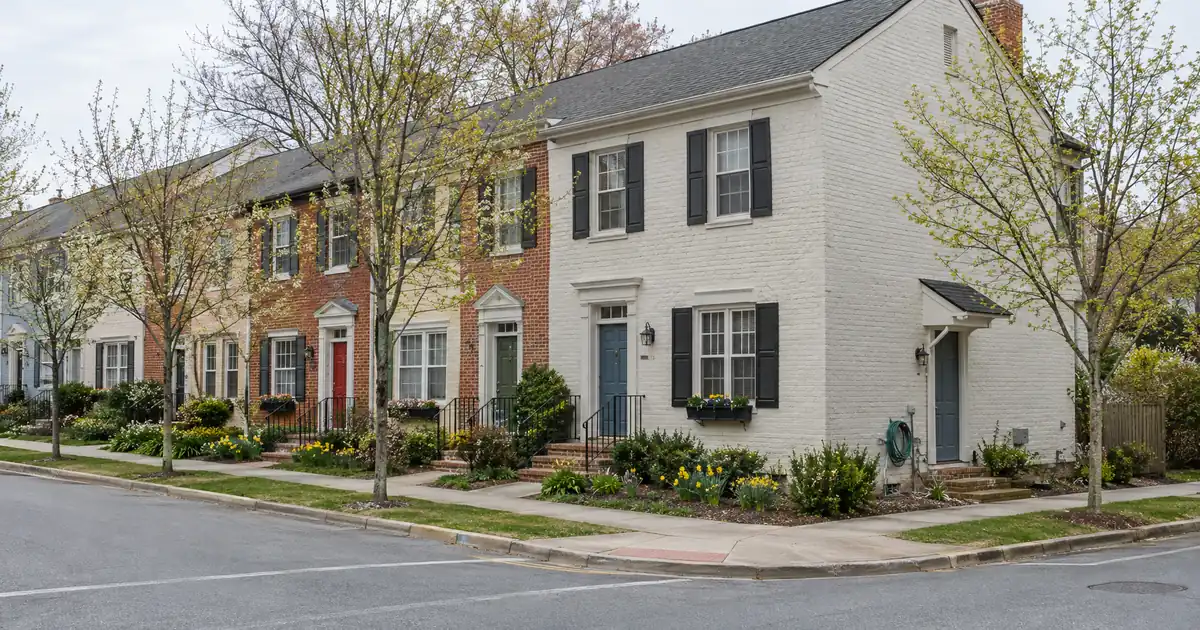
The Quick Read: A VA loan can pay for a newly built home, but the home has to be finished, inspected, and meet VA’s property standards before the loan is guaranteed. Your report date matters as much as your credit. The real question is whether the build, the closing, and your move-in can fit inside your orders window. Builder-financed spec homes usually fit short windows; custom builds need runway.
What Counts as “New Construction” on a VA Loan?
New construction means three different things, and each one runs on a different track. Which one you pick decides how many closings you face, who carries the construction costs, and how much schedule risk lands on you.
VA payment estimate
Starting assumptions reflect an example price with no down payment and a first-use funding fee. Replace them with your own figures.
Editable benchmark: 7.32% as of October 22, 2026 · Freddie Mac 30-year average via FRED®. A conventional market reference, not a VA loan quote.
Illustrative starting assumptions: a $350,000 price, no down payment with full entitlement, a first-use funding fee financed into the loan, a thirty-year term at the current Freddie Mac benchmark, and property taxes and insurance estimated at typical national rates. Every field is editable.
Illustrative estimate only — not a Loan Estimate, approval, quote, or commitment to lend. The rate field carries the weekly Freddie Mac thirty-year conventional benchmark, a market reference and not a VA loan quote; your rate is set by the lender at lock. The funding fee follows VA’s published table for the use and down payment entered; the residual-income figure is VA’s guideline for the region and family size, and the rough residual shown subtracts only the housing payment and the debts entered, while VA also deducts taxes, maintenance and utilities. Taxes, insurance and dues are editable estimates; closing costs are not included. Licensed in sixteen states for consumer mortgages. Lendmire is not affiliated with or acting on behalf of the Department of Veterans Affairs.
1. A finished or nearly finished home. This is an ordinary VA purchase. Many builders sell these as “spec” or move-in-ready homes. A home built by a builder with the builder’s own funds is generally treated as new construction under the VA Lenders Handbook, as Freddie Mac’s processing fact sheet summarizes it.
2. A one-time close (single close). The construction loan and the permanent VA loan close together. Terms are set before the first shovel moves, then convert to permanent terms when the home is done.
3. A two-time close. You take out a separate construction loan first. That interim loan is not a VA loan, even though you plan to end up in one. You negotiate its terms yourself, then close the VA loan when the home is complete.
VA does not lend on any of these. It guarantees loans made by private lenders. So you work with two sets of rules: VA’s requirements and the lender’s own extra requirements, which are called overlays. VA Circular 26-18-7 describes the one-time and two-time structures.
Key Terms Defined
Entitlement: The amount of VA guarantee you have available. Full entitlement means no VA loan limit applies to your purchase.
Notice of Value (NOV): The document VA issues after an appraisal. It sets the official value and lists conditions the home must meet.
Minimum Property Requirements: VA’s standards for a safe, sound, sanitary home. A new build has to meet them before the guarantee is issued.
Certificate of Occupancy: The local authority’s sign-off that a finished home can legally be lived in.
Residual income: The money left each month after major obligations and living costs. On VA loans it is the controlling underwriting test.
Overlay: A rule a lender adds on top of VA’s minimum. Overlays are why two lenders can treat the same VA file differently.
How Is a VA Construction Loan Underwritten?
It is underwritten like any other VA loan. Construction-to-permanent loans fall under the same underwriting chapter of the handbook that governs standard purchases, per Circular 26-18-7.
That means the lender checks your Certificate of Eligibility (COE), your credit, your income, your debts, and your residual income. Across the wholesale programs Lendmire places VA files with, residual income is the controlling test. The 41% debt-to-income figure is a guideline, not a cap. A higher ratio needs residual income well above the standard table.
On leverage, a VA purchase with full entitlement allows 100% financing, with no down payment as long as the price is not above the appraised value. There is no mortgage insurance of any kind and no VA loan limit with full entitlement. If you have remaining entitlement from a current VA loan, a down payment may be required. Speak with a loan officer about your numbers rather than guessing.
VA sets no minimum credit score, but individual lenders set their own. The wholesale programs Lendmire works with start at a 580 decision score, and some lenders set a higher floor, especially for construction. Construction files often get stricter overlays than resale purchases, so expect some lenders to pass entirely. Fewer lenders offer VA construction loans than offer standard VA purchases, which is the first hurdle to clear.
The funding fee works like any VA purchase. For first use it is 2.15% with less than five percent down, 1.5% with five to under ten percent down, and 1.25% with ten percent or more down. Veterans receiving compensation for a service-connected disability, and other exempt groups, are waived. The fee can be financed. On a one-time close, Circular 26-18-7 says the funding fee is not tied to the start or completion of construction.
Every figure here is subject to lender guidelines and full file review. Nothing is a commitment to lend. For the program basics, see Lendmire’s VA loan programs page.
What Must the Builder and the Home Satisfy?
The builder no longer needs a VA-issued ID, but the home still has to pass VA’s property standards. Many older articles still describe the builder ID as required. It is not.
VA Circular 26-25-1 says a VA builder identification number is no longer necessary to issue the NOV or process a loan on new or proposed construction. Builders are still expected to meet state and local licensing requirements. The same circular says VA will point veterans to resources for resolving builder complaints instead of stepping in itself. The ID requirement stays in place for Specially Adapted Housing grants and Native American Direct Loans.
That change has a practical cost to you. Your leverage in a dispute is thinner. Your protections are the warranty, the local inspections, and the lender’s vetting.
On the home itself, all Chapter 12 Minimum Property Requirements must be met before the Loan Guaranty Certificate is issued, per Circular 26-18-7. The KnowVA Chapter 12 overview covers the standards, including a builder-supplied certification or engineer report for new or proposed construction in areas with a history of unstable soil.
Warranty paperwork is the other gate. Newly built homes have generally needed either a one-year builder warranty or a ten-year insured protection plan. The one-year warranty goes on the Warranty of Completion of Construction, VA Form 26-1859. Confirm the current warranty route with your lender, because VA has changed these details over time.
Lenders also expect builder documents: plans, specifications, the contract, permits, and a budget. Exact lists vary by lender.
How Does the Process Run, Step by Step?
The sequence is the same for most files, but the timing is not. Here is the order:
1. Eligibility. Get your COE and a preapproval that names the construction path.
2. Builder and plans. The lender vets the builder and collects plans, specs, and the contract.
3. Appraisal. For proposed construction, VA’s Buyer’s Guide says the appraisal must happen before the foundation is finished. If construction is further along, the appraisal waits until the home is complete.
4. NOV. It lists comparable sales, the floor layout, photographs, and any items that need repair to meet the MPRs.
5. Draws. On a construction-to-permanent loan, the lender needs your written approval before each payment to the builder.
6. Completion. The home needs a clear final inspection and a certificate of occupancy before the guarantee is issued.
7. Closing and funding fee. The permanent loan starts, with the fee handled as described above.
Two clocks run during all this. The first is the NOV validity period. VA uses a 6-month period for proposed construction, according to Circular 26-14-28. If you are under contract during that window, processing can continue until the deal closes or ends. VA may extend validity case by case. The second clock is your report date. They don’t care about each other.
Who Pays While the Home Is Being Built?
On a one-time close, the builder generally carries construction-period interest that an interest reserve doesn’t cover. The builder also pays the fees a builder normally pays on an interim loan, such as inspection, commitment, title update, and hazard insurance during construction. That comes from Circular 26-18-7.
A two-time close is different. No VA loan exists yet, so you negotiate the interim loan’s terms, including interest payments. Ask who pays before you sign anything. The older circular also mentions a lender construction fee, but treat that as historical and ask your loan officer what applies today.
One more budget point. A PCS household often carries current housing costs while the build finishes. That might be rent, or a house you haven’t sold. Plan for that overlap, because builds slip.
Can You Meet the Move-In Rule if the Home Isn’t Finished?
Often yes, but you have to plan for it and document it. VA expects you to occupy the home as your residence. The usual shorthand is within 60 days of closing, but that shorthand assumes an existing home. VA’s handbook allows more than 60 days when you certify a specific future occupancy date and a particular event makes move-in possible on that date. Occupancy much beyond 12 months after closing is generally not treated as reasonable. Confirm the details with your lender against the current VA handbook.
PCS households get a few specific paths:
- Spouse or dependent child occupancy. If you are on active duty and can’t personally move in within a reasonable time, a spouse or dependent child occupying the home can satisfy the requirement.
- Deployment. Deployed servicemembers are treated as being in temporary duty status and can meet the occupancy requirement.
- Certified future date. You certify the date and the event that makes it possible, such as the home’s completion or your arrival.
Orders do not automatically waive anything. The rule turns on a certified date, a triggering event, and paperwork. Keep your orders, the builder’s completion schedule, and any delay letters in one folder.
On a built-to-order home, the clock logic depends on closing and certificate-of-occupancy timing. Some lender sites say the clock runs from the certificate of occupancy, so ask your lender how they apply it to your file.
Which Path Fits Your Report Date?
Match the path to your runway. Build time varies a lot by builder and region, so use your builder’s written schedule, not a guess.
| Your runway | Best fit | Why |
|---|---|---|
| Report date is close | Finished or spec home | Home exists; standard VA purchase |
| Mid-range | Home under construction, or a spec home | Appraisal timing depends on progress |
| Long runway | One-time close custom build | Time to absorb delays |
| Long, flexible lender | Two-time close | Interim loan terms are negotiable |
For a short window, skip the custom build. It is rarely worth the risk. The lender, appraiser, and builder all have to land on time, and one slip can push you past the date you have to be somewhere else.
For a long window, a one-time close gives you one set of terms and one closing. The tradeoff is that fewer lenders offer it. A two-time close widens your choices but means two loans, two sets of costs, and an interim loan that isn’t VA-backed.
This is a real judgment call, and it isn’t always obvious. A custom build can beat a resale on layout and age. But with a fixed report date, a move-in-ready home is usually the safer play, even if it’s less perfect.
Where Do the General Rules Break?
A few edge cases can sink a file or change its path.
- Clear Zone. Proposed construction inside an airport runway Clear Zone is not eligible. For existing or new construction there, you sign an acknowledgement on the NOV. Check the current handbook for exact language.
- Soil and geology. In areas with a history of soil instability, the builder must supply a certification or a geologist’s report. See the Chapter 12 overview linked above.
- Septic. Proposed construction with an individual sewage system generally needs health-authority approval.
- Local inspections. If the local authority inspects and none were obtained, the property can be ineligible as VA security. That guidance comes from older training material, so verify the current rule.
- Radon. Whether builders must certify radon-resistant construction is something to confirm in the current Chapter 12 rather than from any one summary.
- Old homes called “new.” A home completed long ago and never lived in may be treated as a different transaction type. Ask your lender how they classify it.
- Refinancing a construction loan into VA. That is a refinance, not a purchase, and VA refinance seasoning can apply. Plan this with your lender before you pick a two-time close.
- Owner-builder. Some lender summaries say VA permits a veteran to act as their own contractor. Confirm with a lender before counting on it.
VA also no longer inspects new homes during construction. Its sample NOV language has the veteran acknowledge that VA did not inspect the home while it was built. VA help with construction complaints is limited to defects reported during the one-year warranty period. Hire your own inspector for key stages if your lender and builder allow it.
What If You Already Own a Home With a VA Loan?
You may have less entitlement available than a first-time buyer. With remaining entitlement, a down payment may be required, and the amount depends on your situation. Talk to a loan officer before you sign a builder contract.
If you plan to sell the current home, your sale date and your closing date need to line up, or you carry two housing costs. If you plan to keep it, that affects your entitlement. For related reading, see Lendmire’s piece How to Check Entitlement Before a VA Cash-Out With a PCS Move.
Common Mistakes Before a PCS Build
- Signing before talking to a lender. Not every lender does VA construction. Find one first.
- Assuming orders waive the occupancy rule. They don’t.
- Ignoring the NOV clock. Delays can force a re-appraisal.
- Skipping a bridge-housing plan. Builds slip. Budget for it.
- Trusting old builder-ID advice. Check VA’s current circular.
- Forgetting remote closing. Ask early about power of attorney and signing from your next duty station.
Questions to Ask Your Builder
- Is the home licensed and permitted under state and local rules?
- What is the written completion date, and what happens if it slips?
- Will you provide the warranty paperwork and the required certifications?
- Who pays construction-period interest and inspection fees?
- Have you built VA-financed homes before?
What Should You Do in the First 30 Days After Orders?
1. Tell your lender your report date at the first conversation.
2. Get your COE and a preapproval that names the path.
3. Ask which construction options the lender offers.
4. Get the builder’s written schedule before choosing a lot.
5. Document your orders and your occupancy plan.
6. Decide on a fallback: a spec home or temporary housing.
Frequently Asked Questions
Does the builder still need a VA builder ID?
No. VA ended the requirement for standard loans in March 2025. Builders still need to meet state and local licensing. The ID requirement still applies to Specially Adapted Housing grants and Native American Direct Loans.
Do PCS orders guarantee I can skip the move-in rule?
No. Orders are a valid reason for delayed occupancy, but they don’t waive anything. You certify a date and the event that makes move-in possible, and a spouse or dependent child can occupy on your behalf. Your lender reviews the paperwork.
Is a ten-year warranty required?
Not necessarily. The long-standing route has been a one-year builder warranty on VA Form 26-1859 or a ten-year insured plan. Some industry sources say the ten-year option changed. Confirm the current route with your lender.
What happens if the home isn’t finished before my report date?
The guarantee isn’t issued until the home passes final inspection and meets the NOV requirements. The occupancy window can stretch with a certified date, and a spouse or dependent can move in first. If the delay is long, the NOV can expire and force re-appraisal.
Can I put 100% financing on a new build?
Often, with full entitlement and a price not above the appraised value, a VA purchase can finance 100% with no mortgage insurance. With remaining entitlement, a down payment may be required. It is all subject to lender guidelines and full file review.
If you are buying a home and want to see whether a VA loan fits your file, Lendmire can help you compare the options and what each one asks of the file. Reach the team at 828-256-2183.
For your own numbers, request a scenario review with Lendmire.
About Lendmire
Lendmire — NMLS# 2371349 — is a mortgage broker that arranges FHA, VA, conventional and jumbo home purchase and refinance financing in 16 states through wholesale lenders. Every option is subject to the lender’s guidelines and full underwriting. Scotsman Guide named Lendmire a Top Mortgage Workplace in both 2025 and 2026.
Get Started
Ready to find the right loan for you?
In about 30 seconds you can review financing options available for your home or investment property. No commitment required.
Informational only. Not a Loan Estimate, approval, or commitment to lend. Program availability and eligibility are subject to lender guidelines, credit approval, property review, and underwriting.
References
3. KnowVA Chapter 12 MPR overview
This article is part of Lendmire’s VA loan program — full qualification details, guidelines, and scenarios live on the program page.
Related reading: How to Refinance Into a VA Cash-Out From Another Loan Program · How to Clear a Private Second With a VA Cash-Out on Your VA Loan · Refinancing a VA Loan Into a Conventional Loan to Restore Your Entitlement
Brandon Miller
Founder & CEO, Mortgage Loan Originator, Lendmire LLC
- Mortgage Loan Originator · NMLS# 1129696 · Verify on NMLS Consumer Access
- North Carolina Real Estate Broker · License# 343312 · Verify on NCREC
- North Carolina Insurance Producer · License# 19053198 · Property, Casualty, Life, Health · Verify on NAIC SBS
- Lendmire LLC · Firm NMLS# 2371349 · Verify firm licensure
Important disclosures. Lendmire (NMLS# 2371349) is a licensed mortgage brokerage. Lendmire is not a direct lender, depository institution, or financial advisor. All loan inquiries are subject to lender underwriting; this article does not constitute a commitment to lend. Rates, terms, and program guidelines are subject to change without notice and vary by borrower profile, property type, and state. Information in this article is general in nature and is not financial, legal, or tax advice. Equal Housing Opportunity. NMLS Consumer Access: nmlsconsumeraccess.org.